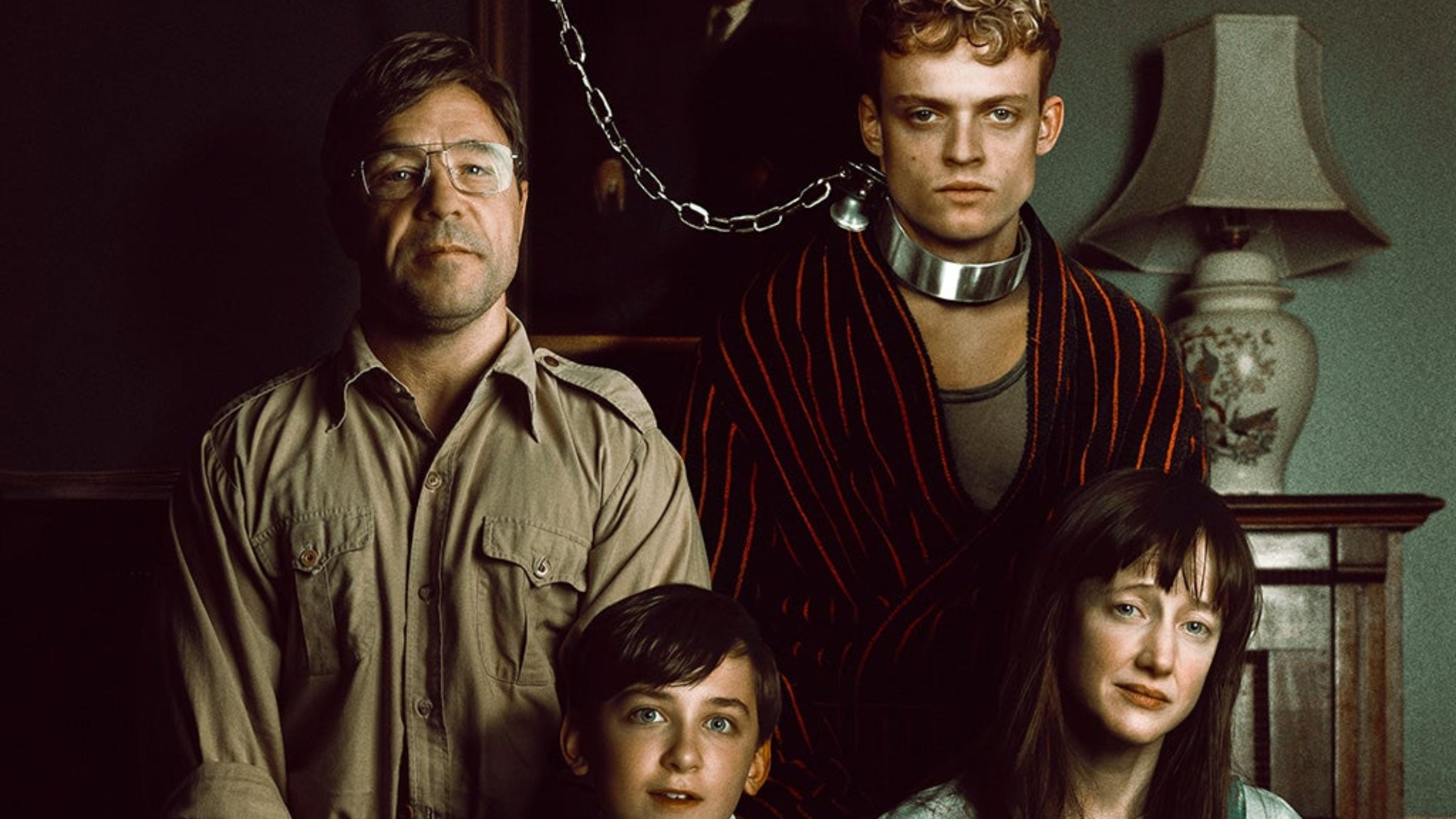
The actors in the thriller Heel are still amazed by the film’s success. Directed by Jan Komasa, who was nominated for an Academy Award, Heel is a compelling and unsettling story that builds on his previous work, the 2025 dystopian drama Anniversary. The film centers on a family who takes in a troubled young man and subjects him to a degrading and inhumane program meant to ‘rehabilitate’ him.
Though it begins as a scary horror story, the film Heel soon becomes deeply emotional, focusing on the humanity of its characters. This makes it a powerful look at what it means to be human. In a recent interview, stars Stephen Graham, Andrea Riseborough, and Anson Boon, along with director Ebaster, discussed what made the film special and how they connected while filming.
Why Stephen Graham, Andrea Riseborough, And Anson Boon Needed To Be In Heel

Andrea Riseborough shared that Stephen Graham was the first to introduce her to the script for Heel. They were already collaborating on a different project, and his enthusiasm convinced her it would be excellent. “Stephen loved it, so I knew it was going to be brilliant,” she explained. “You rarely come across something you connect with as strongly as Stephen did, and I was immediately captivated by the writing—it was just sublime.”
The remarkable thing is that these people are forming genuine connections and supporting each other through a difficult time, even though the circumstances are far from ideal. They’re truly leaning on one another as they navigate the unpredictable nature of grief, which comes and goes in its own time – like waves or a tide. You can’t force the grieving process; you have to accept it and allow yourself to feel what comes up when it does.
Graham was drawn to the film Heel, but what truly excited him about the project was the director, Jan Komasa. He received a letter from Komasa explaining the film, and after watching Komasa’s Corpus Christi, he was incredibly impressed. He immediately contacted Komasa and their agents. When his agent asked if he’d even read the script yet, Graham replied that he hadn’t, but he was committed to the project solely based on Komasa’s filmmaking and wanted to be involved.
Chris and Kathryn are deeply layered characters. The film starts with horror elements, but quickly evolves into a more disturbing and emotionally resonant story. This complexity was a major draw for actor Graham, who said playing Chris was unlike anything he’d done before. He explained that actors always seek roles that challenge them and push their boundaries, and this one definitely did that.
I was reminded of something David Bowie supposedly said: when you’re wading in water, go until your toes just touch the bottom, and then push a little further. That’s where you discover real freedom and honesty. That’s how I felt with this project. I kept questioning if I could pull it off, because this role was completely new for me, and it allowed me to show a side of Stephen I’d never explored before.
Anson Boon used the script as his guiding principle, but playing a character in Heel presented a unique challenge. The character of Tommy, a young man kidnapped and held captive, should naturally gain the audience’s sympathy. However, Boon intentionally portrays him as flawed and unlikeable, adding layers of complexity to the film’s already ambiguous moral landscape. As Boon explained, “When you’re making a film, you’re so immersed in the script and developing your character that the final result can often be surprising.”
I was surprised by how much the film felt like a dark fairy tale. It’s funny, because while we were filming, I was mostly stuck working in the basement, so it didn’t feel that way at the time! But when I watched the finished film, it had this strange, whimsical quality. What really stood out to me was how different it felt from other movies. So often, films fall into simple categories with clear heroes and villains, but this one didn’t.
When I first read the script, I was struck by how I found myself sympathizing with both the villain and the flawed heroes. It presented a really interesting moral ambiguity. The script laid out compelling characters, giving me, as an actor, a great foundation to build on. I’m always fascinated by understanding a character’s motivations – not just the ‘bad’ ones, but everyone has reasons for their actions. With my character, Tommy, I really focused on exploring his backstory and trying to understand the root causes of his behavior – what in his life led him to act the way he does.
Finding Family, Limitations, And Surprises In Heel

Stephen was thrilled to work with Andrea on the project, and they even got to play a married couple again—though this one was very different from their roles in Matilda the Musical. He described Andrea as a delight to work with, and found himself captivated by her performance while filming Heel. He especially admired her dedication to authenticity, saying, “She’s committed to finding the truth, and I loved how we all worked together to uncover it before moving forward. Then, we embarked on that journey together.”
Graham remembered being captivated by Andrea’s performance in one scene. He described watching her move through the kitchen, feeling like she was floating. Because the camera was positioned behind him, he could simply observe and appreciate her acting, thinking it was wonderful. He was so engrossed in watching her that he momentarily forgot he was even in the scene, which he found amusing.
I was so impressed hearing Graham and Riseborough talk about their cast! They had nothing but praise for everyone, but Anson Boon really stood out. Graham said he’d never even met Anson before this project, hadn’t seen any of his work, but he was instantly excited when he got to know him. He described Anson as a wonderful person and a really talented newcomer who absolutely killed it in the role – he said Anson’s character has a huge arc and he nailed every part of it. They were equally kind about Monika Frajczyk and Kit Rakusen, calling them both brilliant in their own unique ways. It’s great to hear such positive things about the whole team!
Riseborough remembered being struck by how close the cast became during filming. They really functioned like a family, and before each scene, they made sure everyone was on the same creative wavelength. She explained this was unusual, as film sets are typically fast-paced and intense, leaving little time for deep discussion. But with each new segment of ‘Heel,’ they prioritized connecting with one another, which created a strong and unified feeling among the group.
Graham agreed, recalling that they’d often have dinner together at the hotel, watching football and relaxing. It got to the point where if Anson missed dinner, they’d playfully tease him, much like parents do with teenagers. Riseborough fondly remembered once jokingly asking Anson, in a parental tone, where he’d been when he came back to the hotel late one night.
Reflecting on the film, Boon explained that it centers around Tommy’s transformation, showing him as a completely different person at the beginning versus the end. While the methods used in his recovery are unconventional and flawed, Boon remains optimistic. He always believed Tommy possessed a hidden desire to be understood, accepted, and loved, even if he wouldn’t express it.
Besides the emotional challenges, actor Boon found the chain used to restrain his character, Tommy, surprisingly difficult to work with. He explained that he hadn’t anticipated how restrictive and limiting it would be until he actually wore it. The script already created a sense of feeling trapped, but physically wearing the chain and experiencing the character’s helplessness amplified that feeling and ultimately helped him deliver a more authentic performance.
It’s a relief it was only a movie and I wasn’t actually experiencing those things! As an actor, though, you want to feel strong emotions. There’s always a balance – figuring out how far you can go into a role without it becoming unrealistic or impossible to perform. With this project, I’m really pleased we created a fantastic collar that was safe to use, but still allowed me, as the actor, to genuinely feel the character’s sense of confinement.
The filmmakers aimed for a distinctive and hopeful feel with Heel, and they achieved it. The resulting thriller is both powerful and surprisingly moving, and Graham realized while filming that it was something truly special. He described the experience as captivating, noting that everyone involved contributed something wonderful and unique to the project.
2026-03-07 01:00