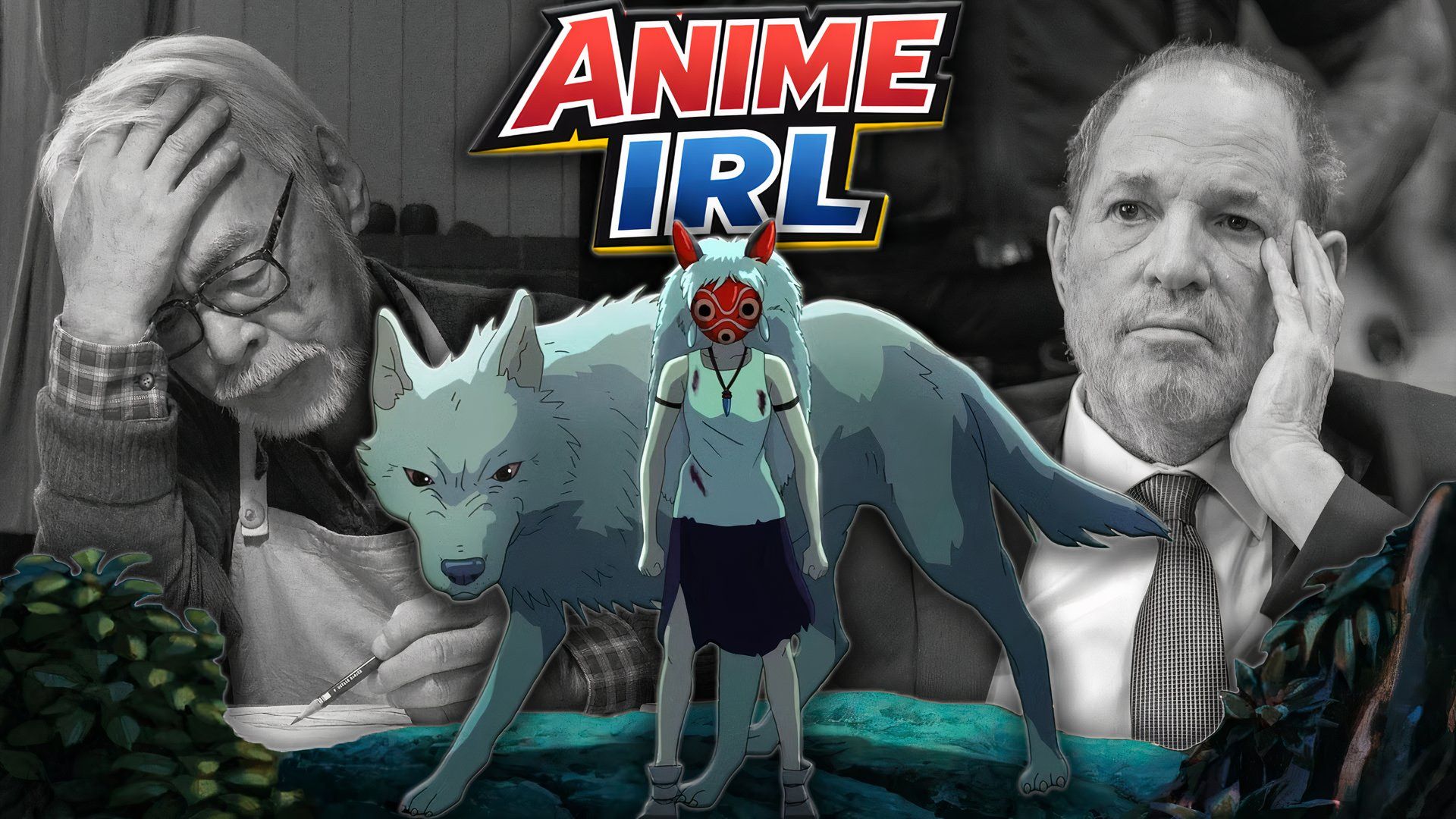
Welcome back to Anime IRL! Every other week, we’ll explore the true stories behind some of anime’s most impactful moments. This time, we’re looking at the tense clash between Studio Ghibli and the notorious film producer, Harvey Weinstein.
Studio Ghibli has become incredibly popular in the United States. Since the 1990s, their films – like Spirited Away and The Boy and the Heron – have become some of the most beloved international movies ever shown in America. Even the Academy Awards have repeatedly acknowledged Studio Ghibli as a leading animation studio worldwide.
Studio Ghibli didn’t have an easy time breaking into Western markets, and their efforts eventually led to a conflict with the infamous Hollywood producer, Harvey Weinstein. This surprising clash had a significant impact on anime, and it all started with a particularly poor adaptation of an anime film.
Studio Ghibli’s Rocky Relationship With the U.S. Film Industry Dates Back to the 1980s
Studio Ghibli began with Hayao Miyazaki, Isao Takahata, and Toshio Suzuki – a team who had worked together successfully in the anime industry since the 1970s. Miyazaki and Takahata were directors, while Suzuki was a producer.
Although Hayao Miyazaki and Isao Takahata had been directing for several years before working with Toshio Suzuki (they first collaborated at Toei Animation in 1963), Studio Ghibli wasn’t officially founded until all three joined forces. The company was established in 1985 and quickly revolutionized anime, releasing a string of highly successful films and becoming Japan’s leading film studio by the late 1990s.
Studio Ghibli became very popular in Japan during the 1980s and 90s without many problems. However, the studio faced challenges when trying to succeed in international markets, particularly in the United States.
Although Nausicaä of the Valley of the Wind was made before Studio Ghibli officially existed, it’s an important film in the studio’s history. Directed by Miyazaki and distributed internationally by Tokuma Shoten (and later sold to Manson International, a company experienced with bringing Japanese films to the US), it offered an early look at how anime films would be introduced to Western audiences. However, the way it was handled wasn’t what the filmmakers at Studio Ghibli had in mind.
When Nausicaa was released in the U.S., it was heavily edited – over 22 minutes of footage were cut, and the dialogue was significantly changed. This resulted in a version quite different from the original Japanese release. The film was even retitled Warriors of the Wind, and promotional posters included characters who didn’t actually appear in the movie.
There’s been a lot of discussion about who decided to edit the film, but those changes didn’t improve its performance. The American release of Nausicaa of the Valley of the Wind, known as Warriors of the Wind, was a commercial failure. While it was released alongside popular movies like Rambo: First Blood Part II and The Goonies, it only earned about $15,000 in its first two weeks in June 1985.
After this project failed completely, Studio Ghibli was hesitant to release films in the U.S. again. Hayao Miyazaki was reportedly dissatisfied with how the movie Nausicaa was adapted for English-speaking audiences, and some believe this led Studio Ghibli to establish a policy of not allowing any changes to their films when releasing them internationally.
By 1996, Studio Ghibli had maintained its strict policy of not altering its films for over ten years. While films like My Neighbor Totoro had some success with home video sales in Western countries, no movie directed by Miyazaki had been shown in U.S. theaters since the poorly received Warriors of the Wind. That’s why Disney’s agreement with Tokuma Shoten to distribute Ghibli films in the U.S. – both current and future projects – was such a big shift for the studio, and brought them back into the world of Western film distribution.
Princess Mononoke’s U.S. Release Spawned the Infamous “No Cuts” Exchange With Harvey Weinstein
In 1996, Disney and Tokuma Shoten teamed up, and began planning to bring Studio Ghibli films to American movie theaters. Disney’s Buena Vista division would distribute Ghibli’s movies on video, but Harvey Weinstein’s Miramax company would handle the theatrical releases.
Most people now know Harvey Weinstein as a convicted sex offender and the figure whose crimes helped launch the #MeToo movement in 2017. But when Studio Ghibli’s Princess Mononoke – their first big film made with Disney – came out 20 years prior, he was seen very differently.
During the 1980s and 1990s, Harvey Weinstein’s Miramax became the leading production company for international and foreign films. By the late 1990s, its influence in the industry was enormous. Weinstein, however, was known for being difficult to work with, and people in the film industry nicknamed him “Harvey Scissorhands” because he frequently made extensive cuts to the movies he produced.
Studio Ghibli has always insisted on final cut of their films, so trouble was inevitable when Miramax began preparing Princess Mononoke for release in the United States. True to form, Miramax suggested significant edits, and reports indicate Harvey Weinstein even wanted to cut up to 45 minutes from the film’s original 135-minute length.
Staying true to Studio Ghibli’s principles, they refused Harvey Weinstein’s demands for extensive cuts. Having recently released Princess Mononoke, and still dissatisfied with how Nausicaa had been handled, the studio’s leadership was firm: the film would not be edited.
According to the recollections of Steve Alpert, a former Studio Ghibli executive involved in talks with Disney and Miramax, Harvey Weinstein was extremely angry with Hayao Miyazaki, Isao Takahata, and Toshio Suzuki, and reportedly said:
Studio Ghibli was in a strong position. They insisted on having final approval over how their films were translated and marketed in the West, and Harvey Weinstein didn’t know they had another advantage: Toshio Suzuki, who decided to personally contact the Hollywood producer.
While Hayao Miyazaki and Isao Takahata were the creative forces behind Studio Ghibli, Toshio Suzuki handled the business side. He was known for being direct and a skilled negotiator, which made him a good match against difficult personalities like Harvey Weinstein. When Weinstein made inappropriate requests, Suzuki famously sent him a katana—a Japanese sword—along with a message stating simply, “No cuts.”
Hayao Miyazaki, Steve Alpert, and Toshio Suzuki have all shared accounts of this incident, though their recollections vary. Miyazaki remembers the sword being sent through the mail to Harvey Weinstein. Alpert, in his memoir, describes Suzuki personally delivering the prop sword—along with a message asking for no cuts to the film—during a meeting in New York City.
Toshio Suzuki admits the famous “no cuts” message wasn’t likely delivered so directly, but it seems the heated conversation between him and Harvey Weinstein probably happened as reported. Although Weinstein and others likely weren’t thrilled with this insistence, it clearly worked: the film debuted in the U.S. in September 1999, completely uncut.
Hayao Miyazaki, Toshio Suzuki, and Studio Ghibli Had the Last Laugh Over Weinstein
When Princess Mononoke was first released in the United States, it didn’t do very well at the box office, earning just $2.3 million. Despite this, critics loved the film, and it gained a following on home video in the early 2000s, paving the way for greater acceptance of Studio Ghibli films in Western markets soon after.
Released in 2003, Spirited Away was a huge hit in both Japan and the United States, significantly expanding what Ghibli could achieve. The film won the studio its first Academy Award for Best Animated Feature, and it almost earned back its $19 million production cost just from ticket sales in the U.S. This success likely led Disney to strengthen its collaboration with Ghibli in the years that followed.
Though Disney no longer distributes Studio Ghibli films, their earlier partnership was key in getting Western critics and audiences to recognize anime as a respected art form, moving beyond popular franchises like Pokémon and Dragon Ball Z. This eventually led to significant financial success for Studio Ghibli in the United States, with the studio earning hundreds of millions of dollars from movie theater releases, home video sales, and merchandise as of 2026.
Compared to Studio Ghibli, Harvey Weinstein’s career took a very different turn after Princess Mononoke. I remember when he left Miramax in 2005 – it wasn’t a shock to anyone, considering his ongoing clashes with Disney’s Michael Eisner. He then started The Weinstein Company and continued producing films there until his arrest in 2018.
The conflict between Studio Ghibli and Harvey Weinstein might seem like a small detail when considering his larger, infamous story. But it also beautifully illustrates how incredible art can overcome the powerful and often overwhelming forces within the American film industry.
Before Studio Ghibli and Harvey Weinstein were known to each other, Hollywood’s co-founder, Daeida Wilcox Beveridge, was once asked about the origin of the suburb’s famous name. Her answer was surprisingly charming and old-fashioned.
I’ve always felt that while Hollywood and the movie business don’t always live up to the ideals some people have, there’s still a real magic to film. And honestly, nobody evokes that feeling of childhood wonder quite like the artists at Studio Ghibli.
The disagreement between Studio Ghibli and Harvey Weinstein is often exaggerated, but it became much more than just a business conflict. It represented a key moment in the history of Japanese animation, helping it gain the recognition and respect as a true art form in Western cinema that it always deserved.
Thanks for checking out this issue of Anime IRL! We’ll return in two weeks with a funnier topic: Ryan Reynolds’ very first acting job – a little-known anime called Funky Fables.
2026-03-04 04:45