
Suzanne Collins’ new book, Sunrise on the Reaping, provides fans with a more detailed history of the Hunger Games world. It delves into the events of Haymitch Abernathy’s Games and explains how the rebellion that unfolds in Catching Fire and Mockingjay began. While the original trilogy offered a broad sense of the timeline, this new book fills in the gaps and clarifies the history of Panem and the years leading up to the uprising.
The prequel novel, The Ballad of Songbirds and Snakes, offered a glimpse into the difficult period known as the Dark Days – the first rebellion – and expanded on the origins of the Hunger Games. Since The Hunger Games is set in a future without specific dates, we’ll use the term “After the Dark Days” (ADD) to mark the years in this timeline.
Panem’s Origins Are Left a Mystery in The Hunger Games
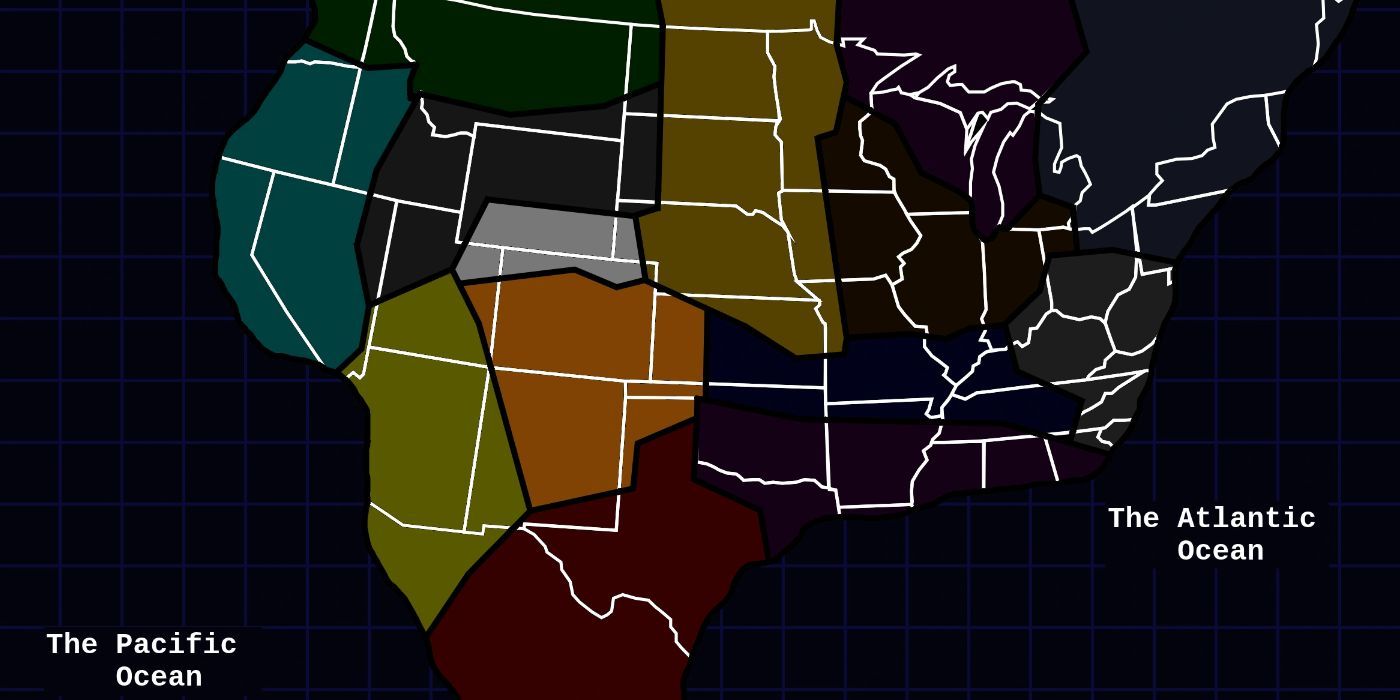
Following a string of environmental and natural disasters, a worldwide war erupted over dwindling resources. From the ashes of this conflict arose Panem, a new nation encompassing what was once Canada, the United States, and Mexico – though a massive flood wiped out much of the eastern coastline.
The name “Panem” comes from the Latin phrase “panem et circenses,” meaning “bread and circuses.” While the country may have borders, its extent isn’t fully known. The exact history of Panem is uncertain, but it arose after devastating wars led to the collapse of the old world.
For an unknown amount of time, Panem existed as a totalitarian dictatorship, with each of the thirteen Districts living in varying levels of poverty. The Districts each had a designated industry that provided resources to the Capitol, rarely getting to use those resources themselves. Naturally, this caused the Districts to turn against the Capitol in a period retroactively named “The Dark Days.”
The Dark Days Lasted for Three Years
“The Dark Days” was the first major revolt against the Capitol in Panem, leading to a civil war. The Capitol claims District 13, known for its nuclear technology, started the conflict. During this time, the Capitol also created Jabberjays – genetically engineered birds that could record and repeat human voices, intended for use as spies.
Panem, and especially the Capitol, faced a truly harsh period. With the Districts no longer supplying resources during the war, the Capitol experienced severe hardship, and some residents were driven to desperate measures, even cannibalism, to survive.
He was around six years old when the war started, and during that time, he saw terrible things and suffered greatly – experiences that ultimately shaped him into the cruel dictator he would become. His father, Xanthos, was a general who died fighting in District 12.
The war concluded only when leaders in the Capitol reached an agreement with District 13. District 13 agreed to secretly live in underground bunkers, preventing total destruction for both sides. Everyone believed District 13 had been completely wiped out, but in reality, it survived hidden for many years.
The period of conflict became known as “The Dark Days,” but that name is simply more propaganda from the Capitol. While it was a difficult time for people in the Capitol, the Districts actually experienced a level of hope and progress towards freedom they hadn’t seen in years.
The Hunger Games Began as a Punishment for the Districts (1 ADD – 9 ADD)

After the war ended, the Capitol created the Treaty of Treason, a set of laws meant to maintain peace. One particularly cruel law established the annual Hunger Games, a televised event where one boy and one girl, aged 12-18, were randomly chosen from each district and forced to fight each other to the death in a dangerous arena.
In Ballad of Songbirds and Snakes, the Hunger Games originated with Casca Highbottom and Coriolanus Snow’s father, Crassus Snow. The first nine Games were simple and short, with tributes immediately thrown into an open arena. Over time, the citizens of the Capitol became uninterested in the Games, so the Gamemakers started adding new elements to keep them entertained.
The 10th Hunger Games Changed Everything (10 ADD)
The 10th Hunger Games marked a significant shift for Panem. By this point, people in the Capitol were losing interest in the Games, and fewer and fewer were watching. To revive excitement, the Head Gamemaker, Dr. Volumnia Gaul, challenged students at the Capitol Academy to mentor the tributes and transform them into captivating performers for the Capitol audience.
Young Coriolanus Snow was a student when he became the mentor to Lucy Gray Baird, the unexpected competitor from District 12. While involved in the 10th Hunger Games, Snow pioneered betting and sponsorships, which would become the most popular part of the event. This was also the first Hunger Games to include interviews with the tributes before the competition, hosted by .
Lucy Gray Baird from District 12 is the victor of the 10th Hunger Games, but her win leads to trouble. Coriolanus Snow falls in love with her and bends the rules to help her survive. When his cheating is discovered, he’s punished by being sent to District 12 as a peacekeeper, where he and Lucy Gray have a relationship. Snow reveals his true colors by betraying a friend, Sejanus Plinth, to the Capitol for his involvement with a rebellion. This act allows Snow to return to the Capitol and inherit the Plinth family’s fortune.
The 11th – 24th Hunger Games Saw Rapid Evolution (11 ADD – 24 ADD)
The 10th Hunger Games were a huge hit, and the event quickly became more of a public show. The winner of the 11th Games was the first to participate in a Victory Tour after winning. Around this time, the arena changed from an indoor, colosseum-like space to an outdoor setting. Woof, from District 8, also won the Games during this period, though the specific year of his victory isn’t recorded.
Throughout the years of the Games, the arena itself became increasingly elaborate, with the Capitol creating a new and different environment each time. Few victors from this period are known, but it was a time when several key figures were born, including Beetee Latier. Meanwhile, Coriolanus Snow was attending university in the Capitol and beginning his political career, eventually becoming the leader of Panem after President Ravinstill.
The First Quarter Quell Revolutionized the Hunger Games (25 ADD)
The Treaty of Treason stipulated that every 25th Hunger Games would include a special change to the usual rules. The first such event happened during the 25th Games, and instead of randomly selecting tributes during the Reaping, each District held elections to choose who would compete.
Details about the First Quarter Quell are scarce, mainly focusing on its harsh premise. The winner and all those who lost were never publicly identified. However, this event introduced several lasting changes to the Hunger Games, most notably the Cornucopia. It was also when Dr. Volumnia Gaul first said the now-famous phrase, “May the odds be ever in your favor.”
The 26th – 49th Hunger Games Continued the Bloody Affair (26 ADD – 49 ADD)

For the next 24 years after the first Quarter Quell, the Hunger Games proceeded without major changes. Around this time, special training schools began appearing in Districts 1, 2, and 4. These schools prepared children for combat, with the intention of them volunteering as tributes – known as “Careers” – for the Games. Though initially meant to improve their chances of survival, these wealthier districts, located close to the Capitol, were heavily influenced by Capitol propaganda, leading them to view volunteering and winning as a great honor.
During this period in Panem’s history, several memorable victors rose to prominence. Beetee Latier from District 3 won the 34th Hunger Games by using his skills with electronics to defeat the other tributes. Wiress, also from District 3, won the Games in 49 ADD by cleverly avoiding conflict in an arena filled with mirrors, discovering a safe spot that others couldn’t reach. Seeder, Chaff, and Brutus were also victors during this time.
Around this time, several important figures were born. Alma Coin, who would later become President of District 13, entered the world. In District 12, Haymitch Abernathy, Maysilee and Merilee Donner, and Katniss and Primrose Everdeen’s parents, Burdock Everdeen and Asterid March, were also born. Meanwhile, Caesar Flickerman began his career as the host of the Hunger Games.
The Second Quarter Quell Is Explored in Sunrise on the Reaping (50 ADD)
The 50th Hunger Games was a special event called the Second Quarter Quell. Unlike usual, it involved twice as many tributes – two boys and two girls from each of the twelve districts, making a total of 48 participants. During the selection process in District 12, a small uprising occurred, and Haymitch Abernathy was unexpectedly chosen as a tribute. He traveled to the Capitol with three other tributes from his district: Maysilee Donner, Wyatt Callow, and Louella McCoy.
Before the Hunger Games began, Haymitch was contacted by a secret group of past winners – including Beetee, Wiress, and Mags – who were led by Plutarch Heavensbee, a future designer of the Games. They asked him to sabotage the arena during live broadcast as a way to rebel against the Capitol. Haymitch managed to damage the arena, but couldn’t completely destroy it. The Capitol then carefully edited the footage to hide what he’d done.
Although he defied the Capitol, Katniss returns to District 12 to find her home destroyed by fire, with her mother and brother inside. She believes President Snow deliberately caused this as a consequence for her behavior during the Games. Snow further demonstrates his power and cruelty by having Haymitch’s girlfriend, Lenore Dove, poisoned, and she dies in Haymitch’s arms.
The 51st – 73rd Games Continued as Usual (51 ADD – 73 ADD)
For the next 24 years, President Snow’s oppressive rule continued to intensify. During this time, Gale Hawthorne was born in District 12 around 55 or 56 years After the Dark Days (ADD), followed by Peeta Mellark a year or two later. Katniss Everdeen, the central character in the original Hunger Games series, was born on May 8th, 58 ADD, and her sister, Primrose, arrived in 62 ADD. Tragedy struck in 70 ADD when Katniss’s father, Burdock, died in a mining accident, leaving Katniss responsible for providing for her family.
During this period, we also see the rise of several well-known victors, including Finnick Odair, who won the 65th Hunger Games at the remarkably young age of 14, making him the youngest winner ever. Other victors from this time include Enobaria (62nd Hunger Games), Gloss and Cashmere (63rd and 64th, respectively), and Johanna Mason from District 7, who won the games the year after.
Katniss Everdeen Changes Everything in the 74th Hunger Games (74 ADD)
The story begins in the year 74 After the Darkness (ADD), with the 74th Hunger Games. Katniss Everdeen bravely takes her younger sister Prim’s place as a tribute. After being chosen, Katniss receives a gift from the mayor’s daughter, Madge Undersee, to help her in the Games. Entering the arena with Peeta, Katniss is advised by Haymitch to present a romantic connection with him to appeal to the viewers in the Capitol. The Gamemakers then use this developing ‘love story’ to their advantage, announcing that tributes from the same district can both win, leading Katniss and Peeta to work together.
It was strange playing the love story for everyone to see, especially since Peeta actually fell for it. Then, the Gamemakers dropped a bomb – only one of us could win. Peeta and I made a desperate decision and decided we’d rather both die than be forced to kill each other, so we grabbed the nightlock berries. Thankfully, they stopped us at the last second! They couldn’t have the Games without a victor, so they let us both win. Everyone in the Capitol thought it was a romantic gesture, but President Snow? He wasn’t fooled. He saw our actions as a challenge to his authority and made it clear he’d be watching me very closely from then on.
Read More
- Dazed and Confused Remains the Best R-Rated Comedy Of All Time
- Don Rosa: The Legendary Comic Book Writer America Shouldn’t Soon Forget
- Золото прогноз
- Mortal Kombat II Scores Fresh Rotten Tomatoes Score In Franhise First
- Прогноз криптовалюты RAIN: прогнозы цены RAIN
- Jason Statham’s $76M Action Remake Resurfaces as a Streaming Hit on Paramount+ 15 Years Later
- Top 5 Must-Watch Paramount+ Shows This Week: May 4–8, 2026
- Star Wars Needs Episode 10 More Than It Ever Needed Episode 7
- 27 Years Ago, Pokémon Snap Was a Non-Violent First-Person Shooter
- Smallville Made One of the Wildest Changes to Superman’s Powers
2026-05-13 04:14