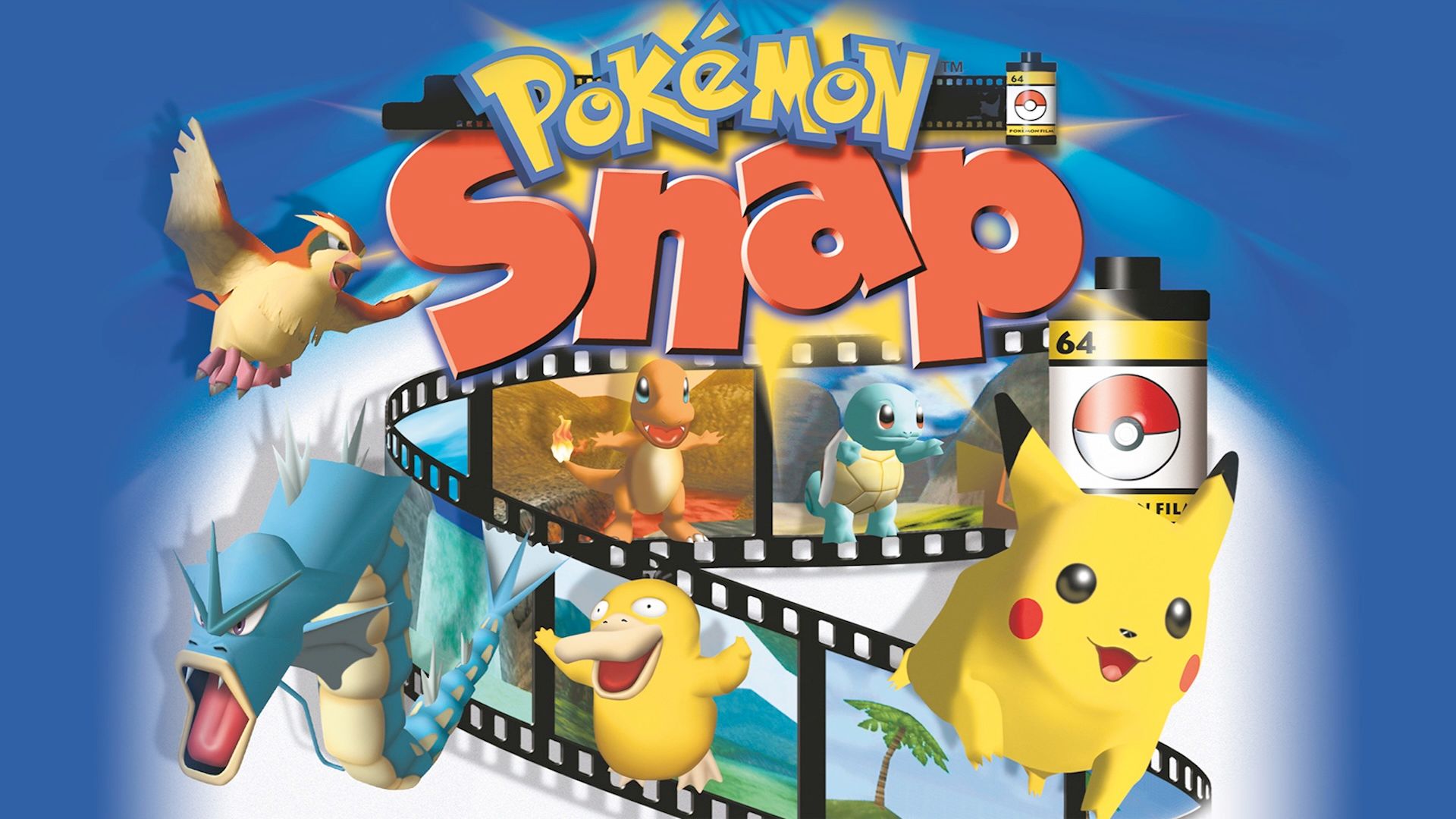
This franchise has expanded into almost every form of entertainment, but it started with and remains built around video games. While the main role-playing games are the most well-known, there’s always been a wider variety of games within the universe.
The Pokémon franchise has explored almost every type of game imaginable. From life simulators like Pokopia and puzzle games like Pokémon Puzzle Challenge, to even a surprisingly quirky game about brushing your teeth (Pokémon Smile), the series goes far beyond its core role-playing games. Interestingly, some of the most successful spin-off titles are those that take unexpected approaches, like first-person shooters.
The Original Nintendo 64 Game Wasn’t Even About Pokémon at First
In the mid-1990s, Nintendo began developing a game centered around photography. The initial idea was to leverage the capabilities of a specific system to save photos to disks, allowing players to easily transfer and print them. However, the project soon stalled as development wasn’t progressing well.
Around the same time, Pokémon began to gain popularity in Japan, starting with the original Red and Blue games for Game Boy and then the animated TV series. The development team initially envisioned Pokémon Snap for the Nintendo 64 as a photography game not specifically tied to Pokémon. However, they realized players needed a clear reason to take pictures, leading them to eventually focus the game on capturing images of Pokémon.
During the same interview, designer Masanobu Yamamoto admitted he was initially unsure about the changes being made to the game. He explained that he wasn’t thrilled with seeing characters that his team hadn’t created. However, he added that incorporating the world of Pokémon ultimately provided a clear path forward, and he grew to appreciate the franchise, believing it rescued the project.
The original concept was interesting, but it likely wouldn’t have succeeded without a well-known brand. Fortunately, the timing was right, and the idea was simple enough to work with. However, it wasn’t a simple process. Nintendo already had 3D models of the creatures from Pokémon Stadium, but these were too detailed for the new game. Showing multiple Pokémon on screen at once required more processing power, so the team had to create new, less detailed models.
Pokémon Snap Had a Complicated Pre-Release
The game, originally called Pokémon Snap, was first revealed at Nintendo’s Space World event in Japan in 1997. Nintendo planned to release it alongside the first Pokémon movie, Mewtwo Strikes Back, in 1998, but the development team hadn’t been informed of this timeline.
The game was delayed for a couple of reasons. Primarily, it wasn’t designed to work with a new accessory, so it needed to be released before that accessory launched. Additionally, problems with the 64DD platform contributed to the delay. Ultimately, the game was first released in Japan on March 21, 1999, for the original Nintendo 64, and then in North America on July 26th.
Pokémon Snap’s Non-Violent Take on First-Person Shooters Is Clever and Fun
At its core, the world of Pokémon involves conflict. The games primarily move forward through battles, but this isn’t typical violence. While Pokémon physically fight, it’s presented as a fantastical and magical experience – creatures using special moves against each other, rather than realistic violence like you’d see in shooting games. A first-person shooter feels out of place in Pokémon, but surprisingly, that’s essentially what Pokémon Snap is.
When you start the game, you’ll see a short introductory video starring Todd Snap, the photographer you play as – some may recognize him from appearances in other media. The video shows Todd trying to photograph the rare Pokémon Mew in the forest, but he isn’t able to get a clear shot. After that, the title screen appears, showcasing the game’s varied island setting with its rivers, beaches, and volcano.
The game begins similarly to other Pokémon titles, with a conversation with Professor Oak. He explains he’s researching Pokémon and needs photos to complete his report. He asks the player for help and provides the “ZERO-ONE Vehicle” – a versatile machine that automatically guides the player through levels along a set route, making it easier to gather the necessary photos.
Once the initial explanations are out of the way, the game starts with a tutorial led by Oak. The first task involves a Pidgey, and the player is told to “shoot” it – meaning to take a picture, not to use a weapon. The mechanic is the same though: line up the target and press the button at the right moment.
The player carefully travels along the path, photographing various subjects. Returning to Professor Oak’s lab, they review their pictures and choose the best ones to share. Oak then evaluates the photos, judging them on factors like the size of the subject, how well it fills the frame, and its pose.
The core of the game is simple: complete the main story. Beyond that, it’s a fun way for Pokémon fans to experience the creatures in 3D. It also cleverly brings first-person shooting to the Pokémon world, but keeps the gameplay nonviolent and family-friendly.
It Took Forever, but There’s Finally a New Pokémon Snap
The early Pokémon spin-off games were commercially successful in North America, each selling between 3 and 6 million copies. Pokémon Snap was one of the lower-selling titles, but it still performed better than most spin-offs released after 2000, only being surpassed by Pokémon Mystery Dungeon: Explorers of Time and Explorers of Darkness. Beyond sales figures, Snap holds a special place for many players due to its release on the N64. For a long time, it was unique within the Pokémon series, offering a gameplay experience unlike anything else and creating a memorable moment for fans.
More than two decades after the first game, a new version was released in 2021. This sequel keeps a similar feel, but instead of playing as Todd, he now assists you as a supporting character. It also features updated graphics, a much larger selection of Pokémon—234 compared to the original’s 63—and is generally a bigger and more expansive game.
While the original Pokémon Snap was a huge hit, selling over 3.6 million copies, the newer version hasn’t reached the same level of popularity, with around 2.4 million copies sold. However, New Pokémon Snap is a great treat for fans of the original, and it’s also a genuinely enjoyable game that adds a lot of charm to the Pokémon universe.
The Nintendo Switch family of consoles, and potentially the upcoming Switch 2 with its backwards compatibility, is becoming the perfect system for playing Pokémon games. A wide variety of titles are available, including core RPGs and remakes, action-packed Legends games, and the fighting game Pokkén Tournament DX. The Mystery Dungeon series has returned with Pokémon Mystery Dungeon: Rescue Team DX, and Detective Pikachu Returns offers a story-focused experience. Plus, the eShop features exclusive games like updated versions of FireRed and LeafGreen, the new battle simulator Pokémon Champions, and several smaller, enjoyable side games.
Finally, it’s worth mentioning the new game, which has the potential to be the most successful spin-off ever created. However, it builds upon the foundations laid by classic titles like the beloved original, Pokémon Snap.
Read More
- Биткойн падает после громких заявлений из Белого Дома о криптовалюте и Федеральной Резервной Системы, сохраняющей спокойствие.
- The True Story That Inspired Abbott Elementary’s Choice To Move The School Into A Mall
- Every Jack Ryan Movie, Ranked
- Inception Meets Lost In HBO’s 4-Part Sci-Fi Game Of Thrones Replacement
- James Gunn on What Makes DCU Unique & Different From Marvel
- Tom Hardy’s Venom Is Heading to Paramount+ (But There’s a Twist)
- Positive Technologies акции прогноз. Цена акций POSI
- Netflix’s Dark Rewrites The Rules Of Your Perceived Time
- Mark Wahlberg’s Boogie Nights is His Only True Masterpiece
- Star Trek II: The Wrath of Khan Is the Only True Masterpiece Movie In the Franchise
2026-05-06 18:13