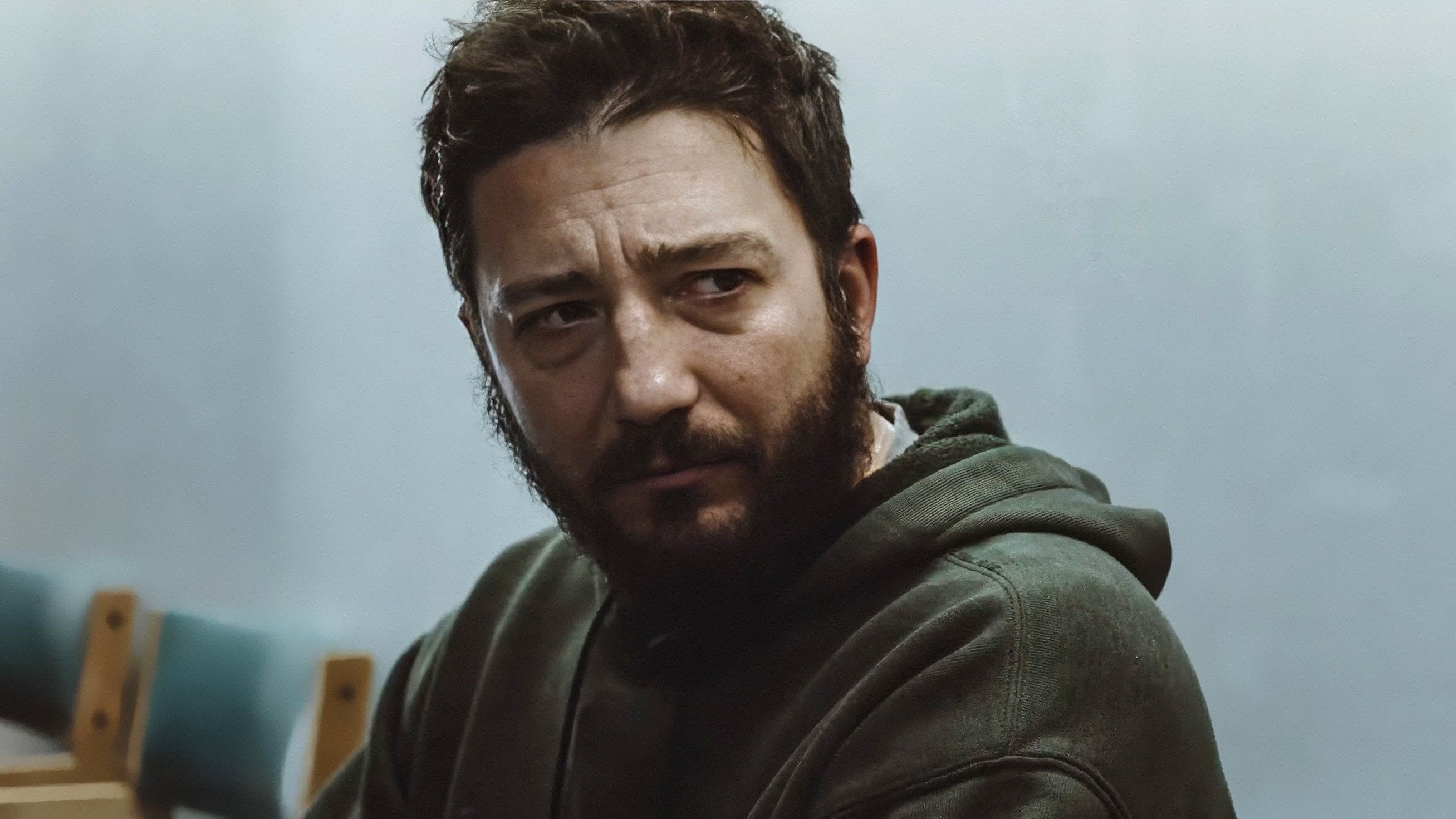
The story begins with a father gently but urgently waking his young daughter before dawn. He asks her to quickly gather a few important belongings, explaining that her brother is already waiting in the car. Both she and the audience are left wondering what’s going on, carefully noticing every detail. When a sheriff appears, the father seems worried, raising questions about potential trouble – is he in danger, or is he the threat? Surprisingly, the sheriff doesn’t seem concerned and allows them to continue loading the car. As they drive away, the daughter posts a notice on their front door.
The movie is intentionally structured to keep the audience in the dark, experiencing the story alongside the family. Like the children in the film, we’re unsure of their destination or the reasons behind their journey. Information is revealed gradually, only as things happen, though observant viewers might anticipate some events – the daughter, at least, seems to understand this move means leaving their home permanently. This approach is central to the director, Cole Webley, and writer Robert Machoian’s vision. Ultimately, the true meaning of Omaha isn’t fully understood until after the credits roll.
I won’t tell you the central idea of the movie, but it deliberately builds our emotional connection to the characters before revealing it. Initially, I found this approach very effective and touching. However, looking back, the way the film is presented actually diminishes the impact of everything we’ve been watching. Omaha is a movie you can’t quite experience the same way a second time, but it’s absolutely worth seeing once – especially for John Magaro’s performance, which is some of the most subtly powerful acting you’ll see all year.
Omaha Has The Most To Say About The Child-Parent Relationship In Times Of Crisis
We don’t know all the details, but Magaro’s father is going through a really tough time. His wife has died, some time ago, and he’s just lost his home. Now, everything he owns is packed into his car, along with his children, Ella and Charlie, and their dog, Max. Even the car is unreliable. Despite everything, he does have a plan and a place they’re headed – Nebraska – though he isn’t sharing much about why.
Magaro delivers a remarkably nuanced performance. Like the acting advice to show restraint rather than overt emotion, the father’s attempts to hide his pain from his children actually make us sympathize with him more. The camera often captures him in profile during his private moments, partially obscuring his distress. We mostly see his determined facade, and the subtle ways it breaks whenever he can’t shield his children from the truth.
Many viewers will likely see Omaha as a story about poverty, and it definitely touches on that – there are a few scenes where the father struggles to afford things as their money runs out. However, the film is even more insightful as a portrayal of forced maturity. Charlie, still very much a child, highlights the contrast with his older sister, Ella, who is beginning to understand the realities around her. The adults often don’t say what they’re thinking, especially their father, but Ella often figures it out anyway.

Wright portrays this increasing self-awareness with a painful honesty, which in turn inspires some of Magaro’s most compelling acting choices. His character, the father, is deeply conflicted by his daughter’s growth. He relies on her and appreciates her understanding, especially when she senses he’s reaching his limit. He often seems to be encouraging her to grow up quickly, even if unintentionally, because he needs her help and maturity as a single parent.
He’s deeply scared of this change, too. You can see the guilt on his face – any parent would want to protect their child’s innocence, and he feels responsible for not being able to. He realizes Ella is growing up and understanding the harsh realities of the world, and sometimes, that frightens him. While her ability to understand his feelings is a comfort, it also means she’s truly seeing him, beyond the idealized image every parent projects. He’s afraid she’ll uncover what he’s working so hard to keep hidden.
The emotional impact of these performances builds powerfully, and given everything that leads up to it, the scene is genuinely difficult to watch. Magaro and Wright deliver particularly strong performances, though perhaps not as much can be said for Omaha. The film’s ending is sure to be a major talking point, but I’ll remember it as a sensitive depiction of childhood strained by financial difficulties, and the awkwardness that arises when the relationship between a child and parent shifts before they’re both prepared.
Read More
- Золото прогноз
- Star Trek Permanently Ended the Borg Storyline
- Фунт обгонит доллар? Эксперты раскрыли неожиданный сценарий
- 10 Greatest Movies That Continue TV Shows
- НИТЕЛ акции прогноз. Цена акций NTZL
- 9 Best Western & Neo-Western Movies Released Since 2000
- Netflix’s New Psychological Thriller Unchosen Tops Global Streaming Charts
- DC’s ‘Clayface’ Can Redeem Sony’s $2.17 Billion Spider-Man Franchise
- Прогноз криптовалюты ATOM: прогнозы цены ATOM
- The Boys Race To Find V1 As Another Fight With Homelander Looms In Episode 4 Trailer
2026-04-30 15:18