Everyone says a story is judged by its ending, and that’s especially true for movies. The climax is the most exciting, pivotal moment – where everything comes to a head. It either makes the whole story feel worthwhile or leaves the audience feeling unsatisfied, ultimately creating a lasting impression that can be more powerful than anything that happened earlier.
Great movies carefully build towards a powerful climax, increasing the stakes and emotional intensity along the way. These climaxes aren’t just the highest point of the story—they feel both earned and exciting. Whether they’re full of action, visually breathtaking, or deeply moving, the most impactful climaxes are what we remember long after the movie ends.
Akira Builds Toward a Disturbing and Chaotic Final Explosion
Akira heavily influenced the look of modern cyberpunk, taking inspiration from both Ridley Scott’s Blade Runner and uniquely Japanese artistic styles that have become hallmarks of the genre. The film’s story becomes increasingly disturbing, combining body horror and psychological distress without offering a satisfying emotional resolution.
The film Akira doesn’t offer a traditional, relieving climax. Instead, the scene in Neo-Tokyo’s Olympic Stadium, where Tetsuo’s powers overwhelm him and he physically transforms, represents a complete breakdown of who he is. While Kaneda fights to save his friend, creating a strong emotional core, the tragic outcome remains the same. Ultimately, Akira delivers a complex warning about the dangers of unchecked power, the nature of evolution, and the limits of friendship.
Jaws Ends with an Iconic Triumph Over Relentless Terror
The movie builds suspense with a deliberately slow pace, largely because the editor, Verna Fields, kept the shark hidden for most of the film. The characters mostly just try to survive its attacks until a final confrontation where they venture out on a tiny boat, hopelessly outmatched by the danger.
Even after we see the shark in all its terrifying detail, Jaws keeps us on the edge of our seats, particularly when the creature starts actively hunting the men who are trying to kill it. The final battle on the sinking boat, the Orca, ends with Quint’s horrifying death, but Chief Brody steps up to protect his town from future attacks. Overcoming his initial fear of the ocean, he bravely destroys the shark, delivering one of the most memorable lines in movie history.
The Shawshank Redemption Concludes on a Note of Delightful Justice
Few movies are as widely loved as The Shawshank Redemption, a film that starts with a heartbreaking story but ends on a powerfully hopeful note. The movie follows Andy Dufresne, who is wrongly convicted of murdering his wife and her lover and spends almost thirty years in prison. While incarcerated, he builds a life for himself and depends on his friendships to navigate the pervasive corruption within the prison – a reflection of his unjust circumstances.
Dufrense’s escape isn’t just a surprising turn of events; it’s the powerful result of his incredible determination, years of careful planning, and unwavering patience. Learning that he’s been digging a tunnel the whole time completely changes how you see everything that happened before. What makes it even better is that the story doesn’t end with the escape – it continues with the warden being brought to justice, Andy finally reaching Mexico, and Red eventually joining him there.
Planet of the Apes Delivers a Devastatingly Twisted Climax
No blockbuster franchise has surpassed the original Planet of the Apes, where astronauts crash-land on a seemingly alien world inhabited by intelligent apes. Only one astronaut, George Taylor, played by Charlton Heston, makes it through the initial conflicts, offering a human viewpoint in a brutal and savage environment. Taylor constantly attempts to show the apes that humans are inherently good, and the audience is drawn into believing alongside him.
There’s a surprising feeling of hope throughout Planet of the Apes—viewers root for Taylor and maybe even imagine humans rebuilding in this new world. However, history suggests that’s unlikely, and the film intentionally leads to that realization. The ending powerfully shows that human salvation isn’t possible. Taylor tragically realizes his own people are to blame for the destruction, a scene that resonates deeply with current events.
Parasite Unravels in a Brutal Clash of Class and Rage
Bong Joon-ho has been creating subtly challenging films for years, including acclaimed works like Memories of Murder and The Host. However, it was Parasite that truly brought his talent to international attention, earning him both Best Picture and Best Director Oscars. Parasite is known for a dramatic turning point midway through, completely changing the story and making it difficult to clearly define who the real ‘parasite’ is.
However, the film’s powerful ending at the garden party is even more impactful. It sharply contrasts joyful celebration with sudden violence. The movie suggests that the wealthy family are the real parasites, exemplified by the father’s heartless request of a father whose daughter is gravely ill. The climax isn’t driven by anger or a desire for revenge, but by the casual disregard this wealthy father shows for someone less fortunate – a contempt that the audience realizes has been present throughout the entire film.
Star Wars: The Empire Strikes Back Drops a Galaxy-Shattering Twist
Star Wars revolutionized filmmaking and how people experience movies, launching a lasting era of epic space adventures. Though fans disagree about the newer trilogies, the original films remain incredibly popular. Each movie has a powerful ending, but the climax of The Empire Strikes Back is particularly shocking – especially for first-time viewers.
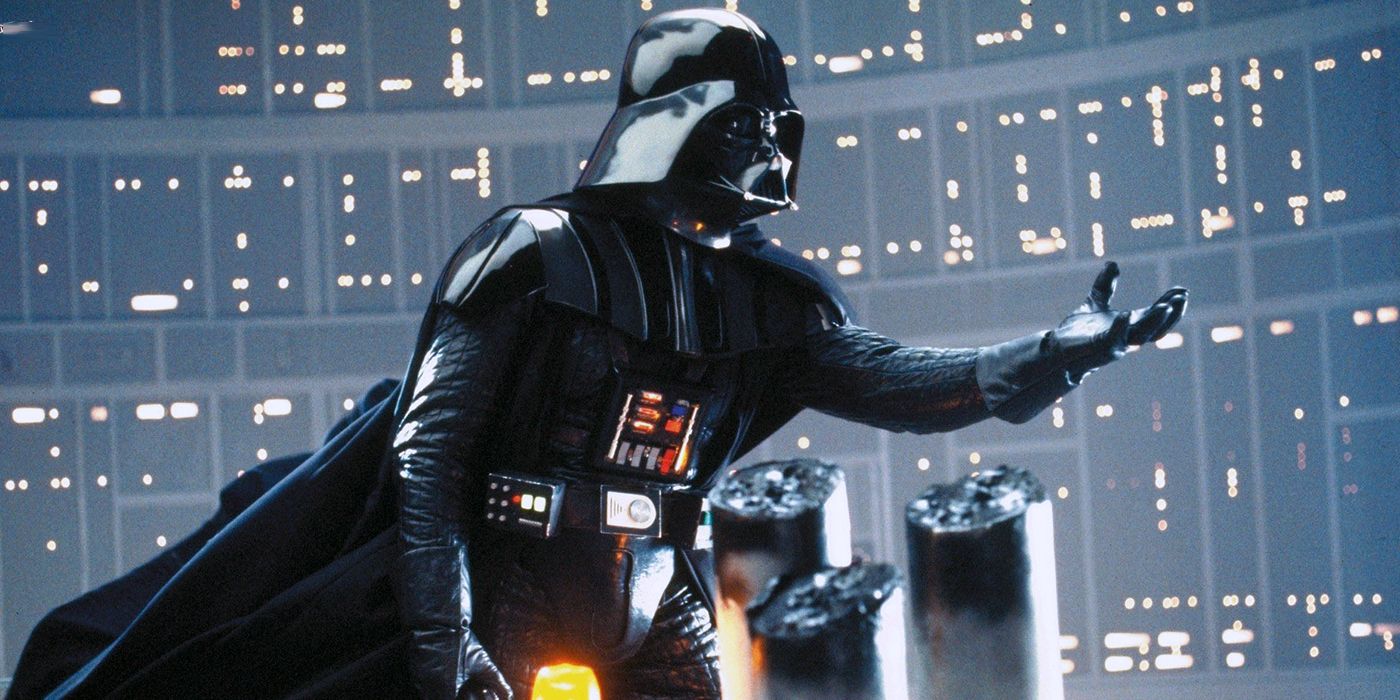
The ending of The Empire Strikes Back completely changed what audiences expected from big-budget films, choosing emotional impact and a complicated story over a neat and tidy resolution. Luke Skywalker’s fight with Darth Vader in Cloud City isn’t a typical victory – Vader crushes Luke’s spirit with his power before revealing a shocking truth that sparked countless fan theories. The revelation that Vader is Luke’s father was a clever twist on the classic story of Oedipus Rex, making an ancient tragedy relatable and deeply moving for a modern audience.
Sunset Boulevard Distorts Reality in a Haunting Psychological Breakdown
Billy Wilder’s film looks back at the beginning of Hollywood’s silent movie era as if it were a distant, unimportant past – specifically, as seen from the 1950s. The film centers on Norma Desmond, a former silent film star, who desperately tries to stay relevant as the movie industry evolves. Once celebrated, she’s now discarded by the same system that built her career, a situation that eerily foreshadowed the critical discussions about Hollywood that would emerge years later.
The film Sunset Boulevard ends on a deeply unsettling note, with Gloria Swanson delivering a performance that brilliantly blurs the line between what’s real and what’s acted. What’s truly disturbing is that no one tries to break through to Desmond and tell her the truth; instead, everyone around her seems to enable her delusions. The film leans into its self-aware nature, even turning a tragic crime scene into a movie set. In a twisted way, Hollywood itself joins in Desmond’s fantasy, transforming her final breakdown into a performance that will forever preserve her imagined reality.
The Good, the Bad, and the Ugly Stretches Tension to Breaking Point
The third film in the series, The Good, the Bad, and the Ugly, powerfully wrapped up the story of Clint Eastwood’s iconic Man with No Name, also known as Blondie. His journey across the vast landscapes of the American Southwest feels like a dark take on the classic hero’s path. In the film’s unforgettable finale, Ennio Morricone’s soaring score, “The Ecstasy of Gold,” builds to a climax as the character known as “the Ugly” frantically searches a graveyard for his hidden treasure.
This scene is a standout moment in film, and crucially, it builds towards the movie’s thrilling finale. Instead of a straightforward gunfight, it’s a visually stunning sequence. The shifting camera angles – from close-ups to wide shots – create tension and uncertainty, even though we know good will ultimately prevail. The extended pause before the shooting begins makes the situation feel incredibly tense and realistic, culminating in a truly satisfying resolution.
Fight Club’s Ending Came with Both a Bang and a Whimper
As a huge film buff, I’ve always been fascinated by Fight Club. It’s strange to think it unintentionally resonated with some really problematic groups, but for me, the movie is still powerfully feminist. Even though Marla Singer doesn’t get as much screen time as the guys, she’s the one who keeps things real. She sees right through the Narrator’s posturing and completely rejects Tyler Durden’s whole destructive game. She’s the anchor that prevents the film from totally spiraling, and that feels incredibly empowering.
The movie Fight Club starts with the main character realizing everything that happens – the violence, the plans for revolution – is connected to a woman named Marla Singer. The film ends with Marla and the Narrator holding hands while watching buildings collapse, symbolizing a larger breakdown. Careful viewers have also noticed visual similarities between the two characters, suggesting a deeper, hidden connection within the film’s intricate story.
Everything Everywhere All at Once Embraces Love Across Infinite Possibilities
The film Everything Everywhere All at Once powerfully demonstrates that cinema is still capable of innovation, moving beyond repetitive blockbusters and sequels to achieve true artistic expression. The movie’s stunning visuals are made even better by Michelle Yeoh’s performance as Evelyn Wang, a woman who deeply wants to rebuild relationships with her family. Her extraordinary adventure starts as a way to escape the everyday pressures of life, but ultimately reveals a profound and simple truth.
What begins as a spectacular, reality-bending martial arts adventure ultimately becomes a deeply moving story about a mother and daughter. After experiencing countless universes, Evelyn realizes she doesn’t need to fight her daughter, Joy, but simply to understand her. The bleakness of Joy’s destructive creation is overcome with loving acceptance, and Evelyn’s belief in rebuilding their relationship is the real triumph. Add to that the breathtaking visuals of the ending, and Everything Everywhere All at Once easily ranks among the greatest films ever made.
Found an error? Send it so it can be corrected.
Read More
- Золото прогноз
- Фунт обгонит доллар? Эксперты раскрыли неожиданный сценарий
- Биткойн падает после громких заявлений из Белого Дома о криптовалюте и Федеральной Резервной Системы, сохраняющей спокойствие.
- The True Story That Inspired Abbott Elementary’s Choice To Move The School Into A Mall
- НИТЕЛ акции прогноз. Цена акций NTZL
- 5 Perfect American Sitcoms
- 10 Savage Hermione Moments the Harry Potter Movies Skipped That Need to Be in the Reboot
- Star Trek Permanently Ended the Borg Storyline
- Henry Cavill’s Sherlock Holmes Returns In New Images For Netflix’s Hit 3-Part Mystery Franchise
- John Wick-Style WWII Action Thriller Sisu Takes Netflix by Storm
2026-05-03 19:14