In 1989, Star Trek: The Next Generation, created by Gene Roddenberry and starring Patrick Stewart as Captain Jean-Luc Picard, revitalized science fiction television. The show, famous for introducing compelling villains like the Borg and Q, quickly became a fan favorite and is still considered one of the greatest sci-fi series ever made. While it’s exceptionally well-regarded, a few other shows might be considered marginally better.
While Star Trek: The Next Generation remains a high point for science fiction drama, other shows have also achieved success by exploring unique approaches to the genre. From self-contained weekly stories to impressively scary horror series, some of these programs are considered just as good, if not better. Ultimately, it depends on personal preference, but certain shows have earned their place among the best by offering something truly different to fans.
Battlestar Galactica is the Gold-Standard of TV Reboots
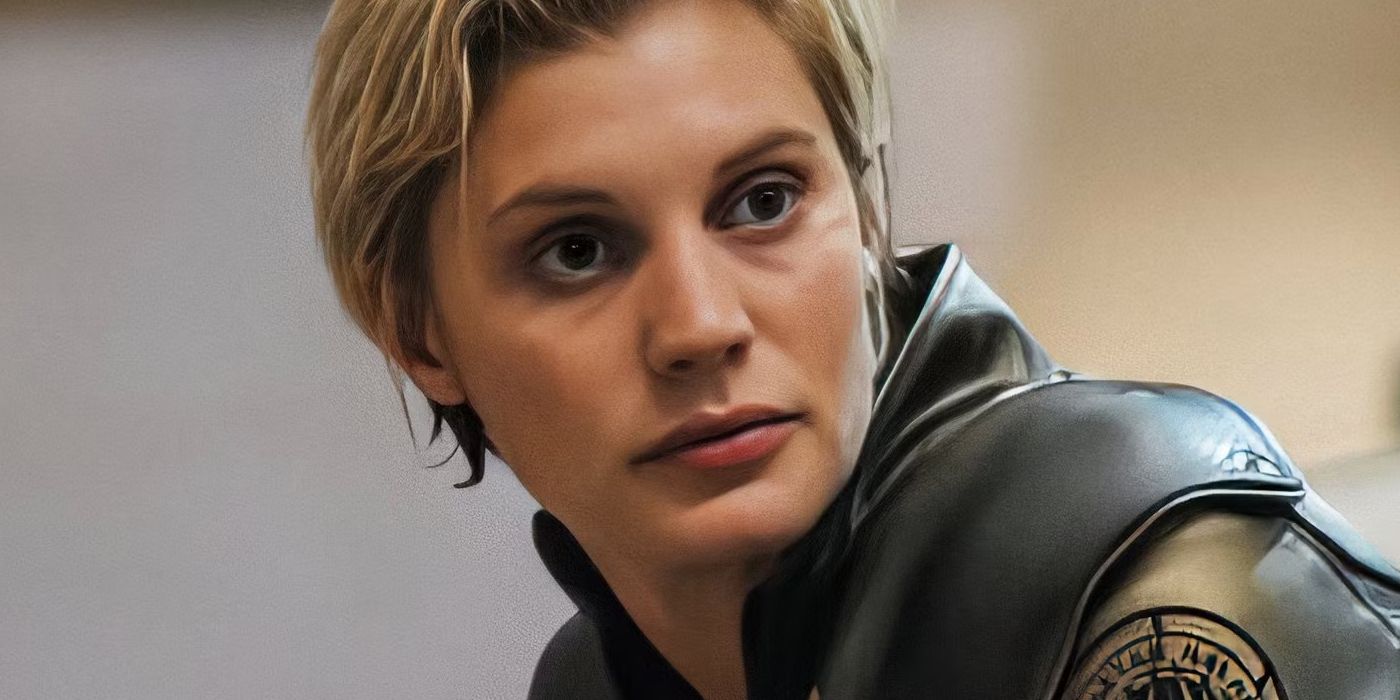
Okay, so Battlestar Galactica? It’s a seriously gripping sci-fi show. Basically, it’s set way, way in the future, and humanity is scattered all over the galaxy. The story kicks off with the last few humans on the run, desperately trying to find the legendary planet Earth. They’re being relentlessly chased by these terrifying robots called Cylons who want to finish them off completely. The whole crew is led by President Roslin and Commander Adama, and their ship, the Galactica, is pretty much all that’s left of the human fleet. It’s a real nail-biter!
This series explores the history of the war between humans and Cylons, following a dangerous voyage through space. While it shares some similarities with Star Trek, it presents a grimmer, more grounded take on space adventures, focusing on the realistic challenges facing humanity.
Widely considered one of the best TV reboots ever, this show set a new standard for its genre as the 21st century began. It uses a dark, futuristic setting to examine difficult decisions our society might face. Similar to The Next Generation, it balances compelling character stories with thought-provoking questions about humanity’s future.
Stranger Things is a Modern Cultural Sensation
First appearing in 2016, the show Stranger Things is set in the 1980s. The story begins in the small town of Hawkins, Indiana, when a boy named Will Byers mysteriously disappears.
After a young girl named Eleven flees a secret government facility, she arrives in Hawkins. Meanwhile, Will’s friends and the local sheriff are desperately searching for him. They soon discover a dangerous alternate dimension called the Upside Down, and realize it holds the key to Will’s disappearance and is filled with frightening creatures.
Inspired by classic ’80s adventure and small-town mysteries, Stranger Things has become a hit with science fiction fans, and it’s easy to see why. While Star Trek traditionally delivered sci-fi in shorter, connected episodes, Stranger Things feels more like a movie, and that makes a big difference.
Severance is a Unique Take on Dystopic Science Fiction
The show Severance is set in a reality where a special process, also called ‘severance,’ splits people’s minds into two distinct identities. One personality exists solely at work, with no memory of their outside life, while the other lives their personal life completely unaware of what they do for a living.
Mark runs into his friend Petey, who reveals he’s managed to undo the severance procedure. As Mark and his colleagues at Lumon Industries grapple with the strange and unsettling realities of their work – including coworkers vanishing and being unable to leave – the show Severance has quickly become one of the most acclaimed original series of the 2020s.
The show’s success is largely due to its fresh approach to the dystopian genre. It expertly blends dark comedy with intelligent science fiction, turning the relatable anxieties of the modern workplace into a thrilling and captivating story.
Dark is a Grim Sci-Fi Mystery Masterpiece
The series Dark is set in the small German town of Winden. When a child goes missing, a network of caves with the power to travel through time is revealed. The show follows Jonas Kahnwald across different points in his life, and explores how he’s linked to other families from various time periods.
The show gradually reveals the stories of all the families impacted by the strange events unfolding, leading up to a potential apocalypse. Many consider Dark to be Netflix’s best original series, blending a complex, mysterious plot with supernatural elements, and building on the popularity of similar shows from the 2010s.
This science fiction story is incredibly unsettling and thought-provoking, designed to leave viewers feeling scared, disturbed, and confused throughout. Unlike some episodic shows like The Next Generation, each episode builds towards a larger conclusion, making it perfect for watching all at once.
Andor Raised the Bar For Disney Star Wars
The show Andor takes place in the world of Star Wars and follows Cassian Andor’s journey from being a loner to becoming a key figure in the Rebel Alliance.
While the Empire’s secret police pursue growing rebel groups, he journeys across planets fighting back. Meanwhile, leaders like Mon Mothma are working to officially unite the opposition, facing constant distrust and treachery as they try to break free from the Emperor’s control.
Unlike The Next Generation, which often explored philosophical ideas, Andor delivers a grittier, more realistic take on science fiction, drawing inspiration from 1970s dystopian thrillers and spy stories. It delves into the moral gray areas of the Star Wars universe, making it the most mature and complex installment in the franchise to date.
The Expanse is a Stunning Cosmic Mystery Series
The sci-fi series The Expanse is set in the future after humans have colonized the solar system. This has led to the formation of three main groups: the United Nations of Earth and Luna, the independent Martian Congressional Republic, and the Outer Planet Alliance – a collective of colonies located in the asteroid belt and known as the ‘Belters’.
When a rich woman is kidnapped and believed to be taken to the asteroid belt, two detectives are assigned to find her, all while a diplomat attempts to ease conflict between space colonies. The Expanse is a remarkably ambitious and well-made series, and that quality shines through in every installment.
If you appreciate detailed and immersive worldbuilding, this series surpasses even Star Trek in its scope. It delves into everything from futuristic political systems to the consequences of establishing colonies in space.
The X-Files Dominated the 1990s of Science Fiction
The TV show The X-Files starts by introducing us to two FBI agents who are complete opposites. Fox Mulder is convinced that the paranormal exists and is driven to find out what happened to his sister, who he believes was abducted by aliens. Dana Scully, on the other hand, is a scientist who uses logic and evidence to question Mulder’s beliefs.
As Scully and Mulder investigate strange occurrences across the country, Scully’s initial skepticism begins to waver when they encounter aliens, uncover government secrets, and confront terrifying creatures. Ultimately, whether fans prefer The X-Files or The Next Generation comes down to personal preference – one emphasizes philosophical questions, while the other centers on thrilling conspiracies.
Both shows follow a similar pattern, mixing storytelling arcs that develop the world with more self-contained adventures. If you enjoy cryptids, urban legends, and a bit of horror mixed into your science fiction, you’ll likely enjoy The X-Files.
The Twilight Zone Perfected Anthology Television
The popular science fiction trend of the 1950s saw the emergence of The Twilight Zone. The show was created by Rod Serling, who collaborated with many other writers from that era.
Every episode of this show presents a unique concept, frequently shifting between genres like dystopian futures, Westerns, and war stories. Highly influential, it paved the way for popular franchises such as Terminator and continues to resonate today. While many other science fiction series are excellent, none have matched the enduring influence of Serling’s groundbreaking anthology.
Found an error? Send it so it can be corrected.
Read More
- Золото прогноз
- 5 Perfect American Sitcoms
- 10 Savage Hermione Moments the Harry Potter Movies Skipped That Need to Be in the Reboot
- Биткойн падает после громких заявлений из Белого Дома о криптовалюте и Федеральной Резервной Системы, сохраняющей спокойствие.
- Фунт обгонит доллар? Эксперты раскрыли неожиданный сценарий
- НИТЕЛ акции прогноз. Цена акций NTZL
- The True Story That Inspired Abbott Elementary’s Choice To Move The School Into A Mall
- Kin Is Charlie Cox’s Best TV Role
- Прогноз криптовалюты QNT: прогнозы цены QNT
- Star Trek Permanently Ended the Borg Storyline
2026-05-03 19:39