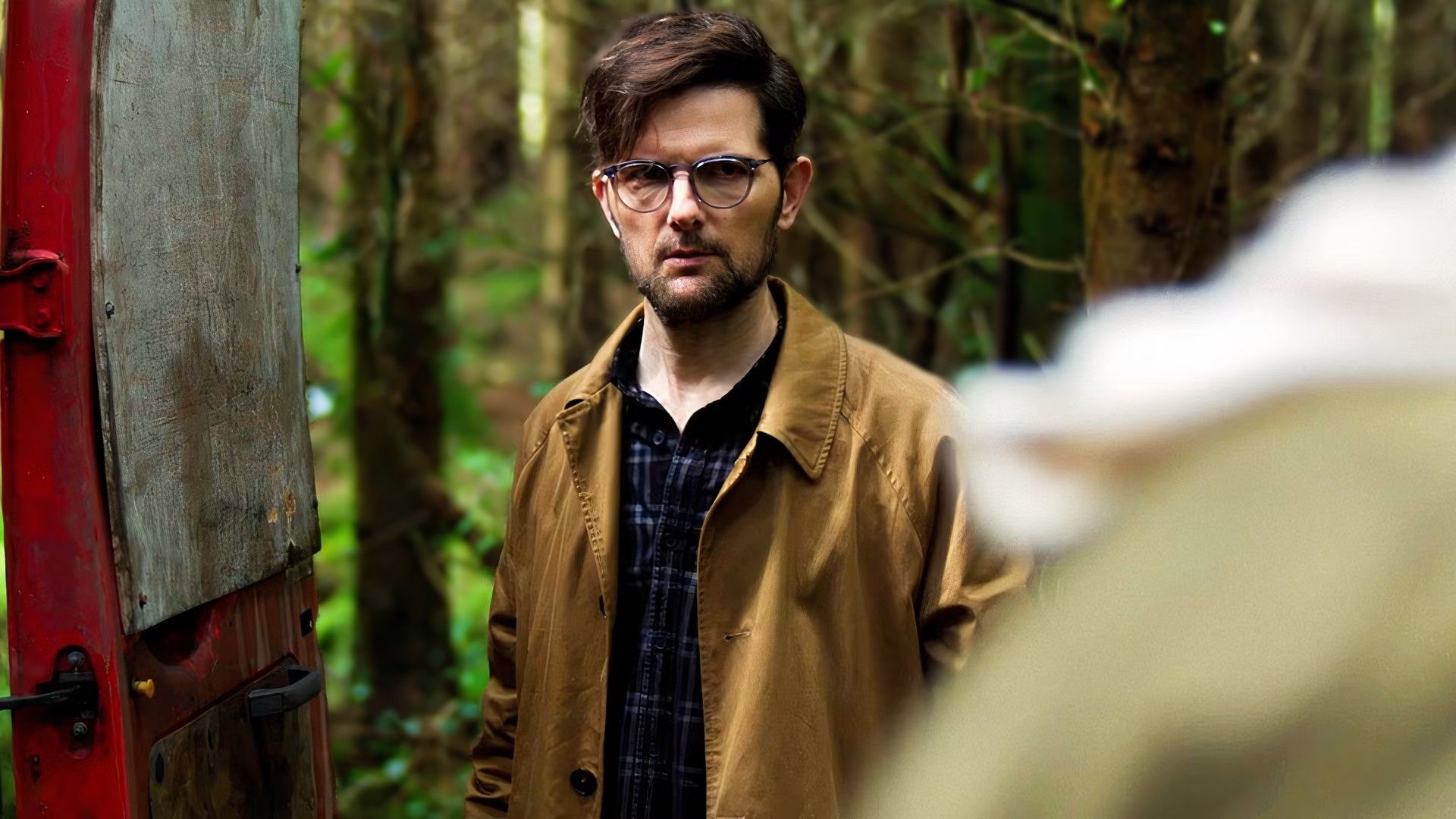
Be warned: this article reveals key plot details about the movie Hokum. While Hokum isn’t a purely cheerful horror film, the director shares that the original ending was intended to be even more bleak.
I just heard about Damian McCarthy’s new film, Hokum – he also directed Oddity earlier this year. It stars Adam Scott as a horror writer named Ohm Bauman, and the story is about him going to a spooky hotel in Ireland to spread his parents’ ashes. Apparently, the hotel is rumored to be haunted by a witch! Peter Coonan, David Wilmot, Will O’Connell, and Florence Ordesh are also in it, which makes me even more excited to see it.
In a recent interview with Inverse, director McCarthy shared that the original script of Hokum had a much darker fate for the main character, Ohm. He was originally meant to remain trapped in the basement dumbwaiter and never escape before being caught by the witch. McCarthy explained this contrasts with the more optimistic endings found in Ohm’s novels, and provided further details in a quote.
Originally, the character was supposed to die. The script had him not surviving the scene in the basement. But it felt too depressing, and I worried audiences wouldn’t enjoy it or want to watch it again.
The story begins with the idea that finding a skull would represent hope. When a ram’s skull appears in the desert, it suggests that Ohm’s experiences at the hotel have deeply affected him.
Currently, Hokum is a rather somber movie. The film quickly reveals that Ohm’s parents have passed away, and he’s traveling to scatter their ashes. His sadness is clear, particularly in how harshly he treats kind characters like Alby and Fiona.
The situation becomes even more intense when Ohm tries to take his own life at the hotel. While he survives, he isn’t the only character struggling with inner turmoil or facing a tragic outcome in the movie.
One of the most disturbing parts of the movie is learning the truth about Ohm’s mother’s death. He had always said she was killed by a stray bullet while coming home from work, but it’s revealed that he accidentally shot and killed her when he was a child, while playing with his father’s gun. This shocking twist powerfully emphasizes the film’s themes of guilt and regret, deepening the overall sense of sadness.
One intriguing aspect of the altered ending in McCarthy’s work is how it reflects Ohm’s personal journey throughout the film. When he first arrives at the hotel, Ohm is a pessimist determined to conclude his book series with tragic endings for both the Conquistador and the young boy, leaving them to die in the desert.
Fiona tells Ohm she has no interest in reading that book—it might even be a hopeful addition to the story written by the author himself. Instead of focusing solely on the sadness and devastation caused by loss and a terrible error, the ending of Hokum shifts the narrative to become a story about a man finding hope.
Ohm is growing and learning from his difficult experiences, including the events of Hokum, and is striving to become a better person.
Read More
- Золото прогноз
- Биткойн падает после громких заявлений из Белого Дома о криптовалюте и Федеральной Резервной Системы, сохраняющей спокойствие.
- 5 Perfect American Sitcoms
- Фунт обгонит доллар? Эксперты раскрыли неожиданный сценарий
- НИТЕЛ акции прогноз. Цена акций NTZL
- 10 Savage Hermione Moments the Harry Potter Movies Skipped That Need to Be in the Reboot
- The True Story That Inspired Abbott Elementary’s Choice To Move The School Into A Mall
- John Wick-Style WWII Action Thriller Sisu Takes Netflix by Storm
- Doctor Strange Has the MCU’s Most Unique Movie Ending
- The Last Of Us Creator & Star’s New Mystery Movie Debuts To Stellar Rotten Tomatoes Score
2026-05-03 17:18