Early color films like The Wizard of Oz, The World, the Flesh and the Devil, and Becky Sharp led the way in bringing color to the big screen, but black and white filmmaking is still very much alive today. In fact, many recent, highly-regarded films have intentionally used black and white not as a limitation, but as a striking artistic choice, resulting in some fantastic modern black and white movies.
Shooting in black and white often encourages filmmakers to pay closer attention to details like lighting, visual texture, storytelling, and character development. Because everything is so visible in black and white, directors and actors often deliver exceptional performances when working with these limitations. This focus has resulted in some truly stunning and memorable films over the past twenty years.
Frances Ha Put Greta Gerwig On the Map
In 2012, filmmaking partners Noah Baumbach and Greta Gerwig collaborated on Frances Ha, a film about a dancer whose life becomes unstable just as her best friend, Sophie (Mickey Sumner), begins to thrive. Shot in black and white and set in both New York City and Paris, the film’s visuals evoke the charm and wistfulness of the French New Wave cinema, beautifully enhancing its realistic story of growing up.
Director and co-writer Baumbach filmed Frances Ha in black and white to capture the hopeful, yet chaotic, nature of Frances’ life, giving it a documentary-like feel. This choice creates a sense of closeness as we watch her navigate big changes. The film uses techniques like shaky camera work, quick cuts, and lively scenes to evoke the energy of classic black and white films, blending vintage style with a modern look. This makes even everyday struggles feel grand and visually striking.
Passing Is One of the Greatest Literary Adaptations
Unlike many modern filmmakers who use black and white for artistic effect, Rebecca Hall uses it to emphasize the story’s themes in her 2021 film, Passing. The movie, based on Nella Larsen’s 1929 novel, follows Reenie (Tessa Thompson) and Clare (Ruth Negga), two childhood friends, in 1920s New York. Clare can ‘pass’ as white, and this adds significant weight to the film’s exploration of identity and race, which is beautifully enhanced by the black and white cinematography.
The film Passing uses striking black and white cinematography to reflect the complex themes of identity, lies, and racial tensions of the era. Cinematographer Eduard Grau expertly plays with light and darkness, highlighting or obscuring features to show how easily Clare can fit in, while emphasizing Reenie’s difficulty doing the same. Unlike Frances Ha, which feels open and energetic, Passing uses a restrictive, boxed-in visual style to create a sense of confinement, making its themes even more powerful and thought-provoking.
Sin City Features An All-Star Ensemble Cast
While films like Frances Ha and Passing use black and white for a realistic feel, the 2005 film Sin City does something different: it recreates the look of Frank Miller’s graphic novels. Directors Frank Miller and Robert Rodriguez used a special technique to film mostly in black and white, but kept certain elements in color. This makes Sin City look strikingly unique and gives it the exaggerated, detailed textures of a comic book.
While films like Frances Ha and Passing use black and white to feel more realistic, Sin City deliberately uses a highly stylized black and white with bursts of strong color. This choice isn’t about realism; it’s about expression – highlighting characters’ personalities, their choices, and important details. By stripping away most colors, the filmmakers focused on the core themes of the story – sin, staying alive, and revenge – and stayed true to the gritty, original comic books.
Mank Sees David Fincher Pay Homage to 1940s Movies
The 2020 film Mank is a biographical drama telling the story of screenwriter Herman J. Mankiewicz (played by Gary Oldman) and how he helped create Orson Welles’ Citizen Kane. The film notably uses black and white cinematography to achieve a heightened sense of realism. Director David Fincher, working from a script written by his father, Jack, employs this visual style not for the indie feel of films like Frances Ha, the stylistic choices in Passing, or the gritty look of Sin City, but to add significant layers of meaning and depth to the story.
I was absolutely captivated by how visually stunning Mank was. David Fincher shot it in black and white using his favorite RED cameras, but it was so much more than just a color choice. It felt like a genuine love letter to 1940s Hollywood, and the cinematographer, Erik Messerschmidt, really nailed the aesthetic. They didn’t just make it look old; they painstakingly recreated the imperfections of the era – everything from the special effects to the sound – going above and beyond simply filming in black and white. It was a truly immersive experience.
The Lighthouse Defies Genre Categorization
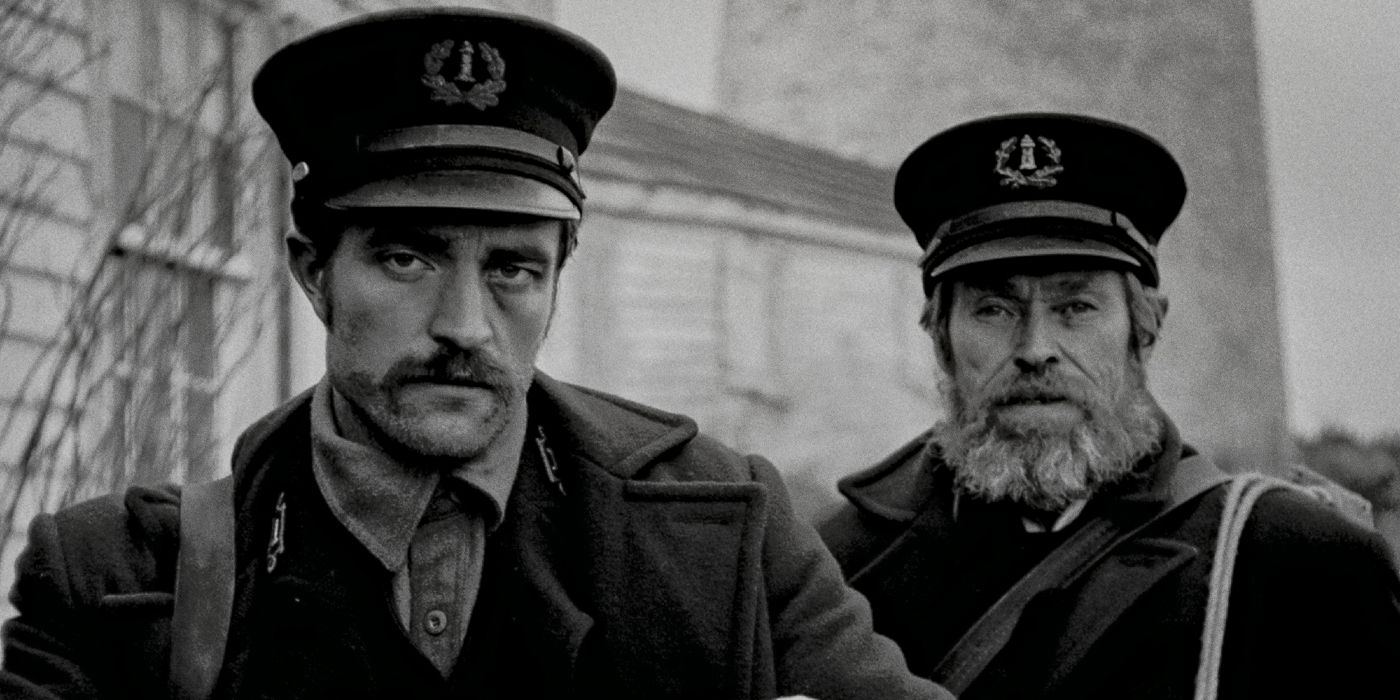
The 2019 film The Lighthouse, featuring actors stranded during a fierce storm, visually draws on the style of late 19th-century New England photography, French seafaring films from the 1930s, and symbolist art. Filmed in black and white, it emphasizes the characters’ growing insanity – both Robert Pattinson’s Ephraim Winslow (who also goes by Thomas Howard) and Willem Dafoe’s Thomas Wake – and heightens the feeling of being trapped, as well as the storm’s strange and powerful presence.
I was absolutely captivated by the way The Lighthouse was filmed. It wasn’t just a modern film made to look old – they actually shot it with lenses from the 1930s and filters that mimicked the feel of film from the early 1900s. It felt truly authentic, unlike some period pieces that use color and then drain it, like Frances Ha or Sin City. And while Mank had a grand, sweeping visual style, The Lighthouse felt deliberately claustrophobic and isolating – it really pulled you in and made you feel trapped alongside the characters. It wasn’t aiming for the warm, accurate look of something like Passing either; the black and white felt stark and unsettling, and it worked perfectly.
The Artist’s Black & White Style Perfectly Mirrors Its Story
Unlike many films that simply pay homage to the silent movie era of the 1920s and ’30s, The Artist fully recreates that experience. Released in 2011, this French film directed by Michel Hazanavicius tells the story of George Valentin (Jean Dujardin), a popular silent film star, and Peppy Miller (Bérénice Bejo), a rising actress, in Hollywood between 1927 and 1932. Their relationship unfolds as silent films begin to be replaced by ‘talkies’.
With its dedication to a classic style, The Artist isn’t just filmed in black and white—it’s a true silent movie. While films like Frances Ha, Passing, and Mank use black and white to create a certain look or feel, The Artist fully commits to the limitations of that format as a way to tell its story. This unique style, and its clear nods to early cinema, earned the film widespread praise and five Academy Awards. As a result, The Artist holds a significant place in film history.
C’mon C’mon Is a Critically-Acclaimed A24 Drama
I was really struck by the visual choices in C’mon C’mon. Unlike films like Mank, The Lighthouse, and Sin City which use black and white to fit a certain style, C’mon C’mon feels like it needed to be in black and white. It wasn’t about genre, but about stripping everything back to focus on the incredibly real and moving story. The film, from 2021 and directed by Mike Mills, follows a radio journalist, Johnny, and his young nephew, Jesse, as they travel across the country. It’s a beautiful and deeply touching film, and watching their relationship unfold, and seeing how they learn from each other, was just wonderful.
Director Wes Anderson has described wanting his film C’mon C’mon to feel like a simple drawing, not a detailed painting, emphasizing its raw, personal, and tender qualities. He chose black and white to draw viewers’ attention to the characters, their conversations, and their inner lives, as well as how they connect with one another. By removing color, the film achieves a powerful focus on human relationships and feels remarkably like a genuine documentary.
A Girl Walks Home Alone at Night Is Inspired By Spaghetti Westerns
Several recent black and white films are worthy of praise, particularly for their ability to surprise viewers. A Girl Walks Home Alone at Night draws inspiration from classic spaghetti Westerns and tells the story of Arash, a young man whose life takes an unexpected turn when he meets a solitary, vampire-like woman. The film’s striking black and white visuals aren’t just stylistic; they reimagine a typically threatening environment as a space where women are powerful.
The film’s title suggests a story about a helpless young woman, but it quickly becomes clear she’s the one in control. This unexpected twist is reinforced by the movie’s striking black-and-white visuals, which go against typical filmmaking conventions. Though filmed in California, A Girl Walks Home Alone at Night is presented entirely in black and white and in the Farsi language, making it a truly original vampire horror film and a standout example of contemporary black and white cinema.
Roma Is a Black & White Academy Award Winner
Roma, a 2018 film set in Mexico City, is considered a modern masterpiece. Shot in stunning black and white, it tells the story of a Mixteca housekeeper working for a wealthy family. Its realistic approach, combined with innovative sound and visuals, creates a deeply moving and unforgettable experience, and many consider it one of the best films of the 21st century.
Alfonso Cuarón’s Roma is visually stunning, using grand, flowing camera movements and a classic film format to create a uniquely immersive experience. This contrasts with the intensely confined atmosphere of The Lighthouse and the nuanced racial themes of Passing. While the film depicts real historical violence, like the Corpus Christi massacre of 1971, it does so through the personal story of Cleo (Yalitza Aparicio), a housekeeper. This approach gives Roma a sweeping, emotionally resonant quality that differs from films like The Artist, C’mon C’mon, and A Girl Walks Home at Night.
The Tragedy of Macbeth Reinvents a Shakespearean Masterpiece
As a film lover, I was completely blown away by Joel Coen’s The Tragedy of Macbeth. Seeing Denzel Washington and Frances McDormand tackle Macbeth and Lady Macbeth was incredible. What really struck me was the choice to film it in black and white – it wasn’t just a stylistic thing, it actually heightened everything. The stark, monochrome visuals really isolated the actors, making their performances even more powerful and the whole world of the play feel incredibly bleak and raw. It felt like Coen stripped the story down to its core, focusing on the psychological turmoil of these characters. It’s a truly stunning adaptation.
This film stands out from other recent black and white movies. Unlike films like The Lighthouse and Passing, which rely on dark, atmospheric visuals, or The Artist and Mank, which playfully reference film history, The Tragedy of Macbeth creates a stark and unsettling world through its use of harsh, angular sets and dramatic shadows. This unique design fully focuses the viewer on the powerful and raw performances of the actors. It’s a visually captivating and unforgettable film, and easily one of the best black and white movies made in recent years.
2026-05-23 02:15