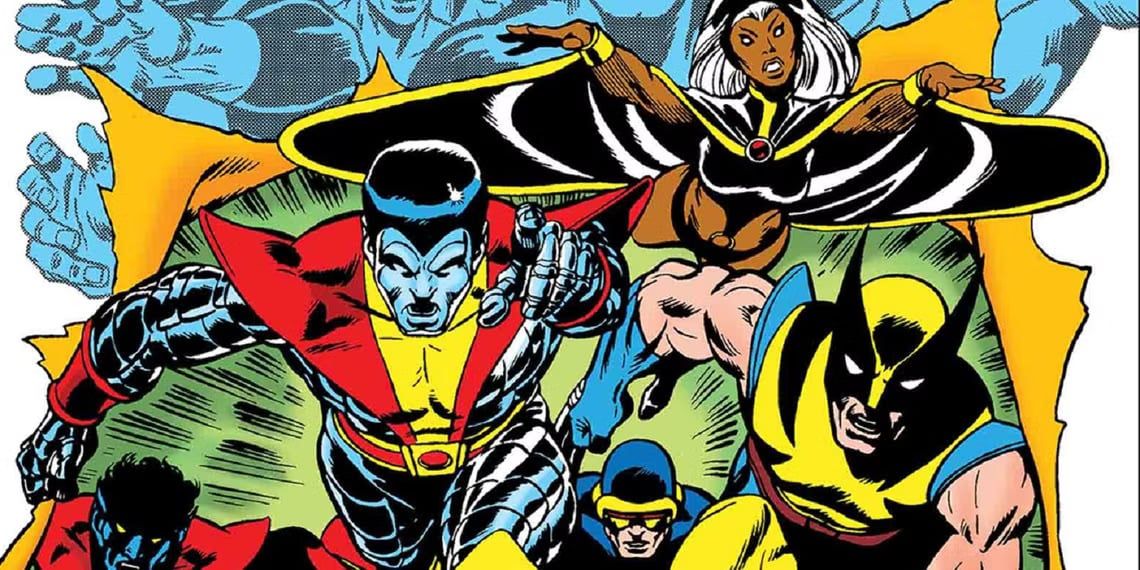
It’s hard to imagine now, but the X-Men weren’t always Marvel’s most profitable characters. However, Marvel was willing to take chances, and that willingness ultimately led to their success. The release of Giant-Size X-Men #1, which featured a completely new team, was a turning point that benefited the company for decades.
Over the years, many X-Men comics seemed like brilliant ideas, though they were quite daring when they first came out. It’s this willingness to take chances that has allowed the X-Men to constantly evolve and reach new levels of success, as Marvel challenges what fans expect from the team. This approach has also kept the X-Men fresh and engaging for decades, preventing the stories from becoming repetitive.
As a huge X-Men fan, I remember when Marvel decided to bring the original five together in the ’80s! It was so cool because by that point, they weren’t really with the main X-Men anymore. Some had retired, and others were off doing their own thing with teams like the Avengers or the Defenders. Everyone knew it would be a hit – the X-Men were huge at the time – but the creators, Bob Layton and Jackson Guice, had a bigger vision for X-Factor #1 than just a simple reunion.
Capitalizing on the widespread fear of mutants, Jean Grey brought together the first X-Men team to continue Professor Xavier’s vision in hiding. They cleverly disguised themselves as mutant hunters, gaining information from those who despised them, and then rescuing young mutants before they could be harmed. This approach offered a unique take on the concept of secret identities for a while.
Most of Marvel’s superhero teams were thriving, but the X-Men briefly struggled, with their comics recycling old stories. Everything changed with a new storyline that introduced a completely new team. The original five X-Men weren’t just absent—they were stranded on a perilous mission, and it was up to Cyclops, one of the team’s earliest members, to save them.
Luckily, Cyclops assembled a team that, while newer to the game, might have actually been stronger than his original X-Men. This diverse group, with members from around the world, was designed to represent the future. They showed that the X-Men were for all kinds of people, and their popularity helped revive the main X-Men comic book series.
The first run of X-Factor was good and produced some memorable comics, but it wasn’t hugely missed until Peter David wrote a fantastic Madrox miniseries. That’s when fans discovered Jamie Madrox had reinvented himself, going from a scam artist to a private investigator who ran a detective agency called X-Factor Investigations.
Man, I was so hyped when Marvel launched the second volume of X-Factor! The idea of Jamie Madrox turning X-Factor into a detective agency was brilliant. It really took off because it was something different – a superhero comic that felt like a gritty noir detective story. They weren’t just fighting supervillains; they were solving murders and dealing with crazy supernatural stuff and messed-up alternate realities. It was awesome, and it became a huge part of the X-Men world for almost ten years!
Following the well-known Phoenix Saga, the Dark Phoenix Saga continues the story of Jean Grey. After seemingly sacrificing herself to save her teammates, Jean unexpectedly gains immense cosmic power. However, this power quickly becomes tainted during her time on Earth. Though a skilled telepath, Jean lacked the experience to control the full extent of the Phoenix Force, which ultimately transformed her into the dangerous Dark Phoenix.
This storyline was unlike anything the X-Men had dealt with before. It wasn’t a typical case of mind control that could be quickly resolved; it presented a genuinely complex challenge for the team. Importantly, it highlighted the endless possibilities for future X-Men stories, as Jean Grey’s actions led to renewed contact with the Shi’ar empire. Despite her many resurrections, the conclusion of the Dark Phoenix Saga – with Jean’s ultimate sacrifice – truly shocked readers.
Fans have different opinions about romantic pairings, or ‘shipping.’ But a major plot twist in Grant Morrison’s run of New X-Men occurred when Jean Grey discovered her husband was having a psychic affair in issue #139. This event allowed both characters to develop significantly.
Scott Summers and Emma Frost were a powerful duo who led the X-Men through a particularly difficult time. They provided a safe haven for the remaining mutants by founding Utopia, and bravely opposed Norman Osborn’s Dark Avengers when most other superhero teams couldn’t. Though Marvel has since reunited Scott with Jean Grey, for a period, Scott and Emma were a significant couple.
Uncanny X-Men #200 was a landmark issue packed with significant events. It saw Magneto put on trial for his past actions, and the birth of Cable, the future X-Man and son of Scott Summers and Madelyne Pryor. But the most shocking and daring move was the unexpected death of Professor X during the trial, and the fallout that followed.
Witnessing Xavier’s death deeply upset everyone. Although Marvel initially regretted the decision, Chris Claremont believed it provided a fitting conclusion to Magneto’s arc, showing the villain finally embracing heroism. While Magneto briefly reverted to his villainous ways in the early 1990s, he became a hero again a decade later and has been an ally of the X-Men ever since.
Even though Marvel Comics knew the X-Men were already a hit in the late 1980s, they weren’t afraid to try new things. A good example is the storyline Mutant Massacre, which started in Uncanny X-Men #210. It suddenly put the X-Men and X-Factor in a position where they had to protect the Morlocks from a dangerous group of mutant killers, and it became one of…
Looking back, it’s surprising how much danger the X-Men faced. The fight with the Marauders left several team members badly hurt and unable to continue for quite a while. Readers had to adjust to a new group of characters stepping in, but that didn’t stop them from…
The X-Men remained incredibly popular throughout the 1980s, mostly because Chris Claremont consistently presented them with difficult new problems. One major storyline, ‘Fall of the Mutants,’ made it seem like the X-Men had died saving the world. However, they actually survived, and it was what happened after that proved to be the truly daring move.
In Uncanny X-Men #229, writer Chris Claremont relocated the X-Men to the Australian Outback, giving them a high-tech, hidden base. This move completely separated them from everything fans knew about the team – including Xavier’s Mansion. Although Marvel wanted Claremont to bring the X-Men back to their original setting, this Outback era remains a fan favorite and is often considered one of the best periods in X-Men history.
Emma Frost is now known as one of the X-Men’s strongest telepaths, but she didn’t start out as a hero. She used to be a major enemy, a member of the Hellfire Club who was skilled at manipulating others to get what she wanted. Despite her villainous past, Emma always had a passion for teaching mutants, which led her to form her own team of students called the Hellions. Sadly, the Hellions were killed in battle, and Emma deeply regretted not being able to protect them.
Later, in Generation X #1, Emma began working with Banshee to teach a group of young mutants, including future X-Men stars like Jubilee and Monet. Since then, she’s remained a vital part of the X-Men, serving as a teacher, strategist, and powerful fighter, especially with her ability to turn her body into an incredibly durable diamond form.
Among the X-Men, Warren Worthington III – known as Angel – always seemed to have it better than the others. Unlike many mutants whose powers made everyday life difficult, Warren could easily keep his identity secret. Plus, his family’s wealth provided him with luxuries his teammates could only dream of. However, his comfortable life didn’t last. In X-Factor #10, his wings were badly injured during a fight. Then, just four issues later, the anti-mutant extremist Cameron Hodge caused them to be surgically removed.
By issue #23 of X-Factor, Warren Worthington III, also known as Angel, reappeared with a dramatic physical transformation. This change was caused by the villain Apocalypse, who infused Warren with his own DNA, turning him into one of Apocalypse’s elite Four Horsemen – Death. Even after rejoining X-Factor, Warren kept his new blue appearance, a more aggressive personality, and incredibly sharp, blade-like wings that he could use to attack his enemies.
Found an error? Send it so it can be corrected.
Read More
- The Punisher’s Absence From Daredevil: Born Again Season 2 Explained
- The Boys Series Finale Officially Arrives Early (With a Twist)
- Mortal Kombat II Scores Fresh Rotten Tomatoes Score In Franhise First
- Star Trek: Starfleet Academy Review – The Kids Are Just Okay in Gaia Violo’s School-Set Comedy-Drama
- Top 5 Must-Watch Paramount+ Shows This Week: May 4–8, 2026
- Star Wars Needs Episode 10 More Than It Ever Needed Episode 7
- 27 Years Ago, Pokémon Snap Was a Non-Violent First-Person Shooter
- Alan Ritchson’s Action-Packed Revenge Movie Revealed In Motor City Trailer
- Dazed and Confused Remains the Best R-Rated Comedy Of All Time
- Jennifer Lawrence Notably Doesn’t Love Kourtney Kardashian, But She’s Loving Kim’s Merkin Underwear Line: ‘Stop Announcing It’
2026-05-12 14:12