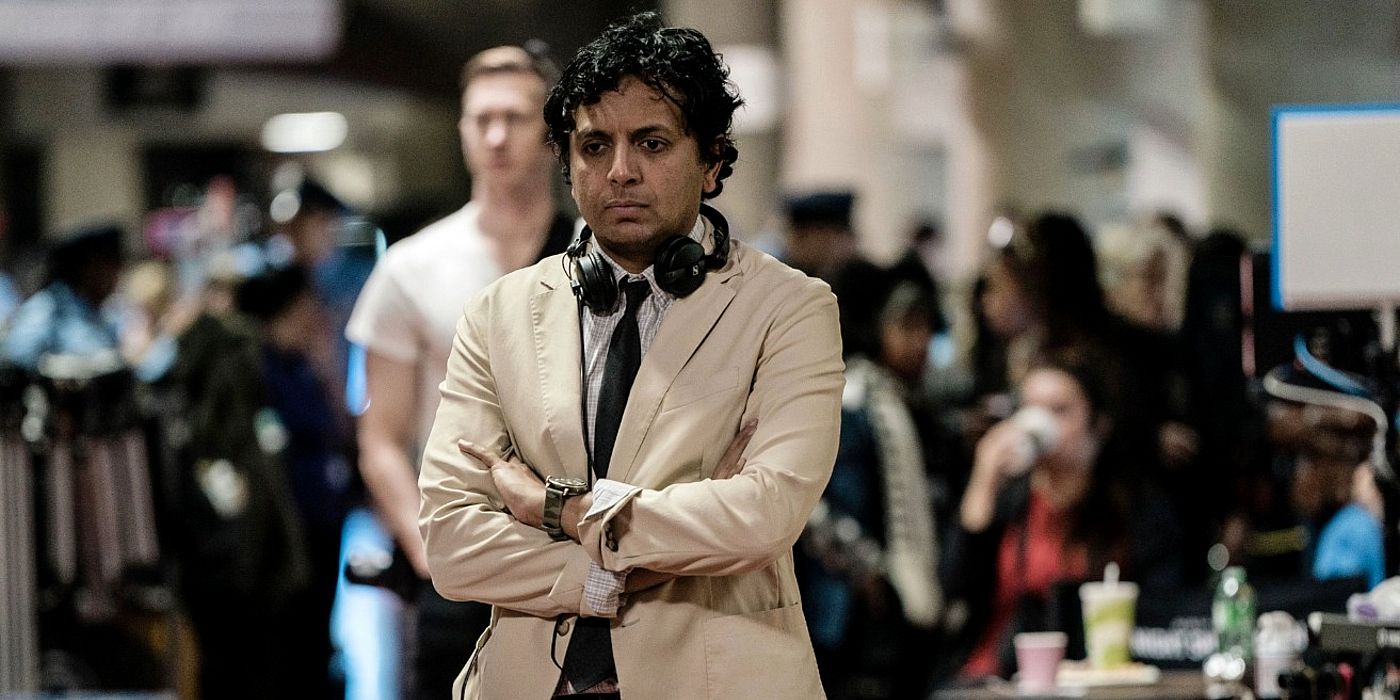
Look, I remember when M. Night Shyamalan was the name in suspense. Films like The Sixth Sense and Unbreakable were genuinely groundbreaking. But around the early 2000s, people started turning on him, and honestly, I think a lot of the criticism wasn’t fair. It really felt like a turning point with his 2004 thriller – a film where he swapped spooky ghosts for a period piece, and it just didn’t land with audiences. It was a tough break for him, and a lot of people seemed to draw a line in the sand after that one.
The movie The Village centers around Ivy Walker, a young, blind woman living in a secluded colonial village with a dark secret. The villagers were cautioned against the mysterious creatures lurking in the surrounding woods and forbidden from entering them. This isolated community existed in a vague location, cut off from other settlements due to the perceived dangers of the outside world – referred to as ‘The Towns’. While the film’s ending proved controversial, The Village is a well-crafted thriller with strong storytelling and captivating performances that deserves a second look.
The Village Was Maligned For Its Concept
After The Village, fans anticipated a dramatic ending, and M. Night Shyamalan certainly provided one. Just as Ivy and Lucius admitted their love, a terrible event occurred: a local boy stabbed Lucius, and sadly, the medicine available couldn’t save him.
Ivy pleaded with her father to let her visit The Towns, hoping they could help the sick boy. This request led to a shocking secret being revealed, one that deeply split viewers – some felt it was a surprising twist, while others had predicted it all along. Surprisingly, the show wasn’t set in the past, but in present-day Philadelphia, near M. Night Shyamalan’s home.
It turned out the whole community was created by people who grew up in today’s world. Ivy’s father, Edward, was a history professor and the son of a wealthy man who had been murdered by a colleague. Edward found others with similar ideas at a grief support group, and together they decided to build a self-sufficient life away from the problems of city living.
Financed by Edward’s father, a secluded sanctuary was established, strictly off-limits to outsiders. Even air traffic was rerouted to keep it hidden. Within this preserve, the elders lived a simple life, cut off from modern technology, and raised their children as if they were living in colonial times. While the premise might sound far-fetched, Shyamalan made it believable through genuine emotion, strong writing, and a captivating musical score. Like all great stories, The Village wasn’t simply about its plot, but about the characters and their experiences.
William Hurt’s performances were captivating and impossible to ignore. You could feel the pain of his characters, making their choices understandable. Central to the story was Ivy Walker, a strong and independent character introduced later in The Village who lived life on her own terms.
Ivy Is a Standout Main Character
M. Night Shyamalan skillfully created a detailed and immersive world in The Village. The film begins with the tragic death of a young boy, just seven years old, which deeply affects the isolated community. The villagers live with constant fear of creatures in the surrounding woods and a superstition that the color red draws those creatures near. After establishing the relationship between Kitty Walker and Lucius Hunt, the story introduces Ivy. Kitty is heartbroken to discover Lucius doesn’t reciprocate her feelings, and Ivy offers her support, eventually understanding why Lucius chose another.
Despite being blind, Ivy had a special gift for sensing auras, making her surprisingly aware of things around her. She was naturally funny, incredibly fast, and deeply believed Lucius truly cared for her. Even in difficult situations, Ivy showed remarkable courage and inner strength.
During the supposed attack, Lucius’s wife refused to come inside until he was safe. She confidently believed they would marry and was the only one brave enough to go into the woods to find medicine for him. It turned out the creatures were actually a story created by the village elders to prevent younger people from leaving.
Ivy was shocked by the betrayal at first, but she quickly adapted and used it as motivation to journey from the woods into the outside world after Lucius attacked. Despite being blind, her father fully supported her mission, believing she was the only one who could succeed. He understood her blindness would shield her from being overwhelmed by the knowledge of a larger world, and allow the Village to thrive if it was destined to.
As Edward predicted, Ivy successfully escaped the community with few problems. She was the only one who realized the creatures weren’t real, even when they seemed to attack her. Noah, the person who attacked Lucius, discovered his parents’ monster costume hidden in their house and was responsible for frightening everyone in the Village. He later pursued Ivy into the woods, but she cleverly led him to his demise, causing him to fall into a hidden pit.
Noah’s story was both a consequence of the elders’ deception and a confirmation of the very legends they used to control the village. The elders claimed Noah was killed by creatures outside the village, and this story kept everyone fearful and confined. Meanwhile, Ivy returned to the community without realizing anything was wrong. The film The Village concluded in a satisfying way, even though it left Lucius’s ultimate fate uncertain.
The movie concluded with Ivy coming home, and left viewers with a sense of optimism. Lucius’s illness was curable with today’s medicine, meaning the older generation wouldn’t have to face the sadness they feared. Ultimately, the film was about more than just life in a colonial village; it was a message of hope.
Grief is a Stirring Message At the Heart of the Film
Long before it became repetitive, The Village centered its story around emotional impact. The film succeeds and resonates with audiences because of the characters’ heartfelt experiences. Each of the older characters carried deep, unresolved grief from their past lives in the modern world.
As a movie fan, I was really struck by the backstory woven into this film. Each character carried such heavy trauma – Edward’s father was murdered, Alice suffered the loss of her husband to violence, and Mrs. Clack’s sister was a victim of a horrific crime. It felt like everyone had reached a breaking point, and honestly, it made perfect sense when we learned Edward, who happened to be a history professor with knowledge of communal living, decided to start a commune. It wasn’t just a surprising twist revealed in the third act, it felt essential – it was the thing that finally brought everything together and made the ending feel earned. It wasn’t a twist for shock value; it was a necessary piece of the puzzle.
The plot twist wasn’t surprising, either. It had been hinted at so much that it felt inevitable the world we were seeing wasn’t the real one. Throughout the film, Lucius noticed the village elders each possessed a mysterious, unopened black box. It wasn’t until Lucius was attacked that the boxes were opened, revealing their painful memories. This explained a lot about the characters and the film’s unique structure, which wasn’t told in a straightforward way. Instead, scenes were revisited later with a clearer understanding of what was happening in The Village.
Many of the characters initially believed they had experienced a significant tragedy, but it’s later revealed to be connected to life in a contemporary city. This twist is what makes The Village so rewarding to watch again. Knowing the foreshadowing and hidden meanings in the dialogue adds a new layer of enjoyment. Combined with Shyamalan’s skillful writing, The Village is a compelling film with a meaningful core message.
The elders decided to leave modern life behind, believing it was the source of their problems. However, they discovered that sadness still found them, even in their secluded woodland homes. August Nicholson, for example, tragically lost his young son, despite already grieving the death of his brother, an emergency room doctor. This experience led Edward to send his daughter to live in the woods, hoping to shield her from pain. He soon realized, though, that escaping society didn’t eliminate suffering; it was an unavoidable part of life, and living without loved ones was simply unbearable.
August supported Ivy’s journey, even though others disagreed. He realized that sadness is unavoidable, but if Lucius could find a cure and ease Ivy’s pain, it would be worth the effort. The film leaves Lucius’s future uncertain, but it feels fitting that after Ivy’s difficult experience, he should find a resolution. This open ending adds to the film’s hopeful and intriguing conclusion, especially considering it wasn’t fully appreciated upon its initial release.
Found an error? Send it so it can be corrected.
Read More
- Биткойн падает после громких заявлений из Белого Дома о криптовалюте и Федеральной Резервной Системы, сохраняющей спокойствие.
- The True Story That Inspired Abbott Elementary’s Choice To Move The School Into A Mall
- Inception Meets Lost In HBO’s 4-Part Sci-Fi Game Of Thrones Replacement
- James Gunn on What Makes DCU Unique & Different From Marvel
- Tom Hardy’s Venom Is Heading to Paramount+ (But There’s a Twist)
- Netflix’s Dark Rewrites The Rules Of Your Perceived Time
- Positive Technologies акции прогноз. Цена акций POSI
- Star Trek II: The Wrath of Khan Is the Only True Masterpiece Movie In the Franchise
- Kenneth Branagh Wants to Give Thor the Logan Treatment
- Циан акции прогноз. Цена акций CNRU
2026-05-06 03:38