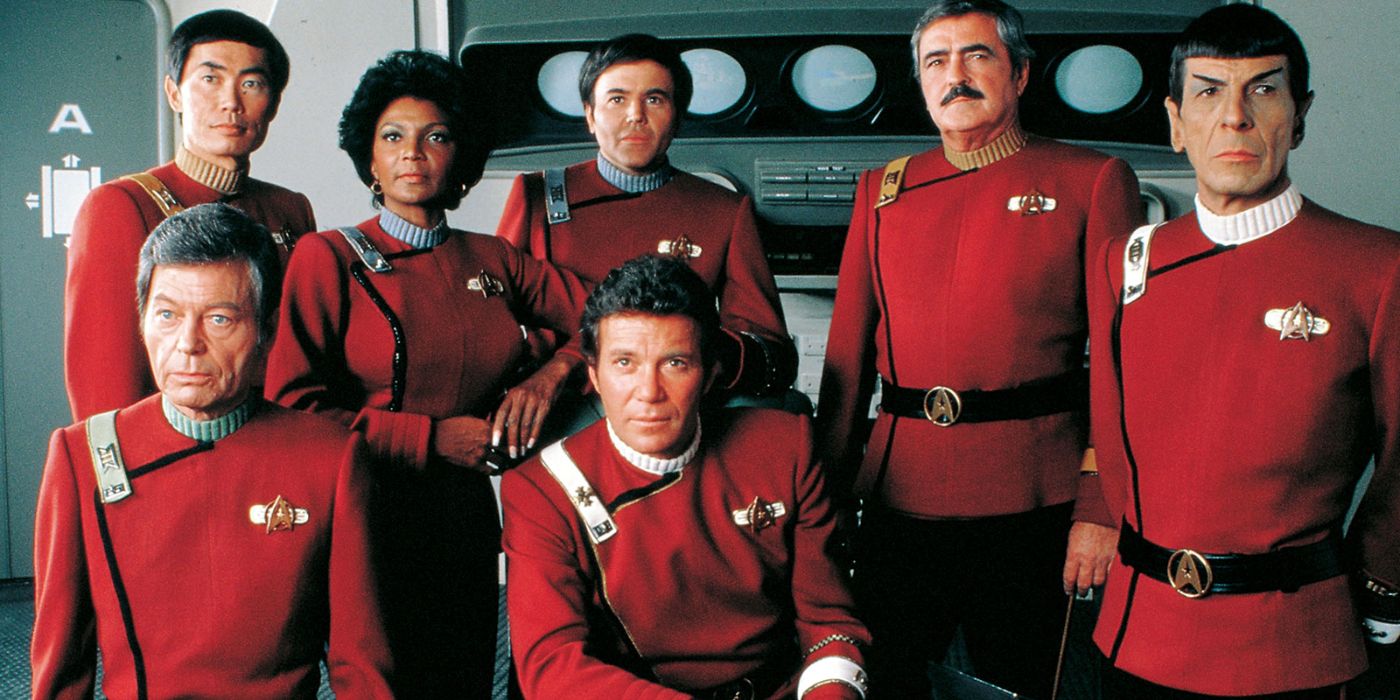
Following the cancellation of the Starfleet Academy series, Paramount has announced a new Star Trek movie is in the works. Jonathan Goldstein and John Francis Daley are signed on to write, produce, and direct. While the Star Trek films have often received mixed reactions from fans over the years—with opinions divided across its 13 movies—Star Trek II: The Wrath of Khan remains a universally beloved favorite.
Many fans consider The Wrath of Khan to be the best Star Trek movie ever made. It redefined how stories were told on the big screen, and after a long break from movies and some disappointing TV episodes, the franchise needs to recapture that magic. This film was a huge success that surpassed everything Star Trek had done before, and its impact is still unmatched.
The Wrath of Khan Set the Gold Standard For Star Trek Movies
Most Star Trek fans agree that The Wrath of Khan is one of the franchise’s best films – and many consider it a classic science fiction movie. It has everything you’d expect from a big-budget blockbuster. The story centers on the crew of the Enterprise as they race to stop Khan (played by Ricardo Montalban) from stealing the Genesis device and getting his revenge on Captain Kirk (William Shatner) after escaping from a 15-year exile.
Many fans consider The Wrath of Khan to be one of the best Star Trek movies, and for good reason. A major factor is its groundbreaking special effects, which were incredibly impressive when the film was released, even if they don’t look quite as cutting-edge today.
With visual effects from George Lucas’ Industrial Light & Magic, The Wrath of Khan brought space to life with vibrant colors and detailed ships – both new and old – creating a truly immersive experience. The film also signaled a shift towards a faster-paced, action-focused narrative, moving away from the style of the original Star Trek series.
But The Wrath of Khan truly succeeds because of its villain, Khan, who is the most compelling part of the film. We first meet Khan in the Star Trek episode “Space Seed” (Season 1, Episode 22), where he’s established as incredibly strong, intelligent, and proud. In that episode, he and his followers are banished to the remote planet Ceti Alpha V after a hearing finds him guilty of trying to take over the Enterprise and harming its crew.
Reviving Khan proved to be a brilliant move. When a TV series transitions to film, it’s usually completely restarted or reworked. It’s uncommon for the original cast to return, and even more unusual for the story to maintain its core themes. Often, the characters simply begin new adventures, ignoring previous storylines.
What makes The Wrath of Khan so good is that you don’t need to have seen the original episode featuring Khan to enjoy it, but the movie still cleverly connects to that earlier story. It almost re-introduces Khan right away, explaining his motivations and why he’s so furious with Kirk. After that initial setup, the film moves forward with its own story, and doesn’t rely heavily on the past episode.
As a longtime fan, I’m a little worried about where this new direction is going. It feels like they’re building something completely separate, a total reboot with no ties to the TV show or even the movies we’ve loved for years. What The Wrath of Khan did so brilliantly was give us, the old fans, a reason to care – it felt connected to the original TOS in a meaningful way. But it also drew in new viewers by making them want to go back and watch the original series. I hope this new version can do the same – honor the past while still appealing to a fresh audience.
Although The Wrath of Khan was fun with its action, effects, and performances, it wasn’t revolutionary for its time, especially with George Lucas already establishing Star Wars. What did make it stand out was its clever way of connecting to previous stories. Both longtime Star Trek fans enjoyed seeing a familiar villain return, and new viewers were intrigued by his backstory, ultimately attracting a fresh audience to the series.
The Wrath of Khan Changed the Franchise’s Direction
Star Trek: The Original Series reflected the television practices of the 1960s. Because shows weren’t typically released as continuous stories, most episodes had to stand alone. While a few characters or storylines would occasionally reappear, you could generally watch the episodes in any order without missing important details. The connection between them was mainly the spaceship Enterprise and its crew.
After the first Star Trek movie didn’t perform as well as hoped in 1979, Nicholas Meyer was hired to shake things up. Before Wrath of Khan, the Star Trek timeline wasn’t clearly defined. This film changed that by adding a title card that stated “In the 23rd Century,” which was the first time the series specifically identified when the stories took place.
Star Trek: The Original Series offered hints about when the show took place, but these were inconsistent. Because multiple writers worked on the series, the timeline felt a bit disjointed. Some episodes, like the one from Season 1, Episode 22, implied the events happened around 200 years after the 1990s – placing it in the 22nd century. However, “The Squire of Gothos” (Season 1, Episode 17) suggested a setting much further in the future, the 27th century.
The exact timing of Star Trek: The Original Series wasn’t crucial, but the new film established a clear timeline. It opened with Captain Kirk turning fifty, now retired to a desk job and living a solitary life after years of romantic adventures. Establishing this timeframe was important because the story showed characters dealing with the effects of their past choices and the challenges of getting older, setting the stage for future storylines.
Meyer’s addition of a consistent timeline fundamentally changed the series, transforming it from a collection of independent stories into a larger, ongoing franchise. Although self-contained episodes remained important, the timeline allowed for characters to grow and evolve over time, moving beyond the limitations of the ‘monster-of-the-week’ format. Characters aged, faced hardships, and ultimately paved the way for a new generation of Starfleet heroes to continue their stories.
Honestly, that original series really opened the floodgates for everything Star Trek became. Over the past sixty years, we’ve seen so many shows and movies connect, and that moment when Captain Kirk came back in Star Trek: Generations is still iconic! It’s amazing how the whole story of Starfleet and the Federation has grown and spanned across different eras.
If you’re interested in following the story, the events now unfold in a clear, timeline-based order. This wouldn’t have been possible without The Wrath of Khan, which provided a path forward for the series that hadn’t existed before.
Read More
- Золото прогноз
- 9 Best Western & Neo-Western Movies Released Since 2000
- Netflix’s New Psychological Thriller Unchosen Tops Global Streaming Charts
- DC’s ‘Clayface’ Can Redeem Sony’s $2.17 Billion Spider-Man Franchise
- Прогноз криптовалюты ATOM: прогнозы цены ATOM
- Star Trek Permanently Ended the Borg Storyline
- Фунт обгонит доллар? Эксперты раскрыли неожиданный сценарий
- 10 Greatest Movies That Continue TV Shows
- НИТЕЛ акции прогноз. Цена акций NTZL
- Ryan Reynolds Reveals Deadpool’s Big Change in Next Team-up Movie
2026-04-30 13:08