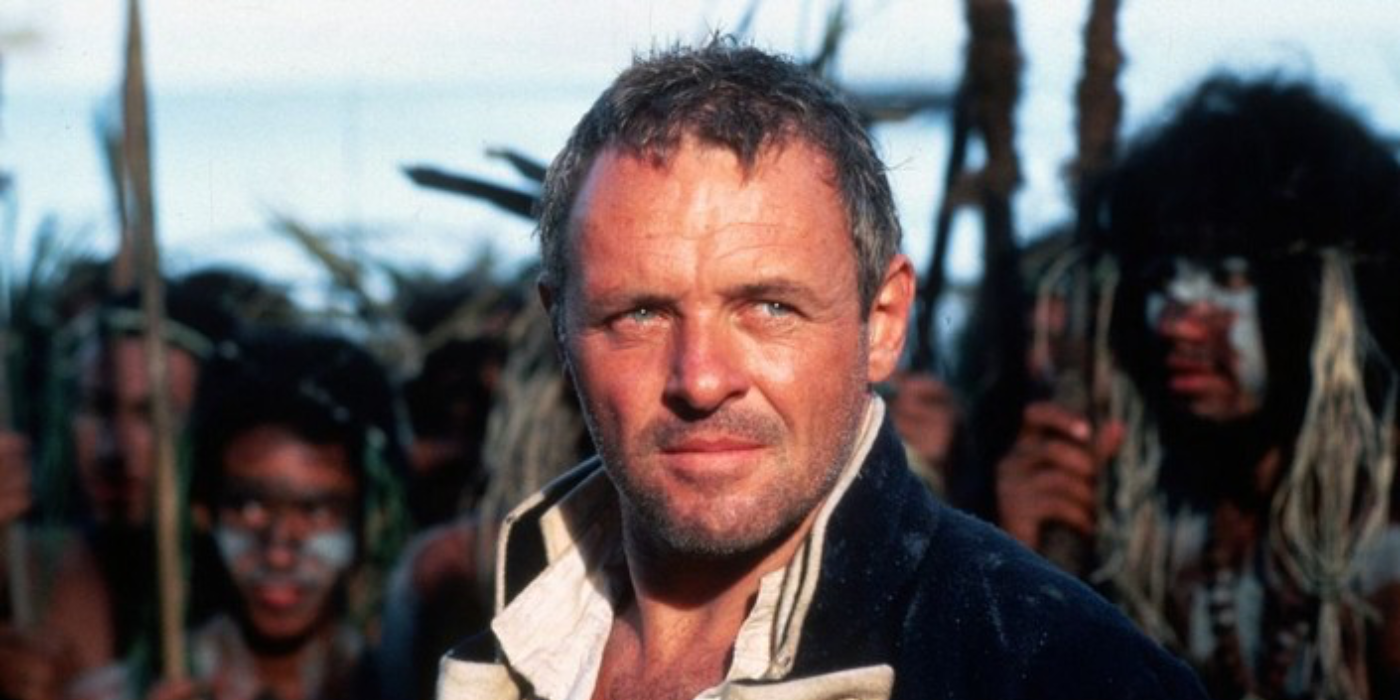
Historical dramas usually fall into one of two categories: they either stick closely to the facts, or they prioritize exciting storytelling over accuracy. Roger Donaldson’s The Bounty lands somewhere in the middle. While it doesn’t perfectly recreate the famous mutiny on the HMS Bounty, it’s still the most accurate film adaptation we have.
Starring Anthony Hopkins and Mel Gibson, The Bounty is one of several films dramatizing the famous mutiny on the HMS Bounty. It’s based on Richard Hough’s 1972 book, Captain Bligh and Mr. Christian, and offers a detailed look at the voyage itself. Despite strong acting from both leads, The Bounty remains a somewhat overlooked gem among historical dramas known for their heightened storytelling.
The Bounty is a Dramatized Retelling of the Infamous Mutiny on the HMS Bounty
The film The Bounty recreates the official investigation into the famous mutiny on the HMS Bounty, focusing on the account of Captain William Bligh (Hopkins). Through a series of flashbacks, we see Bligh’s account of trying to reassert authority over his crew after a long stay in Tahiti, which ultimately leads to the rebellion orchestrated by his former friend, Fletcher Christian (Gibson). After the mutiny, the rebels are left adrift, while Bligh and the loyal members of his crew make the difficult journey to the Dutch East Indies.
The story of the HMS Bounty mutiny – a famously dramatic event in naval history – has been adapted for film several times. The first movie appeared in 1933 as a docu-drama called In the Wake of the Bounty. This was followed by two major productions: Mutiny on the Bounty (1935), directed by Frank Lloyd and starring Charles Laughton and Clark Gable, and a 1962 remake directed by Lewis Milestone featuring Trevor Howard and Marlon Brando.
This version of the story isn’t as famous as the earlier ones, largely because it didn’t receive the same awards attention. The Milestone adaptation received seven nominations at the Academy Awards, including a Best Picture nomination. Still, director Donaldson’s film deserves more credit for its personal and somber portrayal of the events before the mutiny.
The film, initially intended for director David Lean, shares qualities with his style. It presents a more restrained portrayal of the characters, particularly Captain Bligh, who is shown as stubborn and reserved instead of simply cruel. Similarly, Fletcher Christian isn’t the typical heroic figure. The story emphasizes the evolving relationship between them, starting with a genuine friendship and ultimately showing how it falls apart.
The film truly shines thanks to the performances of Anthony Hopkins and Mel Gibson, who both brought complexity to their roles. Gibson’s character is compelling because he’s conflicted between staying loyal and feeling compassion, a refreshing change from the typically one-dimensional heroes we often see. This is perfectly balanced by Hopkins’ portrayal of Bligh, which shows a more human side to the traditionally harsh leader, revealing his empathy as well as his strength.
What really struck me about The Bounty is its script. It’s a much deeper look into what the characters were feeling. The film beautifully shows how Christian gets drawn in by the beauty of Tahiti and his desire to escape his old life. Specifically, his connection with Mautua, the daughter of the island’s king, is key. It really illustrates how he starts to embrace the Tahitian way of life and how that pulls him further and further away from Captain Bligh’s control.
This interpretation of the story likely stems from its reliance on Walter Hough’s historical account of the Bounty, rather than the more fictionalized novels by Charles Nordhoff and James Norman Hall that inspired previous versions. Hough’s book is considered a highly accurate portrayal of the events, allowing for a deeper understanding of Captain Bligh and Fletcher Christian. As a result, this adaptation of The Bounty is remarkably faithful to the historical record and remains unmatched in its detail.
The Bounty Deserves More Credit For Its Faithful Portrayal
Both the 1935 and 1962 films of Mutiny on the Bounty portray Captain Bligh as a cruel and harsh leader who enjoyed punishing his sailors. For many years, this was the accepted story, implying his mistreatment of the crew led to the mutiny. But, as Richard Hough pointed out, based on historical documents, Bligh wasn’t actually a tyrant.
Accounts from his crew paint a picture of Captain Bligh as surprisingly understanding for his time. The ship’s log reveals he frequently used verbal warnings instead of physical punishment like flogging, and he only ordered floggings for offenses that would typically have been punishable by death according to naval rules. For instance, when three sailors deserted in Tahiti and were brought back, Bligh chose to flog them instead of hanging them, which was the standard punishment.
The film The Bounty portrays Captain Bligh as a complex character. He’s depicted as demanding and unwilling to accept poor work, but also skilled and facing constant misfortune. While quick to anger and prone to using harsh language, Bligh only punishes when he feels it’s necessary and is generally moderate with his punishments, visibly disliking having to order floggings. Although his strictness sometimes goes too far – like when he scolds Christian about the ship’s condition – his strong leadership and resolve ultimately help him steer his loyal crew to safety after the mutiny.
One thing the film The Bounty does well is portray the relationship between Captain Bligh and Fletcher Christian accurately. Unlike previous versions, it doesn’t immediately show them as enemies. Instead, it suggests Christian’s frustration with Bligh’s harsh leadership developed gradually during the voyage.
From what I’ve read in Hough’s book and other historical accounts, Captain Bligh and Fletcher Christian actually started off with a pretty good relationship. Bligh himself suggested Christian for a position on the Bounty and even recommended him for a promotion! They weren’t necessarily best buddies like you see in the movies, but they definitely had a solid, professional working relationship at the beginning.
This account of the Bounty story doesn’t portray either Christian or Bligh as the bad guy, and it successfully demonstrates that. Christian, still young and inexperienced, was swept away by the carefree lifestyle of Tahiti and its people. It was his willingness to take advantage of the situation that led to the mutiny, rather than any heroic or rebellious spirit as shown in previous films.
Although The Bounty didn’t quite reach its $20 million budget in worldwide box office earnings, it didn’t become as well-known as other films about the same story. This might be because it prioritized historical accuracy over dramatic flair and a simple good-versus-evil storyline. While it’s not as thrilling as Mutiny on the Bounty, it’s still a remarkably faithful and well-made adaptation of this tragic historical event.
Found an error? Send it so it can be corrected.
Read More
- Южуралзолото ГК акции прогноз. Цена акций UGLD
- 3 Best Netflix Shows To Binge-Watch This Weekend – #1 Is A Surprise Hit Crime Thriller Trending Worldwide
- 2026 Will Be The Year Of Karl Urban
- 10 Hard Sci-Fi Books That Are As Good As Project Hail Mary
- 20 Years Later, Twilight’s Robert Pattinson Just Noticed A “Strange” Acting Choice For One Edward Cullen’s “Vampiric Thing”
- Bryan Cranston’s Highly-Anticipated Comedy Revival Becomes American Streaming Sensation 20 Years After Original Series Ended
- 10 PS2 Games That Are 10/10, No Notes
- Night of the Living Dead Remake Trailer Released
- Netflix’s 2-Part Action Thriller Series Keeps Getting Better & It’s One Of Its Best To Binge
- Prime Video’s Upcoming Cyberpunk Show Is The Third Chapter In The Most Unlikely Trilogy Of All Time
2026-04-20 03:40