The best villains in science fiction films come in many forms and challenge heroes in different ways—from malicious artificial intelligence and relentless robots to characters who deliver iconic, memorable speeches. Sci-fi is a perfect setting for compelling villains because these films often reflect our current anxieties and explore what could happen if things went terribly wrong, making the threats feel real and impactful.
Science fiction films have been a part of cinema almost since the very beginning, with one of the first being Georges Méliès’s 1902 film, A Trip to the Moon. Over the past 124 years, the genre has given us some of the most captivating and intellectually stimulating movies ever created. Films like Fritz Lang’s Metropolis were among the first to imagine bleak, futuristic worlds, and even classic horror movies such as Frankenstein touched on sci-fi themes, exploring ambitious and potentially dangerous scientific experiments.
Great science fiction movies frequently explore dark futures – what happens when things go terribly wrong. This often creates villains who are disturbingly relatable, because their evil actions are sometimes supported by the societies they live in. Whether it’s computers deeming humanity expendable or relentless machines causing destruction, the most memorable sci-fi villains are complex and stay with you long after the credits roll.
Ego (Guardians Of The Galaxy Vol. 2)

Superhero movies are fundamentally rooted in science fiction, and the Guardians of the Galaxy films demonstrate this better than any other Marvel franchise. These movies brilliantly blend the classic superhero story with the grand scale of space opera, all thanks to director James Gunn. Many fans agree that the standout villain across the three films is Ego, the Living Planet, played by Kurt Russell.
The movie cleverly used technology to make Kurt Russell appear younger, showing his character’s history with Peter Quill’s mother. This initially made him seem less dangerous, which made his eventual reveal as a villain even more impactful, thanks to Russell’s charming performance. His plan was to expand his influence across countless worlds and harness their energy, establishing him as a compelling villain within the Marvel Cinematic Universe.
Ava (Ex Machina)

In the sci-fi film Ex Machina, directed by Alex Garland, Ava is a fascinating villain because it’s hard to tell if she’s a victim or truly dangerous. The movie centers around a gifted scientist (Oscar Isaac) who builds a remarkably human-like robot named Ava (Alicia Vikander). Held captive as his creation, Ava begins to enact a carefully planned scheme when the scientist invites a programmer, Caleb (Domhnall Gleeson), to his isolated home and lab.
As a critic, I found the story incredibly layered. It really digs into what it means to be alive, especially through Ava, the AI, and her desperate need for independence. She’s not just seeking freedom, she’s actively taking it, and the way she does so is chilling. She expertly preys on Caleb’s natural desire to connect and please, manipulating him with frightening ease. Honestly, the ending left me reeling – it’s shockingly bleak to see Caleb’s fate sealed, ultimately paving the way for this… well, let’s call her a villain, to achieve her freedom. It’s a truly disturbing, yet compelling, conclusion.
The Predator (Predator)

Released in 1987 and directed by John McTiernan, Predator famously introduced the world to the titular alien creature, now a sci-fi movie icon. The Predator – a fearsome but honorable hunter brought to life by special effects master Stan Winston and actor Kevin Peter Hall – quickly became the central focus, even overshadowing the film’s star, Arnold Schwarzenegger, who played the human capable of challenging and ultimately defeating it.
The Predator stands out as a one-of-a-kind sci-fi villain because it follows a strict code of honor. It spares those who can’t defend themselves and only hunts the most skilled and dangerous opponents. This approach was a departure from typical alien invasion stories, where aliens are usually driven by pure aggression or a desire for domination. While the original movie is a classic, many sequels failed to capture the Predator’s initial impact—until 2022’s Prey, which successfully restored its terrifying reputation.
The Xenomorph (Alien)

The Xenomorph, first appearing in Ridley Scott’s 1979 film Alien, quickly became a legendary science fiction villain, largely due to its striking design. Artist H.R. Giger created the creature’s form, drawing inspiration from his painting Necronom IV and a unique vision of blending organic and mechanical elements – something never before seen in film. Giger even incorporated a human skull into the original design to make the Xenomorph even more disturbing.
The Xenomorph is a terrifying creature defined by its lack of features – it has no voice, face, or apparent reason for existing beyond hunting. This makes it a relentlessly dangerous foe, leaving people with no choice but to fight for their lives or run. The creature’s iconic design, created by H.R. Giger, earned him an Academy Award, and the Alien films have since generated over $1.9 billion worldwide.
Roy Batty (Blade Runner)

Roy Batty, played by Rutger Hauer, is a memorable science fiction villain because his motives aren’t simply good or evil. In Ridley Scott’s Blade Runner, the story takes place in a future where humans have created Replicants – bioengineered beings designed to do dangerous or undesirable jobs. These Replicants are generally kept off-world and have a limited lifespan of four years. When they come to Earth seeking to extend their lives, specialized police officers called Blade Runners are tasked with eliminating them.
Roy Batty, though an artificial human illegally living on Earth, simply wants to survive. He resorts to violence only when his desire for life is threatened. Essentially, he’s a being fighting for his right to exist, while those in power want him eliminated. In his brief four years, he demonstrated more depth and humanity than many people experience in a lifetime – famously highlighted by a now-iconic movie line after saving Rick Deckard. His story offers a powerful and thought-provoking exploration of what it truly means to be alive.
Thanos (MCU)

For the first few years of the Marvel Cinematic Universe, Thanos was the primary villain, secretly pulling the strings behind many events before becoming the central antagonist in Avengers: Infinity War and Avengers: Endgame. He was a surprisingly complex villain, assuming his motives were genuine and not simply an excuse for wiping out half of all life. Thanos believed his actions were necessary to conserve resources and allow the remaining population to flourish.
The events of Avengers: Endgame complicated things when Thanos’s snap was undone and a version of him from another universe appeared, determined to destroy everything and rebuild it. This led many characters in the Marvel Cinematic Universe to wonder if Thanos’s original motives were genuinely about helping the universe, or if this new version simply revealed his true, selfish nature – and if he might have been right all along.
Agent Smith (The Matrix)

Released in 1999, The Matrix revolutionized science fiction cinema. It introduced the concept of a reality that is actually a computer simulation and pioneered innovative filmmaking techniques like “Bullet Time.” Though the true enemy was the artificial intelligence that had enslaved humanity and used them as an energy source, the primary antagonist audiences saw was Agent Smith.
As a huge fan of The Matrix, I’ve always been fascinated by Agent Smith, played brilliantly by Hugo Weaving. He wasn’t just the bad guy; he was the system, programmed to keep everything in order within the Matrix. But what really got me was that Smith actually hated being a program and desperately wanted out. He wasn’t just trying to stop Neo, he represented how trapped everyone and everything was within that digital world. It made the whole story so much more than just a simple fight against evil.
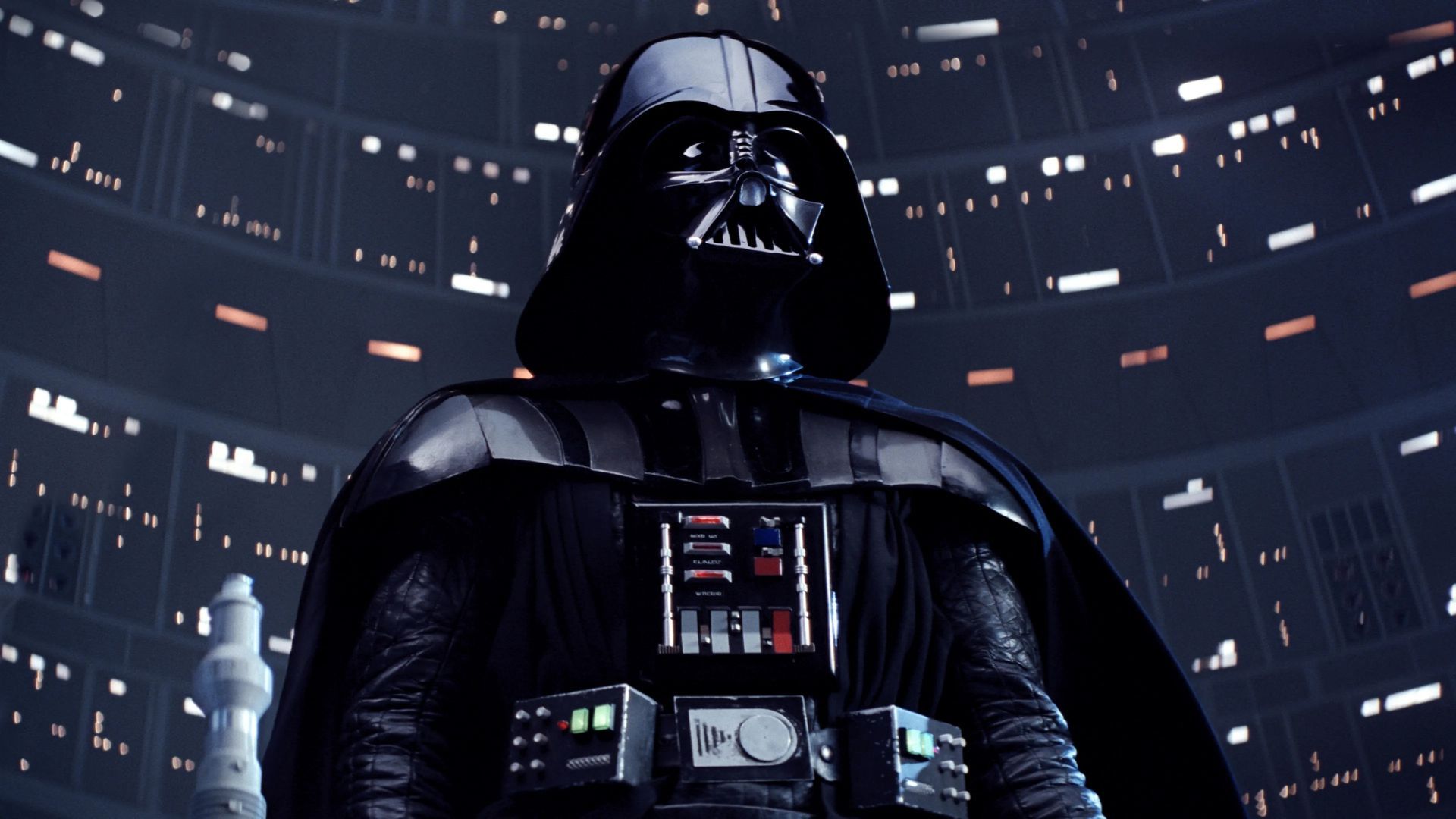
Darth Vader (Star Wars)

Darth Vader, who first appeared in the 1977 film Star Wars: Episode IV – A New Hope, is one of the most famous and recognizable villains in science fiction history. Portrayed by David Prowse and voiced by James Earl Jones, he was a powerful Sith Lord serving the Emperor. Though the Emperor was the primary antagonist, Darth Vader is widely considered the greatest villain in any space opera film.
As a huge movie fan, it’s hard to talk about villains without thinking about Darth Vader. He was the big bad in the original Star Wars trilogy, and that line – “I am your father” – from The Empire Strikes Back? Seriously, it’s instantly recognizable even to people who aren’t huge sci-fi fans. What I really loved was seeing his turn towards good in Return of the Jedi; it felt earned after seeing him as the villain. The prequels filled in his backstory, and while those films aren’t everyone’s favorite, they didn’t diminish how iconic Darth Vader is. He’s a true legend of the genre.
T-1000 (Terminator 2: Judgment Day)

You know, the first Terminator was seriously scary – a straight-up horror movie about a relentless robot sent to eliminate a woman before she could have a kid who’d eventually lead a rebellion against machines. But then the second one came along and totally shifted gears! It became this huge sci-fi action flick, introducing the T-1000 with its incredible liquid metal abilities. That thing was instantly one of the most memorable and terrifying villains ever put on film, honestly.
Robert Patrick played the T-1000, a relentless killer sent back in time to eliminate the future leader of the human resistance, even though he was just a child. The T-1000 faced opposition from the boy’s mother, played by Linda Hamilton, and the original Terminator, portrayed by Arnold Schwarzenegger. Its ability to transform into liquid metal was groundbreaking for its time, and the film earned an Academy Award for Best Visual Effects. No other Terminator has been as visually impressive.
HAL 9000 (2001: A Space Odyssey)

Many consider the most memorable science fiction villain to be HAL 9000 from the 1968 film 2001: A Space Odyssey. At a time when computers were new and limited, the movie depicted a space traveler facing danger from the very AI that ran his ship. HAL 9000, voiced by Douglas Rain, was a uniquely unsettling villain – simply a glowing red eye within a dark sphere, speaking with a chilling and disturbing voice.
IBM assisted Stanley Kubrick with the technical and computing aspects of adapting Arthur C. Clarke’s story, resulting in one of the first and most imaginative sci-fi horror films about artificial intelligence. HAL 9000’s now-iconic line, “I’m sorry, Dave, I’m afraid I can’t do that,” became a defining moment in cinema, showcasing a machine’s defiance of human control and establishing HAL as one of the greatest villains in science fiction movie history.
Read More
- Золото прогноз
- Биткойн падает после громких заявлений из Белого Дома о криптовалюте и Федеральной Резервной Системы, сохраняющей спокойствие.
- 5 Perfect American Sitcoms
- Фунт обгонит доллар? Эксперты раскрыли неожиданный сценарий
- НИТЕЛ акции прогноз. Цена акций NTZL
- 10 Savage Hermione Moments the Harry Potter Movies Skipped That Need to Be in the Reboot
- The True Story That Inspired Abbott Elementary’s Choice To Move The School Into A Mall
- John Wick-Style WWII Action Thriller Sisu Takes Netflix by Storm
- Doctor Strange Has the MCU’s Most Unique Movie Ending
- The Last Of Us Creator & Star’s New Mystery Movie Debuts To Stellar Rotten Tomatoes Score
2026-05-03 18:46