For years, viewers have seen fascinating and well-developed characters take a backseat so a single, ‘chosen one’ hero can be the focus. Studios and comic creators often rely on the same old story: a hopeful hero with a sad past and a predetermined fate, while the most captivating character is often left in the background.
Often, the most compelling stories aren’t about the main characters, but the supporting ones. While protagonists are usually adequate, characters like Killua Zoldyck and Vegeta demonstrate that true dramatic weight, emotional complexity, and rich storylines can often be found in those playing supporting roles – characters substantial enough to carry their own series.
Killua Zoldyck Carries The Moral Complexity That Hunter x Hunter Pretends Belongs To Gon
When Killua joins Hunter x Hunter, he’s already a skilled assassin with a hidden agenda during the Hunter exam, and the story is forever changed by how compelling that makes him. While Gon relies on natural talent and a positive attitude, Killua is haunted by a traumatic past – a childhood filled with torture, a brother who controlled him through implanted commands, and a family of murderers. This backstory isn’t just for added depth; it creates genuine tension whenever Killua prioritizes helping his friends over protecting himself.
This sequence definitively resolves the central conflict. Killua steps up to protect Gon, overcomes the manipulation Illumi imposed on him, and ultimately frees himself by removing the needle controlling him – a complete arc of heroic growth. While Gon’s frightening transformation into an adult is dramatic, the true heart of the story lies in Killua’s subtle but powerful realization that his bond with Gon, like his family ties, can also be harmful, and his subsequent liberation from that dynamic.
Vegeta Spends Dragon Ball Z Proving He Deserved The Story Goku Got To Tell
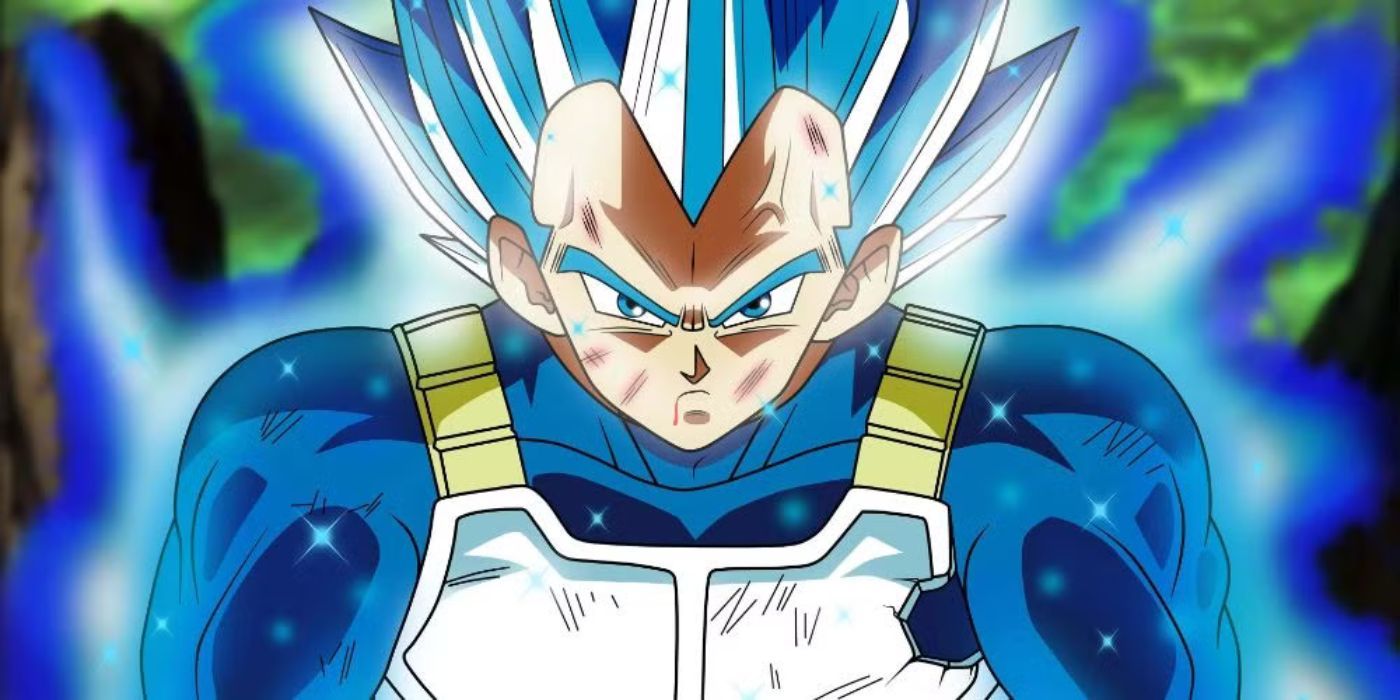
Vegeta bursts onto the scene in Dragon Ball Z as a ruthless prince who judges himself by how many planets he’s destroyed, and then spends a long time trying to make amends for his past. While Goku remains consistently upbeat, strong, and fortunate, Vegeta undergoes a significant transformation. He has to completely rebuild himself after realizing his Saiyan pride and belief in superiority were his biggest flaws, and this process is often difficult and painful.
Vegeta’s sacrifice during the fight with Buu is incredibly impactful, even more so than many of Goku’s heroic moments throughout the series. This is because Vegeta earns that moment through his past failures. He acknowledges Goku as the stronger fighter, prioritizes his family over his pride, and ultimately tries to redeem his mistakes, even if it means sacrificing himself. While Dragon Ball Z generally portrays Goku as a hero saving the universe, Vegeta’s story is a more personal and human one.
Megumi Fushiguro’s Ten Shadows Technique Makes Jujutsu Kaisen’s Thematic Argument Better Than Yuji Does
Watching Jujutsu Kaisen, I’m struck by Yuji Itadori – he’s presented as the character with a strong moral compass, someone who wants others to be around even as they face death. But I find Megumi Fushiguro even more compelling. He approaches things from a very different angle, essentially deciding who’s worth saving based on what will benefit the most people. It’s a cold, practical way of thinking, and it’s reinforced by his ability to summon spirits – shikigami – that can actually be killed for good.
The ‘Fearsome Womb’ storyline shows Megumi is prepared to risk his summoned Divine Dogs’ lives, and the series portrays this as a sign of his skill, not a lack of compassion. Megumi consistently approaches jujutsu with careful planning, a willingness to make tough choices, and a clear understanding of himself – a realistic perspective that fits the world of Jujutsu Kaisen better than Yuji’s more hopeful outlook.
Shoto Todoroki Treats My Hero Academia’s Central Tension As A Personal Crisis
The anime My Hero Academia explores the sacrifices made in the name of heroism, especially when the very foundations of the hero system are flawed. This is deeply personal for Shoto Todoroki, as he’s experienced this corruption firsthand. His father, Endeavor, the top-ranked hero, created children through a calculated breeding program and subjected his wife to terrible abuse.
Shoto doesn’t avoid using his left side because of a personal preference; it’s his only way of rebelling as a child who feels powerless. This is a stronger point about the flaws in My Hero Academia‘s world than everything Midoriya goes through to become a hero.
The fight between Shoto and Midoriya at the Sports Festival feels more impactful than many of the series’ biggest battles because it’s about their inner struggles, not just physical strength. Shoto confronts and overcomes his past trauma, and begins to accept who he is, but the story doesn’t fully explore the consequences of this change.
Zoro’s Loyalty In One Piece Reveals What Following Luffy Actually Costs His Friends
Zoro starts his journey in One Piece determined to become the world’s greatest swordsman. However, he consistently puts Luffy’s dream first, even to his own detriment. He endures incredible pain and exhaustion for Luffy, dismissing concerns from others and pushing himself to the brink of death. While One Piece highlights Zoro’s incredible strength, it also shows a man who has willingly chosen to prioritize his captain’s survival over his own ambitions.
The relationship between Zoro and Mihawk – a former rival who became his teacher and represents the ultimate goal – perfectly illustrates Zoro’s focused journey of self-improvement in One Piece. While a story centered solely on Zoro wouldn’t capture the same unpredictable, lighthearted spirit of Oda’s original vision, it would be a more streamlined and intense narrative exploring the true cost of achieving mastery.
Genos Exposes The Philosophical Problem At One-Punch Man’s Core More Directly Than Saitama
One-Punch Man cleverly uses the idea of an unbeatable hero, Saitama, to poke fun at typical power fantasies. The character Genos offers a contrasting viewpoint: he’s a cyborg who’s always improving and always gives his all in battle, yet still struggles. While Saitama defeats enemies effortlessly, Genos constantly risks his life just to make a difference.
Watching Genos, it’s easy to see him as a loyal student, but I think the story uses him to show that even with hard work, sacrifice, and total dedication, there are no guarantees in the world of One-Punch Man. It’s a little sad, actually, how seriously he takes even Saitama’s casual remarks, like he’s uncovering some deep truth. While One-Punch Man is hilarious with Saitama as the main character, I can’t help but feel it would be even more powerfully heartbreaking if we saw the story through Genos’s eyes.
Chad’s Arc In Bleach Challenges The Series’ Core Power Hierarchy In Ways Ichigo Never Has To
In Bleach, Sado Yasutora intentionally decides to fight only to defend others, not for personal gain. This is a more rigid moral stance than Ichigo’s, and the series doesn’t fully explore the implications of this difference.
Chad’s fighting style is unique in Bleach. Unlike most battles which revolve around swords and spiritual energy, his fights feel distinct because he’s an ordinary human fighting in a world of supernatural beings. He doesn’t have any special lineage or power to explain his strength, and that makes his struggles more compelling than those focused on Ichigo’s complex background.
Arthur Boyle Commits To A Chivalric Identity That Fire Force Only Half Believes In
Arthur Boyle jokingly approaches the world of Fire Force as if it were a medieval adventure, casting himself as a knight. However, the humor quickly fades as it becomes clear his self-created fantasy actually enhances his abilities, making him surprisingly powerful when he fully embraces his knight persona.
Fire Force introduces Arthur, a character whose strength is directly tied to his self-belief—an interesting idea that the series often uses for comedic effect. The rivalry between Arthur and Shinra feels authentic because they begin on equal footing, but their paths diverge due to their differing mentalities, not just their power levels. In a show about spontaneous human combustion and the groups that take advantage of it, a hero whose abilities stem from believing in himself would have perfectly captured the core themes Fire Force was trying to explore.
Ryuji Sakamoto Grounds Persona 5 In The Class Resentment It Wants To Critique
Watching Persona 5: The Animation, I see the Phantom Thieves portrayed as rebels fighting against a broken system. But it’s interesting because Ren Amamiya starts the story already as an outsider, dealing with probation. What really struck me, though, was Ryuji Sakamoto’s backstory. The show made it clear Kamoshida wasn’t just a bad coach – he actively sought out Ryuji as someone who would oppose him, and deliberately injured him, ruining Ryuji’s chances as an athlete.
Watching Ryuji, I realized his explosive temper wasn’t just a personality quirk – it stemmed directly from how unfairly the system had treated him, especially considering he didn’t have much support to begin with. Interestingly, I noticed he seemed to pick up on how people interacted with each other much faster than Ren did in Persona 5: The Animation. He just had a knack for reading a room.
Ryuji gets why schools often prioritize protecting those in power, how a good reputation can be used to control others, and how punishment isn’t applied fairly – it often depends on money and social standing. This understanding of class differences explains his strong commitment to the Phantom Thieves’ goals better than Ren’s reasons.
Kuwabara’s Spiritual Sensitivity Develops Yu Yu Hakusho’s Central Tension More Honestly Than Yusuke
Kazuma Kuwabara begins the series Yu Yu Hakusho as Yusuke’s rival, but soon becomes a more compelling character. Unlike others, he gains spiritual powers without any special assignment or demonic heritage. Kuwabara’s abilities develop naturally, making him unique as the only main character in Yu Yu Hakusho whose powers grow through a process similar to normal human development.
Throughout the Dark Tournament, Kuwabara is constantly tested, and his determination to keep fighting feels different from Yusuke’s because he doesn’t have as much help. Yu Yu Hakusho created a character who embodies pure human ability in a world of demons and spirits, but consistently positioned him just below the main heroes.
2026-05-28 01:45