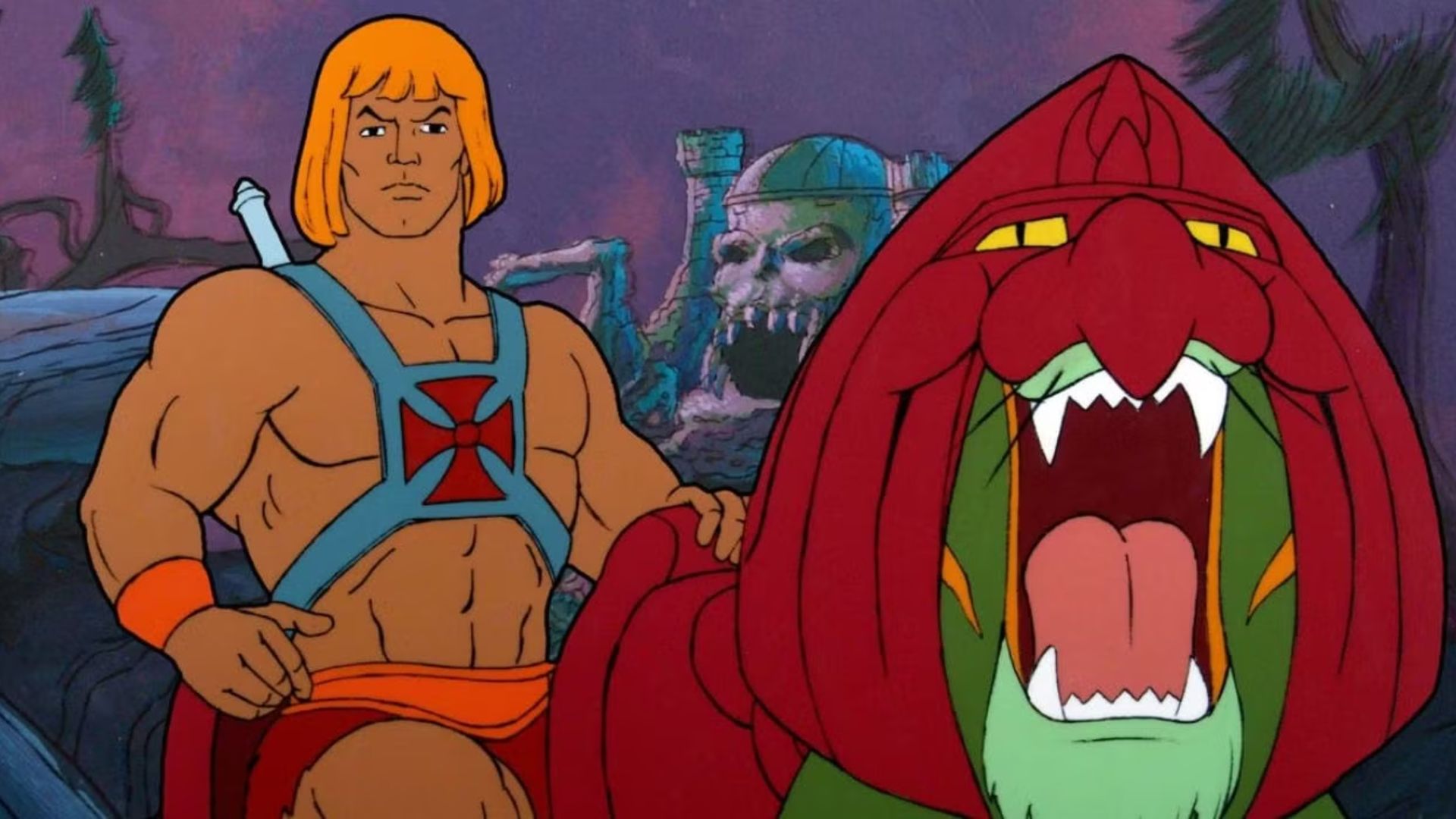
Most people know Mattel’s franchise simply as “He-Man,” but he’s actually just the main character and the biggest reason for its popularity. Originally intended to be the male equivalent of Barbie, this hero from Eternia is famous for his incredible strength and battles against villains like Skeletor. Interestingly, some of the most memorable parts of the story weren’t part of the original concept, and the details of He-Man’s beginnings have largely been forgotten.
The idea that He-Man is secretly Prince Adam wasn’t part of the original concept for the franchise. It was developed later and became well-known thanks to the 1980s cartoon. Interestingly, the first He-Man movie actually stayed truer to the initial plans. This makes He-Man’s history and the overall brand feel less connected to its roots compared to other popular franchises from the 80s.
The First He-Man Wasn’t a Pink Shirt-Wearing Prince
When the Masters of the Universe toys first came out in the early 1980s, Mattel included small comic books with each one. These comics let boys explore the developing story and world of Eternia. This was crucial for building out the initial concepts of the franchise, which uniquely blended science fiction and fantasy.
While many familiar characters and themes from the He-Man universe were present from the start, the character of He-Man himself was quite different. Initially, He-Man wasn’t depicted as the heroic Prince Adam transforming into a powerful hero. Instead, he was portrayed as a roaming fighter, similar to the barbarian Conan.
It made sense that the early Masters of the Universe toys looked similar to those originally planned for the Conan the Barbarian movie starring Arnold Schwarzenegger, as Mattel had initially intended to create toys for that film. However, the character soon evolved in comic books to become more like a traditional superhero. DC Comics even published Masters of the Universe comics that included appearances by Superman on the planet Eternia.
It’s easy to see why the early comics introduced the idea that He-Man isn’t a separate person, but a powerful form Prince Adam achieves when he raises the Power Sword of Greyskull. The cartoon, He-Man and the Masters of the Universe, really cemented this concept, showing Prince Adam as a seemingly lazy guy who kept his heroic identity a secret from everyone he knew.
The show heavily borrowed from typical superhero stories, which made sense considering who it was made for. Unfortunately, this meant people have largely forgotten the original, more complex backstory of He-Man, even though it was arguably a better fit for the overall series.
He-Man’s Live-Action Movies are More Accurate Than People Realize
The Masters of the Universe movie came out in 1987, at a time when the toy line wasn’t as popular anymore. Mattel and the studio hoped it would bring the franchise back to life, but it unfortunately failed and effectively ended the Masters of the Universe series.
Because of limited funding, the show differed significantly from the original cartoon. Most of the story now happens on Earth, a result of some complicated interdimensional events.
One of the biggest differences in the movie was that Dolph Lundgren, playing He-Man, never physically transformed back into Prince Adam, even when he briefly lost his abilities. He would shout the famous “I have the power!” line after regaining his strength and sword, but he didn’t change appearance. The film actually seemed to take more inspiration from the original mini-comics, portraying He-Man more as a traveling warrior than a secret prince.
Actually, the director, Gary Goddard, was working from an earlier design called the Orion Astro-Harness. So, while the final product appeared different from what fans expected, it was actually very faithful to this original design for the company.
This is reminiscent of how the story starts with adult Adam on Earth, a choice some viewers disliked. But it’s important to remember that unexpected beginnings have always been a hallmark of the series.
I think it’s okay that this aspect of He-Man wasn’t huge – actually, it really highlights what made He-Man different from other popular franchises like G.I. Joe, Transformers, or the Teenage Mutant Ninja Turtles. Those shows focused on teams, but He-Man always felt more focused on the individual hero and his destiny.
Masters of the Universe is the Least Consistently Defined 1980s Property
Of all the popular brands from the 1980s that are still around today, Masters of the Universe is arguably the most shapeless and inconsistent. While the cartoon is often considered the main version of the story, its sillier aspects hold it back. Despite this, it remains the primary image of the franchise, which unfortunately prevents other potential directions – like a more rugged He-Man – from being developed.
This is largely because the franchise hasn’t changed much over the years, and most fans primarily remember the original 1983 animated series.
Like Masters of the Universe, Teenage Mutant Ninja Turtles took a different path from its source material. While the 1987 cartoon version moved away from the darker tone and storylines of the original Teenage Mutant Ninja Turtles comics, the live-action films of the 1990s and especially the 2003 cartoon series brought those elements back to life.
Sadly, the storyline established in the early Masters of the Universe mini-comics is no longer being used. When looking for similar shows, Thundercats is the closest comparison, and there are also some parallels with .
Many of these franchises are best known for their 1980s cartoons (and comics, like G.I. Joe), which has made it difficult for them to stay popular and move past being nostalgic favorites. In the case of Masters of the Universe, being so closely tied to its original cartoon is a mixed blessing, as some people now see it as cheesy and only remember it for internet memes.
The fact that the critically acclaimed 2003 reboot of Masters of the Universe wasn’t widely seen is a real setback, particularly because its accompanying toys fixed the problems with the original 1980s line. It’s especially frustrating considering how prominently toys are featured in the brand’s overall presence.
Whether the new He-Man movie will successfully revive the franchise is still uncertain, especially since some people doubt the value of revisiting such a campy series. These lighthearted aspects stem from core story choices, like the idea of Prince Adam, and might actually make it harder to win over audiences than any villain – even Skeletor!
2026-05-28 02:14