
If you’re not familiar with DC Comics or Green Lantern, the trailers for the new HBO Max series, Lanterns, might lead you to believe it’s a show about two wanderers with unusual abilities investigating a mystery in a small town. It doesn’t feature any superhero costumes, and surprisingly, for a show about Green Lantern, the visuals are quite muted and lacking in bright colors.
As a big Green Lantern fan, I wasn’t thrilled with the decision to just call the new show Lanterns – but I was even more surprised by something co-creator Damon Lindelof said on the Lovett or Leave It podcast. He explained they actually dropped the word ‘Green’ from the title because the creative team all felt it was, and I quote, ‘stupid.’ It’s a bold move, and honestly, it left a lot of us longtime fans pretty shocked.
After the comments began spreading online, Grant Morrison, a veteran comic book writer known for his popular work on Green Lantern, published a strongly worded reply on his Substack blog.
The color green in ‘Green Lantern’ isn’t silly, so it’s confusing when a writer works on the story while believing it’s fundamentally flawed. Just as you wouldn’t give ‘CSI’ scripts to writers who disrespect forensic science, why hire people who are embarrassed by or dismissive of the comic book source material they’re supposed to be developing?
He questioned why the Lanterns TV series would risk upsetting its core audience – Green Lantern fans – right from the beginning, calling it a seemingly unwise decision.
Those comments led Lindelof to share a photo on Instagram from his first Comic-Con visit, showing him wearing a Green Lantern T-shirt.
Lindelof described his previous statements as “a silly joke made on a comedy show” and explained he wanted to offer fans “a real apology and an honest explanation of how I truly feel.”
Lindelof explained his long-standing love for the character Hal Jordan, playfully defending his preference for green as his favorite color. He emphasized how proud he was to have worked on the Lanterns comic series, stating it would be disloyal to his colleagues to say anything less than that he felt honored to be involved in creating it.
He concluded by admitting he hadn’t expressed himself well, which he found particularly frustrating because he deeply cares about Hal, John, and everyone in the Corps. He promised to be more careful with his words in the future to live up to his commitment, but for now, he wants the work itself to demonstrate his dedication and he’s excited for everyone to experience it.
The new series Lanterns will debut on HBO Max in August. Given the source material, it’s safe to expect some green imagery, even though the trailers haven’t shown much of it yet. And the recent controversy surrounding the show seems perfectly timed for St. Patrick’s Day.
DC Comics That Can’t Become DC Movies

The Adventures of Jerry Lewis
In the 1950s and 60s, DC Comics had a popular series based on the comedic style of Jerry Lewis. It began as a team-up with his partner, Dean Martin, but continued as The Adventures of Jerry Lewis for another 80 issues after they split up. During its run, Jerry Lewis’s comic character interacted with famous DC superheroes like Batman, the Flash, and Superman. With all of DC’s reboots and changes over the years, it’s hard to know if these comics are still officially part of DC’s story, but perhaps someone can clarify! Regardless, this is one DC hero who won’t be getting his own movie in the DC Extended Universe.
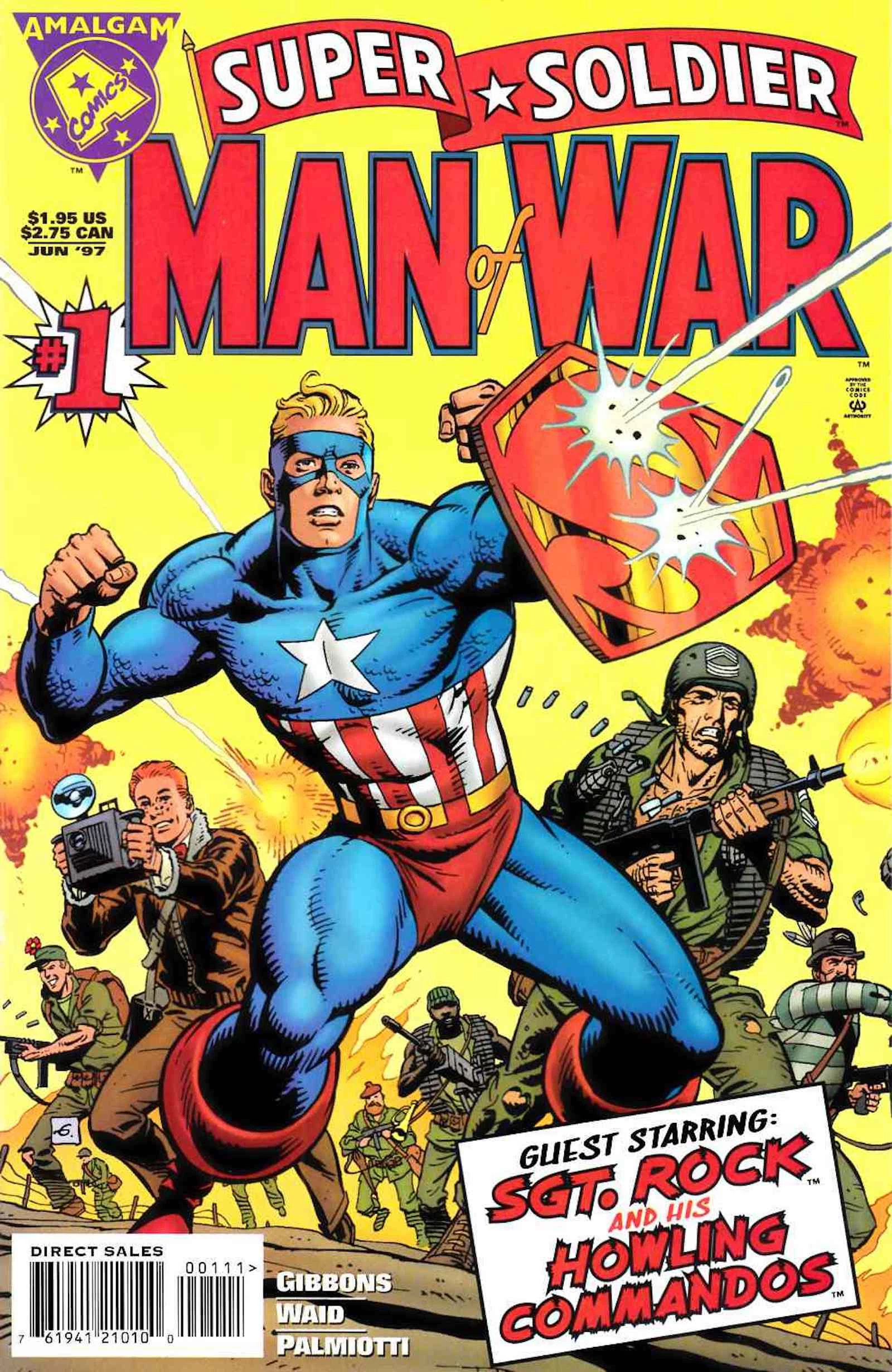
Amalgam Comics
As a comic book fan, I remember the 90s being a wild time, especially when Marvel and DC decided to throw their heroes at each other. After decades of keeping their universes separate, they unleashed a massive crossover event called DC vs. Marvel. It was a full-blown war, and the coolest part? We, the readers, got to decide the winners of many of the fights! The result was a temporary merging of both universes into something called the “Amalgam Universe,” and they published a whole series of comics featuring combined characters – think Superman mashed up with Captain America, or the Justice League teaming with the X-Men. They even had a Dr. Strange/Dr. Fate combo that was… well, let’s just say it was a bit of a magical mess.
Those Amalgam books were surprisingly popular, leading to a second wave a year later. But it’s been a full 25 years since we’ve seen these blended heroes again. A DC vs. Marvel movie feels practically impossible, given the logistics, but after seeing Spider-Man: No Way Home pull off a seemingly impossible crossover, I know a lot of fans, myself included, have started to dream about it.

Captain Action
Captain Action was a toy line created in the 1960s as a superhero-themed counterpart to G.I. Joe. What made Captain Action unique was that you could dress him up in costumes based on other popular heroes, like Superman, Spider-Man, and Flash Gordon. The toy’s popularity led to a short-lived DC comic book series in 1968, which even featured an appearance by Superman. However, after a handful of issues, Captain Action disappeared from DC Comics, and despite occasional toy revivals, he hasn’t returned to the DC universe in comic form.

Doc Savage
Doc Savage is a unique case – he’s a hero who’s struggled to get a movie adaptation despite being associated with both DC and Marvel Comics. Over the years, the rights to publish new Doc Savage stories have shifted between the two companies. DC even tried to incorporate Doc Savage and other pulp heroes into their main universe with a series called “First Wave” in the late 2000s. However, like many licensed comics, the series ended when the publishing license expired, leaving Doc Savage’s future uncertain.
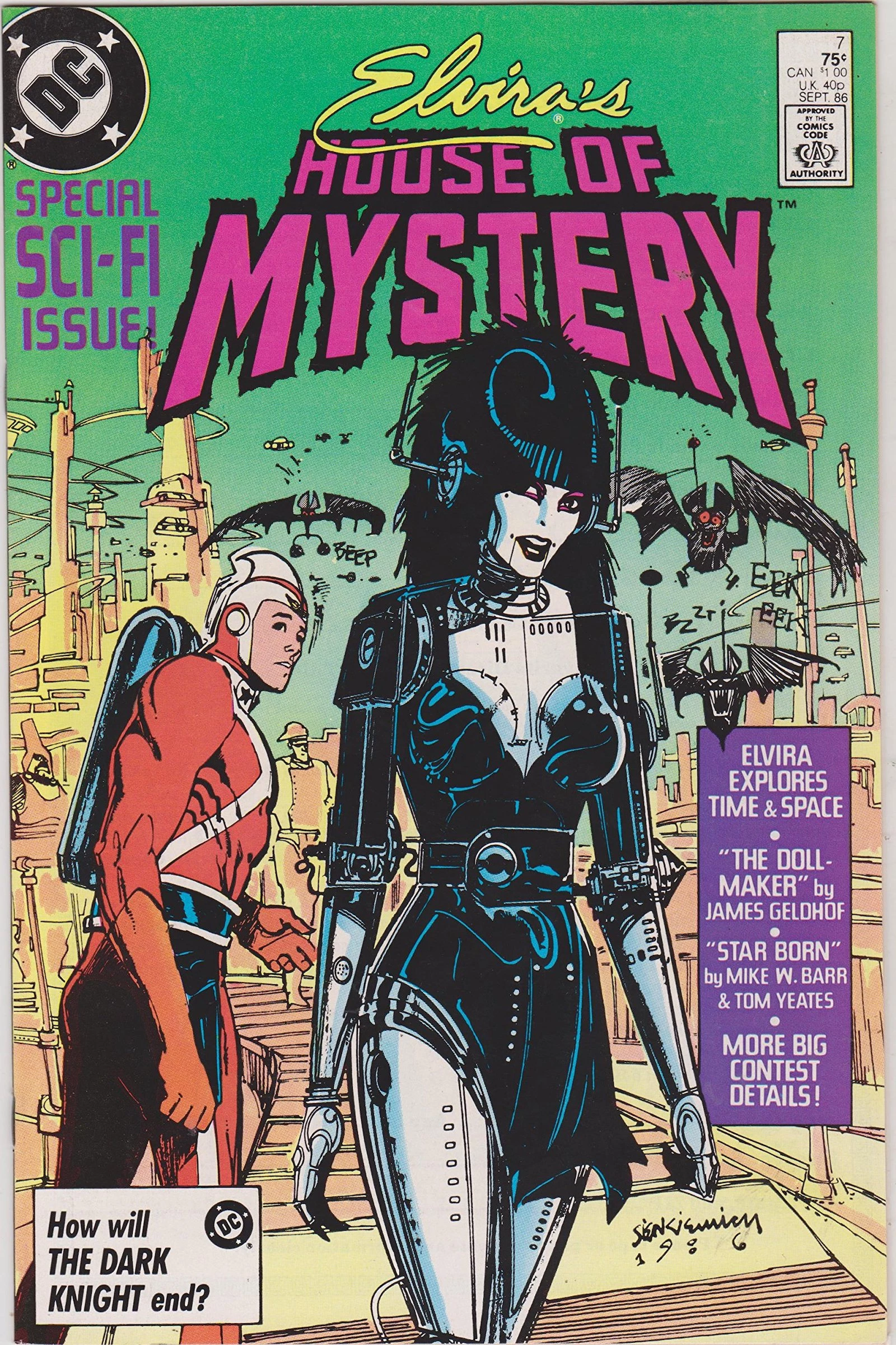
Elvira’s House of Mystery
DC’s House of Mystery is a long-running series known for its collection of scary stories, similar to Tales From the Crypt. In the late 1980s, it took a unique turn when it became Elvira’s House of Mystery, featuring the iconic horror host Elvira as the narrator for each tale. However, that version didn’t last long, and a movie adaptation wouldn’t quite fit. Now, a series on HBO Max seems like a much better idea.

Fallen Angel
DC Comics traditionally kept its main universe separate from more mature content, publishing those stories under imprints like Vertigo. However, in 2003, they made an unusual exception with Fallen Angel, a dark superhero series by Peter David and David Lopez. While never confirmed, the story strongly suggested that the main character was the same Supergirl David had written for years, before a storyline redefined her as Superman’s cousin from Krypton.
Before any direct connection could be made, DC canceled Fallen Angel. David then moved the series to IDW, a competing publisher. After that, any resemblances to his version of Supergirl could only be hinted at, and the possibility of a Fallen Angel movie within the DC Extended Universe disappeared.

Masters of the Universe
Back in the 1980s, DC Comics started publishing Masters of the Universe comics. To kick things off before a larger series, they introduced He-Man and Skeletor into the DC Universe through an issue of DC Comics Presents, a comic known for teaming up Superman with different characters each month.
More recently, DC regained the rights to the Masters comics and created a story that crossed over the He-Man universe with the characters from the Injustice fighting game series. A video game combining the two franchises seems likely, but a movie is probably not in the works.

Peter Cannon, Thunderbolt
In the 1980s, DC Comics obtained the rights to several characters from Charlton Comics, including Blue Beetle, Captain Atom, and Peter Cannon (also known as Thunderbolt). Thunderbolt’s story centers around an orphan raised in a monastery who dedicates himself to achieving peak physical and mental condition. These Charlton characters were integrated into the DC Universe during the Crisis on Infinite Earths event, and Peter Cannon even had his own DC comic in the early 1990s, where he fought alongside other DC heroes (as seen on the cover of Thunderbolt #11 with Power Girl). Although most of the Charlton characters remained with DC, the rights to Peter Cannon eventually returned to the estate of his creator, Peter A. Morisi. This means a dedicated Peter Cannon, Thunderbolt movie from DC is unlikely. However, you’ve already seen a version of the character – Alan Moore’s Watchmen was inspired by the Charlton characters, and Ozymandias is essentially Moore and artist Dave Gibbons’ take on Peter Cannon.

The Shadow
The Shadow, a classic pulp hero, has been a recurring character in DC Comics, notably during the ‘First Wave’ era, as well as in the 1970s, late 1980s, and late 2010s. He even teamed up with Batman in a 1970s issue of the Batman comic. With their similar appearances and approaches to fighting crime, a team-up movie featuring both characters would be compelling. However, such a project would require a complex agreement between the companies that own the rights to each character.

The Shield
Archie Comics is famous for its lighthearted stories about teens, but they also created a group of superheroes like The Shield, The Fly, and The Comet. Archie has occasionally allowed other companies to use these heroes, and for a while in the mid-2000s, they even appeared in DC Comics alongside characters like Magog from the popular series Kingdom Come. When Archie and DC’s partnership ended, these heroes were no longer published by DC.

Sovereign Seven
After finishing his successful 15-year run writing Uncanny X-Men and related titles at Marvel, Chris Claremont moved to DC Comics and launched Sovereign Seven. This new series featured a team of alien exiles living on Earth, who became involved in a large DC crossover event called “Genesis” and teamed up with other DC heroes – even Power Girl joined them for a time.
Sovereign Seven was notable as the first creator-owned series within the main DC Universe, meaning Claremont retained full control of the characters after the series ended and could publish them elsewhere if he chose. This led to a unique final issue where the entire three-year run of Sovereign Seven was revealed as a fictional comic book created by two artists within the DC Universe. Soon after the finale, Claremont went back to Marvel, and the Sovereign Seven characters were removed from DC continuity.

The Spirit
Similar to characters like Doc Savage and the Shadow, Will Eisner’s creation, the Spirit, briefly appeared in the DC Universe during a project called “First Wave” in the early 2010s. However, Eisner’s family still owned the rights to the character, so after the “First Wave” comics ended, the Spirit moved to IDW and then Dynamite Entertainment for new stories. This means, despite teaming up with Batman and other DC heroes in the past, the Spirit won’t be part of any future DC movies. (Considering the 2010 The Spirit film wasn’t very successful, that might actually be a good thing.)
2026-03-17 18:28