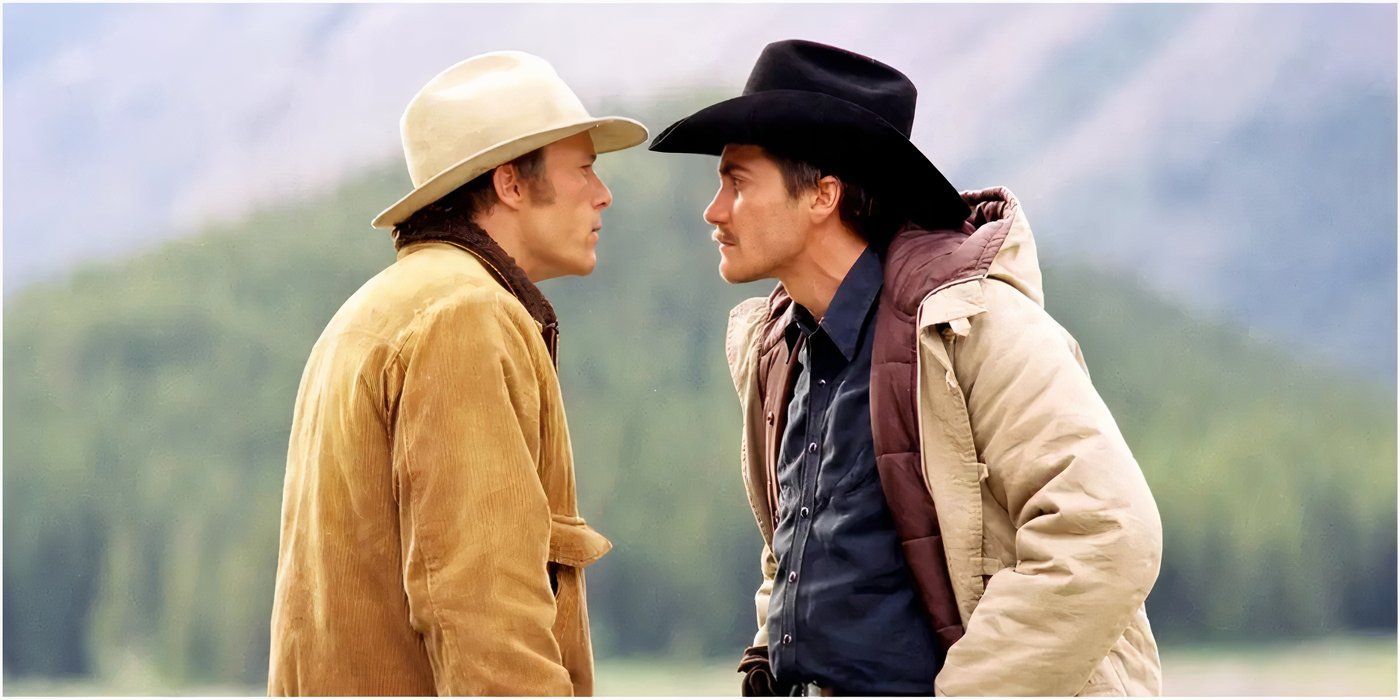
The first intimate encounter between Jack and Ennis (played by Jake Gyllenhaal and Heath Ledger) in Ang Lee’s Academy Award-winning film is raw and intense, more driven by primal attraction than romance. They’re drawn together yet struggle with their own feelings, like mismatched magnets colliding. Set in the remote mountains of Wyoming in 1963, the film shows how, even with complete privacy and wide-open spaces, the two men feel compelled to conceal their connection—from societal expectations, from each other, and even from themselves. Over the years, they continue to seek each other out, but always in secluded locations, avoiding potential judgment.
Now, twenty years after its release – the same length as the central relationship it portrays – Brokeback Mountain is still a powerfully moving film. Director Ang Lee and cinematographer Rodrigo Prieto beautifully set the story of Jack and Ennis against the backdrop of the stunning natural landscape. Despite facing unfair homophobic criticism upon release – which many believed led to Crash winning Best Picture at the Academy Awards that year – Brokeback Mountain has since proven to be a more insightful and emotionally resonant film.
Brokeback Mountain Is A Portrait of Love At Its Most Magnetic
Based on Annie Proulx’s 1997 short story, originally published in The New Yorker, Brokeback Mountain focuses less on outward prejudice against gay people and more on the inner struggles of men raised to believe in traditional, heterosexual relationships. While Jack and Ennis do experience discrimination, particularly at the end of the story, their biggest obstacle is their own fear and inability to accept their feelings. Heath Ledger’s portrayal of Ennis powerfully conveys this internal conflict, showing a man unable to embrace his true desires even when opportunities arise.
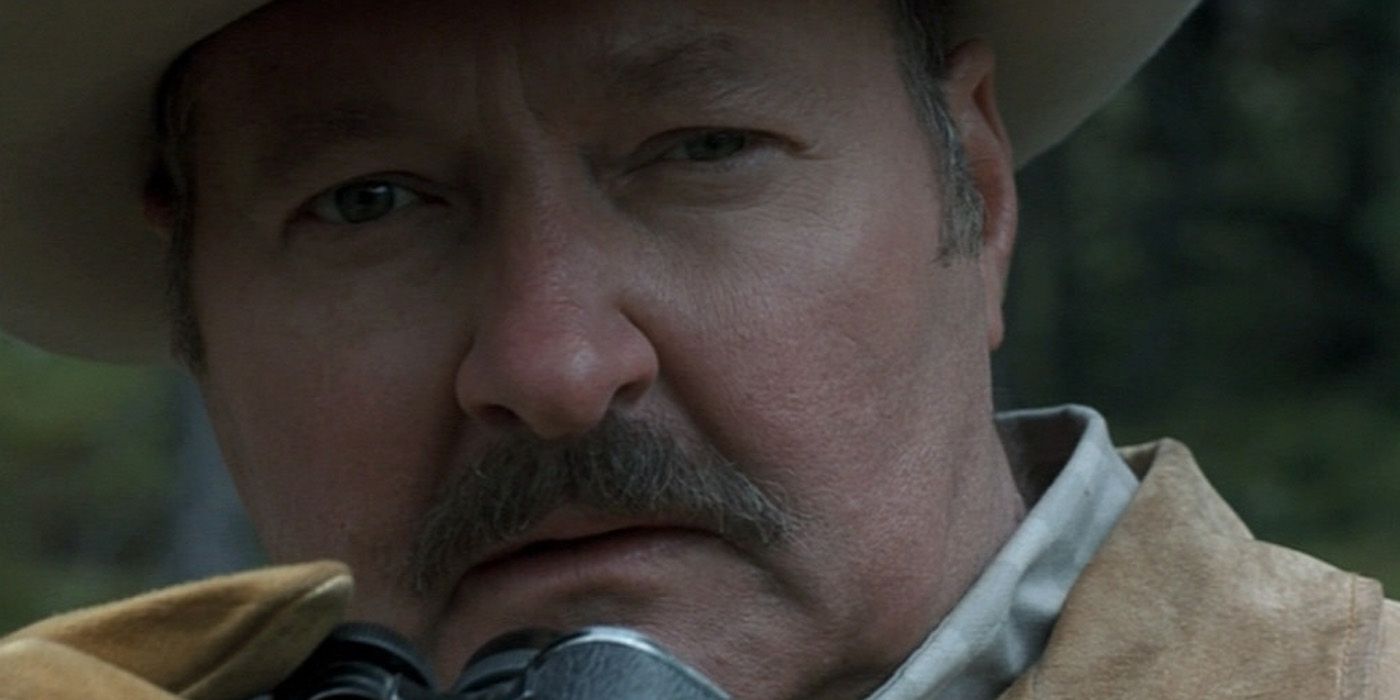
From the moment Ennis and Jack meet, there’s a clear connection between them. Ennis is first shown looking down, hidden under the brim of his cowboy hat, and keeping to himself. Jack arrives in a beat-up truck, already appearing troubled and restless. While they wait for their boss, Joe Aguirre, Jack shaves using his rearview mirror, sneaking glances at Ennis. Both men are hired to spend the season herding sheep on the isolated Brokeback Mountain, meaning they’ll be completely alone together.
The film’s editors, Geraldine Peroni and Dylan Tichenor, skillfully create a sense of timelessness and intimacy. We rarely see Jack and Ennis apart, and their summer romance unfolds as if outside of normal time – from shared meals to quiet conversations and passionate moments. Their connection develops more through unspoken feelings – glances, playful teasing, and a deep physical attraction – than through explicit dialogue.
The story then jumps ahead in time, with Lee not spending much time explaining what happens in between. Ennis marries Alma (Michelle Williams) and they have two daughters, but he struggles with the expectations of being a husband and father. Meanwhile, Jack marries Lureen (Anne Hathaway), a lively rodeo queen, and appears happier in his marriage than Ennis is in his. After four years, Jack reaches out to Ennis, his old friend, with a postcard, sparking a connection that never truly faded.
Larry McMurtry and Diana Ossana, the screenwriters, give almost equal focus to the central couple and the people around them. Michelle Williams, who previously played a queer character in If These Walls Could Talk 2, delivers a heartbreaking performance as Alma, a woman deeply affected by unspoken truths about her husband. Anne Hathaway’s character, Lureen, appears stronger, but the film subtly reveals how sixteen years with an emotionally unavailable partner has built up defenses in someone already inclined to hide her feelings.
However, Brokeback Mountain is best known for the powerful performances of its lead actors, which are considered some of the most memorable portrayals of both same-sex love and cowboy life in film history. Director Lee doesn’t necessarily challenge traditional Western themes; instead, he beautifully explores them. Gyllenhaal portrays Jack as both a vulnerable, childlike figure and a confident man, shifting between these personas when he feels insecure. When Jack famously tells Ennis, “I wish I knew how to quit you,” he’s just finished explaining how hard it is to live a conventional life while hiding a love he can’t fully share. Unlike Ennis, Jack doesn’t have the ability or self-control to suppress his feelings, and he deeply misses the connection with his partner.
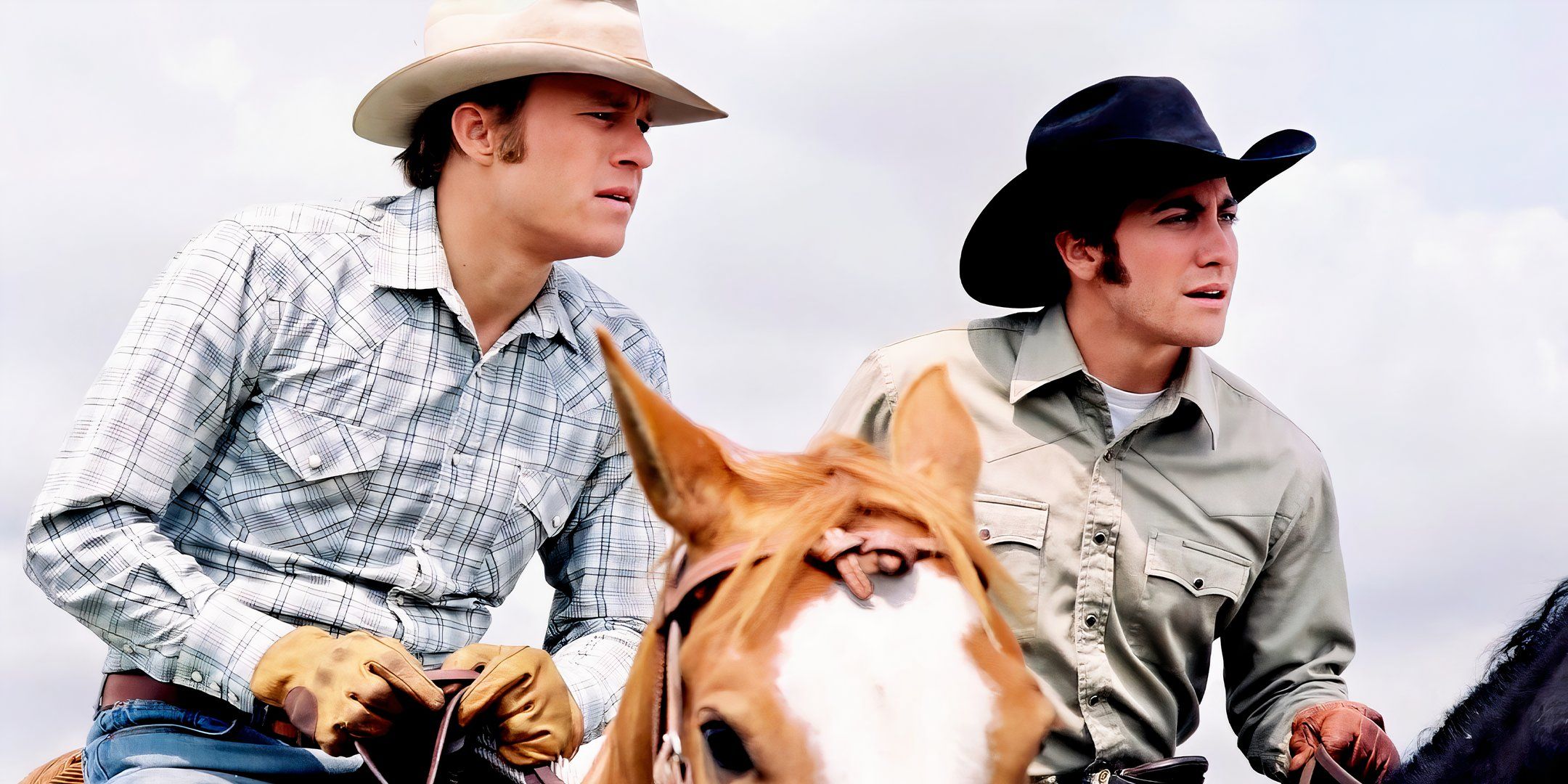

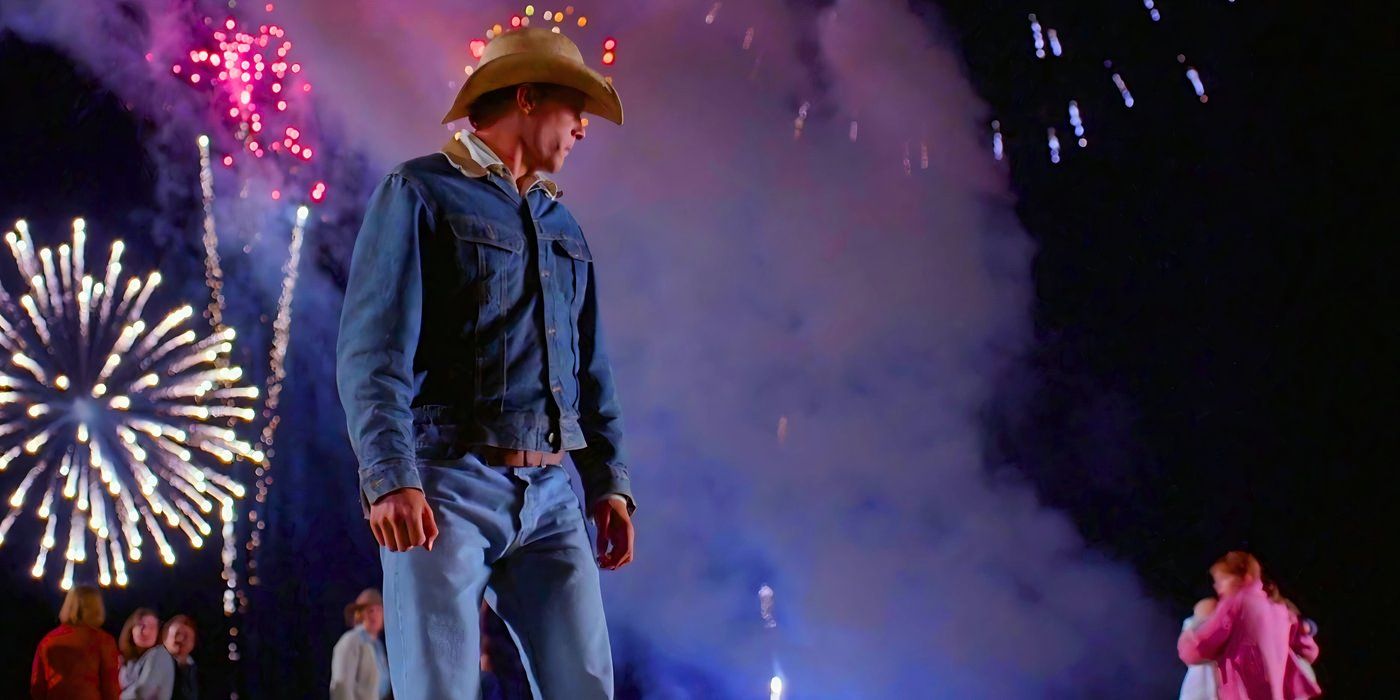
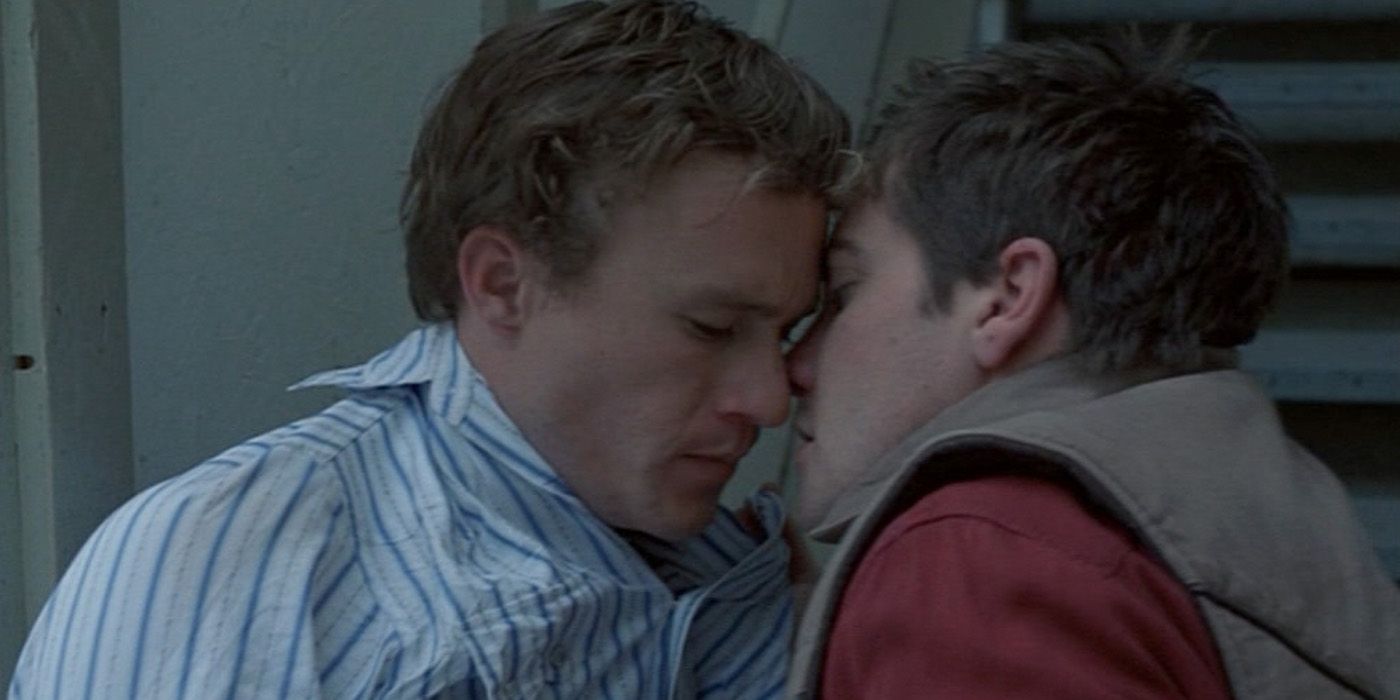
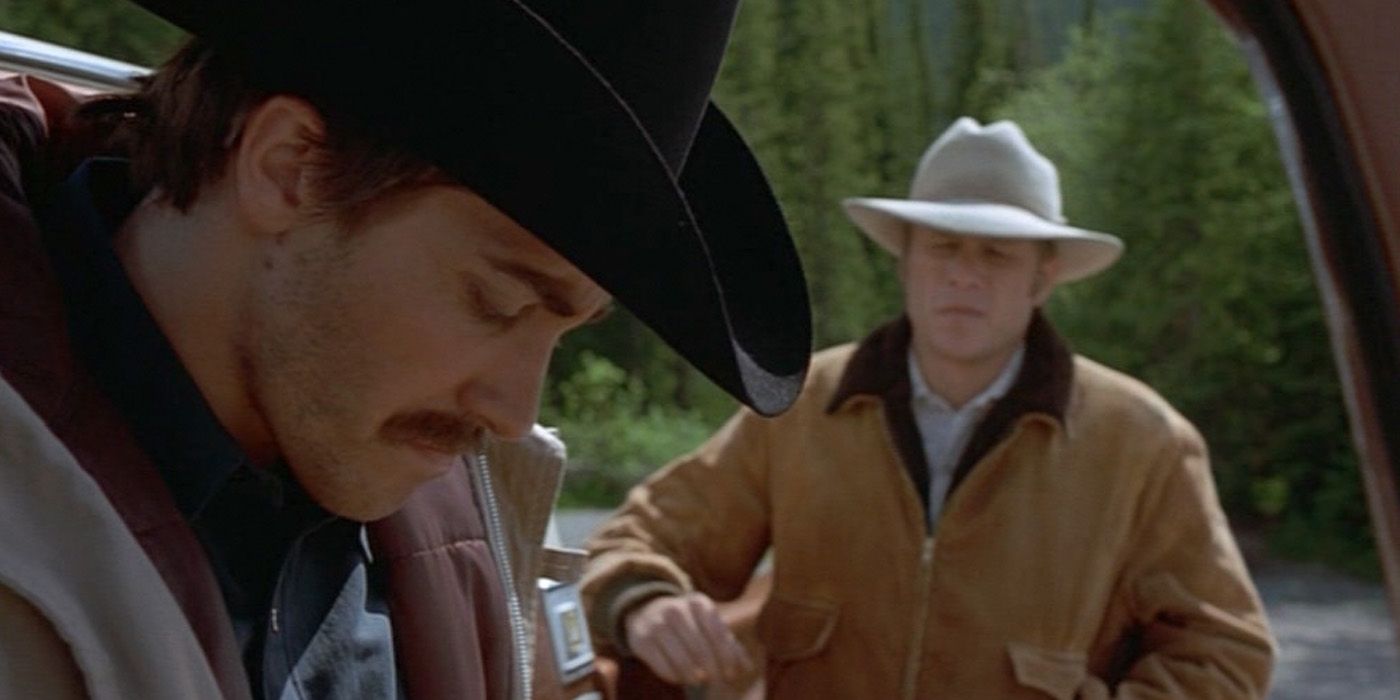
Three years before his iconic portrayal of the Joker in Christopher Nolan’s The Dark Knight, Heath Ledger delivered another compelling performance, disappearing into the role of Ennis. Ennis is a man so used to hiding his true self that he seems to have lost his identity. Though he appears calm, strong emotions simmer beneath the surface, erupting in outbursts of anger – like when he punches a brick wall after saying goodbye to Jack, and later, when he deliberately starts a fight with a stranger.
It’s just heartbreaking to think about all the incredible work Heath Ledger might have done if he’d lived longer. As a film fan, I always wonder what kind of actor he’d become, and what amazing performances he still had inside him. It’s not just the loss of a brilliant talent, but the loss of all the future joy he could have brought to the movies.
Although Brokeback Mountain didn’t win Best Picture at the 2006 Oscars, being nominated in eight categories was still a major moment. Even though several LGBT-themed films were released that year, the topic of homosexuality wasn’t widely discussed. The film was both a critical and commercial success, earning nearly $180 million worldwide on a $14 million budget. Ang Lee won the award for Best Director, and the film received awards for Best Adapted Screenplay and Score. Heath Ledger, Jake Gyllenhaal, and Michelle Williams all received nominations for their acting. Sadly, Heath Ledger’s untimely death three years later meant we lost out on seeing more of his work, but his fellow actors have continued to have successful and varied careers, proving their talent with this challenging film.
Knowing Heath Ledger gave only four performances after filming The Dark Knight adds a profound sadness to his work. It’s heartbreaking to watch him in the film’s final scenes, wearing makeup to appear older – years he would never actually experience. It’s a true tragedy that we lost him so young and will never see the incredible artist and person he could have become, or the further contributions he might have made to cinema.
Re-watching the film is still deeply moving, especially knowing Heath Ledger is gone. The beautiful music by Gustavo Santaolalla and the stunning visuals, reminiscent of paintings by artists like Albert Bierstadt, make the loss even more poignant. Ledger’s absence mirrors the film’s central, heartbreaking love story and sadly reflects the struggles of many LGBTQ+ individuals who have faced prejudice. While its impact might be debated, Brokeback Mountain’s place in film history is secure. Just like the vast mountains where Jack and Ennis find connection, Ang Lee’s film offers something for everyone to relate to.
Brokeback Mountain premiered on September 2nd, 2005 at the Venice Film Festival before its theatrical release on December 9th, 2005.
2025-12-09 13:00