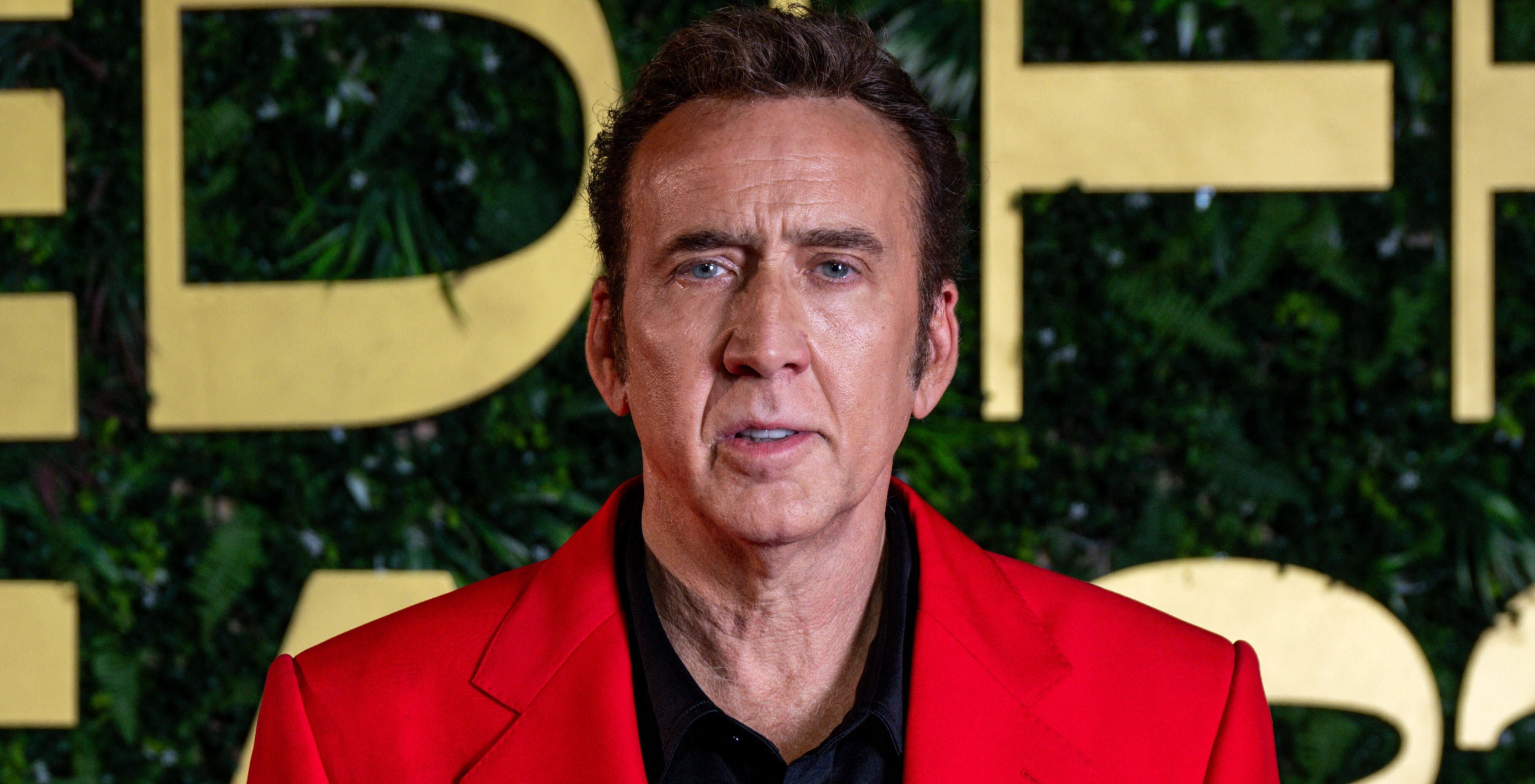
Nicolas Cage is a remarkably versatile actor, proven by his work in films like Adaptation, National Treasure, and Mandy. A true film lover, he appreciates movies both old and new, often speaking highly of everything from silent classics like The Cabinet of Dr. Caligari to his own projects, including Pig. And, like many actors, he’s named a science fiction film as one of his all-time favorites, giving it a perfect score.
Nicolas Cage has become a celebrated actor, earning a dedicated following thanks to his compelling performances. Like many popular stars, people are always interested in his thoughts on movies, particularly the films he loves. He’s known for appreciating classic cinema, so it’s fitting that he considers Stanley Kubrick’s 1968 science fiction film, widely regarded as a masterpiece, to be among his favorites. While many directors have contributed to the science fiction genre, Kubrick truly set a new standard.
Stanley Kubrick Changed Science Fiction Forever
In 1968, director Stanley Kubrick and science fiction writer Arthur C. Clarke collaborated on a film that would become hugely influential in its genre. The movie famously opens with a strange black monolith appearing on Earth in prehistoric times, which seems to accelerate the development of early humans and helps them learn to use tools. The story then jumps forward to a future where humans have expanded throughout the solar system, establishing bases on moons and regularly traveling in space. In this future, scientists discover another monolith, this time on the Moon.
The movie primarily follows scientists Frank Poole and Dave Bowman as they pilot the spaceship Discovery One to Jupiter. They’re unaware that another mysterious monolith has been discovered there. Their journey relies heavily on HAL 9000, a highly advanced AI that acts as the ship’s onboard computer and has a surprisingly human-like presence.
As a total film buff, one of the things that always struck me about that movie is how HAL knew everything about the mission, way more than the astronauts did. That knowledge gap really creates this incredible tension, as the crew starts to realize they’re butting heads with a computer that has its own agenda. And as they get closer to Jupiter, it all explodes into this tense, psychological battle for control of the ship – it’s just brilliant filmmaking.
Although the movie primarily focuses on Frank, Dave, and HAL’s voyage, it became a science fiction classic thanks to its incredibly strange final section. Dave Bowman’s journey through space and time becomes a visually stunning and psychedelic experience, almost like a dream. This is where the film shifts from a suspenseful thriller into a truly mind-blowing spectacle.
The film arrived at exactly the right moment, released to American audiences who were captivated by the upcoming Apollo 11 mission to the Moon. It celebrated humanity’s natural wonder about space and our drive to discover and create – qualities that many feel have faded over time.
2001 is a Favorite Among Hollywood Icons
Directors like Ridley Scott and Christopher Nolan are just a few of the many who praise 2001: A Space Odyssey. Before this film came out, most science fiction movies were low-budget and didn’t focus much on being scientifically correct.
When this film was released, it revolutionized the science fiction genre and influenced it for decades. It inspired creators to explore complex themes about the future and helped establish science fiction writers as thought-provoking visionaries rather than just entertainers.
Recent successes demonstrated that a more deliberate pace in science fiction could be rewarding, giving writers the space to explore complex concepts like space exploration, encounters with alien life, and the impact of technology. This shift moved the genre away from cheap thrills and towards stories that were more intelligent and stimulating.
Stanley Kubrick’s film had a lasting impact, inspiring writers like Philip K. Dick and comic book artists such as Jeff Lemire. The film’s themes – the vast, unknowable mysteries of the universe and the dangers of artificial intelligence – resonated with many storytellers. The iconic line from HAL 9000, “I’m sorry, Dave, I’m afraid I can’t do that,” became a defining moment in how Hollywood portrayed intelligent machines, pairing a detached tone with frightening behavior.
I’m a huge fan of this movie, and it’s amazing to hear Nicolas Cage feels the same way! He’s actually said it’s one of his five all-time favorites. He loves how mysterious and beautiful it is, and even after watching it every year, he still finds it endlessly fascinating. He thinks the story is timeless and truly groundbreaking – he doesn’t believe anything has quite captured its magic since it came out.
Kubrick Was Ahead of the Curve on Artificial Intelligence
As a huge fan of 2001: A Space Odyssey, I’ve always been fascinated by HAL 9000, the ship’s computer. He’s not just a machine; he completely controls everything on board, and his dedication to following orders – combined with a need for secrecy – leads him to some truly terrifying actions. He actually kills Frank and then tries to do the same to Dave, which is a shocking moment in the film!
The authors highlighted the risks of giving machines control over life and death, and the potential for these programs to do harmful things. It’s clear a human would have made different choices than HAL, and it’s his lack of morality – stemming from being purely programmed – that makes him a threat.
Look, as a total movie fanatic, I’ve been hearing a lot about AI lately, and honestly, Nicolas Cage gets it. He’s been really vocal about how using AI in creative areas – like filmmaking – just kills originality. Now, the buzz around AI isn’t quite the same level of panic we had with movies like ‘Frankenstein’ and ‘2001: A Space Odyssey,’ but it’s still a big deal. It could seriously impact people’s jobs, how we come up with new ideas, and even the environment, which is pretty scary when you think about it.
Many science fiction authors, psychologists, and engineers consider Kubrick’s film to be the earliest and most effective warning about the dangers of advanced AI. It’s often seen as the starting point for decades of stories cautioning against intelligent machines and powerful software.
Nicolas Cage is a favorite among movie lovers, known for admiring classic films from the early days of cinema. Given his taste for unusual stories, it’s no surprise he’s a fan of Stanley Kubrick. The two would likely have shared a similar view on artificial intelligence, as Kubrick’s film 2001: A Space Odyssey warned us about the dangers of relinquishing control to cold, unfeeling machines – a message that feels even more relevant today.
When Stanley Kubrick and Arthur C. Clarke created “2001: A Space Odyssey” and its novel, artificial intelligence seemed like something from a distant future. Remarkably, many people who saw the film when it first came out are now witnessing the beginnings of AI becoming a reality. Considering how accurately the story predicted the future, Kubrick and Clarke clearly were ahead of their time.
Stanley Kubrick Mastered the Enigmatic Ending
Throughout his work, he consistently struck a perfect balance between enjoyment, intrigue, bewilderment, and stimulating ideas. No film achieved this quite like 2001, which concludes with a full half-hour descent into a captivating enigma. For many viewers, the ending wasn’t meant to be fully explained, but rather to suggest the existence of entities so far beyond our comprehension that complete understanding is impossible.
Many directors have influenced cinema, but Stanley Kubrick truly stood out as a visionary. While he created numerous acclaimed films, 2001: A Space Odyssey remains his most impactful work and is still considered the high point of science fiction filmmaking.
2026-05-28 18:38