The X-Men consistently drive the most compelling and intricate stories in the Marvel Universe. Recently, they’ve been central to the rise and fall of the Krakoan Nation, and are working to regain public trust. Despite ongoing anti-Mutant prejudice and strained relationships with other hero teams who question their direction, the X-Men remain a beacon of hope for Mutants worldwide.
Many classic X-Men stories have faded from memory, eclipsed by large crossover events or famous storylines with major character deaths and world-altering consequences. However, one significant moment from X-Men history, which was a big deal when it first came out, hasn’t received as much attention lately. This story showcases the high quality of the X-Men comics and remains relevant to how the X-Men are used in current comics and the broader Marvel Cinematic Universe.
X-Men: The 198 Follows House of M
In 2005, Marvel launched a large-scale story arc called House of M that dramatically reshaped the Scarlet Witch’s character. The event involved Wanda Maximoff altering reality to match what she wanted, leading to big changes for many heroes and sparking new conflicts. It was a complex period with both peaceful moments and intense battles, woven into several ongoing comic book series. For a while, Scarlet Witch was seen as a villain, and a massive effort was needed to undo the changes she made. However, this wouldn’t be the last time she altered the course of history.
Okay, so the ending of that arc was intense. Scarlet Witch just says ‘No More Mutants,’ and seriously, things went downhill fast. It’s something fans will never forget. Basically, almost all mutants lost their powers – like, poof, gone. The timeline even shifted, making it like mutants never really existed in the first place. A few big names kept theirs, thankfully, but most had to live normal human lives. A bunch of characters just vanished from the comics for years, it was a total wipeout. It really felt like an entire people were decimated, honestly. It was a huge deal.
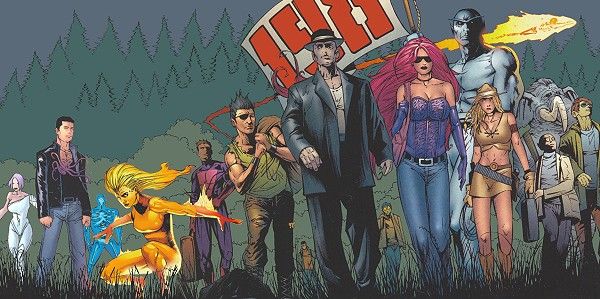
As Mutants began to lose their powers – and their place in the world – a new era dawned. This shift was powerfully depicted in the comic X-Men: The 198, a five-issue series released in 2006. Written by David Hine with artwork by Jim Muniz, the story acted as a key piece of the larger ‘Decimation’ event. Notably, Hine was also contributing to other related titles like Son of M and What If? X-Men Deadly Genesis, giving him a central role in shaping this storyline.
As a huge X-Men fan, I was really intrigued by X-Men: The 198. The title itself is heartbreaking – it refers to the shockingly low number of mutants left after the events leading up to this story. It’s not just an action-packed adventure, though. This series really dives into what it’s like for those few remaining mutants, still facing prejudice and fear, but now on a much larger scale. It’s a really powerful, emotional story about the aftermath of near-extinction and the pain of survival. But even with all the sadness, there’s a thread of hope running through it, and it definitely feels like it’s building towards something bigger – a future where mutants can finally return. It’s a tough read, honestly, but a really important one.
X-Men: The 198 Is A Politically Powerful Story
X-Men: The 198 is a particularly impactful and thought-provoking story within the Marvel universe. It explores the aftermath of a devastating event that nearly wiped out all mutants. For years, the struggles of mutants have been seen as a reflection of real-world issues like prejudice and discrimination. In the story, the near-extinction of mutants is treated as a genocide, and the resulting grief and anger are powerfully portrayed. X-Men: The 198 demonstrates that even after losing so much, some people still want to harm mutants simply because they fear and envy their powers.
The situation becomes much more troubling when the survivors request assistance. They’re brought to Professor Xavier’s institute, hoping for safety. A government plan promises protection through a new Sentinel program – a surprising development, considering Sentinels have always been used to hunt mutants. While many are suspicious, they feel they have no other option.
Okay, so it’s really weird seeing the mutants and those Sentinel robots working together, but this place they’re all in… it doesn’t feel like a safe haven, more like a fancy prison. They keep telling the mutants it’s for their own protection, but honestly, it’s making everyone super paranoid. These are people who’ve been hunted their whole lives, and now, when they’re vulnerable, they’re basically trapped and can’t even live normally. And it’s all because of one woman who seems to be above the law. We’re all just waiting to see what happens next, hoping things don’t go south.
The comic’s ending is packed with action – an escape, a betrayal, a thwarted trap, and the Mutants facing total destruction. But despite the danger, it’s a pivotal moment for mutant society. After nearly losing all 198 remaining Mutants, the government is compelled to grant them full amnesty, essentially giving them their freedom, though it feels fragile given the current situation. It’s a definitive conclusion that sets the Mutants on a fresh course, hinting at a future return and a possible reversal of fortune. This marks the beginning of a new chapter for them.
Mutants May Be About To Face A Similar Fate In The MCU
Today’s comics share a lot of parallels with stories from the past. A central issue remains the fate of mutants. Following the downfall of their nation, mutants are once again struggling for safety and acceptance, mirroring the difficulties they faced after the ‘House of M’ event. Although the mutant population hasn’t decreased, they are now divided into competing groups, lacking the unity they once had.
The MCU is heading in an interesting direction by introducing mutants, but it appears there aren’t as many as fans of the comics might expect. It’s almost as if a large number of mutants disappeared at some point, and the timeline is being altered as a result. The current storyline seems to be mirroring comic book history, potentially revealing a past event that drastically reduced the mutant population. Mutants have always existed within the MCU’s timeline, but a significant change in reality has caused them to be largely forgotten.
However, it’s also possible we’ll see the opposite happen: the Mutants could be poised to enter the Marvel Cinematic Universe for the first time, potentially causing timelines to collide or history to change. If this is true, the resulting impact and consequences will be huge, especially how humans react to this new power dynamic. This might even lead to the creation of the Sentinel program, echoing familiar themes. This comic book feels particularly relevant now, as we begin to see how these interactions might unfold.
Ultimately, X-Men: The 198 explores themes of hatred, fear, and regret, and how a community can recover from near destruction. The story focuses just as much on how people react to mutants as it does on the mutants’ experiences and feelings. While hope ultimately prevails, the film also reminds us that peace is often fleeting. For those familiar with the broader narrative, it’s clear this cycle of struggle continues, and moments of freedom are never permanent.
2026-05-16 14:14