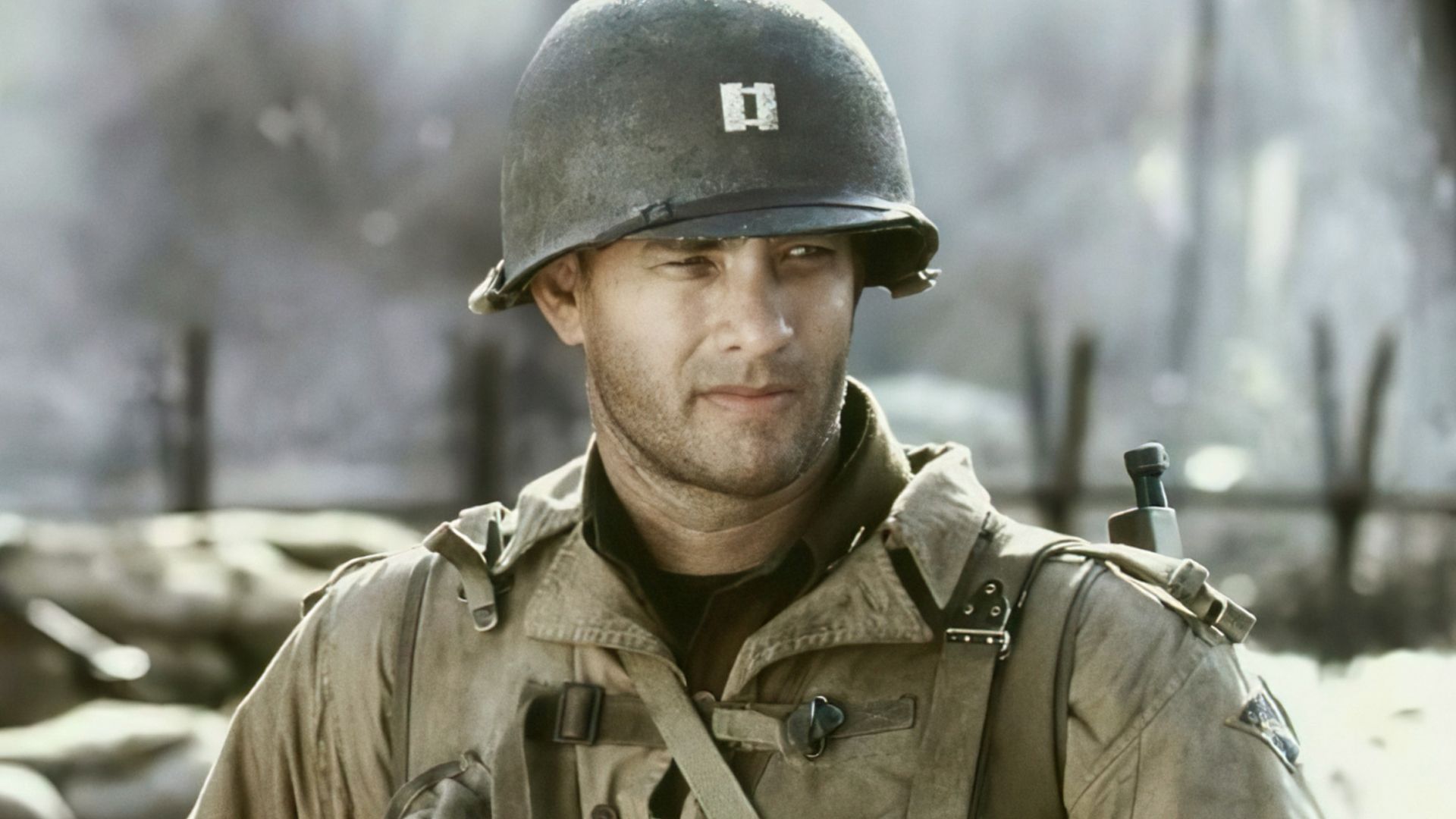
As a huge film fan, I still think Steven Spielberg’s Saving Private Ryan is the benchmark for all war movies, even almost thirty years after it came out. It’s set during the D-Day landings in 1944, and the story follows a group of soldiers as they risk everything to find one young paratrooper, Private Ryan.
This incredibly popular and moving film, starring Tom Hanks and Tom Sizemore, quickly became a classic, winning five Oscars, including awards for Best Director and Best Picture. While widely considered one of the greatest war movies ever made, some other films in the genre are even stronger.
Apocalypse Now Is The Darkest War Movie Ever
Francis Ford Coppola’s film Apocalypse Now significantly changed how people viewed war, and it’s a prime example of this shift. Inspired by Joseph Conrad’s Heart of Darkness, the film moves the story to Southeast Asia. Marlon Brando gives an iconic performance as Colonel Kurtz, a troubled and rebellious officer who establishes a disturbing following deep within a jungle.
The film also stars Martin Sheen, Harrison Ford, and Robert Duvall, and quickly became known for its thoughtful look at the moral and psychological impacts of war. It doesn’t focus so much on the details of the Vietnam War itself, but rather on the disturbing nature of violence, powerfully illustrated by the iconic moment when Colonel Bill Kilgore proclaims his love for the smell of napalm.
Rather than trying to explain or analyze the Vietnam War, Apocalypse Now throws viewers directly into the chaos and confusion felt by the soldiers. The film ultimately reveals the dark potential within people and organizations, dismantling any sense of control or purpose they might believe they have.
At its heart, Apocalypse Now shows how war is both devastating and strangely appealing, changing people into someone they might not recognize. Unlike the realistic portrayal in Saving Private Ryan, Apocalypse Now explores the deeper meaning of war. It moves beyond simple ideas of heroism and duty, making Coppola’s film a bold statement about American military involvement – a critique of both war itself and the aggressive spirit behind it.
The Great Escape Spotlights the Human Spirit
War movies don’t always have to be bleak and sad. Films like The Great Escape demonstrate that you can explore the consequences of war without dwelling on painful details. Starring Steve McQueen as the Cooler King, The Great Escape is a classic war comedy-adventure. To appeal to a wider audience, the filmmakers prioritized emotional storytelling and lighthearted humor, even if it meant taking liberties with historical accuracy.
Ultimately, The Great Escape wasn’t intended to be a realistic depiction of war, particularly its famous motorcycle chases and stunts. While inspired by a true story, the film dramatizes the mass escape from a prisoner of war camp run by the Nazis. The Great Escape skillfully struck a balance – it was entertaining without being disrespectful, and thrilling without celebrating war itself.
The film feels more like a fun, clever caper than a serious drama, though its somewhat bleak ending fits the overall story. The triumph of the main villain is less about actual victory and more about a glimmer of hope and control, especially considering the fate of many characters. Ultimately, the story shines because of the wit and resourcefulness of its characters, highlighting the enduring human ability to find humor and maintain dignity even in difficult circumstances.
Both The Great Escape and Saving Private Ryan are powerfully emotional films that showcase the resilience of the human spirit. However, The Great Escape portrays heroism in a unique way, focusing on character rather than large-scale battle scenes, and its ending is arguably more heartbreaking than the more sentimental conclusion of Saving Private Ryan.
Schindler’s List Offers Is a Tragic WWII Tale
While Saving Private Ryan is a good war film, it doesn’t quite reach the level of Schindler’s List, which is widely considered a masterpiece. Schindler’s List powerfully depicts the horrors of the Holocaust, where millions of innocent people were tragically killed by the Nazis.
It’s no longer acceptable to claim ignorance about the Holocaust, but it’s important to remember the 1940s were a different time. The Nazi regime was incredibly skilled at spreading misinformation and concealing its actions. Because of this, the responsibility for helping victims often fell to individuals like Oskar Schindler, who bravely put himself at risk to save over a thousand people during the Holocaust.
Watching Liam Neeson’s character fall apart at the end of Schindler’s List is incredibly moving, as he questions whether he could have done more to help. However, the film isn’t just about one man’s imperfect heroism; it also powerfully portrays the shocking indifference shown during wartime. Ralph Fiennes delivers a career-defining performance as Amon Göth, a villain far more compelling than his portrayal of Lord Voldemort.
I was deeply moved by Schindler’s List, and it felt completely deserving of its seven Academy Awards, including Best Picture. The way it was filmed really felt like watching actual historical footage. More than just a movie, it’s a truly heartbreaking record of terrible events, a reminder that such horrors must never be repeated. While Saving Private Ryan is a powerful film in its own right, I don’t think it reaches the same incredibly high artistic and emotional level as Schindler’s List.
The Battle of Algiers Set the Stage for War Epic to Come
The European colonization of Africa in the late 1800s and early to mid-1900s is a shameful period in history. While some countries gained independence through fierce fighting – a different approach than the peaceful resistance led by Mahatma Gandhi – Algeria’s struggle for freedom is particularly notable. The film The Battle of Algiers powerfully depicts the courageous, though often brutal, fight of Algerian independence fighters between 1954 and 1962, when the country finally achieved independence.
Despite facing criticism in France for many years, The Battle of Algiers quickly gained international recognition. Director Gillo Pontecorvo’s unique, documentary-style filmmaking creates a sense of realism and impartiality. The film centers on a handful of characters, using their experiences to illustrate the chaotic and unpredictable nature of conflict during the Algerian War for independence.
The connection between oppression and extremism became strikingly apparent in the 21st century, and was powerfully illustrated in the film The Battle of Algiers. The film didn’t offer easy answers, instead pushing viewers to question their own beliefs and confront uncomfortable truths, rather than simply accepting patriotic narratives or straightforward moral judgments. Surprisingly, in 2003, the Pentagon actually screened the film to teach military officers strategies for fighting terrorism.
The film The Battle of Algiers fundamentally changed how wars are depicted on screen. One critic noted its broad and lasting relevance. While it might not be as emotionally powerful as Saving Private Ryan, it’s a more complex film that focuses on much bigger issues than just one person’s fate.
Life Is Beautiful Is All About a Father’s Love
Roberto Benigni’s 1997 film, Life Is Beautiful, offers a unique take on war stories, focusing on the enduring love between a father and son. The film portrays the joyful lives of Guido and Giosuè, which are tragically disrupted when they are sent to a Nazi concentration camp, forcing them to confront unimaginable cruelty.
Despite facing immense hardship himself, Guido consistently tried to cheer up his son and shield him from the horrors around them, where so many had perished. Even knowing his own execution was imminent, Guido continued to play along with the game, determined to protect Giosuè from witnessing the terrible truth.
The film Life Is Beautiful sparked debate because of its use of humor while depicting the Holocaust. However, many critics noted that the movie didn’t trivialize or oversimplify this sensitive topic. Director Benigni took a profoundly dark period in history and turned it into a story celebrating family, love, and the enduring power of hope. The film’s comedic moments served as a way to shield a child from the horrors around him, which is a justifiable reason to use humor even in the face of immense pain.
The heartbreaking story of Guido Orefice echoes the fate of the many nameless people who perished in concentration camps and were lost to history. However, Guido’s spirit lives on through his son, Giosuè, who becomes the storyteller, representing those who remembered and honored the true heroes of the Holocaust. The emotional power of Life Is Beautiful is far greater than other films that explore heroism, offering a much deeper and more meaningful portrayal.
Das Boot Is a Terrifying War Epic
Wolfgang Petersen’s 1981 film, Das Boot, a German-language story about the German U-96 submarine during the Battle of the Atlantic, has become a widely recognized part of popular culture, appearing in shows like The Simpsons and Will & Grace. The film realistically portrays the intense excitement and long stretches of monotony experienced by soldiers during World War II.
The film Das Boot was a critical success, receiving six Academy Award nominations and remaining Germany’s most-nominated film until All Quiet on the Western Front in 2022. It quickly draws viewers into a suffocating and emotionally draining experience, trapping both the crew and the audience within the confines of the submarine. By realistically portraying the intense physical conditions, the film puts viewers in the characters’ shoes, highlighting the fear and boredom of being stuck underwater for long periods.
Most American WWII movies portray German soldiers as villains, but Das Boot shows they were often just regular young men – scared, exhausted, and coping with fear by using humor. Unlike films focused on which side was right, this movie highlights the common human experience of vulnerability, regardless of nationality.
The film Das Boot powerfully illustrates that relentless, mounting tension is more debilitating than sporadic bursts of activity. Unlike Saving Private Ryan, which focuses on heroic acts, Das Boot realistically portrays the effects of fear, exhaustion, and a sense of powerlessness experienced by soldiers – specifically, those trapped inside a cramped submarine constantly at risk of being crushed or flooded.
Read More
- Mortal Kombat II Scores Fresh Rotten Tomatoes Score In Franhise First
- Золото прогноз
- РБК акции прогноз. Цена акций RBCM
- Bambi The Reckoning Sets Peacock Streaming Date in March 2026
- Hell’s Paradise Season 2 Episode 9 Release Date, Time, Where to Watch
- 3 Best Prime Video Shows To Watch This Weekend (Mar 6–8, 2026)
- 7-Part Netflix Series Starring A Hollywood Icon Broke All The Rules
- 9 Best New Movies Coming To HBO Max In May 2026
- 7 Fantasy Books Better Than Game Of Thrones
- Stephen King Praises New Horror Collection “I Know A Place”
2026-05-15 18:11