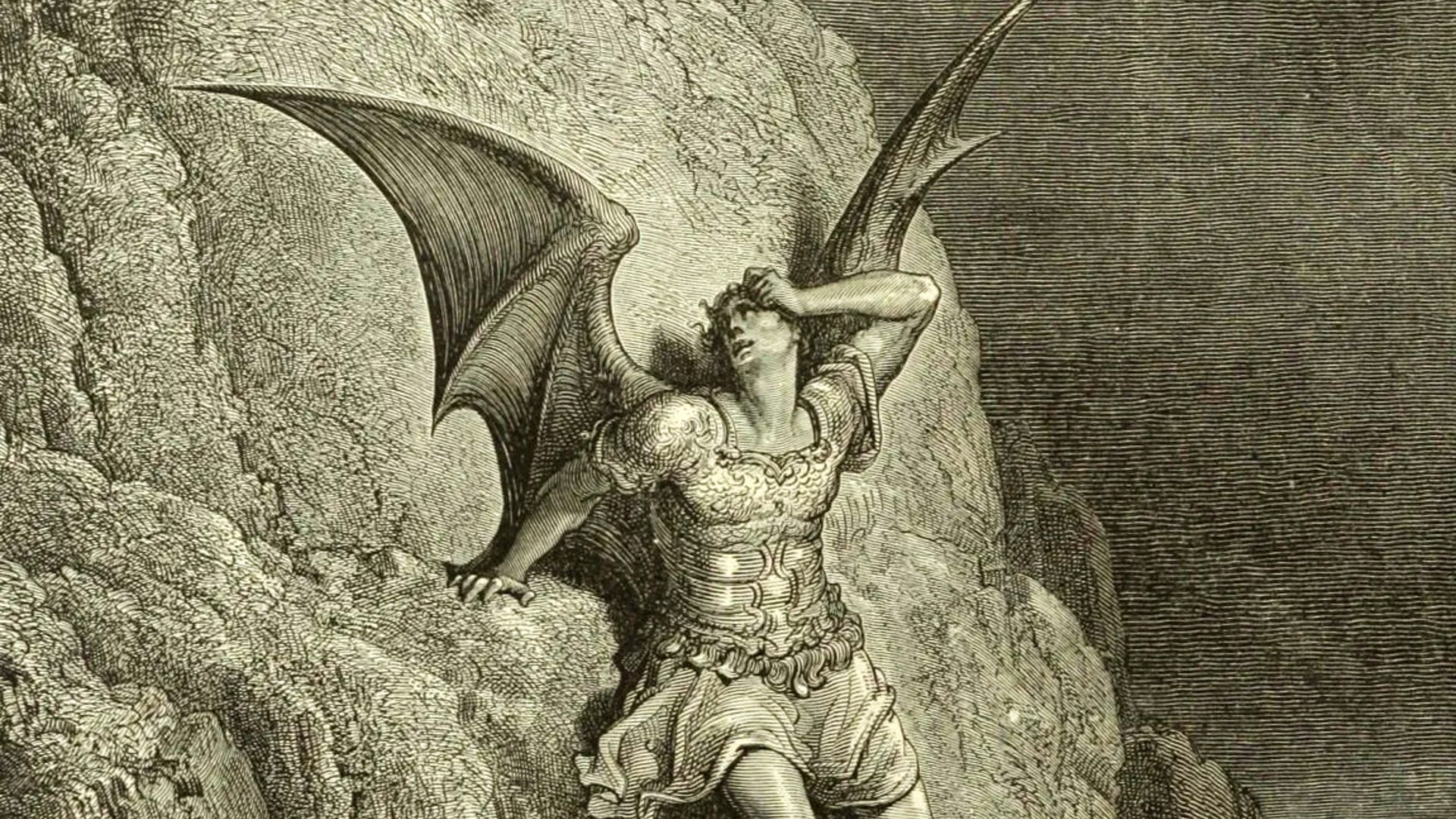
Roger Avary, known for co-creating Pulp Fiction, is attempting to adapt John Milton’s classic poem Paradise Lost into a film. However, he’s relying on artificial intelligence to make it happen, a choice that feels like a risky deal – a bit like the story of Faust.
Deadline was the first to report that Alex Avary is adapting Paradise Lost with the help of Ex Machina Studios, a company specializing in AI-driven filmmaking. The poem, written almost 400 years ago, recounts Lucifer’s revolt in heaven and his ascent to power in hell. Many believe the story is too difficult to adapt for the screen, but Avary and Ex Machina believe AI technology will allow them to finally bring it to life.
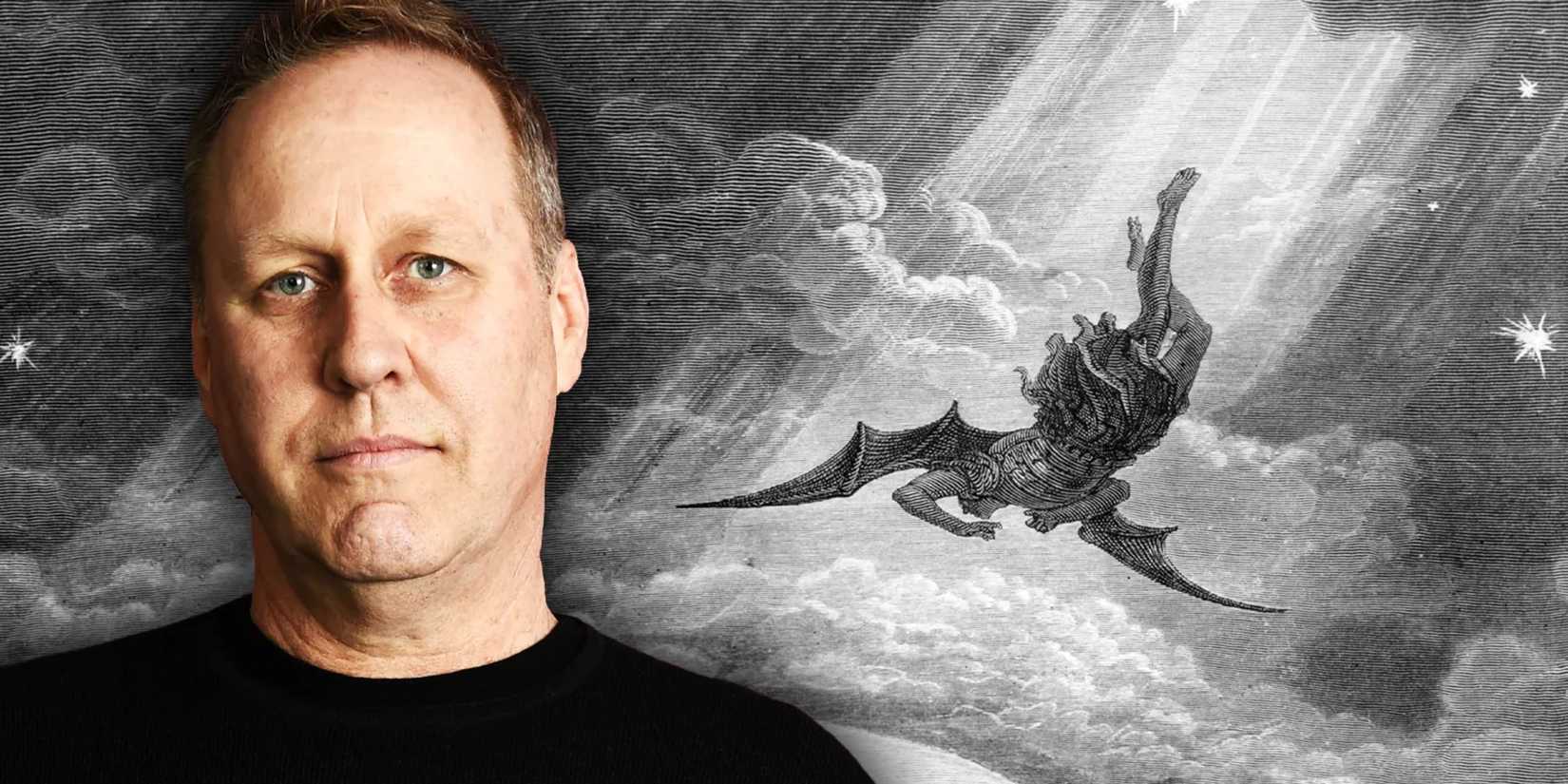
Some argue against this idea, calling it a betrayal of artistic integrity. It’s part of a larger debate about how artificial intelligence can be used versus how it should be used. While AI might make it possible to create a film adaptation of Paradise Lost, the important question is whether the resulting work will justify the sacrifices made in its creation—and we’re not talking about the movie’s financial cost.
If a book is considered impossible to adapt into a movie, doesn’t that suggest something significant about the book itself? Instead of trying to simplify it for the screen, shouldn’t filmmakers see that difficulty as an interesting creative challenge?
The Story Of “Paradise Lost”; The Centuries Old Masterpiece, Explained
Why A Movie Adaptation Is So Intimidating

John Milton’s Paradise Lost is a cornerstone of English literature, and the line “Better to reign in Hell than serve in Heaven” remains famous even today. Written in the late 1650s and early 1660s, the poem has a fascinating backstory: Milton dictated the entire 10,000+ lines of verse because he was blind. It’s a truly incredible story that would make a great film!
John Milton’s Paradise Lost tells the epic story of Satan’s rebellion against God, and how he then tempts Adam and Eve into sin in the Garden of Eden. This incredibly influential poem has had a lasting impact on literature and thought for over four hundred years.
Today’s common ideas about Satan and Hell actually come more from Milton’s poem Paradise Lost than from the Bible itself. Before we even think about using AI to rework the story, it’s worth considering how difficult it is to adapt Paradise Lost in any form. Could any movie truly live up to the expectations built over the past 359 years?
Director Roger Avary Is Bringing “Paradise Lost” To The Screen Using Generative AI
How And Why Avary Is Using AI For His Milton Adaptation

John Milton’s Paradise Lost has deeply influenced art and storytelling for over 350 years. It’s inspired countless works, from classic paintings and poems to modern novels, comics, and films. A notable example is the movie The Devil’s Advocate, starring Keanu Reeves and Al Pacino, where Pacino’s character, the Devil, is named John Milton – a direct reference to the poem’s author.
John Milton’s Paradise Lost has inspired countless works, with people drawing from it in various ways, but it’s never been directly adapted into a film. While Ex Machina Studios and Roger Avary are trying, and AI is helping them, this adaptation faces a key challenge: the technology enabling it isn’t necessarily what makes a good Paradise Lost adaptation successful.
To figure out the reasoning behind this, let’s look at how Roger Avary described the project, according to Deadline.
I’m staying true to the original story, but making it much more affordable. I’m using the latest AI technology to realize Milton’s ideas in ways that weren’t possible until recently.
Avary has modernized Beowulf before, and this time he says he wants to be more faithful to Milton’s original work than he was with that project. That’s encouraging. However, what really stands out is his claim that he’ll do it “at a fraction of the cost.”
This indicates Avary will likely prioritize a visually grand and exciting adaptation of Paradise Lost, aiming for the style of modern Hollywood blockbusters rather than a traditional, classical approach. Artificial intelligence will be used to create large-scale battle sequences in Heaven and a fantastical depiction of Pandemonium, the capital of Hell, ultimately bringing Roger Avary’s interpretation of John Milton’s cosmic vision to life.
Ultimately, whether the movie Paradise Lost works as an adaptation will depend on key elements like the actor playing Satan, the connection between Adam and Eve, the quality of the dialogue, and how it’s filmed and edited – all guided by the director’s vision. Even a very accurate adaptation could fail if it emphasizes the wrong aspects of the story.
How Much Can AI Actually Help With Realizing John Milton’s Epic “Paradise Lost”?
Roger Avary Is About To Find Out The Answer

One reason Paradise Lost is so difficult to adapt into a movie is that the stunning language of John Milton’s poem doesn’t translate well to the screen. While the visuals and concepts can be shown, the simple joy of reading Milton is impossible to recreate. Like any adaptation, the best approach is to create a visually beautiful film that captures the essence and feeling of the original book – to convey the experience of reading it.
Roger Avary’s challenge with Paradise Lost is bringing the poem’s vivid imagery to life on film. While AI could simplify and reduce the cost of this visual aspect, there’s a risk it could overshadow the film’s core artistic vision and steer it in unintended directions. Ideally, as Avary and Ex Machina Studios hope, AI will handle the more complex visual effects, freeing the director to concentrate on capturing the poem’s deeper emotional and spiritual meaning.
Even if AI doesn’t take over the world, the important question remains: what can it do versus what should it do? It’s fitting that we’re having this discussion while thinking about Paradise Lost – the story of something created rebelling against its creator. In a way, Satan was the first AI, like the Skynet from Terminator. And while Milton wrote that story over 350 years ago, and Terminator came out over 40 years ago, the AI revolution is now happening. AI hasn’t actually overthrown humanity yet, but it’s already transforming everything, including how art is made.
Honestly, I can’t really blame Roger Avary for exploring this. For years, Hollywood hasn’t understood what makes Paradise Lost so special, which is why we’ve never seen a good movie adaptation. He genuinely seems to get it, and even if it means taking a risk with AI, he might be the only one who can actually do it justice. I still don’t think AI should be used for a Paradise Lost film, but if someone’s going to try it, I’d trust the co-creator of Pulp Fiction to lead the way.
What do you think, readers? Are you a “yes” or a “no” on an AI-assisted version of Paradise Lost?
Read More
- Золото прогноз
- НИТЕЛ акции прогноз. Цена акций NTZL
- 5 Perfect American Sitcoms
- Биткойн падает после громких заявлений из Белого Дома о криптовалюте и Федеральной Резервной Системы, сохраняющей спокойствие.
- The True Story That Inspired Abbott Elementary’s Choice To Move The School Into A Mall
- Фунт обгонит доллар? Эксперты раскрыли неожиданный сценарий
- The 15 Best Sci-Fi TV Characters Of All Time, Ranked
- Netflix’s New Psychological Thriller Unchosen Tops Global Streaming Charts
- A24’s Texas Chainsaw Massacre Reboot Lands Director
- Прогноз криптовалюты QNT: прогнозы цены QNT
2026-05-03 01:16