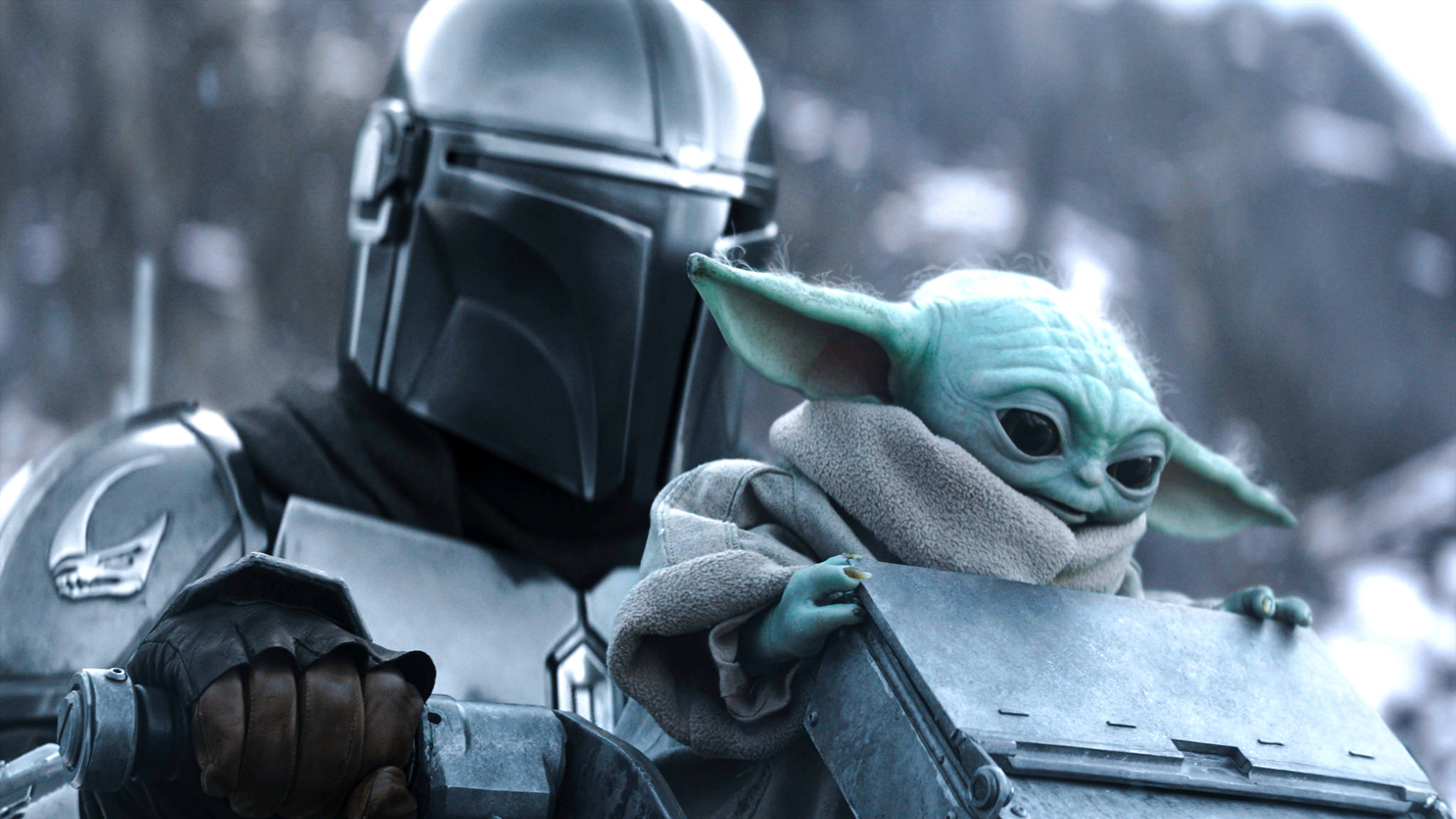
The Mandalorian and Grogu are not just returning the Star Wars universe to audiences, they’re also bringing back a key storytelling approach that was popular in the original films.
The upcoming movie based on the Disney+ series starring Pedro Pascal will be the first Star Wars film shown in theaters in seven years, following The Rise of Skywalker, which finished the Skywalker Saga. The story continues after the events of The Mandalorian season 3, and features Din Djarin taking on legitimate jobs. He’s hired by a New Republic colonel named Ward to rescue the son of Jabba the Hutt, Rotta, with the goal of uncovering information about a larger threat.
Before The Mandalorian and Grogu comes out on May 22, ScreenRant’s Ash Crossan spoke with Jon Favreau at a press event. During a discussion while looking at props from the film, Favreau explained that they kept items from both The Mandalorian and Skeleton Crew together – including masks from Legacy Effects – so everyone on set could easily see them.
He excitedly pointed out how enjoyable it is to see the work of so many artists who have contributed to our Star Wars projects over the years. The warehouse holds everything from the Razor Crest cockpit, which we’ve had since the start of The Mandalorian’s three seasons, to Din Djarin’s customized N1 starfighter – for which we even had to remove the engines to make it fit. There’s also Boba Fett’s throne, and even models used in actual filming, including a piece from the original Star Wars trilogy that’s been brought back for the new movie.
That’s part of a miniature rig created by John Knoll, called the Dykstraflex. The curved, half-moon shape holding the Razor Crest was initially just a tool for checking lighting. We wondered if we could use it for a couple of shots in the first season, and we ended up really liking the results.
The Dykstraflex, a groundbreaking piece of technology designed by John Dykstra for the original Star Wars trilogy, was eventually phased out by George Lucas and most other filmmakers working on the franchise, starting with the prequel films. Since then, Star Wars has largely relied on computer-generated effects – from using bluescreens to build expansive environments for characters like Obi-Wan and Anakin, to the innovative virtual production stage called The Volume, first used in The Mandalorian.
Even though the series was brought back for Disney+, Jon Favreau explained that when starting The Mandalorian and Grogu, he and his team had more experience and time to work with the Dykstraflex technology. They brought in veteran Star Wars creative John Goodson from ILM to help them build a bigger Razor Crest model, allowing them to film using practical models, just like they did in the original films.
As a film enthusiast myself, I wanted to include some nods to classic filmmaking techniques. But ideally, most viewers won’t even pick up on those details. We actually used practical stop-motion animation models created by Phil Tippett, which allowed us to take our time – years, instead of just one year. This meant we could achieve the level of detail we’d always wanted, and create a visually stunning experience that a new audience can simply enjoy as a fun, seamless movie.
With so much progress in filmmaking technology between Return of the Jedi and The Phantom Menace, it’s understandable that George Lucas, J.J. Abrams, and other filmmakers embraced computer-generated imagery for both the prequel and sequel trilogies. This allowed for exciting new action sequences, like the popular space battles in The Force Awakens, and even brought back beloved characters looking younger through digital effects and face-replacement technology.
Jon Favreau isn’t the only recent Star Wars director to prioritize practical effects. Rian Johnson’s The Last Jedi actually set a franchise record with over 200 physical creatures and effects, including a puppet version of Yoda’s Force ghost. Favreau followed suit, using similar techniques to create Grogu (Baby Yoda) for both The Mandalorian series and his new film.
Although Jon Favreau brought back the practical effects style of the original Star Wars, he still uses visual effects in The Mandalorian and Grogu. Unlike Jabba the Hutt in the original trilogy, which was a physical creation, creatures like Rotta and other Hutts in the new film are computer-generated. The trailers also showcase other scenes created with this technology. Despite this, the film is returning to using more practical effects, and with a budget reportedly lower than any Star Wars film since 2005’s Revenge of the Sith, it will be interesting to see if Lucasfilm encourages other directors to follow this approach in future projects.
Read More
- ЭсЭфАй акции прогноз. Цена акций SFIN
- ДВМП акции прогноз. Цена акций FESH
- Южуралзолото ГК акции прогноз. Цена акций UGLD
- 3 Best Netflix Shows To Binge-Watch This Weekend – #1 Is A Surprise Hit Crime Thriller Trending Worldwide
- When Abbott Elementary Will Finally Reveal Mr. Johnson’s Mysterious First Name Teased By Star
- CBS Retcons NCIS’s 18-Year History By Breaking 1 Trend
- Мосэнерго акции прогноз. Цена акций MSNG
- 20 Years Later, Twilight’s Robert Pattinson Just Noticed A “Strange” Acting Choice For One Edward Cullen’s “Vampiric Thing”
- Bryan Cranston’s Highly-Anticipated Comedy Revival Becomes American Streaming Sensation 20 Years After Original Series Ended
- HBO’s The Penguin: A Stellar Cast Powers This Gotham Crime Drama
2026-04-18 19:01