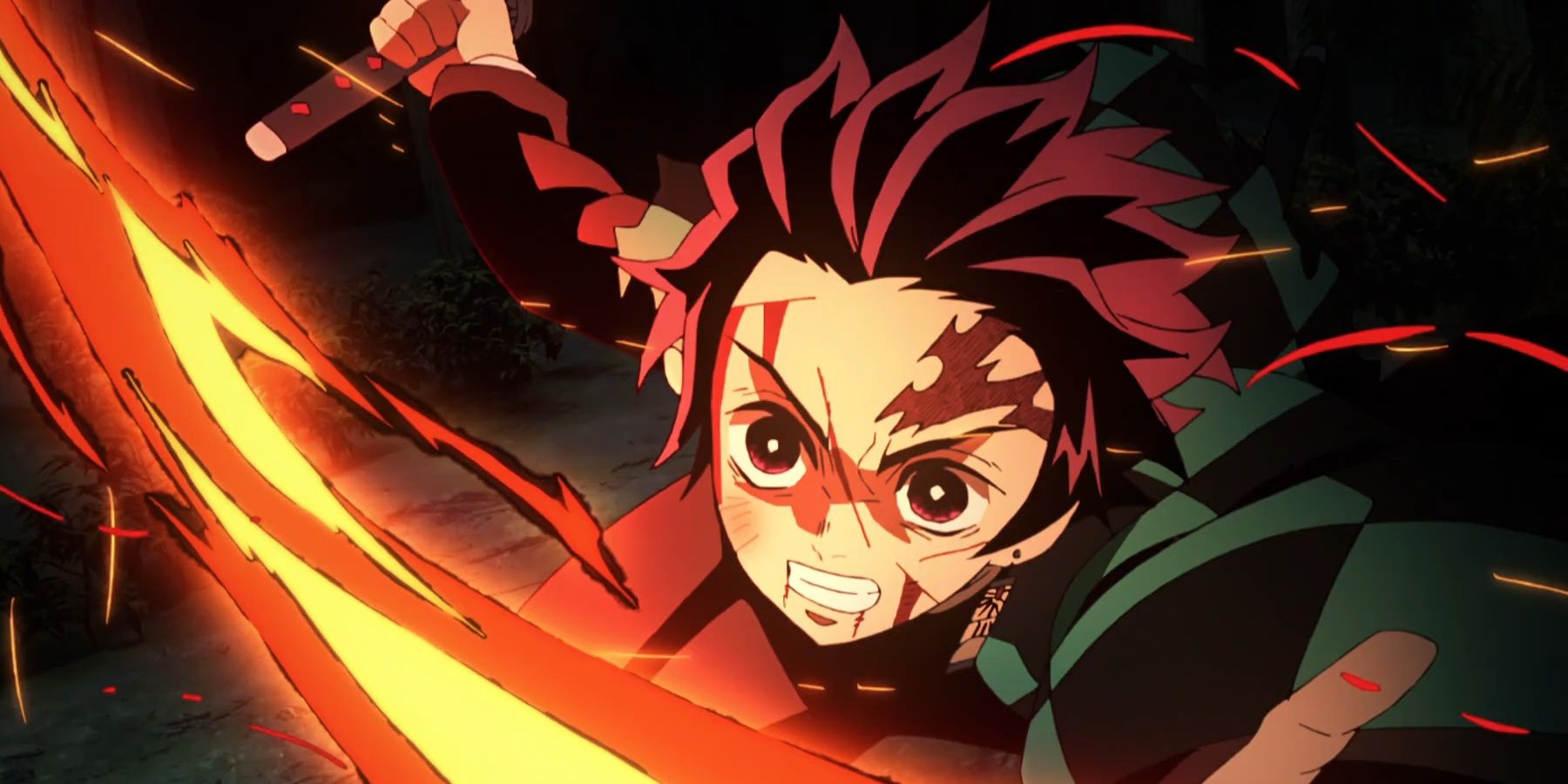
Kindness isn’t about being weak or naive; it’s actually a strength that demands self-control, understanding your own motivations, and being willing to face difficult outcomes. The most genuinely kind characters in anime don’t shy away from conflict because they can’t fight, but because they deeply understand the true price of violence.
These characters approach conflict differently—they always remember the humanity of those they’re fighting, even their enemies. By acknowledging shared vulnerability, showing compassion, and refusing to see others as less than human, they offer a new understanding of how to fight for peace.
Tanjiro Kamado Treats Every Enemy As Someone Whose Life Went Wrong
Tanjiro, the hero of Demon Slayer, feels compassion for everyone, even demons. He’s shown crying for them during their deaths – he mourned Rui’s final moments, held the hand of the first demon he defeated as it faded away, and expressed gratitude. Tanjiro isn’t motivated by a desire for revenge or fame; his only goal is to find a way to restore his sister Nezuko’s humanity with as little violence as possible.
During the final selection process, Tanjiro fights a hand demon responsible for killing many of Urokodaki’s students. After winning the battle, Tanjiro feels sorrow when he learns, through brief visions, that the demon was once a mistreated child before being turned into a demon by Muzan.
Itachi Uchiha Accepts Hate as a Cost of Preventing a War
In the anime Naruto, Itachi committed a terrible act at age thirteen: he killed all members of his own Uchiha clan, including his parents. He did this as part of a secret mission to stop a potentially devastating civil war that could have destroyed their village, Konoha. While his actions seem cruel, Itachi consistently put the needs of others before his own well-being and desires.
Itachi admitted he’d made errors and, in his final act, used a special technique called Izanami to free himself and other reanimated shinobi from being controlled. This came at the cost of his own chance at rebirth. He also apologized to his brother for trying to control him, demonstrating that even his harsh actions were ultimately motivated by a desire for peace.
Thorfinn Chooses to Stop Committing Violence After Learning What It Does to People
Thorfinn envisions Vinland as a peaceful place where everyone is free and violence isn’t needed. The story explores the real challenges of ending a pattern of violence. Throughout the series, Thorfinn gradually becomes a kinder person, a significant change from his violent beginnings as a child soldier in the first season of Vinland Saga.
The most impactful scene in the series features Thorfinn standing firm against King Canute’s attacking army. Instead of fighting, he bravely withstands a beating, choosing to absorb the punishment rather than cause more violence and stating he holds no animosity towards anyone. This demonstrates his inner strength, particularly when he connects with a woman he harmed in his youth, showing her that revenge won’t bring her peace and offering genuine remorse instead of confrontation.
Shigeo Kageyama Only Uses His Powers When Absolutely Necessary
In Mob Psycho 100, Shigeo adopts a unique approach during his battle with Teru: he allows Teru to attack without defending himself. This happens repeatedly when other powerful espers try to goad him by threatening those he cares about. Shigeo consistently absorbs their attacks, attempts to reason with them, and only fights back when absolutely necessary.
Shigeo’s encounter with the spirit Mogami revolves around a debate about human nature – Mogami argues people are inherently cruel and kindness is fake. Shigeo disagrees, continuing to feel compassion even for those who don’t deserve it. Instead of simply defeating the spirit, he focuses on saving the person it’s possessing.
Akane Tsunemori Doesn’t Let a System Decide a Human Life’s Worth
In Psycho-Pass, Akane’s compassion shines through in her moments of restraint. This is especially clear when she aims the Dominator at Shinya Kogami but pauses, even though the system gives her permission to use lethal force. Her hesitation stems from realizing the Sibyl System’s judgments aren’t perfect, making her refusal to act a quiet act of rebellion against a world where morality is decided by an algorithm.
I’m really fascinated by Akane – she doesn’t see people as just numbers or profiles, and that’s where her power comes from. It’s amazing how she handles situations like when the Dominator couldn’t identify Makishima. It forced her to confront the flaws in the system she believed in, but she still fought for what’s right, staying true to her own values instead of just following orders. It’s a really compelling approach to justice.
Vash the Stampede Refuses to Kill Even When the World Punishes Him for This Choice
Vash, notorious across the planet and known as The Humanoid Typhoon, has a massive bounty of sixty billion double dollars. Despite his fearsome reputation, he’s a pacifist who dedicates his life to protecting people and refuses to take a life. Creator Yasuhiro Nightow explained he was inspired to create a character who would consistently choose love and peace, even in dangerous situations, because he often felt that death happened too quickly in other stories.
Despite his peaceful beliefs, Trigun constantly forces Vash into difficult and unwinnable scenarios, often with painful consequences. When facing Legato, Vash is put in a position where he must choose between his principles and saving the lives of Meryl and Milly. In the end, he breaks his promise of non-violence and kills Legato, even though it causes him immense pain and doesn’t necessarily prevent further suffering.
Izuku Midoriya Acts Before He Even Thinks About Helping
Izuku’s story in My Hero Academia emphasizes that his compassion came before his superpowers. The series kicks off with young Izuku instinctively rushing to help a classmate in trouble – he couldn’t help but run towards the danger. Deku doesn’t choose to be heroic; it’s simply his natural reaction to help anyone in need.
Deku pushes himself to his physical limits, even breaking all his bones, in his determination to master a power that doesn’t come naturally to him. During the Overhaul arc, he bravely fights while carrying Eri, a distressed child, risking everything to prevent her from being recaptured. Even after learning about Shigaraki’s difficult past, Deku doesn’t hesitate to fight him, but he clearly feels empathy and wants to help the person beneath the villainous exterior.
Allen Walker Refuses to Use Akuma to Kill the Humanity Inside His Enemies
In the anime D.Gray-Man, Allen Walker has a special eye that lets him see the souls trapped inside Akuma. He can even see the souls of those he fights. Importantly, Allen always apologizes to the souls when he destroys an Akuma, demonstrating that he views them as people who were forced into that situation, rather than simply as enemies.
Allen Walker’s Innocence, manifesting as a clown, embodies his compassionate nature. Its ultimate form is a powerful sword designed to defeat Akuma, but Allen refuses to use it to hurt innocent people. This reflects Allen’s own character; his weapon, like himself, is incapable of harming humanity. Kanda criticizes Allen for being a naive idealist, questioning why he seeks peaceful solutions when everyone else relies on fighting.
Kenshin Himura Builds His Entire Life Around the Decision to Never Kill Again
The anime Rurouni Kenshin centers around Kenshin Himura, a former assassin haunted by the people he killed during the Meiji Revolution. For fifteen years before the series begins, he lived with the weight of those deaths. Now, he’s determined to atone for his violent past. He carries a special sword, a sakabato, with a reverse blade that prevents him from taking another life, even though he’s more than capable of winning fights quickly with a traditional sword. Kenshin deliberately chooses not to kill, hoping to avoid becoming the ruthless Hitokiri Battosai he once was.
Hajime Saito criticizes Kenshin, claiming he’s pretending to be peaceful to avoid facing his past. Kenshin counters that he doesn’t strive to be the strongest; he simply wants to live a life free from taking lives. In the end, Kenshin doesn’t fight for the sake of Japan, but to protect the people and allow them to live normal lives.
Emma from The Promised Neverland Erases Her Memories For Peace
In the first season of The Promised Neverland, Norman and Ray initially planned an escape from Grace Field House that would have left many children behind. However, Emma strongly disagreed, insisting they find a way to save everyone. She believed that if you’d rescue someone when it’s simple, you have a responsibility to do the same, even when it’s incredibly difficult.
In the end, Emma renews an ancient pact with the Demon God, ensuring the remaining children can safely travel to the human world, but at the cost of forgetting her own family. Her strong belief in a peaceful future for both humans and demons, and her willingness to sacrifice her personal happiness for that goal, leads her to make this difficult choice.
Found an error? Send it so it can be corrected.
Read More
- ЭсЭфАй акции прогноз. Цена акций SFIN
- ДВМП акции прогноз. Цена акций FESH
- Мосэнерго акции прогноз. Цена акций MSNG
- CBS Retcons NCIS’s 18-Year History By Breaking 1 Trend
- Why Bullseye Saved Daredevil in Born Again Season 2 Finally Revealed
- ‘Ozark’ Is the Only True ‘Breaking Bad’ Successor
- Why For All Mankind Season 5 Kills Off THAT Major OG Character In Episode 3 Detailed By Star
- New Pokémon TCG Set Revealed For July Has Fans Predicting Massive Change
- All 9 Lord Of The Rings Movie Characters That Have Now Been Recast
- HBO’s The Penguin: A Stellar Cast Powers This Gotham Crime Drama
2026-04-17 05:41