Animation quality has improved a lot recently thanks to new technology. While modern animation is technically more polished and visually impressive, many people still prefer the style of 90s anime, finding it more appealing and charming.
The anime industry is well aware of this effect. That’s why many modern shows intentionally use visual styles reminiscent of older animation – things like grainy textures, subdued colors, thick lines, and deliberately imperfect drawings. This is done to evoke a feeling of nostalgia, recreating the experience of stumbling upon a hidden gem while watching late-night VHS tapes.
Kill la Kill Channels the Anarchic Energy of ’90s OVA Culture
From the start, Kill la Kill has a distinct, intentionally rough look. Characters are simple, flat shapes, backgrounds are blurry and colorful, and action scenes are fast-paced, even skipping frames – a style reminiscent of classic anime like Gunbuster and early Tenchi Muyo. Studio Trigger made this choice on purpose, prioritizing dynamic and expressive animation over polished details.
The show’s wild, chaotic visuals perfectly reflect its central ideas. Kill la Kill explores how clothing can be used for oppressive control, and to convey this, it needed a world that feels unstable and on the verge of falling apart. The anime’s intentionally raw and unpolished art style achieves this, creating a sense of tension that mirrors the story itself.
Space Battleship Yamato 2199 Is Proof That Reverence and Reimagination Can Coexist
Unlike many modern remakes that smooth out the original’s quirks, Yamato 2199 intentionally keeps those distinctive features while also improving the overall quality. The anime embraces the original’s aesthetic – including character designs with broad faces, old-fashioned instrument panels, and a limited color scheme – faithfully preserving the boxy, bold lines of Leiji Matsumoto’s 1974 creations.
The ship’s interior uses warm amber and deep blue lighting, reminiscent of classic science fiction, giving the Yamato 2199 a feeling of grit and determination. This design choice is central to the show’s emotional impact, letting viewers truly connect with the characters’ grief and heroism, and experience the world they inhabit. Director Yutaka Izubuchi intentionally maintained the original’s raw, unrefined aesthetic, recognizing that some stories need that authentic weight to resonate.
White Album 2 Uses Visual Understatement to Make Heartbreak Feel Inevitable
The anime White Album 2 uses a gentle, watercolor-like art style with very little strong shading. This approach perfectly captures the way romance was portrayed in anime from the late 1990s, specifically in terms of showing characters holding back their feelings. The scenes in Kazusa Touma’s apartment strongly resemble the visuals from a visual novel adapted into anime around 1998, and this isn’t accidental – it’s a deliberate choice. The creators clearly understand that a subtle color scheme is more effective at conveying romance than flashy lighting effects.
Whenever the show avoids flashy visuals—and it consistently does—it puts all the focus on the acting and the soundtrack. This deliberate simplicity in White Album 2 becomes a key part of its style. For example, the famous rooftop scene in the final episode is powerful because the animation is so bare and doesn’t try to distract you. This minimalist approach is a direct nod to the visual style of the anime it’s referencing.
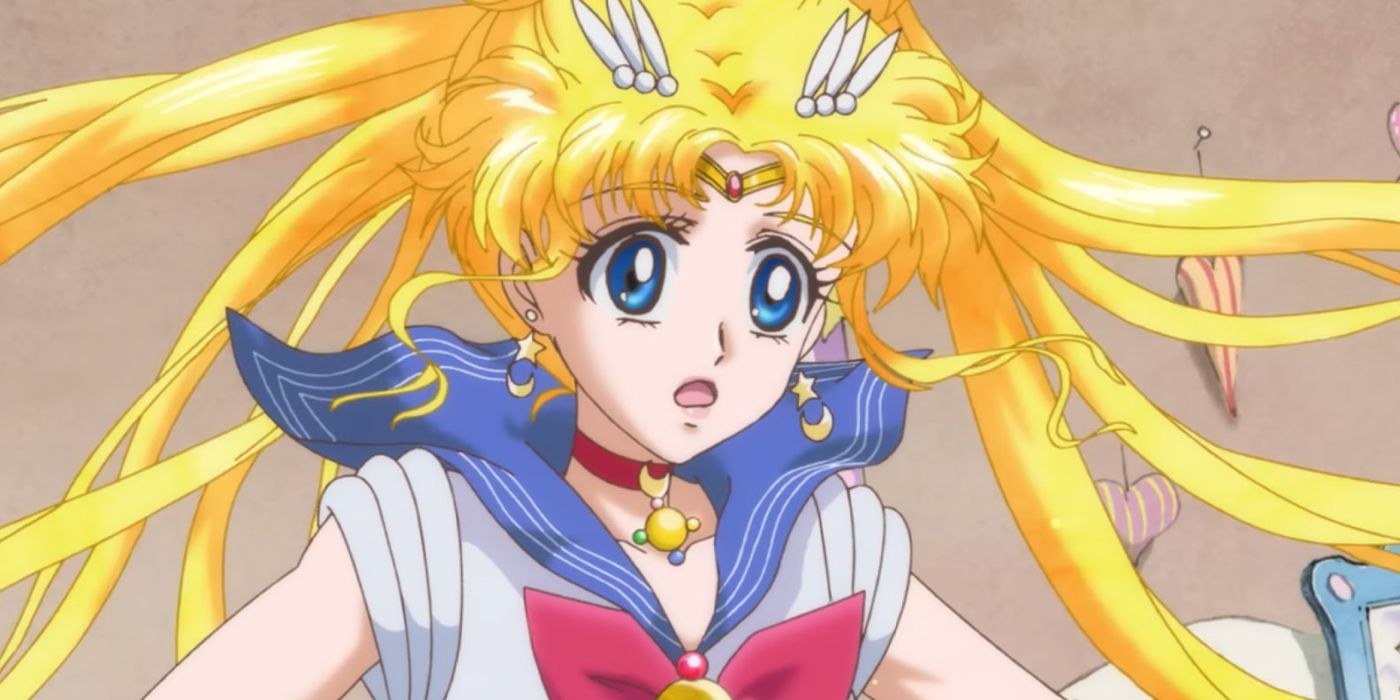
Sailor Moon Crystal Resurrects Naoko Takeuchi’s Manga Lines for a New Generation
Instead of giving Usagi Tsukino a modern makeover, Sailor Moon Crystal stays true to Naoko Takeuchi’s original manga art style. This means characters have longer limbs, more refined features, and a look that’s reminiscent of shojo manga from the late 1980s and early 1990s, rather than current animation trends. The series aims to faithfully recreate Takeuchi’s artwork, offering fans an adaptation that stays true to the source material.
While the show wasn’t perfect in its production, it successfully conveyed the emotional core of the original manga. For those who remember the 1992 Sailor Moon anime, Sailor Moon Crystal feels like experiencing the story directly from the source material.
JoJo’s Bizarre Adventure Treats Hirohiko Araki’s Manga Panels as a Visual Bible
David Production’s animated version of JoJo’s Bizarre Adventure mainly focuses on bringing the existing visuals to life. The manga itself already provides a fantastic and unique style – it feels like the 1990s, but in a way that still looks modern and stands out. The character designs created by Hirohiko Araki are inspired by classic ’80s Italian fashion photos and the muscular superhero artwork of the 1970s.
The vibrant color choices in JoJo’s Bizarre Adventure intentionally move away from realism to emphasize certain ideas. Especially in Phantom Blood and Battle Tendency, color isn’t just used for lighting; it’s used to express characters’ emotions, a style inspired by Hirohiki Araki’s own colored manga panels and the flashy animation of action OVAs from the 1990s.
Pluto Inherits Osamu Tezuka’s Visual DNA Without Becoming a Tribute Act
Osamu Tezuka is best known for Astro Boy, and his series Pluto features characters with the same large eyes and rounded features. To ensure Pluto resonated with fans as its own story, it was reimagined as a serious crime drama. The character Gesicht, like other Tezuka heroes, has a distinctive, expressive face, but he also embodies the emotional depth of a modern noir detective.
The robots in the show are designed with a distinct, retro style, reminiscent of classic science fiction animation from the 1960s and 70s. These designs emphasize mechanical construction over more modern, computer-generated aesthetics. This intentional contrast with the incredibly detailed and realistic city backgrounds creates a striking visual effect. It makes the robots feel like they come from another time, which perfectly reflects the themes of the story by Naoki Urasawa.
Sonny Boy Reconstructs the Visual Grammar of ’90s Experimental Animation
Shingo Natsume’s Sonny Boy draws on several visual styles popular in 1990s anime. It combines the simple, dreamlike imagery of early Gainax works, the unsettling atmosphere of late-night anime collections, and character designs that focus more on ideas than perfect detail. The characters, including Nagara and his classmates, are drawn with a minimalist style, reflecting their ongoing development, which is central to the story.
I’ve been really struck by how Sonny Boy captures this feeling of being lost – like school’s out forever, you don’t quite know who you are anymore, and the usual rules just don’t apply. It’s amazing to me that it does this using a visual style from the late 90s! That contrast – the way it looks versus what it’s about – creates a really unsettling feeling that feels far more powerful than anything slick and modern could achieve. It just gets under your skin in a way that’s truly special.
Megalobox Turns Visual Degradation Into a Statement About Class and Survival
I’m totally captivated by how Megalobox handles its retro style! It doesn’t just hint at old-school anime – it fully commits, and that’s surprisingly rare. The intentional grain, scratches, and color distortions aren’t flaws, they’re a deliberate artistic choice. It really hits home because Joe, the main character, fights in this gritty, rundown area called the Junk Layer. The show visually feels worn down, and that perfectly reflects the harsh reality of his world. It’s like the visuals are mirroring the environment, and it’s brilliant!
Studio TMS recognized that how something looks and what it means are closely connected. The boxing scenes in Megalobox use strong, deliberate movements with brief pauses, creating a powerful impact – a style inspired by the classic anime Ashita no Joe from 1970. Unlike modern action shows that rely on speed and blur, Megalobox demonstrates that this older, more impactful style of animation remains effective.
Kowloon Generic Romance Frames Memory Loss Through the Haze of Analog Aesthetics
The unique look of Kowloon Generic Romance – its slightly faded colors, blurry backgrounds, and character designs reminiscent of late 90s Japanese manga for women – directly supports the story it’s telling. Because the main character, Kujirai, is struggling with her memories, the show uses a visual style that avoids harsh lines and clear details, creating a sense of uncertainty.
Kowloon Walled City is a mysterious place, and the animators perfectly capture that unsettling feeling of something being just off, even without characters pointing it out. Instead of typical dramatic scenes with bright colors, the story focuses on two characters who seem unable to connect in a muted, washed-out world. This careful artistic choice is what makes Kowloon Generic Romance stand out from other romance stories that rely on nostalgia.
Azudra’s Helck Proves That a Classic Fantasy Look Can Still Carry Genuine Emotional Heft
Helck’s visual style strongly resembles classic fantasy anime from the mid-1990s, and it embraces that aesthetic. The characters are drawn with bold lines and emotive faces, focusing on clear shapes and vibrant colors in action scenes rather than realistic anatomy.
The anime Helck draws on a classic style of fantasy manga adaptation, similar to early works like Slayers and the original Lodoss War OVAs. By using this style, the show quickly establishes that it will blend humor and serious drama. In fact, the main character, Helck, embodies this entire aesthetic, immediately making him the focal point of the story.
Found an error? Send it so it can be corrected.
Read More
- The Mandalorian & Grogu’s Ending Explained: What’s Next For Din Djarin & Grogu?
- Star Wars Confirms Maul as the Most Underrated Villain
- 6 Martial Arts Tournament Movies To Watch After Mortal Kombat II
- I Love Boosters Ending Explained: The True Meaning Behind Boots Riley’s Fashion Social Satire
- The 8 Best X-Files Episodes Written By Vince Gilligan
- The Hierarchy Of Power In James Gunn’s DCU Is Officially About To Change
- Spider-Noir Review: Nicolas Cage Delivers One of the Best Superhero Shows of the Decade
- Apple TV+’s ‘Shrinking’ Beats the Best Sci-Fi Shows ‘Severance’ and ‘Silo’ on Streaming
- 10 Strongest Super Mario Galaxy Movie Characters, Ranked By Power
- The JRR Tolkien Retcon That Changed Everything About Lord of the Rings’ Elves
2026-04-12 05:21