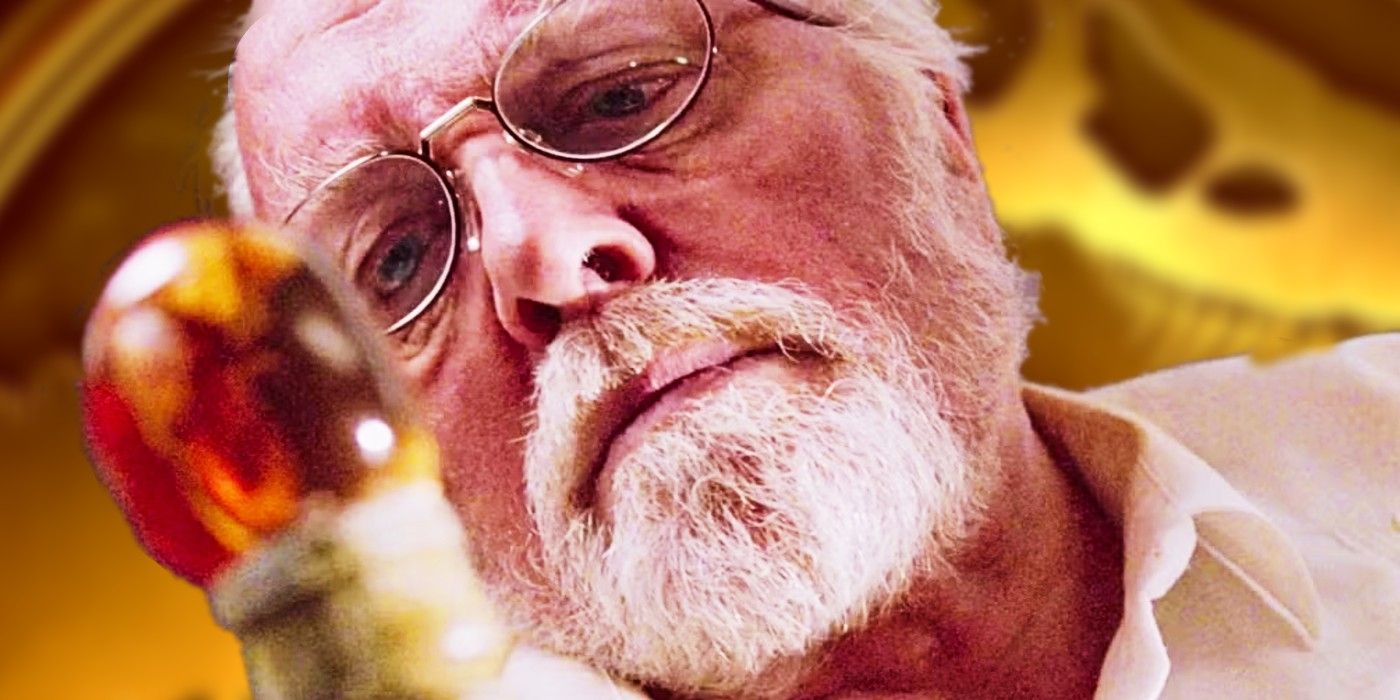
The latest trailer has fans disappointed, as the Jurassic Park franchise falls into a familiar and frustrating pattern even after 32 years. Director Colin Trevorrow previously admitted that Jurassic Park was difficult to turn into a long-running series, feeling the original story was complete. While fans speculate about the future of Jurassic World – will it go to space or somehow connect with the Fast & Furious movies? – the series keeps changing established details of the original Jurassic Park. Now, the new film, Jurassic World Rebirth, adds another potential origin story for the dinosaurs, prompting viewers to question what this means for the overall narrative and whether there’s a larger mystery at play beyond just another oversized dinosaur.
Michael Crichton’s Jurassic Park, published in 1990, quickly became a hugely popular and influential dinosaur story. The novel, about an island where dinosaurs were brought back to life using genetics, was soon turned into a massive hit movie by director Steven Spielberg. Known for its amazing special effects and tagline, “Adventure 65 Million Years in the Making,” Jurassic Park became a worldwide sensation, leading to three sequels and a very successful film franchise. After a less well-received third film in 2001, Universal Pictures relaunched the series with Jurassic World in 2015. Though Jurassic World Dominion (2022) was promoted as the end of the Jurassic era, fans were surprised when Universal announced another sequel just two years later. Jurassic World Rebirth, starring Scarlett Johansson, is scheduled for release in July 2025, and its first trailer was released in February, offering a preview of the new film.
How Jurassic World Rebirth is Rehashing One of the Series’ Most Tired Trends
Since Universal announced Jurassic World Rebirth in 2024, information has slowly emerged through photos, interviews, and summaries of the plot. However, the first trailer provided fans with a much clearer idea of what to expect and raised some interesting questions about the future of the series after Jurassic World Dominion. With David Koepp, the original Jurassic Park screenwriter, returning for another reboot-like story, many expected a return to the original setting. But to justify revisiting the Jurassic Park world again, Koepp would need to be very inventive, facing a bigger challenge than even the massive Mosasaurus in Jurassic World.
Okay, so the new trailer for Jurassic World Rebirth really sets the stage. It seems like after the endings of Fallen Kingdom and Dominion left a lot of fans divided, the world has really changed. Most of the dinosaurs didn’t survive – they just couldn’t handle the modern climate. Isla Nublar is gone thanks to that volcano, and Isla Sorna apparently just fell apart. It’s a little weird they’re completely skipping over places like Mantah Corp Island and even potentially the BioSyn Sanctuary, but whatever. Instead, this movie introduces another island! Apparently, InGen was breeding seriously dangerous, mutated dinosaurs way before Jurassic Park even opened, and they kept them hidden away. Now, a team is sent in to get DNA from these massive creatures, hoping for some kind of medical miracle. But, you can guess it, things go horribly wrong. It looks like the dark secrets of Jurassic Park are coming back to haunt everyone, and I’m pretty sure a few people are going to lose more than just their hats!
As a long-time Jurassic Park fan, I’ve been following the reaction to this latest reveal of another ‘secret’ island, and it’s definitely divided people. Some are excited, feeling like it’s a step back towards the more suspenseful, science-focused vibe of the original Michael Crichton story. Others, though, see it as just another unnecessarily complicated plot twist. What really bothers me is that this island never came up in any of the films, nor was it hinted at in any of the expanded universe material. No one seemed to care about keeping people away, and surprisingly, no characters have ever mentioned anything about the potentially terrible things that happened there. Honestly, the number of these ‘forgotten’ dinosaur islands the franchise keeps introducing is getting ridiculous. It feels like they’re constantly being created to fix plot holes or backtrack on earlier decisions. It really makes me wonder if this series will ever truly progress, or if it’s just going to keep recycling the same basic premise – a few remote islands filled with dinosaurs – in different ways.
How Jurassic World is a Series Based on Retcons
Let’s be honest, this franchise has always relied on changing things up – retcons, reboots, you name it. Some fans see this as a good thing, a way to explore fresh stories. Others? They’re understandably frustrated. It feels like the Jurassic World movies can’t move forward without tweaking what’s already happened. And you know, director Colin Trevorrow might be onto something when he compares it to the park itself – maybe the franchise needs to constantly reinvent itself to stay exciting and keep audiences coming back for more.
The biggest change to the original story came when Michael Crichton wrote The Lost World in 1995. Even though Jurassic Park was destroyed, Ian Malcolm was believed to be dead, and dinosaurs had escaped, Crichton needed another island with dinosaurs and Malcolm—somehow still alive—for a new adventure. This led to the introduction of Isla Sorna, also known as “Site B.” Malcolm explained this by noting that the dinosaurs born in the park were unusually healthy, implying they must have been originally bred somewhere else before being moved there.
The idea of multiple locations continued in the film The Lost World: Jurassic Park (1997), with John Hammond calling Isla Sorna the place where dinosaurs were originally ‘made’ – like a factory. Jurassic Park III (2001) expanded on this, suggesting InGen’s facilities were still running, as evidenced by creatures like the Spinosaurus, which wasn’t on any of InGen’s official records. Later, the marketing for Jurassic World: Fallen Kingdom revealed Isla Sorna had been secretly used for genetic experiments even after it was supposedly abandoned. Adding to the complexity, The Lost World: Jurassic Park also introduced the idea of a Jurassic Park in San Diego – Hammond’s original plan before focusing on Isla Nublar – which made the franchise’s timeline even more confusing.
The Jurassic World franchise became increasingly complicated as new stories were added. Jurassic World: Camp Cretaceous introduced the Scorpios Rex, a dinosaur hybrid created before the Indominus Rex, and revealed Mantah Corp. Island, a secret location where dinosaurs illegally taken from Isla Sorna were hidden. Jurassic World: Fallen Kingdom then surprised viewers by suddenly revealing Benjamin Lockwood, a previously unknown long-time partner of John Hammond, and his mansion, which contained a hidden lab for early cloning experiments. It also introduced another secret island meant to be a dinosaur sanctuary after Isla Sorna was thought to be abandoned. Finally, Jurassic World Dominion added even more twists, revealing that Lockwood’s granddaughter was a clone and giving her an unexpected genetic history, making the timeline even more convoluted.
Considering everything that’s happened, it’s no surprise that Jurassic World Rebirth feels like it’s trying to recapture the spirit of the original Jurassic Park. However, it’s worth pointing out just how strange the franchise’s backstory has become. The story keeps needing new islands to continue, and increasingly complicated explanations are used to cover up plot holes. While we can accept dinosaurs causing chaos, it’s harder to ignore the fact that the series’ history is now full of inconsistencies and contradictions.
Is Jurassic World Rebirth Secretly Subverting a Series Staple?
Fans have already spotted some major inconsistencies in the plot. For example, if the Spinosaurus wasn’t originally part of InGen’s dinosaur collection, why are they now tracking it near this new island? Also, the technology seems surprisingly advanced for a story set in the 1970s. Why are the abandoned buildings in better condition than those seen in earlier films? And why has this island never been mentioned before? Some viewers think director David Koepp is intentionally playing with a common complaint from Jurassic World – not by repeating old mistakes, but by surprising the audience and creating a more interesting story.
Maybe Jurassic World Rebirth holds more surprises than just a new dinosaur threat. Could this island actually be different from the one we thought? Is someone secretly continuing the dinosaur cloning research started by InGen, with their own hidden goals? Perhaps this isn’t a relic of the original Jurassic Park, but a brand new, secret experiment.
Changing established story details (retcons) works best when it adds to the existing story, rather than creating contradictions. The new film, Jurassic World Rebirth, faces a big challenge and has a lot to explore if it wants to successfully bring the franchise back to life. The most compelling Jurassic Park stories have always started with explorers entering uncharted territory. Perhaps audiences, like the characters in Jurassic World Rebirth, need to approach the film with the same spirit – a sense of wonder balanced with careful optimism – because sometimes understanding the past is the key to moving forward.
Read More
- Star Wars Confirms Maul as the Most Underrated Villain
- Black Phone 2 Ending & Grabber’s Fate Explained
- Prime Video Finally Confirms Sister Sage’s Weakness in The Boys
- The Mandalorian & Grogu’s Ending Explained: What’s Next For Din Djarin & Grogu?
- ‘Big Little Lies’ Season 3 Puts HBO’s Emmy-winning Thriller in Jeopardy Once Again
- 9-1-1 Solidifies Buck & Eddie’s Romantic Future In Season 9
- Donald Trump Mocks George Clooney’s French Citizenship
- Life Hack Ending Explained: What Happens After The Big Heist (And Why Kyle’s Secret Weapon Is So Important)
- 6 War Movies Better Than Saving Private Ryan
- Евро обгонит рубль? Эксперты раскрыли неожиданный сценарий
2026-04-09 00:39