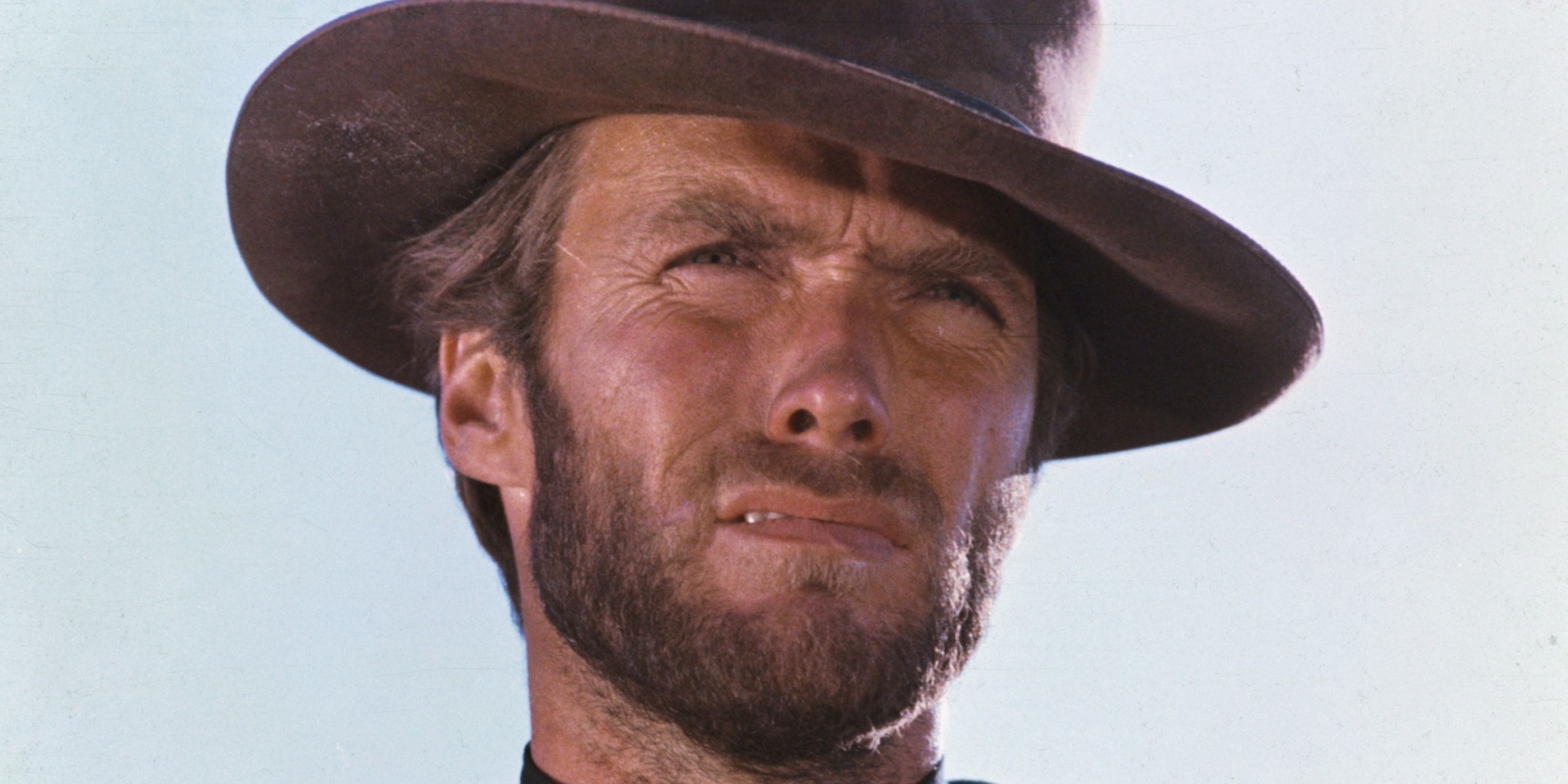
From the very beginning of American filmmaking, the Western has been a central part of Hollywood, producing iconic movies like The Good, the Bad and the Ugly. This 1966 epic, directed by Sergio Leone, was Clint Eastwood’s last appearance as the mysterious “Man With No Name,” a flawed hero seeking wealth in the Wild West. As a prime example of the Spaghetti Western style, the film is often praised as a masterpiece and is credited with reshaping the Western genre.
If you love The Good, the Bad and the Ugly, there are many other great Westerns you’ll enjoy. The Western genre has a long history, and Sergio Leone’s film has inspired countless movies. For those who appreciate classic Westerns and Clint Eastwood’s iconic character, several films make perfect pairings for a double feature.
Yojimbo Inspired Sergio Leone’s Man With No Name
I first encountered the brilliance of Akira Kurosawa in 1961 with his film Yojimbo. It tells the story of a wandering, masterless samurai who ends up freeing a town caught between two warring factions. Honestly, it was a huge moment for me – and for a lot of people, I think – because it really opened up the world to Japanese cinema. I even learned later that it deeply inspired Sergio Leone! He basically took the idea of this lone, wandering hero and used it as the foundation for his iconic Man With No Name character in A Fistful of Dollars.
The similarities between the films Yojimbo and A Fistful of Dollars were striking, leading to legal challenges and good-natured teasing of director Sergio Leone by Akira Kurosawa. However, this connection actually fueled the long-lasting influence of Japanese samurai stories on American Westerns. For those who love The Good, the Bad and the Ugly, the key to understanding Clint Eastwood’s iconic “Man With No Name” character lies in the brilliant story found in Yojimbo.
The Good, the Bad and the Weird is the Korean Take on Sergio Leone
Movies worldwide often reimagine Western stories in new locations, and The Good, the Bad and the Weird is a great example of this. The film takes place during World War II in Manchuria, which was occupied by Japan at the time. It centers on three Korean characters – a bounty hunter, a thief, and an outlaw – who team up to find hidden treasure. As they travel across 1930s Manchuria, facing dangers from both Japanese soldiers and Korean bandits, their pursuit of the treasure leads them into the desert.
Blending classic Westerns with the energy of Asian cinema, The Good, the Bad and the Weird is a fantastic tribute to director Sergio Leone – particularly his film Yojimbo. This movie takes the chaotic spirit of a treasure hunt, similar to The Good, the Bad and the Ugly, and amplifies it with a uniquely Korean flair. Directed by Kim Jee-woon, it’s a must-see for fans of Korean film and Westerns alike.
Unforgiven Concluded Eastwood’s Western Career
Clint Eastwood effectively ended his nearly three-decade run as a Western icon in 1992 with his film Unforgiven. The movie, set in Wyoming as the Old West was disappearing, centers on William Munny, a retired and widowed gunslinger who reluctantly takes on one final bounty hunt. As Munny confronts the ruthless sheriff of Big Whiskey, Little Bill Daggett, he’s forced to grapple with the violence of his past and his own inner struggles.
As Clint Eastwood has said, Unforgiven represents everything he thought about Westerns and his career making them. The film challenges and reworks the traditional, often romanticized, portrayal of the American frontier, offering a much more realistic and critical perspective. In a sense, it feels like a final chapter to the story begun with The Man With No Name, moving away from Sergio Leone’s legendary and idealized vision of the West towards something more down-to-earth and thought-provoking.
The Quick and the Dead Pays Homage to Spaghetti Westerns
A mysterious woman known as The Lady arrives in Redemption, a town controlled by the ruthless John Herod. Once a year, Herod allows anyone to challenge his rule in a winner-take-all duel, and he’s always considered unbeatable. The Lady enters the competition alongside a former gunfighter who’s now a preacher, a young man who claims to be Herod’s son, and several other skilled gunslingers, all hoping to defeat Herod and reclaim the town – for The Lady, it’s a personal quest for revenge.
Stylistically, The Quick and the Dead feels like a spiritual successor to Sergio Leone’s classic Spaghetti Westerns, embracing the legends of the Wild West rather than historical accuracy. Sharon Stone’s character is a fantastic match for the iconic, mysterious antiheroes seen in films like those starring ‘The Man With No Name,’ and the supporting cast is excellent. If you enjoy epic showdowns like the final duel in The Good, the Bad and the Ugly, this movie delivers a series of them.
Django Was the 1960s Rival to The Man With No Name
Sergio Leone became famous for creating a new style of Western, but Sergio Corbucci’s Django quickly appeared as a distinct alternative. Django presented a much grimmer take on the American West, telling the story of a mysterious gunslinger similar to Leone’s iconic Man With No Name. Like those films, Django begins with the arrival of its hero in a small town, where he plans to manipulate two warring groups for his own benefit, though the situation soon becomes more personal.
As much as I love Clint Eastwood’s ‘Man With No Name’ films here in the States, over in Italy, Franco Nero’s ‘Django’ really took off. It spawned a ton of sequels, imitators, and just generally kept the spirit alive. And honestly, Quentin Tarantino’s ‘Django Unchained’ from 2012? It fits perfectly as a double feature with Sergio Leone’s ‘The Good, the Bad and the Ugly’ – just as much as the original ‘Django’ from 1966 does. In fact, ‘Django’ came out the same year Leone finished his trilogy, and I think even fans of the original back then would have loved seeing those two films together.
Once Upon a Time in the West is the Definitive Western Epic
As a huge fan of Sergio Leone, I always get excited talking about his work after The Good, the Bad and the Ugly. One of his most celebrated films centers around a newly married woman named Jill who comes to town to find out who murdered her husband, a rancher called Brett McBain. Things get really interesting when the hitman who killed Brett decides Jill is also a problem and tries to take over McBain’s property. Luckily, two enigmatic gunslingers show up to protect her, but it quickly becomes clear they both have their own hidden agendas.
Once Upon a Time in the West took everything that made the “Dollars Trilogy” great and combined it into one stunning, grand film. It’s a much more serious and heartfelt story than Clint Eastwood’s earlier movies, working both as a classic Western tale and a beautiful farewell to the era. The film truly showcases Sergio Leone’s skills as a writer and director, making it a complete masterpiece and a fitting end to the Westerns of the 1960s.
The Mask of Zorro is Another Western Gold Adventure
In 1998, director Martin Campbell revitalized the Zorro story for a new audience by casting Antonio Banderas as Alejandro Murrieta in The Mask of Zorro. Unlike previous films, this sequel shows Don Diego de la Vega’s final adventures as Zorro, as he mentors Murrieta to take his place. Simultaneously, Don Diego seeks revenge on the man who destroyed his family and fights to free the people of California from the ruling Spanish nobles.
While The Mask of Zorro feels different in tone from The Good, the Bad and the Ugly, both films are packed with adventure. Director Campbell aimed for a broader, more family-friendly audience, meaning fans of the treasure hunts in Leone’s film will likely enjoy this one too. Instead of guns, The Mask of Zorro features sword fights and action, but it still captures the exciting spirit of the Old West that Leone was known for.
The Outlaw Josey Wales is a Treasure Trove of Iconic Gunslinger Quotes
In The Outlaw Josey Wales, we meet Josey, a Missouri farmer who joins the Confederate army after his family is tragically killed by Union soldiers. When the war ends, Josey’s unit is deceived, leaving him the only person left alive and branded as an outlaw by the winning Union army. Forced to flee, he sets out for Mexico, but along the way, unexpectedly becomes the guardian of a ragtag group of people who are also seeking a new life.
As a critic, I found this film, set in the same era as The Good, the Bad and the Ugly, really leans into that classic Eastwood anti-hero vibe. But what sets it apart is the writing – it’s surprisingly deep and morally complex. Wales delivers some truly memorable moments and lines, making it a fantastic pairing with the ’66 classic. While both films offer anti-war sentiments, this one, from ’76, explores the gray areas of morality in a much more compelling way.
A Fistful of Dollars Began the Dollars Trilogy
Sergio Leone and Clint Eastwood became famous in the United States in 1964 with the release of A Fistful of Dollars. This film, the first in Leone’s “Dollars Trilogy,” introduces a mysterious stranger who arrives in the town of San Miguel. The town is controlled by two rival groups – the Rojo bandits and the corrupt Baxter family – and the gunslinger cleverly uses their conflict to his own advantage.
Inspired by Akira Kurosawa’s Yojimbo, A Fistful of Dollars brought the story to the American West, creating the iconic image of the tough but moral gunslinger. The film is essential for understanding Westerns made in the 1960s, as it fundamentally changed the genre. Though not Sergio Leone’s best Western, it was where he perfected his unique style and launched Clint Eastwood to stardom.
For a Few Dollars More Is Criminally Underrated
After A Fistful of Dollars blew everyone away, Sergio Leone and Clint Eastwood teamed up again for For a Few Dollars More. This one throws our mysterious Man With No Name into an uneasy alliance with Colonel Mortimer, a bounty hunter with a personal vendetta against this really nasty outlaw called El Indio. To take down El Indio and his gang, Eastwood’s character goes undercover as an outlaw himself, which sets the stage for an awesome ambush. It’s a classic setup!
Often overshadowed by its more famous neighbors in the Eastwood Western series, this 1965 film is a hidden gem. It’s actually better than A Fistful of Dollars, features some of Clint Eastwood’s best work as the Man With No Name, and has fantastic chemistry between the lead actors. It was the first time these two stars appeared together on screen. While fans of The Good, the Bad and the Ugly will love it, it’s unique as a Western that feels like a ‘buddy cop’ movie.
Found an error? Send it so it can be corrected.
Read More
- Star Wars Confirms Maul as the Most Underrated Villain
- Butcher’s ‘Spice Girls’ Speech In The Boys Season 5 Was 7 Years In The Making
- Black Phone 2 Ending & Grabber’s Fate Explained
- NCIS’s Official Perfect McGee Replacement Sets Up Sean Murray’s Hero Exit
- The Mandalorian & Grogu’s Ending Explained: What’s Next For Din Djarin & Grogu?
- 9-1-1 Season 9 & 9-1-1: Nashville Premiere Recap & Spoilers
- Mortal Kombat III Announced with Jeremy Slater Returning
- Colman Domingo’s Cowardly Lion Appears in New Wicked 2 Posters
- Who Should Play Rapunzel And Flynn Rider In The Live-Action Tangled? I Had To Ask Popular Fancast McKenna Grace
- The ‘Scrubs’ Revival Isn’t Hurrying Along Everyone’s Love Stories Like the Original Era Did
2026-04-07 02:13