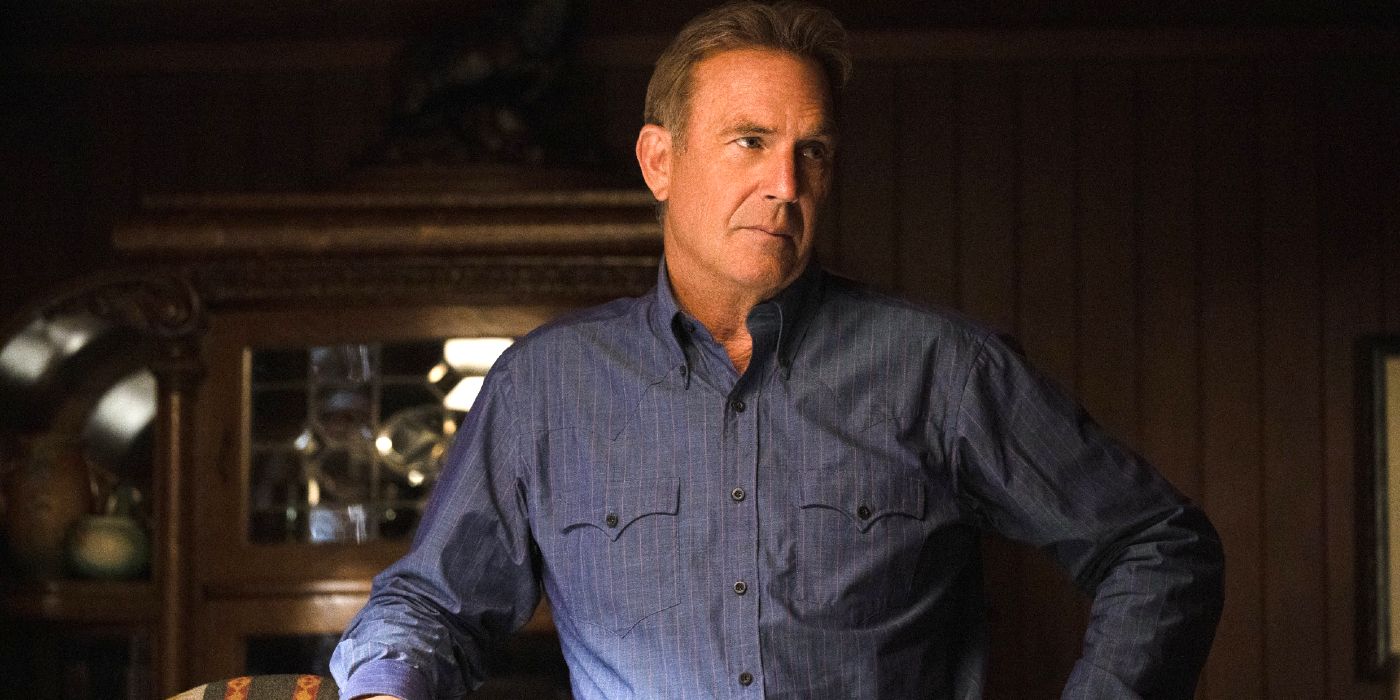
When people talk about recent Western TV shows, Yellowstone is usually the first one mentioned. The show, created by Taylor Sheridan, has become very popular over its five seasons and sparked several spin-offs, effectively bringing the genre back to life for today’s viewers. However, Prime Video also offers a worthwhile contribution to this renewed interest in Westerns.
With Emily Blunt leading the cast, this Western is a standout thanks to its direct storytelling, realistic visuals, and a new take on classic Western tropes. In a time when many shows are sprawling and last for multiple seasons, The English proves that a tightly-focused Western can be incredibly impactful.
Prime Video’s The English Is a Revisionist Western Series
The story centers on Lady Cornelia Locke, who travels to America determined to find justice for her son’s murder. She soon crosses paths with Sergeant Eli Whipp, a Pawnee man heading to Nebraska to request land promised to him for his military service – a request he suspects will be denied. Recognizing a shared purpose, they decide to team up and pursue their goals together.
In the 1970s, Western films started to become more realistic and complex. Instead of simply celebrating American ideals and expansion, these new films questioned traditional Western themes. Movies like Once Upon a Time in the West and The Wild Bunch were key in changing how the genre was seen.
I’ve always loved how Westerns evolved! After the classic, super patriotic films, we started seeing movies like McCabe and Mrs. Miller and Jeremiah Johnson that really challenged those old ideas. That shift paved the way for films like Tombstone and especially Unforgiven, which were huge hits because they weren’t afraid to look at the darker side of the West and question the way things used to be portrayed – even acknowledging the racism that was part of the genre’s history.
I’ve noticed that sometimes, even recently, the genre seems to fall back into old patterns, especially when it comes to how it portrays women and Indigenous people. For example, a film like Killers of the Flower Moon mainly showed the story through the eyes of white people, which felt like it diminished the Osage characters or focused too much on violence and trauma in their lives.
Often, problematic elements in older movies and TV shows are excused as being typical of the time. However, many recent productions avoid addressing these issues. The English revitalizes a genre that previously tackled them directly.
Unlike many Western series that have overlooked or negatively depicted Indigenous Americans, The English presents a more nuanced perspective through its character, Whipp. The show immediately challenges typical Western tropes by introducing Whipp as a Native American man who collaborates with the US Patrol.
He first completes one last mission: finding a sought-after Cheyenne leader named Running Hawk. Afterwards, he plans to retire and finally take possession of the land promised to him as payment for his work. Like many Native Americans at the time, people were often pressured into supporting those who had taken their territory simply to ensure their own survival. Throughout the series, Whipp is torn between his loyalty to the US Patrol and his connection to his community, creating a compelling and complex character journey.
Locke stands out in this type of story as a strong, independent woman who takes charge of her own destiny, instead of needing to be rescued. Driven by a desire to avenge her son, she relentlessly pursues his killer, and quickly proves she knows her own worth. She faces challenges from the beginning, but adapts quickly, and her growth throughout the story adds significant depth and complexity.
As a critic, I found The English deeply affecting. It doesn’t shy away from showing the harsh realities faced by Indigenous people and women in that era – the betrayals they endured, the pain they suffered, and the impossible decisions they were forced to make. What really struck me was how powerfully the series illustrates what happens when a group is under control, and how even those who seem completely powerless can discover incredible strength through their dedication to fighting for what’s right.
The English Benefits as a Miniseries
Many people consider Yellowstone a key part of the recent revival of Westerns. While classic Western films starring actors like John Wayne and Clint Eastwood have remained popular for decades – alongside more recent hits like Tombstone and The Power of the Dog – the Western genre hasn’t fared as well on television.
Early Western TV shows, like Have Gun, Will Travel and Gunsmoke, usually featured self-contained stories each week. These were enjoyable action programs but weren’t known for breaking new ground. Then Yellowstone revived the Western genre with a complex, ongoing story and a fresh perspective.
I think the biggest reason for its success is simple: it kept getting renewed! The first season was popular with us fans, but critics weren’t blown away – it only got a 58% score on Rotten Tomatoes. But as the show went on and we learned more about the Duttons, it really hit its stride. Later seasons became huge, consistently earning scores in the 90s from critics – it’s amazing to see how far it’s come!
What truly sets The English apart is its satisfying completeness. At just over five hours long, the show feels like one seamless movie, delivering a full Western story with no loose ends or frustrating cliffhangers. It successfully tells everything it intended to within its concise six episodes.
These days, streaming services are quick to cancel shows, particularly those in less popular genres like Westerns. Netflix’s The Abandons recently met this fate, ending after only one season because not enough people watched it. Other series, such as Prime Video’s Outer Range and USA Network’s Damnation, also didn’t last long – they were both canceled after two seasons.
As seen with shows like The Abandons, many series are created with the expectation of lasting multiple seasons. When Netflix cancels a show prematurely, like it did with The Abandons, viewers are left with an unfinished story and unresolved plot points. Yellowstone would have suffered the same fate if it had been cancelled before its conclusion.
The first season ends with Dan Jenkins (Danny Huston) being kidnapped and the ranch facing danger, a pattern that continues throughout the show’s run. Though the series was allowed to finish its story over five seasons, it could easily have been cut short. Lower ratings in later seasons, like those in the fifth season, could have left the story unfinished.
As a critic, I found the tight structure of The English to be one of its greatest assets. It really sets it apart from sprawling series like Yellowstone, which often struggle with pacing and wrapping things up effectively. Because this was designed as a limited series, it avoided the pitfalls of dragging on too long or losing focus – delivering a fully realized and satisfying story that will endure. It’s a complete work, and that’s something special.
2026-07-28 19:08