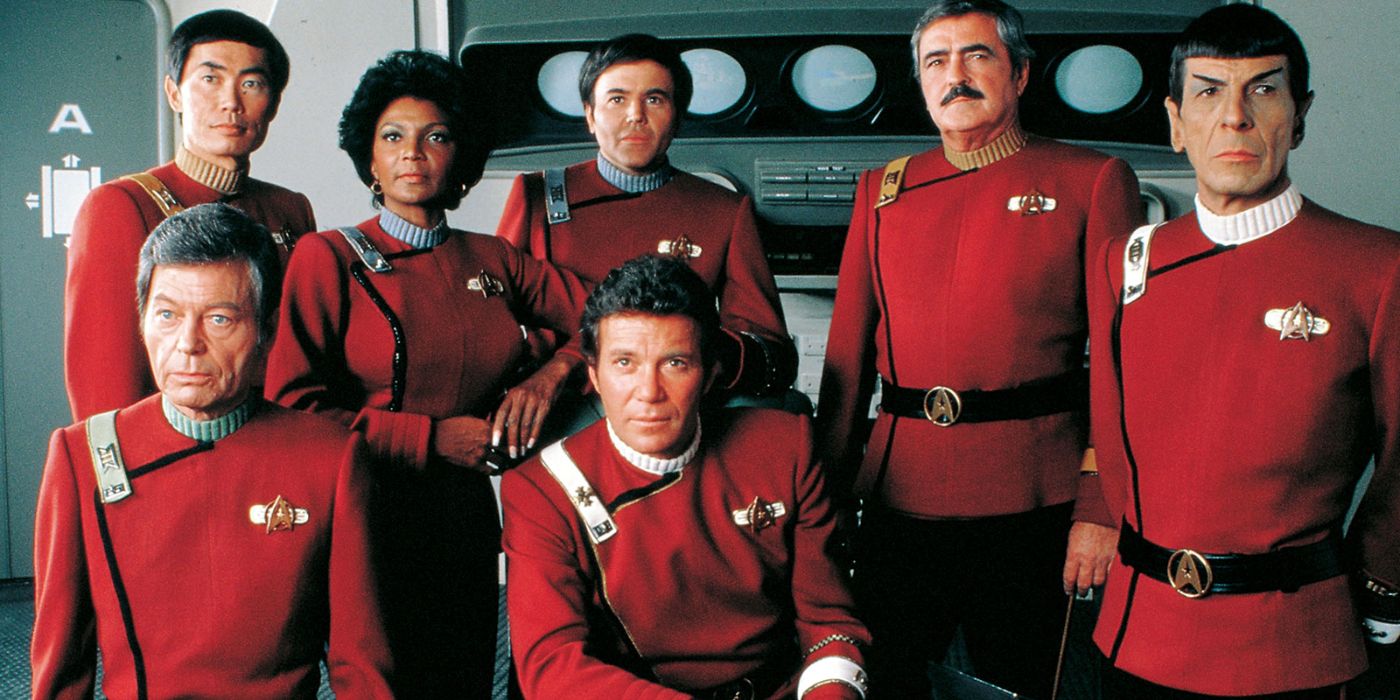
Space operas are a type of science fiction known for grand, adventurous stories that take place in outer space. They often share themes with classic tales of knights and myths. This subgenre became popular in the 1960s and gained a strong following thanks to shows like Doctor Who. If you enjoy Star Trek, there are many books available that offer similar space-faring adventures while you wait for the next movie.
For over 60 years, Star Trek has been a huge part of popular culture, appearing in films, TV shows, comics, and novels. It didn’t just influence how we see science fiction – it also changed how fans connect with each other, encouraging things like fan fiction and fan conventions. Star Trek brought science fiction to a wider audience and inspired countless other shows, movies, and books. Some of these works directly imitate Star Trek, while others simply build upon ideas it popularized.
Becky Chambers’ Wayfarers Series Modernizes Space Operas
Becky Chambers’ debut novel, The Long Way to a Small, Angry Planet, the first in the Wayfarers series, follows Rosemary Harper as she escapes her past by joining the crew of the Wayfarer, a spaceship that’s more working-class transport than galactic explorer. The story focuses on the crew members and their personal journeys – each with their own challenges – rather than grand adventures. As they travel across the galaxy, the Wayfarer crew encounters various alien cultures, and the novel delves into the lives and struggles of everyone on board.
I absolutely loved how this book reminded me of Star Trek – it wasn’t about huge battles, but about the people. The crew felt like a real family, even though they were all different species! It really focused on their lives together, learning about each other’s cultures, and just the everyday stuff. And like classic Star Trek, it felt hopeful and optimistic about the future. It also tackled really interesting topics – things like mental health, being yourself, and all kinds of relationships, which I really appreciated. It’s just a really positive and inclusive story.
Redshirts Pokes Fun at Classic Star Trek Tropes
John Scalzi’s Redshirts, which won both the Hugo and Locus awards in 2013, is a fun and affectionate tribute to Star Trek. The book is filled with references to the show, starting with its very title.
This novel cleverly mixes science fiction, comedy, and a playful self-awareness. It follows the crew of the starship Intrepid as they begin to notice a strange pattern: every away mission results in the death of a lower-ranking crew member, while the officers always survive. Like the original Star Trek, the characters are inspired by those in TOS, but this book expands the story to include the experiences of the ship’s junior officers.
The novel’s spaceship is a nod to the classic Star Trek episode “The Immunity Syndrome,” where the entire crew of the Vulcan ship Intrepid is destroyed by a massive space amoeba. Beyond poking fun at the tendency for minor characters to die, the story also explores themes like time travel and doppelgängers, and examines storytelling techniques such as plot armor and convenient, unexplained technology.
Leviathan Wakes is the Introduction to The Expanse Series
The Expanse, a critically acclaimed and award-winning series by Daniel Abraham and Ty Franck (writing as James S.A. Corey), is a nine-book space opera. The story begins with Leviathan Wakes, published in 2011, and follows the crew of the Rocinante over forty years. They become entangled in crime, political conflicts across the solar system, war, and the investigation of an alien presence, all while humanity has spread throughout the Solar System.
Both The Expanse and Star Trek are space-based stories that delve into complex political issues and the evolution of humanity, utilizing believable concepts of space travel and technology. The Expanse is known for its realistic portrayal of physics and the challenges of alien technology, making it a more ‘hard’ science fiction series than Star Trek. However, both shows share a focus on a dedicated crew who function as a close-knit ‘found family’ and provide a moral compass for the narratives. While The Expanse presents a grittier, more realistic vision of space colonization, Star Trek offers a more optimistic future, but both emphasize strong ensemble casts and compelling characters.
The Left Hand of Darkness is Feminist Sci-fi at its Finest
Ursula K. Le Guin’s acclaimed 1969 novel, The Left Hand of Darkness, cemented her place as a leading science fiction author. The story centers on Genly Ai, a human diplomat sent to the planet Gethen to convince its people to join a galactic federation called the Ekumen. However, his efforts are repeatedly thwarted because he struggles to understand Gethenian culture – the planet’s inhabitants are ambisexual, meaning they don’t have a fixed gender. Both the novel and Le Guin use symbolic storytelling to question conventional societal norms and highlight the potential consequences of challenging traditional gender roles.
This novel is a pioneering work of feminist science fiction, praised for its exploration of androgyny and how gender shapes society. Though not a fast-paced adventure, it’s known for its deep, philosophical approach to the genre. As part of Ursula K. Le Guin’s Hainish Cycle, the book shares common ground with Star Trek, particularly in its vision of a hopeful, diplomatic alliance of planets. Both feature ambassadors who study different cultures and political systems on alien worlds – a concept similar to Star Trek’s iconic away team missions.
This story is reminiscent of the Star Trek: The Next Generation episode featuring the J’naii. Like that episode, it involves a relationship with an alien species who don’t understand or accept gender roles and sexual intimacy. Specifically, a character falls in love with a J’naii who identifies as female, but faces disapproval and pressure to change due to their culture’s beliefs.
The Vorkosigan Saga is Star Trek: TOS Fanfiction
The Vorkosigan Saga is a highly acclaimed space opera series by Lois McMaster Bujold, winning the Hugo Award five times. It includes more than 20 novels and short stories, and combines action, humor, and romance. The series centers on Miles Vorkosigan, a clever and resourceful strategist with a disability, who works as a spy and mercenary. The story is set a thousand years in the future, in a galaxy where humans have colonized many planets, each with its own unique and complicated culture.
The Vorkosigan Saga goes beyond typical space opera with its focus on complex themes like disability, identity, and ethics, as well as explorations of queer norms, social change, and intricate relationships. Like Star Trek, it prioritizes character development and focuses on diplomacy, military tactics, and moral challenges. The series shares Star Trek‘s spirit of cultural discovery within a large, varied galaxy, and many books follow a similar “planet of the week” structure. Interestingly, the saga actually began as Lois McMaster Bujold’s idea for Star Trek fanfiction.
The Culture Series is Set in a Post-Scarcity Society
As a huge sci-fi fan, I first stumbled upon Iain M. Banks’ Consider Phlebas back in ’87, and it totally blew me away. It’s the book that kicks off his incredible Culture series. What I love about it is that it explores what happens when a really advanced, almost perfect society—that’s The Culture—has to deal with civilizations that aren’t so enlightened. Each book feels fresh because it follows different characters, but they’re all connected by this underlying theme of the Culture subtly (and sometimes not so subtly!) trying to shape the galaxy. It’s fascinating to see how they approach these interactions, and how their agents work behind the scenes.
Iain M. Banks’s The Culture series, consisting of ten novels, is frequently compared to Star Trek, but with a more complex and provocative approach. Both depict advanced, utopian societies where money isn’t necessary, and artificial intelligence handles most work, allowing citizens to pursue pleasure and fulfillment. However, while Star Trek‘s Starfleet generally avoids interfering with developing civilizations, the Culture subtly guides them toward more just and forward-thinking futures – essentially asking what would happen if Star Trek characters took a more active role in shaping other worlds.
The Binti Trilogy Highlights Africanfuturist Sub-Genre
The Binti trilogy is a series of science fiction novellas by Nigerian-American author Nnedi Okorafor. It follows Binti, a sixteen-year-old Himba girl from Namibia, as she travels from Earth to a renowned university in space. During her journey, her ship is taken over by the Meduse, alien creatures resembling jellyfish. Binti, a skilled mathematician and ‘harmonizer,’ must use her talents to navigate the dangers of space and a growing conflict. The trilogy has won both Hugo and Nebula awards and is praised for blending African culture with science fiction, while also tackling themes of colonialism, acceptance, technology, and what it means to find your identity.
Nnedi Okorafor’s Binti trilogy and Star Trek share a lot of common ground. Both offer a hopeful vision of the future, focusing on exploring the galaxy, building relationships with different cultures, and resolving conflicts through communication instead of fighting. Like many Star Trek stories, Binti follows a young person leaving home to encounter alien societies. Binti often acts as a peacemaker in difficult situations, mirroring Star Trek‘s emphasis on diplomacy, understanding, and overcoming prejudice. In fact, Binti even gets a quick mention in the Star Trek novel The Autobiography of Kathryn Janeway, where it’s listed as a book that inspired Janeway’s own space travels.
Foreigner Series Explores Anthropological Science Fiction
C.J. Cherryh’s Foreigner series features more than twenty novels following the descendants of a ship lost while traveling from Earth. The books center around Bren Cameron, a human translator and diplomat who navigates the complex court of the Atevi, the ruling alien species. Often categorized as space opera and anthropological science fiction, the series explores the clash and intersection of human and alien cultures, highlighting how differently the two species perceive the world.
C.J. Cherryh’s Foreigner series shares similarities with Star Trek, focusing on diplomacy, politics between stars, and making first contact with new civilizations. However, Foreigner explores these ideas in a more realistic and detailed way. Like Star Trek: The Original Series, which highlighted the differences between Vulcans and humans, Foreigner examines the challenges and successes of two very different species – humans and the Atevi – trying to coexist. The Atevi have a unique, mathematically-based way of thinking that shapes their strict social rules.
Star Wolf Series is Written By a Star Trek Writer
Originally published in 1972 as Yesterday’s Children, then revised and re-released as Starhunt in 1985, this is the first book in David Gerrold’s Star Wolf series. Gerrold, a writer for Star Trek—famous for the episode “The Trouble with Tribbles”—created a space opera series that shares many similarities with Star Trek. Like Star Trek, Star Wolf focuses on the adventures of a starship and its crew as they explore the galaxy within a federation of different species, with a military-style structure.
The Starhunt series began as an idea for a two-part Star Trek: The Next Generation episode called “Tomorrow Was Yesterday.” The final book in the series, Blood and Fire, started as a script that included gay characters and subtly addressed the AIDS crisis, fulfilling a promise from Roddenberry to include LGBTQIA+ stories in TNG. The Voyage of the Star Wolf, especially, feels like TNG with its familiar crew relationships and a strong, non-human security officer similar to Worf. Sharing themes of military service and space exploration, and even including a quick nod to the classic Tribbles, the Star Wolf novels are essentially Star Trek‘s literary counterpart.
Hitchhiker’s Guide is the Ultimate Space Opera Comedy
Douglas Adams’ The Hitchhiker’s Guide to the Galaxy is widely considered the best science fiction comedy ever made. It started as a radio comedy on BBC Radio 4 between 1978 and 1980 and quickly became a huge international success, expanding into novels, comics, TV series, games, stage plays, and even a 2005 movie. The story follows Arthur Dent, the last human after Earth is destroyed to build a hyperspace route. He’s saved by Ford Prefect, an alien who appears human and works as a researcher for the electronic travel guide, The Hitchhiker’s Guide to the Galaxy.
Both Hitchhiker’s Guide to the Galaxy and Star Trek use classic space opera elements – they feature expansive galaxies, diverse alien life, and futuristic technology like teleportation. Both stories also poke fun at complicated intergalactic rules and regulations, from the Vogons’ pointless destruction of Earth to Starfleet’s bureaucratic problems. However, Hitchhiker’s Guide specifically satirizes the Federation’s corporate-like organization. The series is known for its humor, including iconic elements like 42, the Answer to the Ultimate Question of Life, the Universe, and Everything. While Star Trek balances humor with a hopeful vision of the future, Hitchhiker’s Guide uses sci-fi ideas to create a more absurd and comical effect.
Read More
- Биткойн падает после громких заявлений из Белого Дома о криптовалюте и Федеральной Резервной Системы, сохраняющей спокойствие.
- The True Story That Inspired Abbott Elementary’s Choice To Move The School Into A Mall
- Inception Meets Lost In HBO’s 4-Part Sci-Fi Game Of Thrones Replacement
- Seth Rogen’s Knocked Up Becomes a Global Streaming Hit on Netflix
- Star Trek: Starfleet Academy Review – The Kids Are Just Okay in Gaia Violo’s School-Set Comedy-Drama
- James Gunn on What Makes DCU Unique & Different From Marvel
- Доллар обгонит южноафриканский рэнд? Эксперты раскрыли неожиданный сценарий
- 6 Batman: The Animated Series Episodes With Multiple A-List Stars
- Every Jack Ryan Movie, Ranked
- Viggo Mortensen ‘Thrilled’ With Jamie Dornan’s Aragorn Recasting
2026-05-07 22:12