Many action stories lose their way before the end, becoming overly focused on flashy effects instead of meaningful plots. They often rely on convenient power-ups and forget the original conflicts, ultimately losing the emotional connection with the characters. What truly sets great action stories apart is a strong, consistent structure – the ability to build tension and raise the stakes while staying true to the core themes and ideas established early on.
A truly satisfying action climax happens when every part of the story feels essential, not just extra. Each fight advances the plot, every character’s journey makes sense, and the ending directly connects back to the questions and promises made at the very beginning.
Fullmetal Alchemist Brotherhood Treats Equivalent Exchange as a Moral Law Never Broken
Fullmetal Alchemist: Brotherhood consistently uses the idea of ‘equivalent exchange’ – not just as something that happens in the story, but as a core part of how the whole series is built. Studio Bones emphasizes that every sacrifice Edward Elric makes has a matching consequence.
Even as the fantastical battles become more complex, the show remains surprisingly consistent, unlike many action series that lose track of their own rules when introducing new threats. The storylines of Olivier Mira Armstrong, Scar, and Ling Yao all develop separately but ultimately come together to support the central idea of the series: what responsibilities does a nation have to its citizens?
Every character in Fullmetal Alchemist: Brotherhood has their own purpose, and because of this, the emotional impact of the Promised Day is incredibly powerful – it feels earned after everything we’ve seen and learned about them.
Attack on Titan Commits to Eren Yeager’s Transformation so the Ending Becomes Structurally Inevitable
Attack on Titan manages a remarkable feat: it completely flips the story’s moral perspective over the course of its four seasons, and does so smoothly. Even though some fans were surprised, Eren Yeager’s turn into a world-level villain feels earned and consistent with the story.
Hajime Isayama carefully laid the groundwork for that story arc throughout the first season, hinting at it in the training scenes and the secrets revealed in the basement. MAPPA captures the emptiness in Eren’s gaze with the same skill Wit Studio used to portray his initial anger, making the emotional impact truly powerful. Each action sequence involving the ODM gear in Trost, Stohess, and Shiganshina forces the characters to rethink everything they thought they knew about their enemy.
Attack on Titan doesn’t focus on flashy battles; instead, each fight changes how we understand strength and control, and this consistent approach remains throughout the whole series.
Mob Psycho 100 Makes Shigeo Kageyama’s Emotional Repression the Engine of Both Drama and Spectacle
The strength of Mob Psycho 100 lies in how Mob’s psychic abilities and his personal growth are directly connected. Whenever Shigeo Kageyama’s bottled-up emotions burst forth, the animation studio, Bones, visually represents each outburst based on the specific feeling he hadn’t yet acknowledged.
I’m completely fascinated by Reigen, honestly. He’s really the heart of the show for me, because he just gets people in a way Mob hasn’t quite figured out yet. And the story keeps hammering home this amazing point – we see it with Toichiro Suzuki in Season 2 and again during the Separation arc in Season 3 – that raw power means nothing if you don’t understand yourself. It’s like, power without self-awareness is just…destructive.
Mob Psycho 100 focuses just as much on Mob’s personal development as it does on his action-packed battles. This creates a satisfying experience that’s both visually exciting and emotionally engaging.
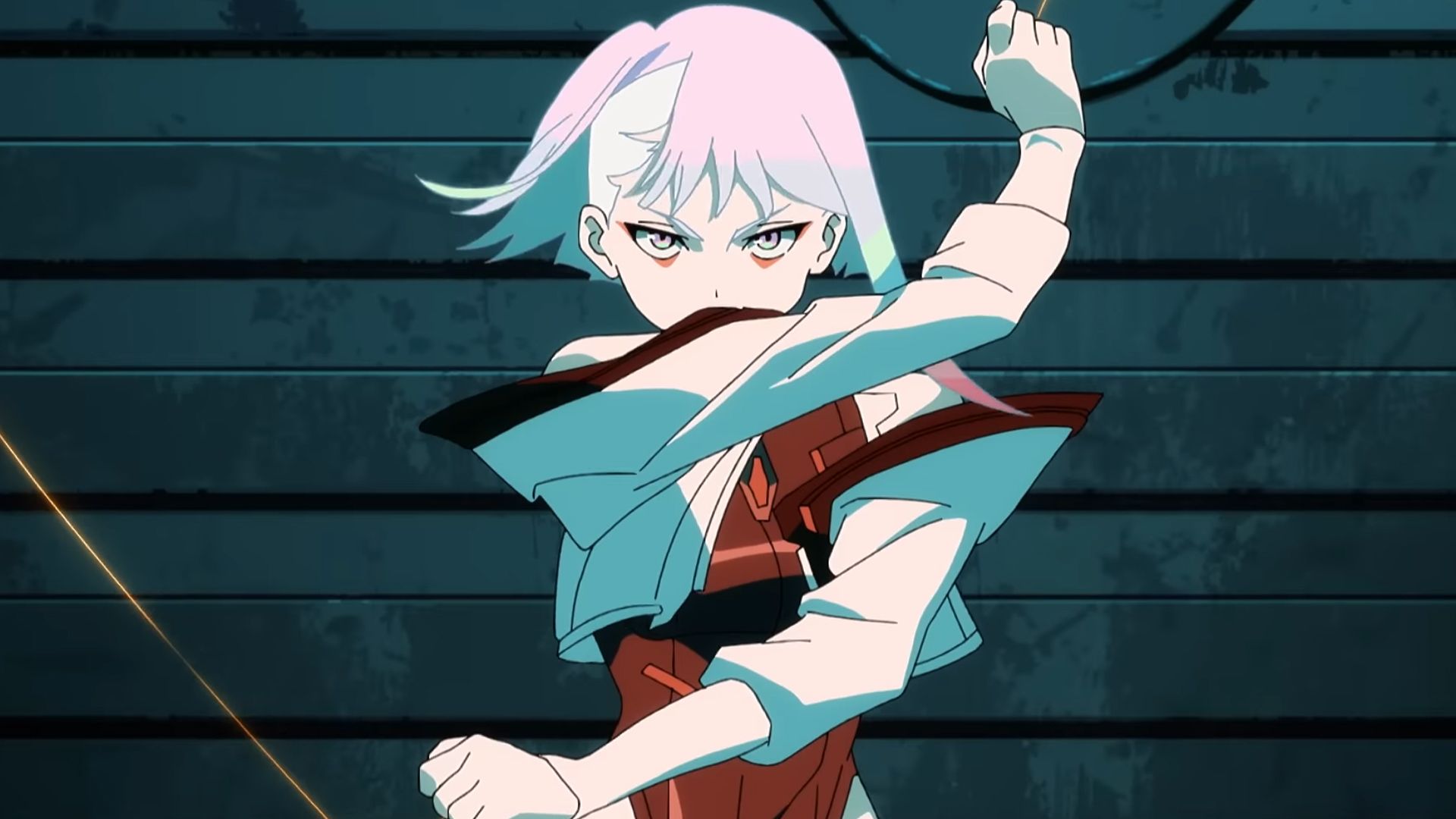
Cyberpunk Edgerunners Uses David Martinez’s Cyberpsychosis as a Structural Countdown
The anime Cyberpunk: Edgerunners portrays David Martinez’s downfall as both a deliberate path he takes and something he couldn’t avoid. The show’s distinctive style uses vibrant, exaggerated colors and depicts bodies in ways that go beyond realistic human forms.
Night City slowly breaks down those who live there, and this mirrors David’s own fading sense of self throughout the series. The image of Lucy’s moon keeps appearing because David can only attain it by transforming into someone who’s lost sight of what it originally meant to him.
As David gets more cybernetic implants, the action becomes quicker and more intense, highlighting the show’s theme of the price of power. Ultimately, Edgerunners visually represents David’s loss of humanity by increasing the speed and chaos of the animation.
Tengen Toppa Gurren Lagann Treats Kamina’s Death as Its Ideological Turning Point
The anime Tengen Toppa Gurren Lagann is clearly split into two parts: before and after the character Kamina’s departure. The creators intentionally structured the story this way, understanding that Simon’s journey to overcome this loss would be central to the plot.
Kamina’s core idea – that self-belief starts with trusting someone who believes in you – is the driving force behind all of the Gurren Brigade’s successes. The story follows Rossiu to see if Simon can use this lesson even in situations Kamina never imagined.
The ending of Tengen Toppa Gurren Lagann is effective because the giant robots aren’t just a symbol – they represent a real, cosmic battle of wills as a physical power. The show builds to this incredible scale over its 26 episodes, making each bigger moment feel earned and meaningful, not just flashy for the sake of it.
Cowboy Bebop Builds a Jazz-Structured Narrative Where Every Session Resolves Into the Same Final Chord
Rather than simply being a way to save money, the episode-by-episode structure of Cowboy Bebop is a deliberate artistic choice. Each episode explores a different genre, and director Shinichiro Watanabe uses this variety to keep viewers from becoming too comfortable with what they think they know about the characters and their world.
Spike Spiegel’s history comes back to him in pieces because he’s spent years ignoring it, and the show’s storytelling reflects this avoidance. Even though each episode seems separate, they gradually build emotional weight, hinting at the things Spike can’t run from. The characters Julia and Vicious are established as dangerous figures visually, even before we fully understand why they matter in Cowboy Bebop.
Watanabe realized this, and the story builds to its biggest moment over 24 episodes by intentionally leading the audience astray.
Fate/Zero Reframes the Holy Grail War as a Tragedy Powered by Idealism’s Inevitable Failure
Fate/Zero functions effectively as a prequel due to the way Gen Urobuchi crafts the story around dramatic irony, immediately establishing a key element for the audience. Kiritsugu Emiya’s approach – practical, uncompromising, and devoid of emotion – is presented as a sensible reaction to the brutal nature of the war, and the series meticulously explores the exact points where this logic breaks down.
As a huge fan of Fate/Zero, I always felt the clash between Kiritsugu and Kirei was something special. It wasn’t just a fight, but a real meeting of minds – or rather, a showdown of beliefs taken to their absolute limits. Both characters were so committed to their own ways of seeing the world that their battles felt less like action scenes and more like arguments playing out with Servants as the pieces. It’s the most genuinely philosophical moment in the whole Fate series, in my opinion.
The battles in Fate/Zero—like Rider’s group of companions, Archer’s disdain for today’s society, and Saber and Lancer’s arguments about honor—aren’t just action sequences. They all contribute to the show’s main question: what responsibilities does a true hero have to the world?
Samurai Champloo Uses Mugen and Jin’s Incompatible Fighting Styles as its Central Argument
The anime Samurai Champloo cleverly connects its old-fashioned historical setting with its modern hip-hop music to mirror the clashing personalities of the characters Mugen and Jin. Mugen fights using a free-flowing, improvisational style inspired by capoeira, while Jin is a master of traditional sword fighting, highlighting their very different approaches to history and custom.
Watanabe builds the entire journey around exploring if these two ideas can work together without one overpowering the other. The search for the sunflower samurai, led by Fuu, mainly serves as a backdrop to this central conflict, rather than being the core problem itself.
What makes Samurai Champloo visually striking isn’t just flashy design – the style is the way the characters are portrayed. Mugen, for example, fights like someone who had to learn to survive, and his unpredictable battles feel genuinely raw and desperate.
Parasyte The Maxim Uses Migi’s Alien Logic as a Measuring Instrument for Izumi’s Eroding Humanity
The series Parasyte: The Maxim truly shines when Migi acts as a counterpoint to Shinichi Izumi’s growing emotional struggles. Migi’s focus on simple survival, without any emotional concerns, establishes a stable point of reference.
The true terror of Parasyte isn’t the parasites themselves, but how Shinichi transforms throughout the series. Each battle he endures alters his connections with others, ultimately leading to a point where even confronting Gotou doesn’t frighten him anymore. The show’s horror lies in that change – the distance between the person he was at the beginning and who he becomes.
I’m completely fascinated by how Parasyte details that incredible transformation – it’s like watching Migi himself examine every bit of cellular change! The show really ramps up the horror over its 24 episodes, but what sticks with me most is how it constantly focuses on the human impact of everything happening. It’s not just about the monsters, it’s about the people caught in the middle, and that’s what makes it so powerful.
Kill la Kill’s Deliberately Incomplete Animation Is the Visual Argument Ryuko Matoi Makes With Her Entire Body
Studio Trigger’s Kill la Kill is built on a fascinating contrast. The show explores how clothing can represent oppressive power, but it’s animated with a deliberately raw and unconventional style that rejects typical polished visuals.
The transformation scenes with Ryuko Matoi and Senketsu use a deliberately choppy and simple visual style that feels powerful and energetic, not cheap. The strict rules of Satsuki Kiryuin’s school try to control everyone, but the show’s visuals constantly fight against that control. As the story unfolds and we learn more about Ragyo Kiryuin, the series becomes a story about taking control of your own body and dealing with the pain of the past.
The ending of Kill la Kill doesn’t try to tidy things up, and that’s intentional. A polished conclusion would go against everything Ryuko struggled to achieve. The raw, intense energy of the final fight isn’t a flaw—it is the point.
Read More
- Золото прогноз
- The Boys Series Finale Officially Arrives Early (With a Twist)
- Dazed and Confused Remains the Best R-Rated Comedy Of All Time
- Mortal Kombat II Scores Fresh Rotten Tomatoes Score In Franhise First
- Don Rosa: The Legendary Comic Book Writer America Shouldn’t Soon Forget
- I Did Not Have Swiftie Boyfriends Complaining About Being On A ‘Clock’ After Her Proposal On My Bingo Card
- Jessie Buckley & Paul Mescal Officially Set Hamnet Reunion
- Outlander Season 8, Episode 9 Recap & Discussion: Old Wounds Are Finally Healed Ahead Of The Series Finale
- Евро обгонит венгерский форинт? Эксперты раскрыли неожиданный сценарий
- Джетленд Холдинг акции прогноз. Цена акций JETL
2026-05-16 04:45