Warm up your snapping fingers; Wednesday is back.
Netflix has started filming the third season of Wednesday, the hit series based on The Addams Family.
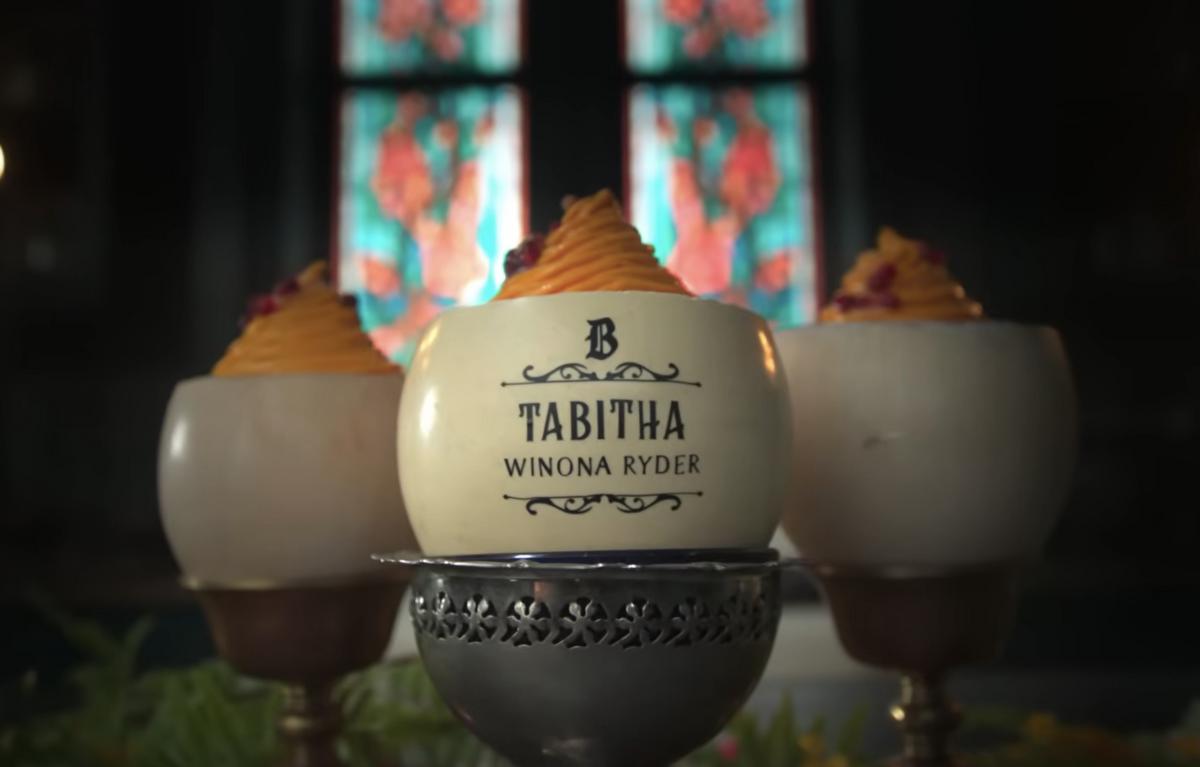
The new season of the show will feature several returning and new faces. Winona Ryder and Eva Green, both frequent collaborators with director Tim Burton, are joining the cast, with Green playing the mysterious Aunt Ophelia, Morticia Addams’ sister. Catherine Zeta-Jones will reprise her role as Morticia, alongside Luis Guzmán as Gomez, Fred Armisen as Uncle Fester, and Jenna Ortega as Wednesday.
Here‘s the new teaser for Season 3, complete with the full announcement of the new co-stars:
According to Alfred Gough, a co-creator of the series, the team’s main focus for Season 3 of Wednesday is to make it the strongest season yet. They plan to further develop the characters and expand the world of the show, including exploring more of the Addams family and revealing previously unknown family secrets.
Season 1 of Wednesday is still Netflix’s most popular English-language series, according to the platform’s own data. It’s number one on their list of top shows, with 252.1 million views. Season 2 of Wednesday is currently fifth with 119.3 million views. Only Adolescence and seasons 4 and 5 of Stranger Things have been viewed more.
Here’s what Tim Burton said about Season 3 of Wednesday and the new cast members, including Ryder and Green.
I’m thrilled to be back for Season 3! It’s fantastic to work with the original cast again. And honestly, getting to collaborate with some friends I really admire – Winona, Eva, Chris, and Noah – makes this season feel incredibly special. I feel really lucky to be a part of it.
Season 3 of Wednesday is currently being filmed in Dublin, Ireland, and will be available to stream on Netflix soon. You can also watch the first two seasons on Netflix now.
Essential Movies on Netflix Every Film Lover Should See

Night of the Living Dead (1968)
While Netflix has a lot of content, it doesn’t have many classic or historically important films. One notable exception is George A. Romero’s Night of the Living Dead, a groundbreaking horror movie about a zombie outbreak. Beyond the zombies themselves, the film is significant because Romero made it independently, and it achieved remarkable success and cultural impact, making it a key moment in film history.

The Sting (1973)
Often considered even better than Butch Cassidy and the Sundance Kid, The Sting is a captivating and surprisingly poignant film. It follows a young con man (Redford) who teams up with a seasoned swindler (Newman) to avenge the murder of his friend by a ruthless gangster (Shaw). With stellar performances from all three leads, the movie is full of clever twists and turns, balanced by a touching portrayal of life during the Great Depression. The Sting rightfully won the Academy Award for Best Picture in 1973 and remains a classic of 1970s Hollywood.

The Texas Chain Saw Massacre (1974)
I’m so thrilled this 1974 horror film is getting the recognition it deserves – the Library of Congress added it to their preservation list in 2024, acknowledging how culturally significant it is! And with a documentary, Chain Reactions, coming out the same year, it’s a perfect time to revisit (or discover!) the original that started it all. Seriously, if you only know the sequels or reboots – many of which just don’t measure up – do yourself a favor and watch this beautifully brutal, truly terrifying film on Netflix. You won’t regret it!

Pulp Fiction (1994)
While Pulp Fiction may not be the most copied film of the ’90s today, it was hugely influential for a time. The fact that so many attempts to copy it were so bad actually highlights just how talented Quentin Tarantino is, both then and now.
Pulp Fiction is a strange mix of things that somehow all come together. It’s a grand story about crime in Los Angeles, but also a deep look at the characters involved. It jumps between incredibly over-the-top scenes – think magical briefcases and secret clubs – and surprisingly ordinary moments, like conversations about foot rubs and international fast food. It’s both large in scope and intimate in its focus, funny and sad, violent and cartoonish. That’s what makes it Pulp Fiction.

Titanic (1997)
James Cameron’s most famous films all share a few key ingredients: a love story, large-scale action, exciting pursuits, and a complex relationship with technology. While Titanic isn’t as action-packed as films like The Terminator or Avatar, it still embodies these themes. It was a groundbreaking and hugely successful film for its time, and it’s easy to see why even today. Cameron has a unique ability to keep the story centered on the characters, even when the scenes around them are massive and spectacular.
Election (1999)
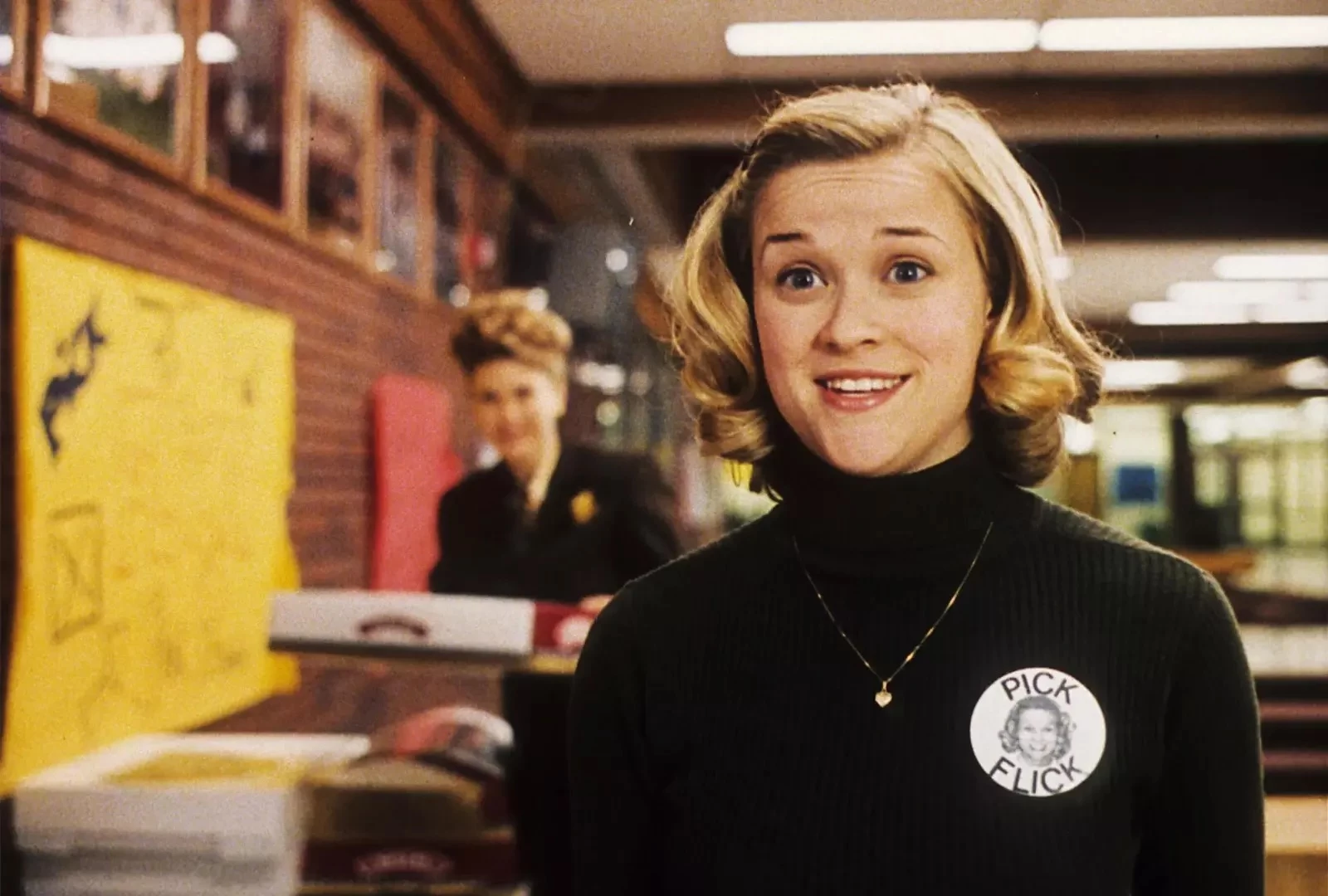
Reese Witherspoon first gained widespread recognition in the 1999 comedy Election, where she plays Tracy Flick, an overly enthusiastic high school student who clashes with her cynical history teacher (Matthew Broderick, channeling his Ferris Bueller energy). The film centers around their amusing rivalry when Tracy runs for student council president. Election is a darkly funny and insightful movie, and it’s often cited as a highlight of a fantastic year for cinema. What’s also interesting is the title – simply Election, not The Election – because the film is more about the difficult experience of making choices in general, rather than just the outcome of a school election.

Donnie Darko (2001)
Netflix isn’t the best place to find truly unique or classic cult films, especially if you’re looking for older titles. They do have a lot of their own, more recent movies, but if you want a genuinely unusual film that gained a following as a midnight movie, your choices are limited. One example is Richard Kelly’s Donnie Darko, which features a young Jake Gyllenhaal as a teenager who survives a near-fatal accident and may be the key to preventing a global catastrophe. The film is known for its unsettling visuals, dark mood, and memorable conclusion, and is considered a standout independent film from the early 2000s.

The Squid and the Whale (2005)
Noah Baumbach truly established himself as a talented filmmaker with a deeply personal movie about a young man (played by Jesse Eisenberg, who also benefited from the film’s success) navigating his parents’ divorce. The film received many award nominations and launched Baumbach into a new, ongoing phase of his career, as seen in films like the Netflix hit Marriage Story and Jay Kelly.

Zodiac (2007)
David Fincher is known for directing thrillers about serial killers, but Zodiac is more than just that. It’s a journey through San Francisco’s history over several decades, seen through the perspectives of three men obsessed with solving the Zodiac Killer case. We follow a police inspector (Mark Ruffalo) – who is said to have inspired the film Bullitt – a crime reporter (Robert Downey Jr.) whose articles made him a target, and an amateur detective named Robert Graysmith (Jake Gyllenhaal) who can’t shake the case even when the killings stop. What Zodiac does exceptionally well is show how all-consuming an obsession can be. Fincher immerses the audience in a maze of clues and false leads using clever camera work and editing. By the end of the film – which circles back to the very beginning after a tense two and a half hours – viewers understand exactly what drove Robert Graysmith.

Boyhood (2014)
For twelve years, director Richard Linklater secretly filmed scenes with the same small cast and crew, documenting the life of a boy (Ellar Coltrane), his mother (Patricia Arquette), and his sister (Lorelei Linklater) as they grew up. While some might see this as a personal project for Linklater, the film actually offers a fascinating look at American life in the early 2000s, and the universal experiences of family – love, hardship, and compromise. Every movie deals with time, but Boyhood has a special connection to it. Seeing the actors genuinely age on screen adds a touching quality to some moments and deepens the emotional impact of others. When Arquette delivers a speech at the end, it’s filled with the weight of twelve years of real-life happiness and sorrow. As the late Roger Ebert eloquently put it, movies are windows into our world, and Boyhood feels like a film that throws those windows wide open.

Whiplash (2014)
Whiplash is a fantastic film that explores the intense dedication and sacrifices artists make for their craft. The movie centers on Miles Teller, who plays a determined young jazz drummer at a top music school. His relationship with his demanding and often cruel instructor drives him to excel, but at a significant personal cost. Director Damien Chazelle masterfully balances the film’s thrilling energy with a deeper look at the dark side of artistic pursuit, culminating in a truly unforgettable final scene – a powerful showdown between student and teacher. Surprisingly, Whiplash also works as a genuinely terrifying horror film; the subtle but menacing line, “not quite my tempo,” delivered calmly by the instructor when the drummer makes a mistake, is far more frightening than anything found in typical horror movies of the decade.

Sing Street (2016)
Just how good is Sing Street? I actually cried while watching it… on a plane! Even on a small screen at 35,000 feet, this inspiring story about Irish teens chasing their music dreams really resonated. It’s filled with witty dialogue, strong performances, and a soundtrack that’s even better than La La Land. Sing Street is a genuinely feel-good movie, and we could all use one of those right now. Just be warned – it might make you tear up a little (or a lot – no shame!).

Spider-Man: Into the Spider-Verse (2018)
While most Spider-Man movies are numerous, Spider-Man: Into the Spider-Verse stands out as both a large-scale and exceptional film. It features a diverse group of Spider-People, including the new hero Miles Morales, the courageous Gwen Stacy, and a downcast Peter B. Parker. The movie powerfully emphasizes the classic Spider-Man message – that anyone can be a hero – and brings Stan Lee and Steve Ditko’s inspiring vision to life with stunning animation.

Roma (2018)
I remember 2018 as the year Netflix really hit its stride with original films, and Alfonso Cuaron’s Roma was a standout. It’s a deeply personal film, almost an autobiography, focusing on a Mexican family and their housekeeper, Cleo, played brilliantly by Yalitza Aparicio. When it first came out, there was a lot of debate about whether you needed to see it in a cinema to truly appreciate it – and honestly, Cuaron’s beautiful black and white visuals were stunning on the big screen. But I have to admit, there’s something to be said for watching a film like that in the comfort of your own home, where you can really let yourself feel everything without worrying about anyone else seeing you cry! It just felt like Netflix offered the best of both worlds.

The Irishman (2019)
Frank Sheeran truly supported Jimmy Hoffa – and ultimately, that’s where he ended up. This subtle hint early on is just one example of the incredible detail and care Martin Scorsese put into The Irishman, a film that feels like the culmination of his entire career. The most powerful moments come towards the end, as Robert De Niro’s character finally faces the consequences of his life choices. He seems almost proud of many of his actions, especially his loyalty to Jimmy Hoffa (played by Al Pacino). However, he also begins to realize that despite the status, wealth, and respect his work brought him, he’s now facing death alone in a nursing home. A priest offers forgiveness, but it remains to be seen if it will be enough.

Cats (2019)
Let’s be honest, Cats doesn’t compare to the other films on this list. But to truly understand something amazing, it helps to look at its opposite, and Cats perfectly serves that purpose. Even years later, the movie raises so many bizarre questions. Why do the cats have human hands? Where are all the people? What is “hot milk soup”? Why does Jennifer Hudson have a runny nose throughout the entire film, and why does Idris Elba appear nearly nude? And why is Taylor Swift wearing heels when everyone else is barefoot? These questions will probably stay with us forever, and that’s part of what makes the movie so strangely wonderful.

The Power of the Dog (2021)
Jane Campion’s The Power of the Dog is a slow-burn Western that demands your full attention – you can’t afford to be distracted! The film subtly reveals its characters and their motivations, ultimately offering a compelling exploration of masculinity. Benedict Cumberbatch delivers a powerful performance as Phil Burbank, a tough cowboy grappling with change after his brother brings home a wife and her son. The story centers on the complex relationship between Phil and the seemingly ill-suited Peter, and how their misunderstandings of each other lead to a surprising and quietly shocking conclusion. Hopefully, we won’t have to wait another decade for Campion’s next film.

RRR (2022)
This exciting Indian film delivers three hours of stunning visuals, romance, action, and energetic musical numbers. It’s similar to a classic John Woo action movie, but set in South Asia, and focuses on two powerful men on opposite sides of the law who unexpectedly team up. These men are Bheem, a warrior from the Gond tribe, and Rama, a soldier in the British army. Bheem travels to Delhi to find a kidnapped girl, while Rama is tasked with tracking down whoever is searching for her. They should be enemies, but a chance encounter leads to a surprising friendship. Throughout the film, RRR keeps you guessing about when each man will discover the other’s true identity, all while showcasing thrilling rescues – Bheem often represented by water, and Rama by fire – and challenging the prejudiced British upper class with incredible dancing.

Godzilla Minus One (2023)
It’s rare for a prequel to truly enhance a franchise, but Godzilla Minus One does just that. By setting Godzilla’s story in post-World War II Japan, the film powerfully revives the character’s original impact as a symbol of atomic devastation and the psychological scars of war. And this Godzilla is genuinely frightening – immense in scale, disturbingly sickly, and with an atomic breath that truly terrifies.
But Godzilla Minus One isn’t just a visual spectacle. It features a compelling, flawed protagonist (Ryunosuke Kamiki) and subtly explores themes related to kamikaze pilots, culminating in a deeply emotional decision. A significant portion of the film feels reminiscent of a classic Howard Hawks adventure, with a crew of hardened sailors battling a colossal, nuclear-powered dinosaur – and it’s as incredible as that sounds.

Are You There, God? It’s Me, Margaret. (2023)
While Are You There God? It’s Me, Margaret didn’t make a splash at the box office, it feels destined to become a defining film for today’s young people, much like Ferris Bueller’s Day Off was for my generation. This excellent adaptation of the classic book comes from writer/director Kelly Fremon Craig and boasts a fantastic cast, including Rachel McAdams, Benny Safdie, and Kathy Bates. Abby Ryder Fortson, who was memorable in the Ant-Man films, is also wonderful as Margaret. As a father of two daughters, I’m not looking forward to navigating these issues myself in a few years, but I’m glad this movie will be here for them when they need it.
Read More
- Everything We Know About Georgie & Mandy’s First Marriage Season 3
- Золото прогноз
- Stranger Things Brings Back Divisive Season 2 Character in Season 5 Vol. 1
- Man of Tomorrow: James Gunn Debunks Rumor Regarding DCU’s [Spoiler]
- Taika Waititi Developing New Comedy for Hulu
- DC Studios’ Major Batman Movie Gets First Casting Update In 9 Months
- The Super Mario Galaxy Movie Trailer Is Here, And I’m All About Rosalina And That Villainous Introduction
- Forget Star Trek, Anson Mount’s Best Role Is in AMC’s Gunslinger Western Drama
- Playdate’s Ending On Amazon Is So WTF I Need To Talk About It
- George Clooney Reacts To His Worst-Reviewed Film Ever: “It Was Just A Disaster”
2026-02-23 18:30