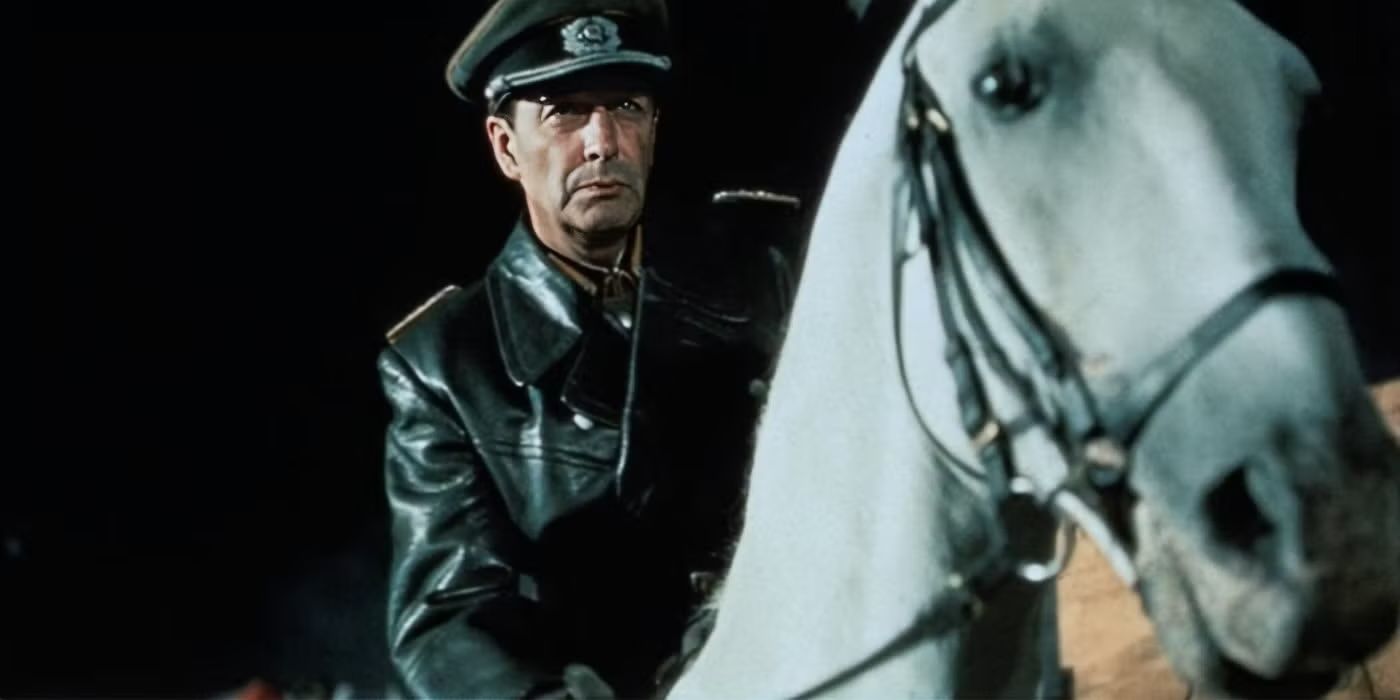
Disney+ has become a great way to rediscover some of Disney’s older live-action films, which often get overshadowed by the success of their animated movies. This earlier period was actually a time of significant growth for Disney, helping the company establish its unique style and voice. That classic Disney magic really came to life in these films, solidifying Disney’s reputation as a creative and innovative studio. Movies like Swiss Family Robinson and Mary Poppins from the 1960s continue to shape Disney’s image today. However, one film from that era hasn’t received the same recognition, even though it had a big impact on the industry.
Released in 1963, Miracle of the White Stallions was a Walt Disney Productions film distributed by Buena Vista. The 118-minute, full-color adventure and war epic centers on the impact of conflict on personal relationships. Originally shown as a two-part special on Walt Disney’s Wonderful World of Color, the film reflects the style of its era but remains influential. While its initial reception was modest, Miracle of the White Stallions is now recognized as a strong example of Walt Disney’s live-action filmmaking.
Walt Disney’s Love of War Movies Spawned Miracle of the White Stallions
The 1960s were a time of exciting growth for The Walt Disney Company. As Walt Disney approached the end of his career, he focused on projects he believed would be his lasting achievements. He was particularly dedicated to expanding the company’s theme park business, with Walt Disney World becoming a major focus. Meanwhile, Disney’s animation studio was thriving, releasing beloved classics like The Jungle Book, One Hundred and One Dalmatians, and The Sword in the Stone, solidifying Disney’s leadership in animation. Disney also continued to produce successful live-action films, including The Parent Trap.
As much as Walt Disney was a businessman, always aiming for a hit, he really used his films – and later, Disneyland – to showcase what he loved. You can see it everywhere! He was obsessed with classic American culture, trains, and even old stories, and he poured all of that into the park’s design. It wasn’t just entertainment for him; it was personal. He even used his skills to help with war efforts during WWII, making propaganda films. And don’t even get me started on his love for horses – that passion found its way into the parks too! All these different interests seemed to be building towards something, and it all culminated in a really special movie released just before he passed away.
The film Miracle of the White Stallions centered on the bond between humans and horses, set against the dramatic backdrop of World War II and the political unrest of the time. It featured inspiring characters – the kind of heroes Walt Disney admired – and blended elements of adventure and drama, genres Disney had mastered in its live-action films. While clearly inspired by other movies of the era, Miracle of the White Stallions also contributed its own unique story to the cinematic landscape.
When watching 12 Strong, it’s clear that Miracle of the White Stallion likely influenced this specific type of film and inspired later movies. The film has a classic, enduring quality that makes it a hidden standard for similar productions. Many of its most memorable scenes now feel strangely familiar, suggesting that this lesser-known film has subtly impacted popular culture. Filled with the hallmarks of a classic Walt Disney movie, it’s an emotionally powerful story that is both complex and well-developed. While it may not have the same action-packed energy as films it inspired, it’s still a compelling and spirited watch.
Miracle of the White Stallions Boasted an All-Star Cast & Creative Team
It’s remarkable that Miracle of the White Stallions is memorable, given the number of films made about the same events. Though it’s not well-known to most viewers, the film is special because of its skillful production. The cast and crew were exceptionally talented, and would be considered stars in any era. This strong team helped ensure the film’s compelling story was told effectively, giving Miracle of the White Stallions a real chance to succeed.
Arthur Hiller, a seasoned director who worked from the 1950s to the 1990s, directed Miracle of the White Stallions. He was known for his versatility, successfully handling a variety of genres in films like The Addams Family, The Careless Years, and Love Story (which earned him an Oscar nomination), as well as the National Lampoon’s series. The screenplay for Miracle of the White Stallions was written by A. J. Carothers, who frequently collaborated with The Walt Disney Company. Carothers wrote several Disney live-action films, including Emil and the Detectives, The Happiest Millionaire, and Never a Dull Moment, many of which are now largely forgotten.
Walt Disney unsurprisingly took a producer role, alongside his partner Ron W. Miller. Though often overshadowed, Miller—as President of Walt Disney Productions—was a key figure in this period and helped develop films like Tron. He had previously contributed to movies such as The Rescuers, The Fox and the Hound, and The Black Cauldron. The film also benefited from a talented team, including cinematographer Günther Anders, composer Paul J. Smith (known for Cinderella and Pinocchio), and editors Cotton Warburton and Alfred Srp. Disney assembled a crew of both longtime employees and outside experts, aiming to create a film that would be respected as a genuine artistic work. This dedication to quality, always a hallmark of Disney’s films, signaled that the filmmakers believed in Miracle of the White Stallions and wanted it to stand apart from other live-action movies of the time.
The film’s cast reinforces this idea of solid craftsmanship. Miracle of the White Stallions featured Robert Taylor and Lilli Palmer as leads. Taylor went on to become a well-known romantic hero, later taking on more complex roles in films like The Day the Hot Line Got Hot, where he moved beyond his polished image. Palmer consistently demonstrated her talent, earning Golden Globe nominations for But Not for Me and Peter the Great both before and after appearing in Miracle of the White Stallions. The supporting cast included skilled and experienced actors such as Curd Jürgens, Eddie Albert, James Franciscus, John Larch, and Brigitte Horney. Like many aspects of Miracle of the White Stallions, the cast wasn’t about star power; it was built on dependable professionals who could deliver reliable performances.
The Film Is Inspired By a Real Story
The film Miracle of the White Stallions is based on a true story, which adds to its authenticity. It draws heavily from The Dancing White Horses of Vienna, a book written by Alois Podhajsky, who also contributed to the film’s writing. The story centers on Operation Cowboy, a daring military effort to save approximately 100 Lipizzaner horses – 70 from Vienna’s Spanish Riding School and 30 from Czechoslovakia. These horses were important symbols of Austrian national identity, and with war creating dangerous conditions and food shortages, the operation was considered crucial to their survival.
The movie follows a remarkable mission to save a group of horses, showcasing their skill through an unusual dressage performance. This display aims to prove the horses’ worth and secure their protection. The film skillfully contrasts the large-scale devastation of the war with the personal struggle to safeguard these animals, as the team seeks to gain support for their cause. This contrast drives the story, with the central conflict revolving around protecting this compassionate effort. As a Nazi invasion looms and a final battle approaches, the hopes of both the rescuers and the horses are put to the test, creating intense emotional stakes.
Despite moments of loss, Miracle of the White Stallions is an uplifting story about people doing what’s right and ultimately succeeding. The film beautifully honors those who rescued the horses, showcasing their dedication and skill. At its heart, the movie explores the powerful connection between humans and animals – a theme audiences can easily connect with. While many war films focus on human struggles, this one offers a fresh perspective by centering on the horses. It also poignantly portrays the humanity of characters, even those forced to serve in the German military, and the emotional cost of war on them.
Beyond its talented cast and crew, Miracle of the White Stallions features a strong storyline. While it touches on classic themes of good versus evil, it also explores more complex ideas. Even today, viewers can enjoy the story’s unexpected twists and turns. It’s often difficult to revisit older films due to outdated perspectives, limited technology, and smaller budgets. However, Miracle of the White Stallions‘ biggest strength is its timeless appeal and ability to connect with a wide audience.
The Film Flopped at the Time Of Its Release
You know, despite all the lovely things people say about it now, Miracle of the White Stallions wasn’t a huge hit when it first came out 62 years ago. I think a big part of why it’s been a bit forgotten is that the original marketing just didn’t quite connect with audiences. It was the 1960s, and frankly, people were a little tired of World War II movies – Disney had other, brighter things going on. Plus, the classic Western was starting to fade, and Disney was proving they could shake things up with animation, so it felt like the movie got lost in the shuffle.
I remember when Miracle of the White Stallions came out – it made about $2.55 million at the box office, which was pretty good considering it only cost around $2.5 million to make! But looking back, it’s amazing to think that just three years later, Mary Poppins exploded and made a whopping $103 million! It really shows what audiences were looking for. People wanted something different, something magical to escape with, and Disney just didn’t seem to promote Miracle of the White Stallions enough to really capture that. They didn’t manage to get either the audience or the critics excited about it, which is a shame.
Many initially found the film to be slow, visually dull, and appealing only to those who love horses. Some also criticized how German soldiers were depicted, feeling they were given too much depth. However, Disney often releases films that aren’t immediately successful with critics or at the box office, but later gain a dedicated following. Fantasia and Pirates of the Caribbean: At World’s End are good illustrations of this pattern.
The reasons some critics disliked Miracle of the White Stallions when it was first released in the 1960s are surprisingly the same reasons people love it today. The film was unique in its approach, well-made, and deliberately paced to create a powerful ending. Many of the techniques used now seem more common, suggesting the movie was simply ahead of its time. Thankfully, it’s now receiving the appreciation it deserves from a modern audience.
Found an error? Send it so it can be corrected.
Read More
- JJK Director Taps Talent From Spy x Family & JoJo’s Bizarre Adventure For New Movie
- One of Clint Eastwood’s Best Westerns (That Isn’t ‘The Good, the Bad and the Ugly) Is Leaving Free Streaming
- Группа Аренадата акции прогноз. Цена акций DATA
- In Just 1 Day, Universal’s Wicked: For Good Is Officially the Most Watched Title on PVOD in America
- Taylor Sheridan’s 2-Part Action Thriller Series Is The Perfect Binge Ahead Of The New Season
- НОВАТЭК акции прогноз. Цена акций NVTK
- Welcome to Derry Just Officially Confirmed Its Shining Connection (& It’s Perfect)
- After 24 Years, LEGO Star Wars Will Finally Bring Back This Overlooked Prequels Character
- ‘The Pitt’ Season 2, Episode 3 Main Characters, Ranked by Likability
- Bridgerton Season 4 Part 1 Premieres With Magical Rotten Tomatoes Score
2026-03-25 17:09