Isekai is one of the most common and well-loved genres in anime today. Though it’s sometimes criticized for being formulaic, many isekai series are truly exceptional. From influential early hits like Log Horizon to more recent favorites such as Re:Zero – which is getting a new season fans are eagerly awaiting – the genre continues to produce standout titles.
Interestingly, some of the greatest anime about being transported to another world actually came out before the current boom in popularity of the genre. For example, one of the funniest anime comedies about this theme, debuted way back in 1996 – before the term “isekai” was even widely known. Almost 30 years later, this often-overlooked show deserves to be discovered by fans who are searching for creative, unique, and funny fantasy stories.
Many Excellent Isekai Fantasy Anime Released Prior to the Genre’s Modern Boom
For many fans, the modern isekai genre really took off in the 2010s. The huge success of Sword Art Online in 2012 sparked widespread interest, leading to a surge of anime about people getting stuck in video games or alternate worlds. Popular series like Overlord and Re:Zero debuted in the middle of the decade, and the genre’s popularity has continued to grow ever since.
While modern isekai anime is incredibly popular now, the genre actually started with online novels written by fans. Even Sword Art Online, a hugely successful series, began as a web novel in 2002 – it took ten years to become famous worldwide. The common themes and features we see in isekai today evolved gradually over time. Before that, many stories now considered isekai were simply portal fantasies that don’t quite feel like the isekai we know and love today.
Many anime from the late ’90s and early 2000s actually appealed to female audiences, which is different from how the isekai genre is known today. Series like Inuyasha, The Twelve Kingdoms, and Fushigi Yugi all fit the basic idea of isekai—modern heroines transported to fantasy worlds—but they don’t quite match the focus on power and wish fulfillment that’s common in today’s isekai anime.
Early isekai series were created before the market became crowded with stories focused on wish fulfillment and predictable plots. Because of this, they often feel more original, even when using typical fantasy settings and the ‘stranger in a strange land’ idea. Those Who Hunt Elves is a good example – it’s an anime that manages to be both familiar and surprisingly new, blending characters with modern attitudes into a fantasy world of elves and magic.
Those Who Hunt Elves Is an Unhinged, Hilarious Isekai Comedy
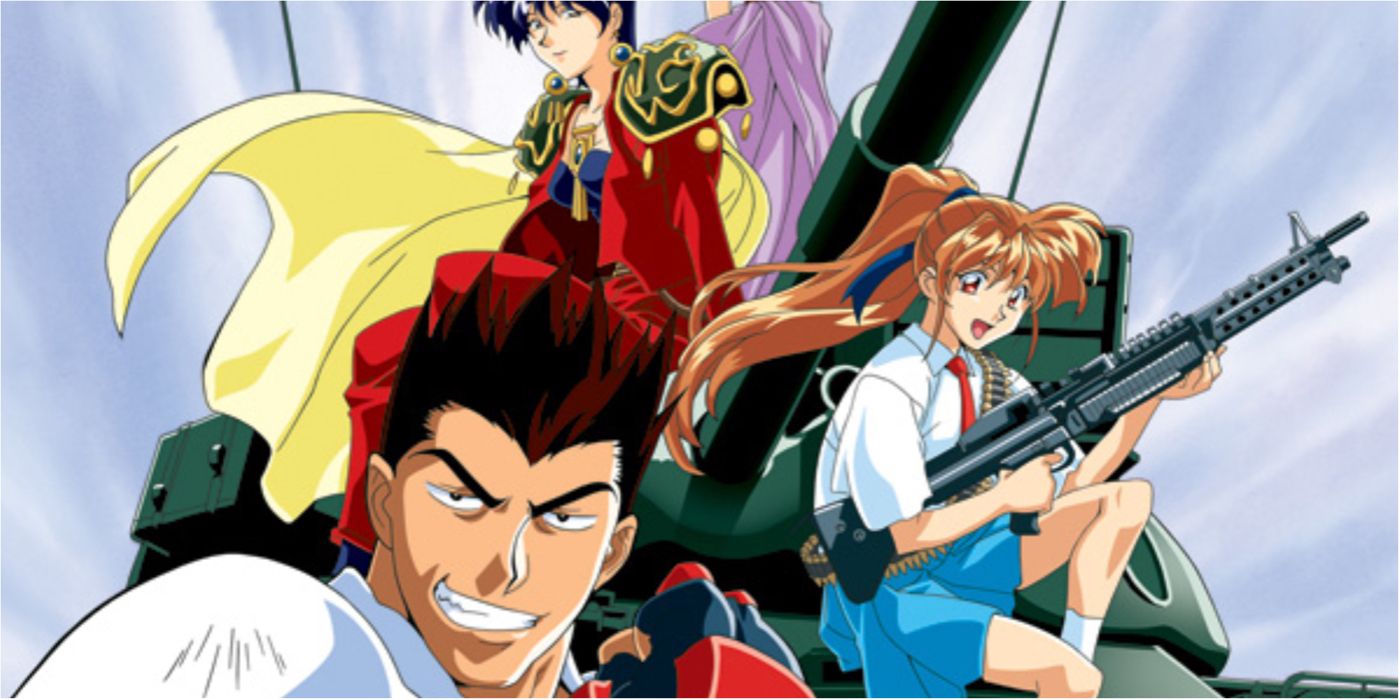
Like many anime of its kind, Those Who Hunt Elves starts with a group of people being transported to another world. But instead of the usual heroes, this story features a very different trio. The main characters are Junpei, a martial artist who appreciates beauty; Airi, a smart actress who prefers using her intelligence; and Ritsuko, a high school student completely fascinated with military equipment and technology.
After appearing in a strange world with a tank and other weapons, the group finds themselves under the care of Celcia Marieclaire, a powerful elven priestess. When her attempt to send them home with magic goes wrong, the spell breaks apart, and magical fragments become tattoos on various elves. This sets the stage for their journey across this fantastical land, where they decide the quickest way to recover the spell fragments is to… well, check every elf they encounter.
The show Those Who Hunt Elves is best described as delightfully chaotic. While it initially appears to be a standard fantasy story, it quickly becomes clear that it doesn’t follow typical conventions or build a complicated backstory. The world is filled with strange creatures – think villainous fishmen who ironically can’t swim, and cat spirits inhabiting machines. When the Elf Hunters show up, things get even wilder. Each episode is a whirlwind of ridiculous scenarios, silly humor, and jokes so bad they’re good.
One of the surprising highlights of Those Who Hunt Elves is its funny, character-focused humor. While the main characters—a group of three that later grows to four—aren’t incredibly complex, they don’t feel like typical anime stereotypes, and their interactions are always entertaining. The constant playful arguments between Jumpei and Celcia are especially fun, and Ritsuko is a consistently engaging character whenever she appears.
Those Who Hunt Elves Feels Shockingly Refreshing in the Modern Isekai Landscape
While not deep or complex, Those Who Hunt Elves is delightfully silly and never tries to be something it’s not. It’s essentially a parody, but it came out before many of the now-familiar tropes of the ‘isekai’ genre were even established. This means it doesn’t rely on subverting clichés like shows such as KonoSuba or Cautious Hero do. Instead, it uses the ‘transported to another world’ idea in a wider, more unrestrained way, giving it a unique comedic energy that many newer isekai comedies often miss.
Interestingly, Those Who Hunt Elves is a rare anime comedy that actually benefits from being dubbed. The English dub doesn’t just translate the words; it adapts the humor for English-speaking audiences, meaning jokes that would be lost on those who don’t understand Japanese still work thanks to clever reinterpretation.
While a little old-fashioned and definitely not subtle, Those Who Hunt Elves isn’t trying to be a deep, complex fantasy story. It’s simply meant to be fun! This forgotten gem offers a silly, over-the-top adventure that fully embraces the comedic possibilities of the fantasy genre, letting viewers escape into a world where anything goes.
Read More
- ‘And Then The Chesty One Comes In.’ SNL’s Cut For Time Sketch Hilariously Reimagined Sydney Sweeney And Zendaya’s Euphoria
- Five Nights At Freddy’s 2 Review: The Video Game Movie Sequel Limbos Under The Low Bar Set By The First Film
- Teenage Mutant Ninja Turtles II Returns to Theaters for 35th Anniversary
- The Western That Launched Kevin Costner’s Career Is Finally Streaming For Free
- Elle Fanning’s Upcoming Apple TV Comedy Continues A Wildly Impressive Streaming Trend
- Star Trek’s Smartest TNG Episode Is the Best Time-Travel Story in Sci-Fi TV History
- Netflix Rolls the Dice on Live-Action Kakegurui Series Renewal for 2027
- 10 Times Lex Luthor Gained Powers
- Nintendo Releases First Official Zelda Movie Photos, Revealing Link and Zelda in Costume
- CBS Effectively Explains Why Tracker Got Rid Of Bobby & Velma
2026-03-01 01:40