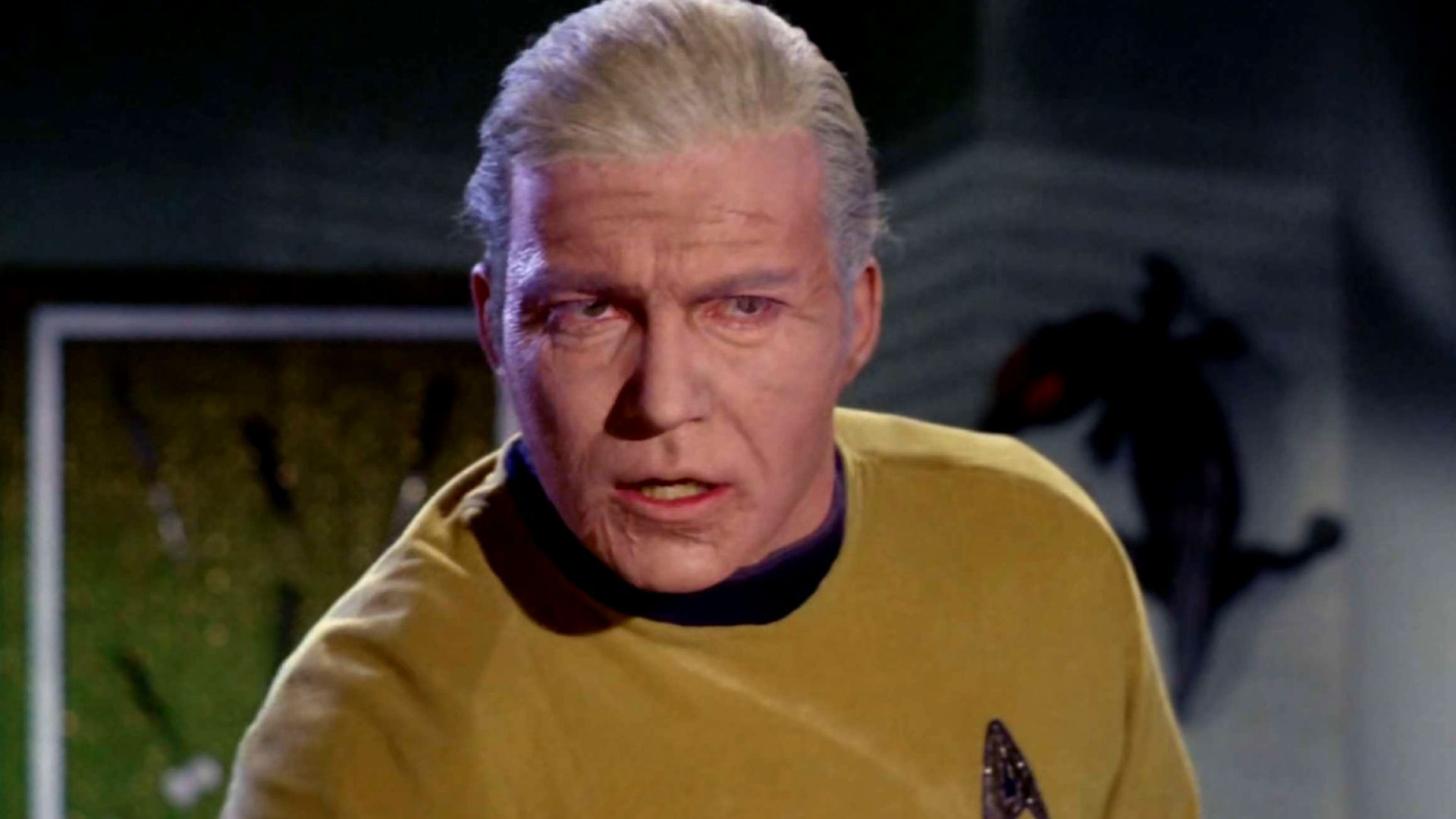
William Shatner, as Captain Kirk in the original Star Trek series, was always portrayed as a hero. The show consistently presented him as brave, a strong but just leader, quick-thinking against opponents, charming with women, and capable in a fight. He almost always came across as impressive.
Throughout the original Star Trek series, Captain Kirk was almost always portrayed as a highly capable Starfleet officer. However, there were instances, particularly after the first season, where he was shown with flaws. In the season 2 episode “Obsession,” Kirk’s decision-making was impaired by a deeply upsetting experience from his time on the Farragut. Interestingly, another episode where Kirk made a mistake also highlighted his impressive intelligence.
Star Trek’s “The Deadly Years” Brings Out The Worst Of Captain Kirk

In the Star Trek episode “The Deadly Years,” a landing party from the Enterprise is exposed to radiation that makes them age at an incredibly fast rate. Characters like Kirk, McCoy, Spock, and Scotty quickly start showing signs of aging, like gray hair and various health problems. While it’s serious, the effects aren’t catastrophic for everyone – Scotty just needs rest, McCoy becomes more irritable and sluggish, and Spock’s Vulcan physiology slows down the aging process for him.
Things become difficult for Kirk. As he gets older, he starts forgetting orders and nearly reveals important information to the Romulans because he can’t recall the proper codes for Starfleet communications. Rather than acknowledge that the radiation is affecting him, Kirk avoids facing the truth. He stubbornly insists his only problem is a little gray hair, refusing to admit any weakness or mistake.
Unlike the rest of the crew who are also aging, Kirk struggles to accept getting older. While Scotty, McCoy, and Spock acknowledge their own difficulties with age, Kirk’s denial creates conflict and ultimately leads to a failed competency evaluation after he embarrasses himself.
Captain Kirk’s strong sense of duty, as seen in episodes like “Obsession,” can sometimes be a flaw. He’s put the Enterprise and its crew at risk to get revenge, and even stayed in command when sick and unable to think clearly. Kirk’s dedication to being a good leader sometimes prevents him from making the best overall decision.
In “The Deadly Years,” the effects of rapid aging highlight a weakness in Kirk’s character, bringing out his more difficult and inflexible traits.
“The Deadly Years” Also Shows Why Captain Kirk Is A Starfleet Legend

Once Captain Kirk is restored to his normal age thanks to adrenaline, he rushes back to the bridge, only to discover the Enterprise is being fiercely attacked by the Romulans. Thinking quickly, he creates a fake message for Starfleet – one he’s certain the Romulans will capture – and then skillfully guides the Enterprise to a quick getaway.
Just moments after being gray-haired and likely unaware of the full extent of the problem, Kirk clearly devised this plan as he hurried from sickbay to the bridge. He quickly thought through his actions, and his seamless solution to the crisis is strikingly similar to how he aced the Kobayashi Maru test – a brilliant, unconventional approach that few other Starfleet officers could achieve.
Kirk’s success is highlighted by how poorly Commodore Stocker performs as his replacement. When Stocker takes command of the Enterprise, he’s unable to react to the Romulans, becoming indecisive after they don’t respond to his attempts to communicate. This contrast with Kirk makes Kirk’s bravery even more remarkable. Kirk makes captaincy look effortless, but it’s easy to forget how challenging the job actually is.
Captain Kirk’s biggest strength in Star Trek is also what sometimes leads to his mistakes. His unwavering confidence lets him boldly outsmart enemies like the Romulans, but it also drives him to keep going even when he’s made a poor decision.
Read More
- HBO’s New Drama I Love LA Rotten Tomatoes Score Unveiled
- What George Lucas Really Thinks Of The Mandalorian
- Star Trek’s Most Groundbreaking Character Is the 1 Fans Have Forgotten
- The Mummy Returns Sets 25th Anniversary Rerelease Date With Poster & Teaser
- Nick Reiner Pleads Not Guilty in Parents’ Murder Case
- Darth Maul Theory Teases The Return Of A Surprising Star Wars Villain In Shadow Lord
- Does Vivi Have A Devil Fruit In One Piece Season 2?
- The Flash’s Danielle Panabaker Opens Up About Low-Paying Arrowverse Crossovers And ‘Bad Behavior’ Being Rewarded On The Set
- 7 Comfort TV Shows That Rival Gilmore Girls
- Eleven’s Kryptonite In Stranger Things Explained
2025-12-10 21:09