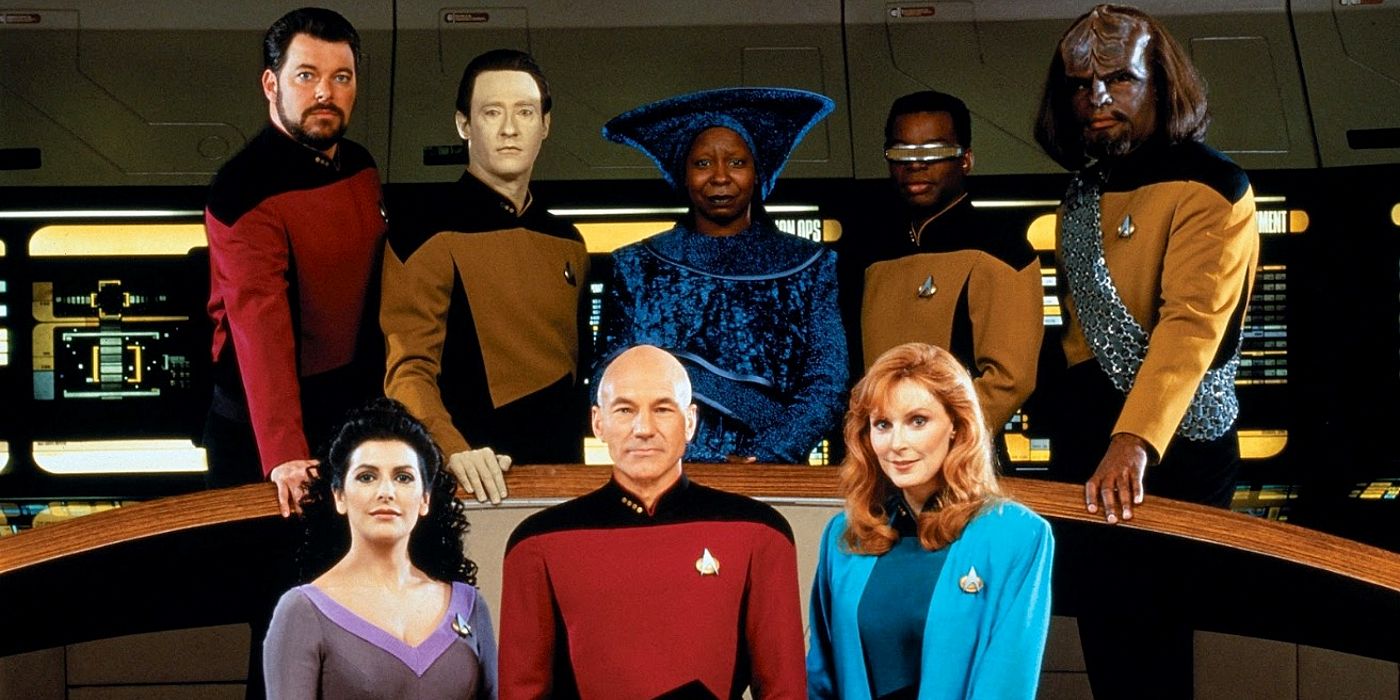
Time travel is a classic sci-fi idea, but it’s notoriously difficult to pull off well in storytelling. It needs careful planning and clear explanations to avoid confusing the audience. However, decades ago, a show managed to deliver one of the smartest and most effective time travel stories ever seen on television.
Star Trek: The Next Generation really hit its stride after a few seasons, and Season 5 showed the writers were confident in letting the characters lead the stories. The episode “Cause and Effect” was a great example of this, trusting viewers to follow a complex plot and rewarding their patience with a truly memorable experience.
This Episode of Star Trek: The Next Generation Is a Perfect Time Travel Story
Wow, the season five episode of Star Trek: The Next Generation called “Cause and Effect” just grabs you right from the start! It opens with this incredible, shocking scene – a total explosion! – and it instantly puts you on the edge of your seat. They don’t give you any explanation, and it immediately feels like whatever’s happening is unavoidable and that things are going to end badly. It really sets the tone for the whole episode!
The usual flow of the story is quickly disrupted. As events repeat, viewers start to realize something isn’t right, similar to the movie Groundhog Day. Though time loop stories are well-known, the science fiction setting provides a great opportunity to play with and expand on this familiar idea.
In the “Cause and Effect” episode, Dr. Beverly Crusher, played by Gates McFadden, is a key figure. Although the show initially had trouble letting other characters lead the narrative, it had become more established by its fifth season. At this point, the actors were all comfortable in their roles, and the production ran smoothly.
From the very beginning, it felt like something strange had already happened, even before the show really started. I quickly noticed, along with the crew – especially Dr. Crusher – that things were… repeating. She kept getting this feeling of déjà vu, like she’d lived moments before. She’d hear familiar conversations and even voices at night, and she bravely tried to explain it to Captain Picard and the others, but sadly, they didn’t quite believe her at first.
After the Enterprise is destroyed, the same events start happening all over again. This time, a card game between Crusher, Data, and Worf introduces strange occurrences. The players begin to anticipate each other’s moves, realizing this is more than just a feeling of having experienced it before – something unusual is definitely happening.
While exploring a new area of space, the Enterprise has become trapped in a time loop. It appears this loop is caused by a collision with the USS Bozeman near a strange temporal distortion, resulting in an explosion and a paradox. Every day, the two ships collide, and the loop resets.
For me, the movie really clicked when I realized the voices Dr. Crusher was hearing weren’t random – they were actually echoes from previous timelines! It was a huge ‘aha!’ moment, and suddenly everything started to make sense. The crew started noticing things felt… familiar, and it was awesome seeing them connect the dots. They really started to trust each other and, more importantly, their gut feelings, which was key to figuring things out.
What makes this captivating is the gradual progress and increasing suspense with each cycle. Every iteration brings just enough advancement to keep things moving and subtly alters the situation. These small changes accumulate over time, and the eventual payoff is incredibly satisfying for viewers.
Star Trek: TNG Is a Sci-Fi TV Masterpiece
What truly shines in “Cause and Effect” is the acting. Even though the story repeats itself within the time loop, it never feels stale. The episode smartly avoids repetition by gradually increasing the suspense and showing the characters slowly become aware that something isn’t right.
The actors faced a delicate challenge. With each reset of the time loop, their characters return to the beginning, but are subtly altered by a growing feeling of déjà vu. These changes start small, but become more noticeable, and the performances need to show this increasing sense of unease. Each actor portrays this growing awareness in a unique way.
At first, the subtle details are hard to catch. Filming this episode was a challenging process, requiring careful attention to detail. Because many scenes needed to be filmed repeatedly with small changes, the crew had to plan everything precisely to ensure everything still matched up. The actors also needed the flexibility to try different approaches while staying consistent with the overall story.
While often overlooked when talking about good TV episodes, editing was especially important for “Cause and Effect.” Because the episode repeats events, skillful cuts and camera work were key to its success. They create a sense of the time loop closing in, mirroring the characters’ feeling of being stuck and emphasizing the significance of even minor details they observe.
“Cause and Effect” makes a great first episode of Star Trek: The Next Generation. You don’t need to have seen any previous episodes or know anything about Star Trek to understand and enjoy it. The story stands on its own, focusing on a compelling science fiction idea to move the plot forward.
The story doesn’t follow a straightforward timeline and trusts the audience to piece things together. This draws viewers directly into the characters’ disorientation, creating a shared and deeply engaging experience. Because of this, the time loop feels like more than just a story trick – it’s something everyone experiences alongside the characters.
This is another excellent episode of Star Trek: The Next Generation. Director Jonathan Frakes clearly understands the actors and allowed them to subtly influence the time-loop storyline. Many fans consider this to be one of his strongest directing efforts on the show.
I remember when this episode aired – it really felt like a turning point for the show. It was written by Brannon Braga, who quickly became one of the most important people behind the scenes. He was around for a lot of the later seasons, eventually becoming a co-executive producer. This episode was where I really started to notice his talent for complex, mind-bending sci-fi, especially stories involving time travel. It felt like his style was really coming into its own with this one.
“Cause and Effect” Has one of the Best Sci-Fi TV Endings
An episode of Star Trek: The Next Generation reveals the USS Enterprise wasn’t alone in experiencing the time loop. The ship it collided with, the USS Bozeman, had been stuck in the loop for much longer – over 90 years, judging by the age of their uniforms. The Enterprise was only caught in the loop for 17 days.
In a welcome and unexpected moment, Captain Morgan Bateson from the Boseman is shown to be connected to the show Cheers. The brief conversation between Grammer’s Captain Bateson and Picard feels significant, and the audience understands the impact of the recent events. The episode concludes effectively through careful build-up and suspense, rather than relying on flashy effects.
I really appreciated how the episode ended with a quiet moment instead of a huge info dump. It felt so much more natural to see the Enterprise crew realize how lucky they were to only have been stuck in that time loop for 17 days, especially compared to the Bozeman. Now I’m completely hooked and wondering how Bateson will cope with knowing he was trapped for almost a century! It’s a great setup for what comes next.
What truly makes the Star Trek: The Next Generation episode “Cause and Effect” stand out is its respect for the audience and its confidence in their ability to understand the story. Rather than explaining everything, the episode presents a unique scenario and lets viewers piece together the mystery alongside the characters, making them active participants in solving it.
Stories involving time travel can be tricky to tell well. The episode “Cause and Effect” stands out because it focuses on building suspense and strong acting, instead of just relying on the time travel itself, which often leads to confusing narratives. This approach is a key reason why it’s so highly regarded.
Found an error? Send it so it can be corrected.
Read More
- Доллар обгонит лев? Эксперты раскрыли неожиданный сценарий
- Steamy Series ‘Outlander’ Dominates Its Raunchy Competition on Streaming
- Уфргсинтез префы прогноз. Цена префов UFOSP
- Hogwarts Sure Does Look Familiar In The New Harry Potter Trailer (But Not From The Movies)
- Disney+ Launches New Feature That Marvel Fans Will Love
- Supergirl Gets a Big Change Ahead of Release — Report
- Is There a Fire Force Season 3 Episode 26 Release Date or Part 3?
- Game Of Thrones Star’s New Sci-Fi Movie Changes The Rules Of A Popular Genre
- Netflix’s 8-Part Psychological Thriller Is Its Best New Show To Binge This Weekend
- ‘Deadpool’ Star Stefan Kapičić Joins Keanu Reeves in Tim Miller’s New Sci-Fi Action Thriller
2026-04-10 03:40