
It’s often said that Starfleet’s strength lies in its personnel, but the organization doesn’t always listen to those who offer valuable insight. Throughout Star Trek history, there are numerous instances where Starfleet ignored the advice of respected individuals, with disastrous results. Jean-Luc Picard is a prime example. A strong advocate for both the Romulans and synthetic lifeforms, Picard was deeply disappointed when Starfleet chose to abandon the Romulans and ban synthetics, ultimately leading him to resign his commission.
As it turned out, Picard was right all along. Starfleet was deceived by a secret group of villains, and the Federation later reversed its unfair ban on artificial lifeforms. Their poor handling of the Romulus disaster caused trouble throughout various timelines in Star Trek. Had Starfleet only heeded Jean-Luc Picard’s warnings, many problems could have been avoided, and he wasn’t the only former captain frustrated by Starfleet’s mistakes. Captains Kirk, Sisko, and countless others likely felt the same way.
In the new series Star Trek: Starfleet Academy, Captain Janeway finds herself frustrated, like many Starfleet veterans before her, because the organization consistently ignores the advice of its most seasoned leaders.
Starfleet Has Been Playing With The Omega Molecule Again

In the last episode of Star Trek: Starfleet Academy, the dangerous Nus Braka, a pirate with world-domination plans, successfully broke into a highly secure Starfleet lab and stole advanced, experimental weapons. This was only possible because of a series of poor choices made by Starfleet personnel.
The ninth episode of Star Trek: Starfleet Academy explains that Braka was after a material called Omega 47, a highly advanced form of the Omega molecule originally researched by the Borg. This molecule was incredibly powerful, offering possibilities as both a devastating weapon and a limitless energy source. However, it was also dangerously unstable and could severely damage the fabric of subspace.
Even a small amount of Omega is incredibly dangerous. It can instantly kill anyone nearby and destroy large areas of subspace, cutting off warp travel. Because Omega is so unstable, a single accident could potentially disable warp travel across an entire quadrant of space.
I’m absolutely horrified to learn that Nus Braka has planted a whole line of Omega 47 mines right along the Federation’s borders. It’s a terrifying thought – those mines could cut off all our worlds, bringing an end to everything we’ve worked for in space exploration and cooperation, all at once. It just makes me wish someone – a Starfleet captain, perhaps – had really stressed how dangerous messing with Omega technology could be.
Janeway Was Always Against Studying The Omega Molecule
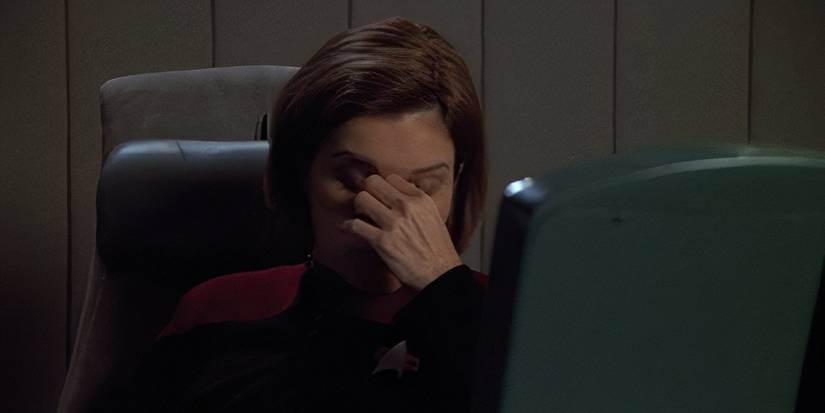
During the time of Star Trek: Voyager, Starfleet had a strict rule called the “Omega Directive.” It absolutely forbade any research into a substance called Omega, and any ship that found it was ordered to destroy it immediately. Captain Kathryn Janeway strongly supported this order.
In Star Trek: Voyager‘s fourth season, the episode “The Omega Directive” featured Captain Janeway issuing a strict order when her ship encountered Omega. Even though Seven of Nine argued that Omega offered incredible scientific possibilities, Janeway decisively eliminated the danger. Janeway understood that some discoveries are too risky to pursue, and she believed Omega was one of them.
Captain Janeway consistently valued the immediate safety of her crew above all else, even if it meant sacrificing potential future benefits. She firmly believed in focusing on present survival and wasn’t afraid to make difficult choices, famously stating, “I don’t care if you can make it sing and dance. We’re getting rid of it… Omega must end here.”
Tuvok wondered why Captain Janeway, as a scientist, was so unwilling to investigate Omega. Janeway countered that she wouldn’t endanger a large portion of the galaxy just to satisfy their curiosity, calling it both arrogant and reckless. She believed there were limits to exploration, and Omega represented one of them.
In Star Trek: Voyager, Captain Janeway and Starfleet Command both recognized that Omega posed too much risk to be worth investigating. However, by the 32nd century – despite building the Voyager-J as a tribute to Janeway’s ship – Starfleet seems to have forgotten that crucial lesson.
Starfleet Ignoring Janeway Makes Even Less Sense In Star Trek’s 32nd Century

Federation scientists now seem to have figured out how to safely study Omega, which Starfleet might use as evidence that Janeway’s concerns were unfounded. However, they’d be mistaken. Janeway’s main point wasn’t about the risk of studying Omega, but rather that it shouldn’t be controlled at all, and the possibility of someone misusing it remains a strong reason to leave it alone.
Nus Braka is a dangerous individual, and it was a mistake for Starfleet to keep Omega at the same location as devices that could turn it into a weapon.
As a critic, I have to say, one of the most unsettling things about the current Starfleet storyline is their work with the Omega particle. The galaxy is still reeling from the Burn – that devastating event that cut off warp travel by making dilithium useless. Honestly, having seen what a Federation without warp capability looks like, it’s incredibly frustrating to watch them risk repeating history by playing around with something that could cause the same thing to happen again, even if they believe they can control it.
Of all the times to ignore Janeway’s warnings, Starfleet has picked the worst.
Starfleet Academy’s Omega Twist Was Hidden In Plain Sight

It’s not entirely unexpected to see the Omega molecule reappear in Star Trek, especially since Star Trek: Starfleet Academy previously suggested it would be important in the 32nd century.
In the fifth episode of Starfleet Academy, SAM was looking for a good mystery to solve and ended up investigating the disappearance of Benjamin Sisko. While searching, she reviewed several screens highlighting famous unsolved cases from Star Trek’s past. These included topics like the psychic effects near the Galactic Barrier (referencing the character Gary Mitchell), immortal beings like the Guardian of Forever, and the origins of the Omega Molecule.
Seeing the Omega molecule listed with all those unsolvable riddles really struck me – it felt like Starfleet was still avoiding even thinking about it, you know? And honestly, they were – at least, that’s what they wanted everyone to believe.
However, the discovery also showed that the Omega molecule isn’t as closely guarded a secret as it once was during Captain Janeway’s time. Now that its power is widely known, Starfleet would have been unable to resist studying it. The Federation likely would have justified the research by claiming they needed to understand this powerful new technology before any potential enemies did—but as seen in the newest Star Trek series, that decision has had disastrous consequences.
Read More
- Underrated Shudder Horror Movie Becomes Global Streaming Hit After Quiet Theatrical Release
- 20 Years Before MobLand, Roger Ebert Hailed Pierce Brosnan’s The Matador as an ‘Overlooked Gem’
- The Mighty Nein Season 1 Episode 4 Release Date, Time, Where to Watch
- DC Studios Confirms Justice League’s Current Status In The DCU
- Blizzard Beach to Close Again for Seasonal Refurbishment After Summer Operations
- 3 Must-Watch Movies On Prime Video This Week (October 27-30)
- Mike Flanagan’s Unmade Shining Spinoff Must Happen After Stephen King Hit
- Netflix’s New 84% RT Thriller Has Given Us The Most Terrifying TV Villain Of The Year
- Game Of Thrones’ New Targaryen Show Is Officially Breaking An HBO TV-M Trend
- Stranger Things 5 Tops Netflix Charts Despite Mixed Reviews
2026-03-08 15:21