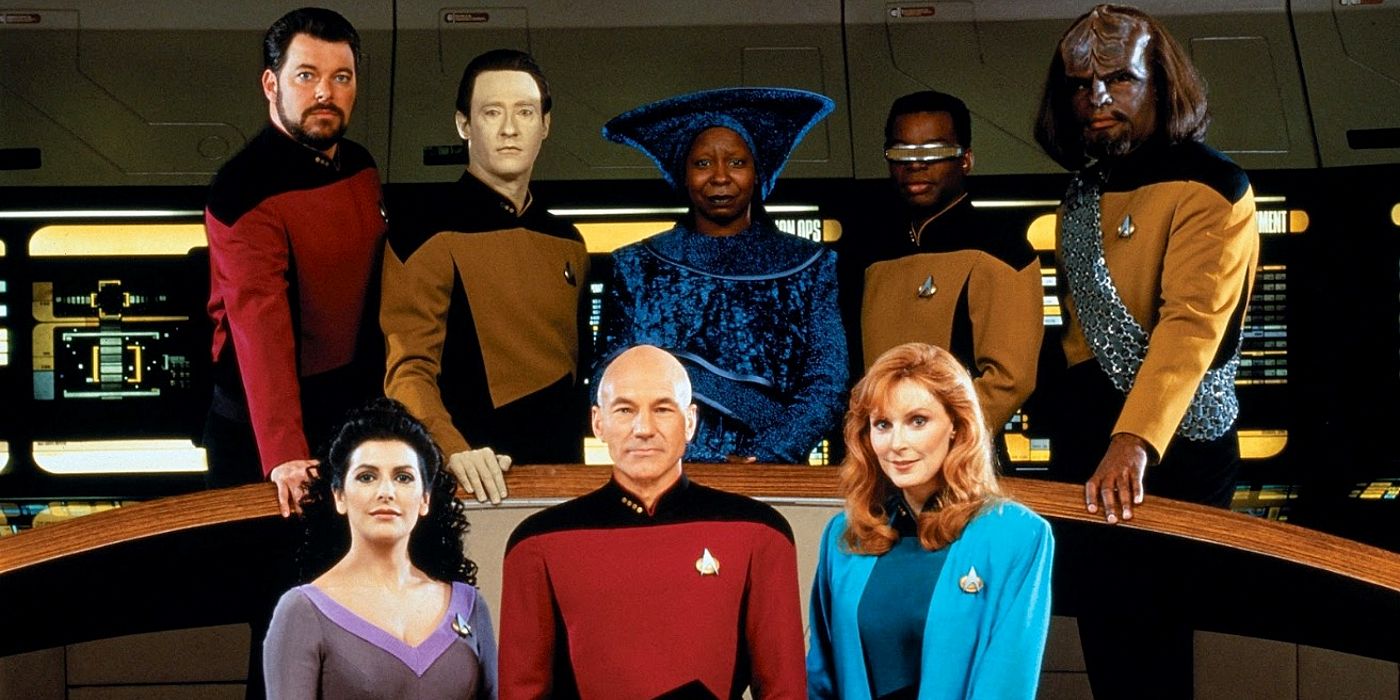
Even years after it first aired, the Star Trek: The Next Generation episode “Schisms” remains deeply unsettling for many viewers. Appearing early in the sixth season, it transformed the usually safe and familiar environment of the Enterprise into a frightening and dangerous place for the crew. The episode touches on themes of body horror and explores the lasting effects of psychological trauma.
While earlier episodes like “Conspiracy” and “Identity Crisis” showed more physical horror, “Schisms” focuses on a creeping, internal terror. The episode doesn’t reveal a clear villain until the very end. This leaves the crew exposed and vulnerable during their most personal moments, transforming a puzzling mystery into a truly disturbing experience of bodily invasion.
“Schisms” Stands Out From Other Horror-Centric Star Trek: The Next Generation Episodes
The Season 6 episode “Schisms” isn’t the only time Star Trek: The Next Generation moved away from traditional science fiction storylines and explored psychological territory. The series consistently challenged the limits of the genre while staying true to its overall feel. However, “Schisms” is particularly notable for how deeply it unsettles and affects the characters themselves.
Early in the run of Star Trek: The Next Generation, the Season 1 episode “Conspiracy” stood out as a particularly frightening installment. It became well-known for its disturbing content, and the BBC required significant edits before it could air. The biggest issue was a graphic scene involving an exploding head in the final five minutes, which was shown intact during the episode’s original US broadcast.
The episode ‘Conspiracy’ feels reminiscent of John Carpenter’s The Thing and marks an early point where the series began to develop its unique storytelling style. It was a noticeable shift in tone from what had come before in Season 1. Though well-received, ‘Conspiracy’ relies more on visual horror and presents a clear, immediate danger. This differs from ‘Schisms,’ where the threat is less direct for most of the episode.
Fans often bring up the Season 4 episode “Identity Crisis” when talking about scary Star Trek moments. Similar to “Conspiracy,” the fear in this episode stems from a visible, physical change. The story centers on Geordi, whose body starts to transform because of something that happened on an earlier mission, before he even joined the Enterprise crew. He was infected with a parasite that slowly alters its host’s DNA.
The infection impacted other members of Geordi’s team, and sadly, not everyone survived. This change is irreversible. While the infection itself follows a pattern, the abductions in “Schisms” seemed random, creating constant fear that anyone could be taken. Geordi eventually recovers, but his crewmates are left with lasting psychological trauma and the physical scars from the procedures they endured.
As a long-time fan, I always thought Season 4’s “Night Terrors” really echoed the vibe of “Schism.” Both episodes cleverly use the idea of sleep deprivation to build tension. In “Night Terrors,” the crew gets trapped in this weird space anomaly, Tyken’s Rift, and it prevents them from getting any proper rest. This leads to some seriously creepy hallucinations, and it’s easily one of the most unsettling episodes in the whole series, in my opinion.
The strange effects in “Night Terrors” come from the surroundings. They’re purely visual and don’t last long, as the crew starts to appear like zombies because they haven’t been sleeping. In “Schisms,” Dr. Crusher finds out that Riker had surgery to remove and reattach his arm, leaving him with a permanent scar. The crew’s lack of sleep isn’t caused by where they are, but by the fact that they’ve been abducted.
Fans often mention a few episodes of Star Trek: The Next Generation when talking about the scariest stories. While all of these episodes are effective and affect the crew in different ways, “Schism” is particularly unsettling because the danger it presents isn’t truly resolved – the threat remains even after the crew believes they’ve dealt with it.
“Schisms” Scars the Crew of the Enterprise in Star Trek: The Next Generation
The episode “Schisms” opens with the crew of the Enterprise, including Riker, suffering from severe fatigue. At first, everything else on the ship seems fine. The story initially focuses on Riker’s struggle to stay awake during Data’s poetry recitations, establishing the Enterprise as a warm and friendly environment before hinting at the unsettling events to come.
Riker often shows up to work looking messy and late. He’s even asked Geordi to wake him up before his shift begins because he’s losing track of time. From Riker’s point of view, Geordi wakes him almost as soon as he tries to sleep, and he doesn’t remember falling asleep at all. He checks the clock and realizes Geordi is right about the time.
Besides feeling tired and losing track of time, Riker and other crew members start reacting strongly to ordinary things. For example, Riker panics during a simple haircut when the barber uses scissors. While they don’t remember being abducted, these reactions suggest something traumatic happened to them, likely related to surgical procedures, and these memories are surfacing subconsciously.
A key event in the “Schisms” episode is the sudden appearance of a strange tear in space within the Enterprise’s cargo bay. The crew doesn’t realize it, but this tear is how the aliens are boarding the ship. They used the larger rupture to try and break into the ship completely, and created smaller tears to enter crew quarters while people were sleeping, abducting them for study.
The episode keeps building suspense as small memory differences and strong emotional responses to everyday objects start to add up. Everything seems normal on the Enterprise, but a growing number of complaints are raising concerns. The crew hasn’t yet realized how these strange events are connected to the recent rift.
Over time, the group members started sharing what they remembered. They used the holodeck to reconstruct their hazy memories and understand how different objects made them feel. Working together, they slowly rebuilt the room, and as their individual recollections surfaced, a disturbing pattern emerged: each of them remembered a surgical table and a distinct clicking sound coming from the surrounding darkness.
A key moment revealing the crew’s dire situation occurs during medical exams. The doctor discovers unusually high serotonin levels in their systems, indicating recent sedation. Even more shockingly, an X-ray of Commander Riker’s arm reveals it was recently detached and reattached.
The crew eventually realizes they’re being taken from the ship while they sleep. When Picard checks, they discover Lieutenant Hagler is missing. He soon returns, but is gravely ill – Dr. Crusher finds his blood has turned into a plastic-like substance. The crew then starts to develop a plan to find out where the enemy ship is located.
This Episode of Star Trek: The Next Generation Ends with an Unsettling Discovery
The crew realizes how the abductions are happening after Commander Riker bravely offers to act as a lure. Because he’s being taken each night against his will, it’s their only option. To help him remember what’s happening while he’s abducted, Dr. Crusher gives him a drug to keep him awake. When Riker enters subspace, he finds creatures wearing robes and hoods who communicate using clicking sounds.
Subscribe for deep dives into Star Trek’s darkest episodes
Subscribe for deep dives into Star Trek’s darkest episodes
Riker spots another missing crewmate nearby. Taking advantage of the creatures’ focus on Geordi trying to shut down the rift, Riker quickly rescues the crewmate and tries to escape. They jump through the portal just as it closes, sealing the rift. Although the rift is closed, the crew still feels the effects of being taken, leaving the situation unresolved at the end of the episode.
The crew couldn’t figure out what caused the creatures to appear or even make contact with them, and they still don’t know how the rift was created. Their technology is more advanced than Starfleet’s, which is concerning. What’s especially puzzling is that, unlike enemies like the Borg or Romulans, there’s no obvious reason why they attacked the Enterprise.
The ship is currently safe, but it’s been permanently weakened. Since no one fully understands the technology involved, there’s no guarantee this problem won’t return. The crew’s sense of security on the Enterprise has been deeply shaken, leaving them uneasy and with no clear answers or promises of future safety.
The episode “Schisms” really captures the fear that comes with facing something completely unknown. The aliens aren’t interested in communication, and their way of invading is bizarre and unsettling. The ending offers no hope, leaving both the crew and viewers feeling like the danger hasn’t truly been dealt with. What makes “Schisms” so memorable is how it strips away the crew’s control and the usual security of the Enterprise.
Read More
- Прогноз криптовалюты ATOM: прогнозы цены ATOM
- One of Clint Eastwood’s Best Westerns (That Isn’t ‘The Good, the Bad and the Ugly) Is Leaving Free Streaming
- In Just 1 Day, Universal’s Wicked: For Good Is Officially the Most Watched Title on PVOD in America
- JJK Director Taps Talent From Spy x Family & JoJo’s Bizarre Adventure For New Movie
- Группа Аренадата акции прогноз. Цена акций DATA
- Taylor Sheridan’s 2-Part Action Thriller Series Is The Perfect Binge Ahead Of The New Season
- Welcome to Derry Just Officially Confirmed Its Shining Connection (& It’s Perfect)
- Sonic Team Refuses to do ‘Sonic Adventure’ Remake — Instead Focuses on New Projects
- Доллар обгонит малайзийский ринггит? Эксперты раскрыли неожиданный сценарий
- 10/10 Detective Shows Are Rare, But This 7-Part Series Is Perfect From Start To Finish
2025-12-23 01:38