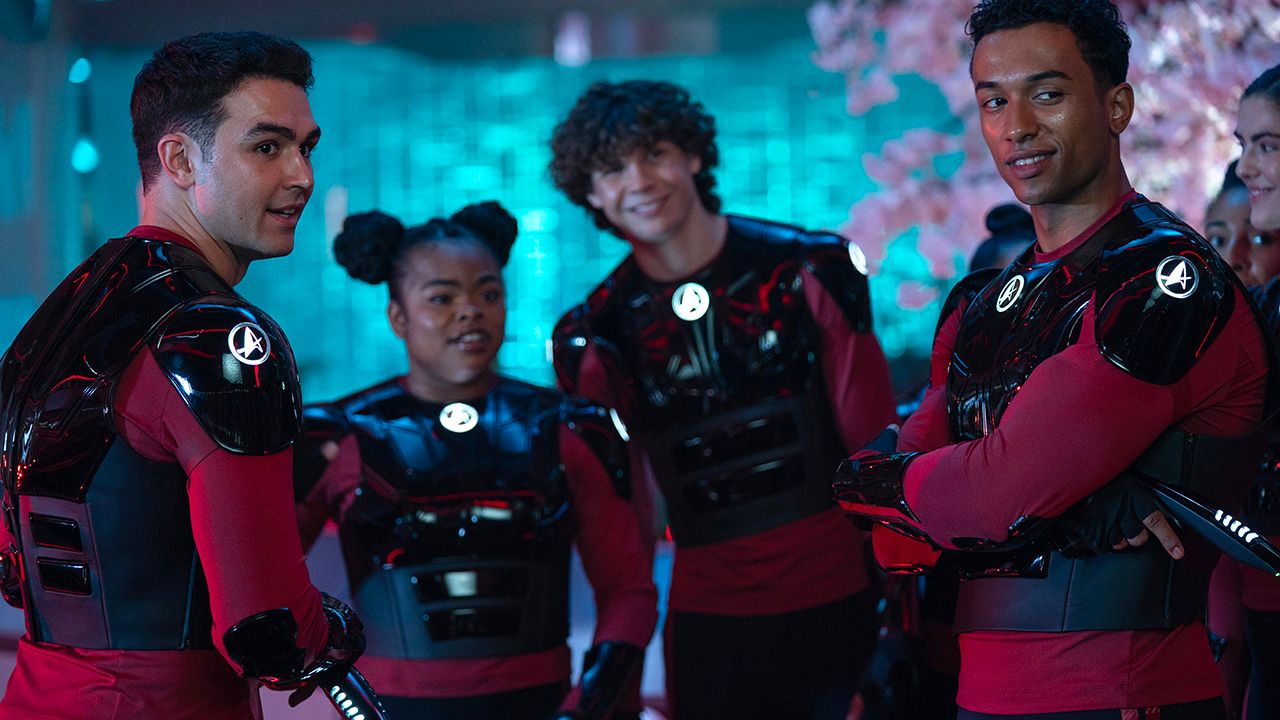
When the first promotional images were released, fans worried the show looked like a teen drama – similar to shows like Riverdale. The images featured the six main new cast members, all attractive, posed in a way that reminded people of those kinds of shows.
It’s unfair to blame the show’s creators, Gaia Violo, or showrunners Alex Kurtzman and Noga Landau for issues with the marketing. While the show is enjoyable and feels like a genuine Star Trek continuation, it doesn’t quite address the criticisms leveled against it. The first half of the season focuses on teenage cadets dealing with typical high school problems – minor conflicts, overly sweet romances, and relentlessly positive team-building activities where even self-centered characters discover the benefits of working together.
The show successfully captures the spirit of the original series, particularly its hopeful vision for social and political advancement. Several episodes explore thought-provoking ideas through interactions between different cultures and species, reminiscent of the franchise’s strongest seasons. Holly Hunter delivers a fantastic performance as Academy Chancellor Nahla Aké, and she easily ranks among the best Starfleet captains in the history of the series. Overall, there’s a great deal to enjoy in this new installment.
Starfleet Academy is Spiritually Right at Home, But Lacking Enough Compelling Characters
The new show has a surprising amount in common with Discovery. Its main character, Caleb Mir (played by Sandro Rosta), shares a lot of personality traits with Michael Burnham from that series – he’s a young, headstrong, and incredibly smart man who’s been separated from his mother, Anisha (Tatiana Maslany of Orphan Black). He’s a bit reckless and overconfident, but also a genius, much like Matt Damon’s character in Good Will Hunting, only physically stronger.
Feeling responsible for the breakup of Caleb and Anisha fifteen years ago, Aké makes Caleb an offer: if he joins the academy, she’ll work to get his sentence on the planet Toroth reduced. She even promises to help him find Anisha, who has been missing for years. Though hesitant, Caleb agrees and follows Aké to San Francisco, where the academy is being reopened for the first time in over 150 years – a closure brought about by the lasting political fallout from the events of Discovery, known as “The Burn”.
Initially, Aké appears hesitant to rejoin Starfleet. She had previously resigned under difficult circumstances and needs convincing by Admiral Vance to return. However, once she’s back, she quickly seems comfortable and capable. While the series focuses on Caleb’s story, Hunter as Aké is the standout performer. Her character is refreshingly unconventional – a free-spirited, barefoot woman who prefers physical media like books and records. As a Lanthanite who’s lived for over 300 years, Aké radiates wisdom and genuine happiness. She’s reminiscent of Captain Janeway from Voyager, possessing a similar wit and confidence, but with a uniquely warm and charming personality.
In the 32nd century, Starfleet Academy students learn both in traditional classrooms and on board the U.S.S. Athena, a beautifully designed ship that allows them to practice real-world missions. Aké’s second-in-command is Lura Thok (played by Gina Yashere), who is part Klingon, part Jem’Hadar, and partners with Jett Reno (Tig Notaro, returning from her role in Discovery). Creator Kurtzman often casts comedians, and Yashere shines as a hilariously bold and self-aware instructor.
Kurtzman has reunited Robert Picardo with fans as The Doctor, the famously sarcastic and clever hologram from Voyager. Now at Starfleet Academy, The Doctor is the Chief Medical Officer, leads the Opera Club, and teaches debate – and it’s a delight to see him deliver lines with the same flair he was always known for.
Starfleet Academy‘s Side Characters are More Interesting Than Its Main Cast
Honestly, the main cadets at the Academy didn’t really grab me – and that’s a big issue when the show is supposed to be about their journeys. Rosta is fine, but the others feel a little underdeveloped early on. Karim Diané plays Jay-Den Kraag, a Klingon who’s all about healing and science, which is interesting on paper, but the performance felt a bit wooden. And Caleb’s rival, Darem Reymi, played by George Hawkins, is this big, tough Khionian…but honestly, he doesn’t feel all that different from the other characters. He’s just…bulky.
Even though Starfleet Academy includes a lot of LGBTQ+ and diverse characters, it still needs more stories that really break new ground and explore difficult ethical issues.
Genesis Shepard plays a new character, a Dar-Sha named Genesis, who is the admiral’s daughter. She’s charming and flirty, but doesn’t have a lot of depth yet. Kerrice Brooks is more engaging as SAM, the first holographic cadet in Starfleet. Her performance is a little reminiscent of Sylvia Tilly from Discovery, with a tendency to say the wrong thing, but it’s interesting to see how a being made of light operates within Starfleet. However, I think the show could improve by removing Stephen Colbert’s character – his computer voice is overly silly and feels out of place.
Kurtzman and Landau appear to be balancing the established spirit of Star Trek with the style of a college comedy, similar to The Sex Life of College Girls. The show introduces a nearby “War College” filled with competitive, battle-focused cadets, but their interactions often feel reminiscent of the house rivalries in Harry Potter, as they compete for social dominance. Despite this, exploring this previously unseen part of the Star Trek universe is quite enjoyable.
Kurtzman understands that Star Trek is at its best when characters are challenged and pushed to their limits while navigating the vastness of space. While this new series maintains the core spirit of Trek, it doesn’t quite capture the sharp political commentary of previous installments. Though the show features diverse characters and representation, Starfleet Academy could benefit from bolder storylines and more thought-provoking ethical dilemmas. The visual effects are impressive, but much of the content feels less innovative than what’s already been explored, and with more humor, in Lower Decks. If the creators – Violo, Kurtzman, and Landau – truly want to break new ground, they need to focus on what makes these characters unique, as relying solely on nostalgia – like bringing back The Doctor – will only take them so far.
Read More
- Five Nights At Freddy’s 2 Review: The Video Game Movie Sequel Limbos Under The Low Bar Set By The First Film
- ‘And Then The Chesty One Comes In.’ SNL’s Cut For Time Sketch Hilariously Reimagined Sydney Sweeney And Zendaya’s Euphoria
- If You Loved The First Omen, You Need To Check Out This New Horror Film
- Pokémon Legends Johto Leak Leaves Gamers Torn
- Mindhunter: Netflix’s Psychological Thriller Masterpiece
- Belissa Escobedo, on Happy’s Place
- Netflix’s #1 Trending Comedy Proves Critics Are Wrong About This $523 Million Franchise
- Пермэнергосбыт акции прогноз. Цена акций PMSB
- Серебро прогноз
- One Piece: Egghead Arc Episode 1140 Release Date, Time, Where to Watch
2026-01-08 10:59