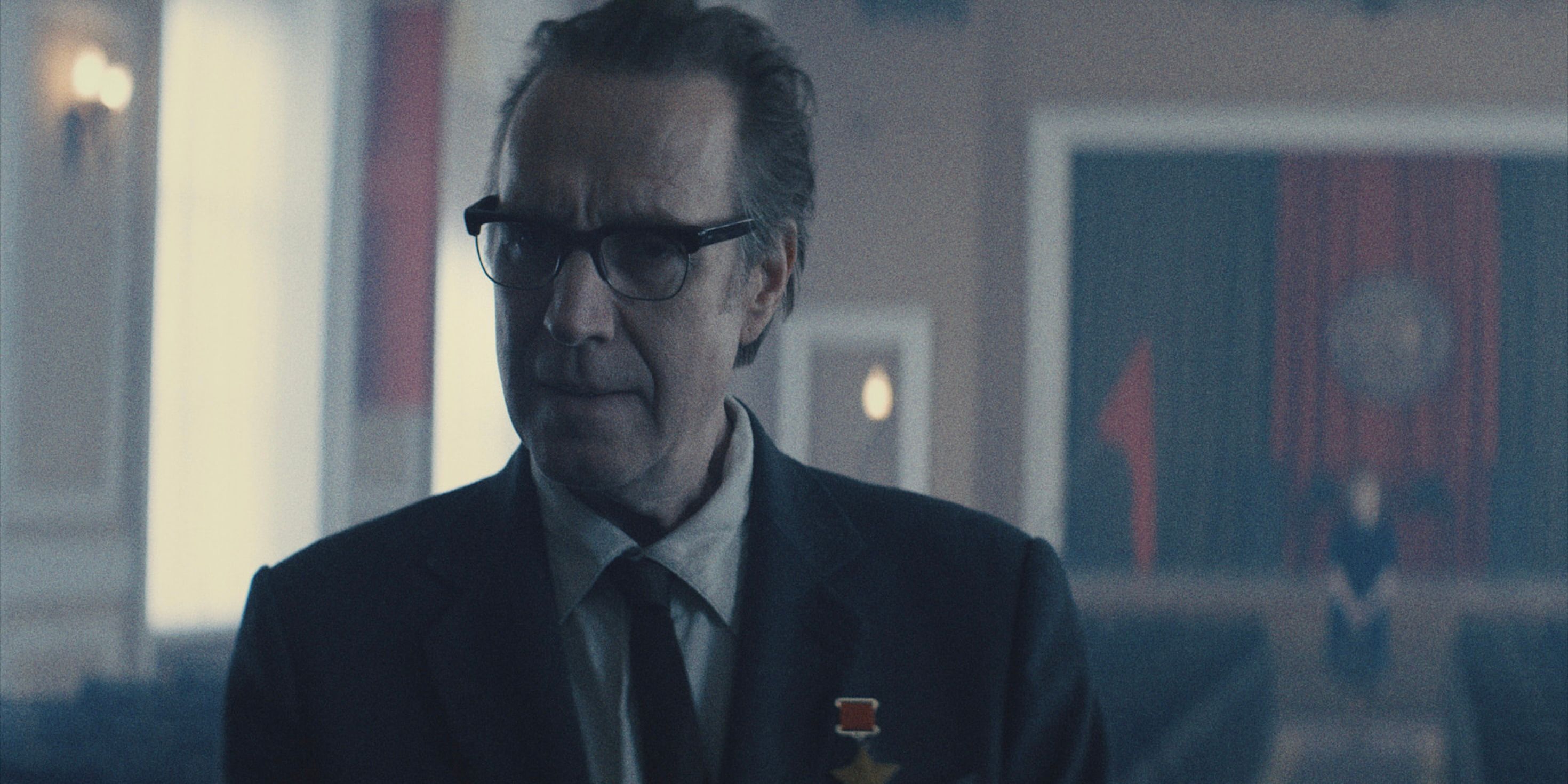
The saying goes that history is told from the perspective of those who win. In Apple TV+’s series, the Soviet Union actually won the space race, leaving the United States determined to regain its leading position. Now, a new spinoff show offers a look at what life was like for the Soviets who did win that race, taking viewers behind the scenes in the Soviet Union.
Early seasons of For All Mankind were captivating because of their compelling stories and realistic portrayal of relationships, politics, and science. However, as the show shifted its focus to Mars, it sacrificed some of that emotional depth for spectacle. Star City goes back to the core elements that made For All Mankind successful, but tells the story from a Soviet perspective. This new series is grittier, more complex, and arguably more daring than the recent seasons of For All Mankind.
Star City Is a Pulsating Political Thriller
Developed by the creators of For All Mankind, including Ronald D. Moore, Star City is set in the late 1960s and early 1970s. The story begins with the Soviet Union successfully landing both a man and a woman on the moon. The series focuses on the titular city, a highly controlled and secretive hub for cosmonauts, engineers, and intelligence officers – the very heart of the Soviet space program. Residents are constantly watched, often without their knowledge, and absolute loyalty to the Soviet Union is demanded.
Though the show is set in space, the political drama is actually more compelling than the space travel itself. While Rhys Ifans is credited as the main star, Agnes O’Casey truly leads the story as Irina Morozova. Irina is a new recruit tasked with monitoring cosmonaut Valya Markelov (Adam Nagaitis) and his wife, Tanya (Ruby Ashbourne Serkis). She’s a bright and promising spy, and we see her character evolve from innocent and observant to steely and determined, a transformation later embodied by Svetlana Efremova.
Irina’s mission to find a spy quickly pulls her into the harsh and oppressive world of the Soviet Union, where secrets are fiercely guarded from both America and its own people. Mentored by Lyudmilla Raskova, the leader of KGB surveillance at the mysterious Star City, Irina witnesses a growing corruption that begins to affect her. She soon discovers that trust is a luxury she can’t afford, as friends turn into foes, ordinary people are exploited, and even those considered heroes are easily discarded.
Star City’s Visuals and Direction Tell a Story of Their Own
While Star City has a lot of plot threads to manage, it effectively portrays the fear and oppression of life in a dystopian society, even if it can’t fully explore the complex historical and political consequences of the Soviet Union. The show’s cold, blue visual style enhances the unsettling atmosphere, creating a stark contrast with the idea of a technologically advanced nation. Each episode emphasizes the loneliness and isolation of the city’s inhabitants, making it a more visually engaging experience than For All Mankind.
Given that Star City quickly reveals a major event – the first moon landing with Alice Englert as Anatasia Belikova – it’s surprising the show still manages to create suspense. The series quickly falls into the pattern established by For All Mankind: a constant push for greater achievements in space exploration. The Soviet Union’s secrecy allows the spinoff to introduce new advancements without American awareness, but longtime fans of For All Mankind may wonder how these developments fit into the existing timeline.
Despite some initial hurdles, Star City offers enough compelling content to keep even first-time viewers engaged. The character of the Chief Designer, played by Ifans and clearly inspired by the real-life Sergei Korolev (who passed away in 1966), is particularly charming. The show takes creative liberties with history by keeping him alive. While both the Chief Designer and Sasha Polivanov (played by Solly McLeod) are less developed than other characters, the Chief Designer’s impact is somewhat diminished by his nameless title, and Sasha’s unpredictable nature isn’t fully explored on screen.
Anastasia is unpredictable, but her behavior stems from the immense pressure of being a symbol of Soviet ideals. She’s treated like an exhibit, and isn’t allowed to return to space. It would have been compelling to see her connect with Tanya earlier in the series, as both women embody the difficult realities of being female in the Soviet Union. The show keeps them apart, even though they share a common experience.
We also meet Sergei Nikulov, played by Josef Davies, and Lakshmi, portrayed by Priya Kansara. Lakshmi’s a brilliant scientist brought on board by the Chief Designer because of her expertise in keeping astronauts alive in space. And Sergei? He’s actually a younger version of the character Piotr Adamczyk played in For All Mankind. Right now, their roles are a bit smaller, but honestly, I get the feeling they’re going to become much more important as the show goes on.
Is Star City a Worthy Spinoff to For All Mankind?
The show Star City has some minor issues, but one noticeable quirk is the casting: most of the actors are British playing Soviet characters. Surprisingly, they don’t try to imitate Russian accents – though Rhys Ifans occasionally sounds different, it might just be his natural Welsh accent coming through.
The decision to not use Russian actors is disappointing. Previous shows like For All Mankind made an effort to authentically portray Soviet characters, either by casting actors born in Russia or those who at least tried to master the accent. Star City‘s current approach makes it feel less like an alternate history of the space race and more like a story where Britain, not Russia, was the dominant force in the Soviet Union.
Despite being in development for over two years and facing initial disinterest from fans of For All Mankind, Star City has emerged as a surprisingly well-crafted show. It will be fascinating to see how audiences react to a series set in the Soviet Union that portrays America as the opposing force, though the show also leaves room for compelling Soviet antagonists. Ultimately, this ambitious series deserves a chance to prove itself – much like the innovative ideas and dedication of its characters, Star City is a worthwhile project with a lot of potential.
New episodes of Star City premiere every Friday on Apple TV.
2026-05-30 06:39