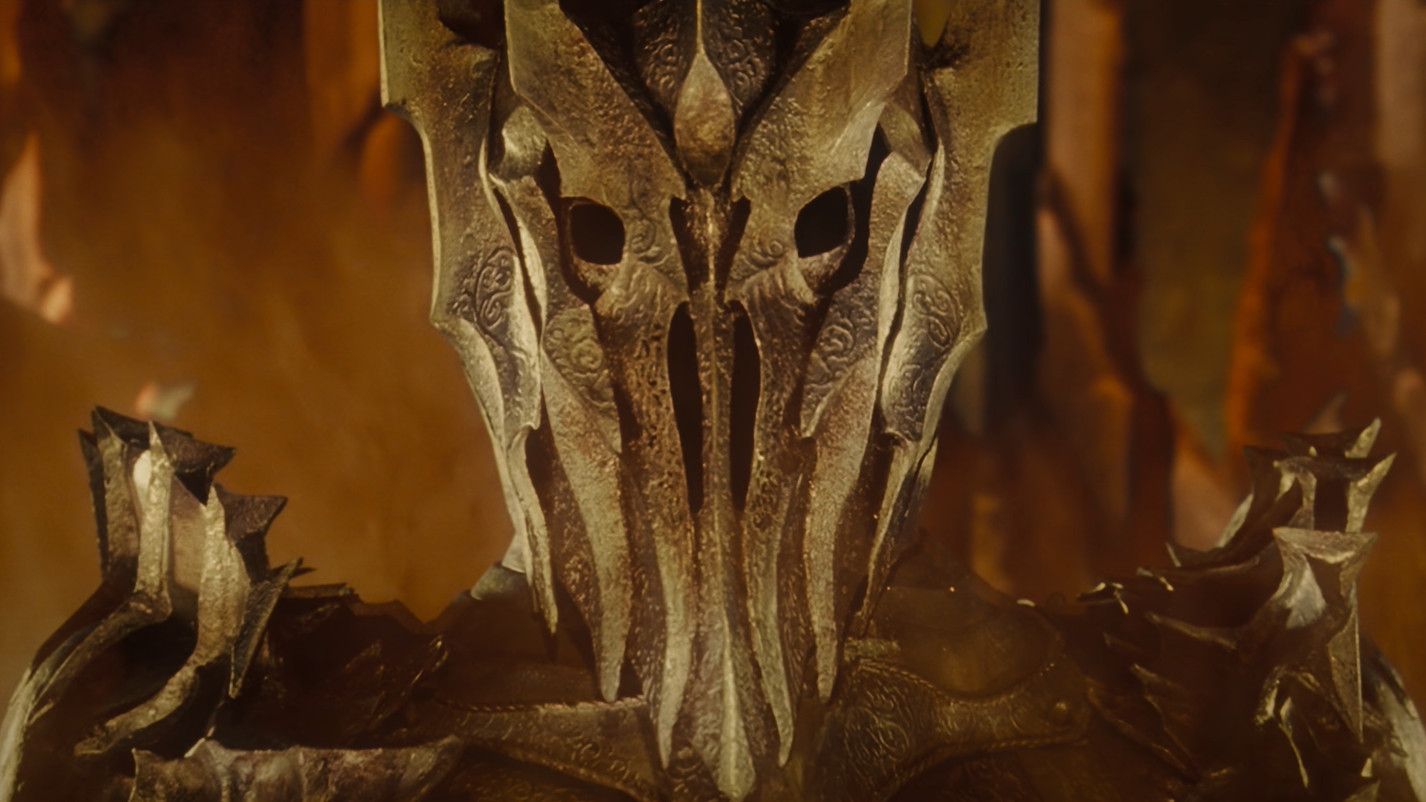
Middle-earth, as depicted in J.R.R. Tolkien’s book and Peter Jackson’s movies, was filled with frightening evil creatures. While some, like the Balrog of Moria, acted on their own, most were either servants of or worked alongside the primary villain, Sauron.
Sauron was an incredibly powerful immortal spirit, one of the strongest beings in Middle-earth. However, he couldn’t conquer the land alone. He needed his followers and reluctant allies to fight for him during the War of the Ring. Though he’d lost access to some of the terrifying creatures he’d commanded in the past – like dragons – his remaining loyal servants still posed a great danger to the people of Middle-earth.
Gothmog Led Sauron’s Forces in a Major Battle
Gothmog was a key leader in Sauron’s army, acting as a high-ranking officer at Minas Morgul. He and the Witch-king jointly led the forces of Orcs, Easterlings, and Haradrim during the attack on Minas Tirith. However, the book intentionally keeps Gothmog’s origins unclear, leading to fan theories that he might have been a Black Númenórean, one of the Ringwraiths, or even a powerful spirit like Sauron himself.
Because Tolkien’s writings and Peter Jackson’s films don’t offer many details about Gothmog, it’s hard to know exactly how strong he was. However, he clearly possessed great power to become a leader in Sauron’s brutal army. The extended version of The Lord of the Rings: The Return of the King shows Gothmog as a powerful fighter, surviving the Rohirrim’s attack at the Battle of the Pelennor Fields and even battling Éowyn to a standstill.
The Mouth of Sauron Was Stronger Than He Seemed
Viewers familiar only with Peter Jackson’s movies might remember the Mouth of Sauron as a minor character – he appeared briefly to taunt Frodo and company before the final battle. However, in J.R.R. Tolkien’s books, the Mouth of Sauron was depicted as a much more formidable and influential figure, despite having limited screen time in both versions.
In J.R.R. Tolkien’s The Return of the King, specifically in the chapter “The Black Gate Opens,” the Mouth of Sauron is described as a descendant of people who had worshipped Sauron long ago, during the Second Age. He was also a powerful sorcerer, having learned magic directly from Sauron himself. The book further establishes him as the Lieutenant of Barad-dûr – essentially, second-in-command at Sauron’s fortress. This suggests that Sauron greatly valued and trusted the Mouth of Sauron.
Shelob Prevented Intruders From Entering Mordor
Shelob was a terrifying, spider-like monster in The Lord of the Rings, known as one of the most dangerous creatures in Middle-earth. She was born from Ungoliant, an ancient spirit of darkness who frightened even Morgoth, Sauron’s master. While not as strong as her mother, Shelob possessed incredibly potent venom that paralyzed victims and skin impossible to penetrate. Samwise Gamgee managed to defeat her by blinding her with his sword, but he didn’t kill her—he only drove her away.
In The Two Towers, Tolkien describes Shelob as fiercely independent, loyal only to herself, though she and Sauron both gained from their connection. Shelob unintentionally helped protect Sauron’s lands by killing those who strayed into her lair, while he ensured she had a constant source of victims – prisoners and Orcs to devour. Tolkien even suggests Sauron viewed Shelob almost as a pet, playfully calling her “his cat.”
Saruman the White Aimed to Rival Sauron
Saruman was a major villain in The Lord of the Rings. While not exactly a servant of Sauron like Shelob, Saruman pretended to be loyal while secretly planning to steal the One Ring and defeat Sauron himself. Tolkien explained in Unfinished Tales that Sauron knew about Saruman’s deception but allowed it to continue because Saruman’s attacks on Rohan actually helped advance Sauron’s plans.
Saruman, like the other Wizards, was a powerful immortal being called a Maia, sent to Middle-earth by the Valar – essentially godlike figures. While his physical body weakened him, he still had considerable magical power. In the books, Saruman’s magic was often understated; he mainly used it to enhance his voice and become incredibly persuasive, allowing him to control others. Peter Jackson’s movies showed more dramatic displays of his abilities, including telekinesis, lightning strikes, and fireballs.
As a huge fan of The Lord of the Rings, I always found Saruman’s villainy so compelling. It wasn’t just about wanting power; he actively engineered his Orc army to be even more terrifying, and he came up with this incredible – and destructive – fiery weapon specifically designed to break through Helm’s Deep! Honestly, if he had succeeded in wiping out Rohan, it would have been game over for everyone. The Rohirrim were absolutely crucial in the final fight against Sauron, so their destruction would have meant Middle-earth was doomed.
The Witch-king of Angmar Was Sauron’s Strongest Ally
In Peter Jackson’s film adaptation of The Return of the King, Gandalf calls the Witch-king Sauron’s most dangerous servant. While this isn’t a direct quote from Tolkien’s book, it accurately reflects his importance within the story. The Witch-king, like all the Nazgûl, was originally human, but a Ring of Power from Sauron transformed him into a powerful warrior and sorcerer. Tolkien wrote that during the Siege of Gondor, Sauron further enhanced the Witch-king’s power with demonic forces, making him even more fearsome.
While Saruman was a more powerful sorcerer than the Witch-king, both the book and movie versions of The Lord of the Rings suggest the Witch-king had greater overall strength. Saruman couldn’t conquer Rohan, but the Witch-king ultimately succeeded in breaking its defenses. Additionally, a prophecy stated no man could kill the Witch-king, and Éowyn was only able to defeat him after Merry Brandybuck weakened him with a special blade forged to fight the Nazgûl.
The movies emphasized that the Witch-king was more powerful than Saruman. Unlike the book, the films showed the Witch-king damaging Gandalf’s staff and almost defeating him, only being stopped by the arrival of the Rohirrim. Considering Gandalf had previously broken Saruman’s staff, this clearly suggested the Witch-king would have easily won against Saruman in a direct fight. Beyond his great strength, the Witch-king was completely devoted to Sauron, making him the Dark Lord’s most important commander during the War of the Ring.
2026-07-24 04:36