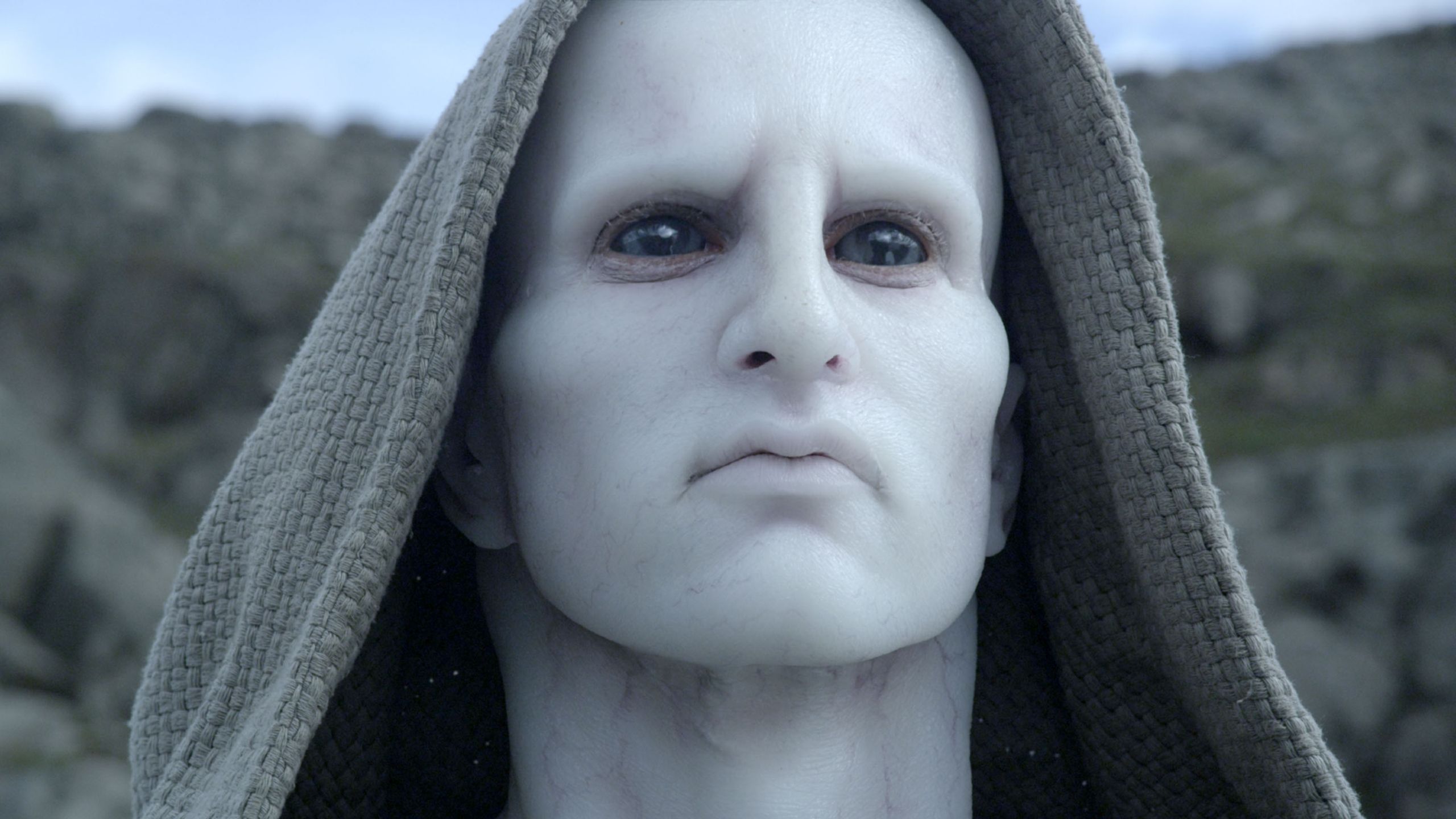
One of the biggest disappointments in science fiction was the way the Alien series left the story started in Prometheus unfinished. Prometheus brought Ridley Scott back to the world of Alien, broadening the story to include the mysterious Engineers, a sense of cosmic horror, and thought-provoking questions about where humanity came from. Unfortunately, these intriguing ideas weren’t fully explored in the following movies. That all changed with the 2025 release of Alien: Earth, which finally returned to the themes that made Prometheus so compelling.
FX’s Alien: Earth has been widely praised as a gripping, movie-quality sci-fi horror series, finally bringing the Xenomorph to television. While it offers the exciting visuals and suspense you’d expect from the Alien franchise, its greatest strength is arguably how it expands on ideas from the film Prometheus, making it particularly satisfying for fans of that movie.
While it features the classic terrifying Xenomorphs, Alien: Earth delves into the thought-provoking themes that made Prometheus so interesting – and controversial. The franchise isn’t really about the creatures themselves, but about bigger ideas like creation, artificial intelligence, and what it means to be human. These unsettling concepts are at the heart of both Prometheus and now, Alien: Earth.
Alien: Earth Is The Perfect Spiritual Successor To Prometheus
The FX Series Finally Explores The Philosophical Ideas Ridley Scott Introduced In 2012

Although Prometheus got a sequel in 2017 with Alien: Covenant, many of its most interesting concepts were never fully explored. The mysterious Engineers were given less importance, and the film shifted away from grand, cosmic horror to focus more on traditional monster action. The series seemed to play it safe, emphasizing connections to previous Alien films rather than pursuing deeper, philosophical themes.
Alien: Covenant shifted the focus back to the character of David (Michael Fassbender), which surprisingly simplified the overall Alien storyline. While the film offered intense horror and explored the idea of artificial intelligence rebelling, it moved away from the sense of wonder and mystery that defined Prometheus. The enigmatic Engineers became less important, and the film prioritized explaining how the Xenomorphs came to be over creating a feeling of deep, unsettling fear.
Unlike some stories that focus on explaining the origins of the Alien universe, Alien: Earth explores the core concepts behind it. Set long before the original Alien film, it delves into artificial life and genetic engineering, echoing themes from Prometheus. The story isn’t simply about the fear of a Xenomorph being on Earth; it’s a deeper look at the implications of creating life and whether that act inevitably leads to destruction.
Okay, so this show really reminded me of Prometheus – that same quest to understand where we come from, but with a focus on incredibly advanced artificial beings and the blending of organic and synthetic life. Now, Alien: Covenant touched on these ideas too, but it did it through the lens of one android’s pretty bleak outlook. What’s cool about this show, Alien: Earth, is it doesn’t just use artificial life as a plot point. It actually makes you think about the bigger philosophical questions surrounding it – what does it mean to be alive, who are the creators, and so on. It’s a much broader, more thought-provoking approach.
Ultimately, Alien: Earth feels like the follow-up Prometheus deserved. It explores similar themes of creation, ambition, and powerful beings, much like Ridley Scott’s earlier film, but without relying on the same plot points or characters. While not directly connected to Prometheus, it’s unique among Alien projects in that its core ideas aren’t lost in the focus on the Xenomorphs.
Where Alien: Earth Is Set In The Timeline Compared To Prometheus
Both Stories Are Prequels To Alien But Separated By More Than Two Decades
 Patrick Brown/FX
Both Prometheus and Alien: Earth are prequels to the original Alien film from 1979, but they take place at different points in the story’s timeline. Prometheus is set in 2093, many years before the events of the first film (which happen in 2122). It shows humanity’s initial encounter with the Engineers and the disastrous results of that meeting.
Unlike some other stories in the Alien universe, Alien: Earth takes place in 2120, only two years before the original Alien film. This makes it 27 years after the events of Prometheus. As a result, Alien: Earth feels more like the gritty, corporate-controlled future that fans expect when they think of Ellen Ripley and the Alien franchise.
The timing of this story is important. Prometheus takes place during a time of discovery, when people are still searching for big answers about the universe. Alien: Earth, on the other hand, is set in a more jaded and profit-focused future. This difference lets Alien: Earth explore similar ideas as Prometheus but within a world that feels more familiar to fans of the Alien series. It connects the large, thought-provoking ideas of Prometheus with the gritty, realistic style that defines the original Alien films.
Don’t Expect Alien: Earth To Ever Reference Ridley Scott’s Prequels
Noah Hawley Has Made It Clear His Series Charts Its Own Path

Even though Alien: Earth shares some similar themes with Prometheus and Alien: Covenant, it won’t directly connect to the stories in those films. While Ridley Scott is involved as an executive producer, the series is being led by creator Noah Hawley, who has his own distinct ideas for the future of the Alien universe.
Hawley has clearly stated his intention to incorporate aspects of the Prometheus story into the upcoming Alien: Earth series, as he recently shared with The Hollywood Reporter.
Ridley and I have discussed this extensively, along with many other aspects of the show. I, and many others, always envisioned this ‘perfect life form’ – as described in the original film – as something that evolved over millions of years, a creature that could have existed in space for a million years. The concept that it was recently created as a bioweapon doesn’t resonate with me as strongly.
This approach moves the show away from the idea presented in the earlier films that the Xenomorph was created by David. Hawley prefers the sense of a truly ancient and mysterious creature, like in the original Alien, instead of the more recent explanation that it was a deliberately engineered weapon, as shown in Prometheus and Alien: Covenant. He’s also explained the difference in technology between those films and the original Alien.
I think the technology in the Alien prequels felt too futuristic compared to the original Alien movies, especially considering those prequels are supposed to be set in the future of the original films. I much prefer the older, more practical look of the first two Alien movies, and that’s why I’ve chosen to go with that style.
Overall, the feedback shows that Alien: Earth isn’t trying to connect every detail of the existing story. It carefully chooses the ideas that worked well in Prometheus, but leaves out anything that doesn’t fit the dark and gritty feel of the original Alien film. Surprisingly, this willingness to stand on its own might be precisely what fans of Prometheus have been hoping for.
Read More
- Everything We Know About Georgie & Mandy’s First Marriage Season 3
- Avatar 3 Runtime Revealed for New James Cameron Movie
- Anthony Hopkins & Ryan Gosling Stole the Show in This Overlooked Mystery Gem
- Adam Sandler Talks Really Wanting To Make A Serious Movie Early In His Career, Plus The Funny Prediction His Grandma Made
- Original Harry Potter Star Is ‘Sick of Talking About’ Potential Reboot Return
- How Breaking Bad Creator Helped Ryan Coogler With X-Files Reboot
- Серебро прогноз
- President Trump Threatens Tariffs on Foreign-Made Films
- Playdate’s Ending On Amazon Is So WTF I Need To Talk About It
- 2026’s Biggest Sleeper Hit With 89% RT Proves Hollywood Is Dangerously Out of Touch
2026-02-25 19:00