
Currently, Project Hail Mary is the year’s biggest blockbuster, earning rave reviews and huge box office numbers. The film stars Ryan Gosling as Ryland Grace, a former scientist and schoolteacher tasked with solving a mysterious dimming of the sun. It’s based on the novel by Andy Weir, who also wrote the popular book The Martian, which was successfully adapted into a film in 2015.
As a huge movie and book fan, I’ve always admired how much effort Andy Weir puts into his stories. He really takes his time, doing tons of research to get the science right, and that’s something Christopher Nolan does with his films too. Think about Interstellar – it’s so detailed and realistic! Both stories, actually, center around everyday people embarking on incredible space journeys to try and save us all. It’s really interesting to hear what Weir has to say about Nolan’s work, and it makes you appreciate both of their approaches even more.
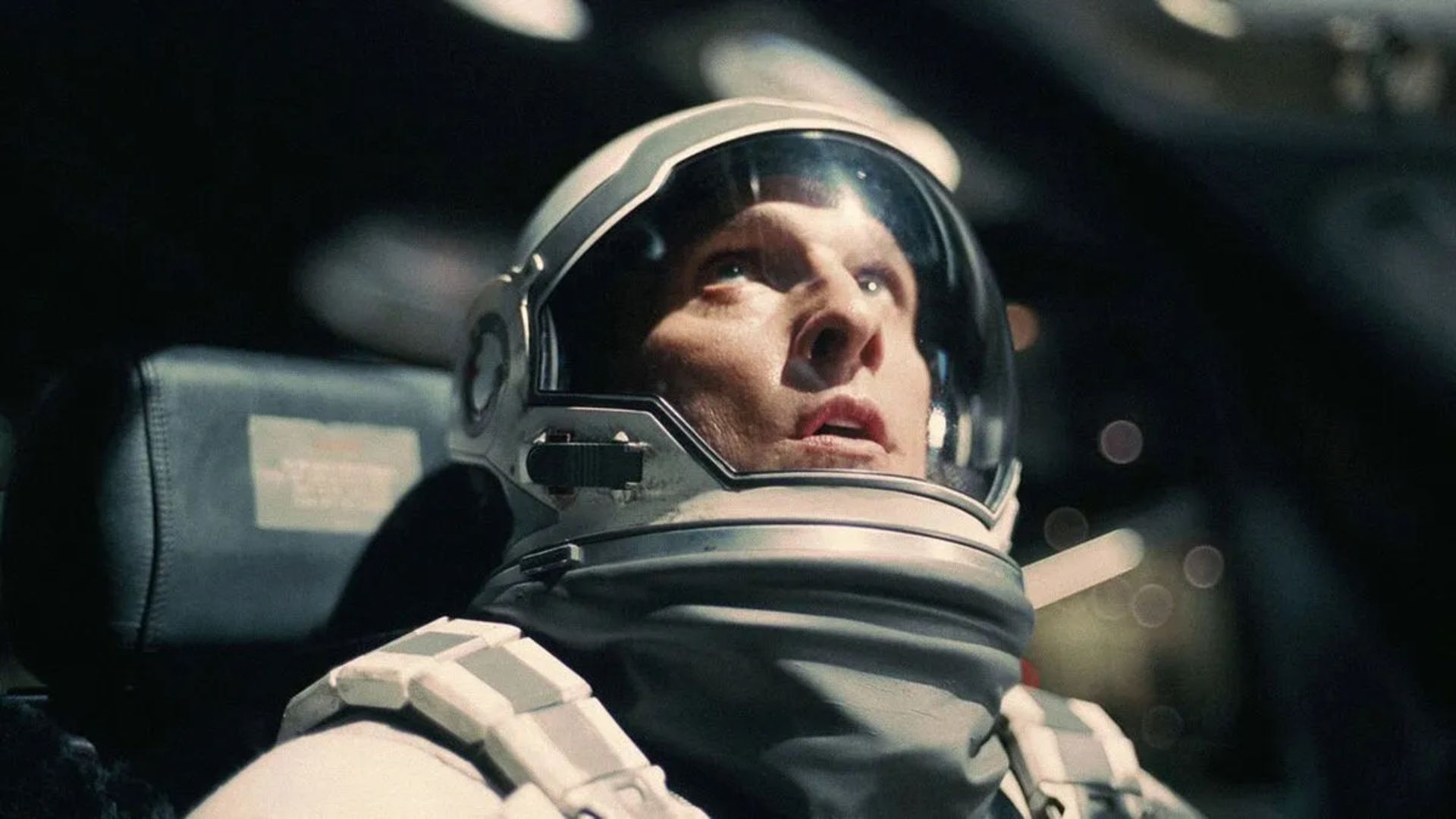
What Did Andy Weir Say About ‘Interstellar’ in 2016?
Paramount Pictures
In a 2016 interview, originally published on Quora and now available on HuffPost, Andy Weir shared his thoughts on the movie Interstellar. He stated:
Andy Weir confirmed the science regarding black holes in his work is correct, particularly how time slows down near them. While actual time travel isn’t proven, he ensured the way it’s depicted in the story makes sense within its own rules.
Let’s compare and contrast Project Hail Mary and Interstellar. In the 2026 science fiction story Project Hail Mary, Ryland Grace journeys to the Tau Ceti star system to investigate why that star isn’t dimming like our sun and others nearby. His goal is to find the cause and help Earth solve the problem. Interstellar, on the other hand, takes place on an Earth struggling with crop failure and widespread hunger. Astronaut Joseph Cooper (played by Matthew McConaughey) is sent through a wormhole to search for potentially habitable planets, not to save Earth itself, but to find a new home for humanity.
The movie Interstellar has been widely commended for its realistic depiction of science, particularly the concept of time dilation – how time can slow down near objects with strong gravity. Interestingly, the black hole shown in the film, named Gargantua, closely resembled the first real photo of a black hole revealed by The New York Times in 2019.
That being said, Weir had an issue with the nuts and bolts of Interstellar’s story. He said:
Some of the story’s fundamental ideas, particularly those not based on science, seem a bit far-fetched. But even if Earth faces severe environmental problems, it will always be more practical to repair our own planet than to try and establish a new home on another one.
Scientific Accuracy Battle: ‘Project Hail Mary’ Vs ‘Interstellar’
Kip Thorne, a Nobel Prize-winning physicist, was involved in the movie Interstellar as both a producer and a science advisor. He discussed this very question in a 2024 interview with Neil deGrasse Tyson on the StarTalk podcast. Tyson shared a similar concern to author Andy Weir: why would the characters in Interstellar prioritize finding a new home for humanity instead of trying to solve Earth’s problems, which would likely be more affordable and practical?
Thorne told Tyson that he and the team behind the movie Interstellar worked with leading biologists while writing the script to ensure accuracy.
The biologists I spoke with said they weren’t aware of anything that could stop a widespread, devastating plant disease from happening. That’s what we see in this movie – a disease that’s unprecedented for scientists, but still theoretically possible.
According to Thorne, Christopher Nolan and his brother Jonathan—who co-wrote the film’s script—initially envisioned a truly devastating and widespread crop failure. It almost feels inevitable that this disaster would lead the characters to abandon Earth, which is exactly what happens. Whether this feels believable to viewers is subjective; some will find it a logical outcome, while others might see it as forced.
Subscribe to the newsletter for science-in-film insights
Get smarter about how sci-fi films handle real science—subscribe to the newsletter for expert-informed takeaways on scientific accuracy, behind-the-scenes context, and clear comparisons that sharpen the way you watch movies.
Every science fiction story relies on some made-up elements. In the case of Project Hail Mary, Andy Weir created astrophage, a microscopic alien life form that consumes the energy of stars – and that explains why the stars are fading. If you’re willing to go along with these imaginative ideas, both this and The Martian are excellent sci-fi films that strive for scientific accuracy.

Found an error? Send it info@movieweb.com so it can be corrected.
Read More
- НОВАТЭК акции прогноз. Цена акций NVTK
- Taylor Sheridan’s Mayor of Kingstown Kills Off Tracy in Season 3
- Прогноз криптовалюты UNI: прогнозы цены UNI
- Why Star Wars’ 2-Part Prequel Masterpiece Was Missing Key Rebel Character Explained
- Прогноз криптовалюты OP: прогнозы цены OP
- Heated Rivalry Star Christina Chang Discusses Season 2 and Handling Fame
- How Scarlett Johansson Feels About No Other Actors (Publicly) Supporting Her During Her Black Widow Legal Battle With Disney
- Caught Stealing: Austin Butler’s Crime Thriller Flops At Box Office But Thrives On Streaming
- ‘The Pitt’ Season 2, Episode 3 Main Characters, Ranked by Likability
- Castlevania: Netflix’s Controversial Yet Captivating Fantasy Series
2026-03-24 14:04