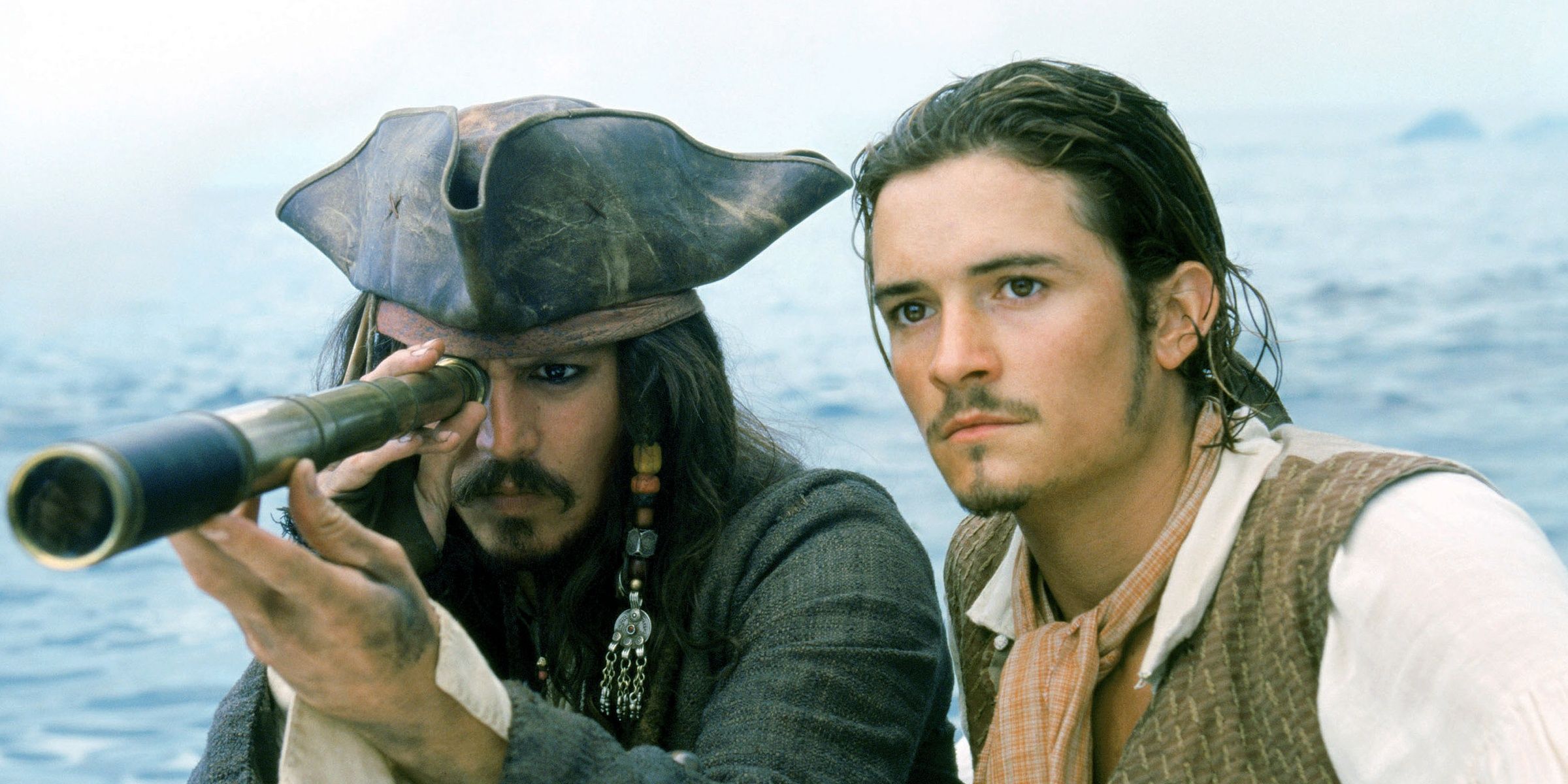
Nearly everyone agrees that the first movie in the series is the strongest. A key reason for its success was the villain, Captain Hector Barbossa, whose well-developed character showcased the film’s rich storytelling.
Geoffrey Rush brings a natural authority and authenticity to the role of Barbossa, making him a memorable pirate character in recent films. While initially presented as a typical villain, a specific scene in the first movie reveals a surprising depth to his personality and highlights his crucial role in the story.
Captain Barbossa Was Always Seen Eating an Apple in Pirates of the Caribbean
Even today, Pirates of the Caribbean: The Curse of the Black Pearl remains a fantastic film. Its impressive visuals are a key reason why, achieved through a large budget and a dedication to practical effects rather than relying solely on computer imagery. The film also benefits from a strong cast, with Johnny Depp delivering a memorable performance as Jack Sparrow. However, a great hero needs a great villain, and Captain Barbossa fits the bill perfectly – he’s a compelling antagonist who not only commands the Black Pearl but is also directly responsible for Jack Sparrow’s misfortune.
Captain Barbossa commanded a crew of the undead – pirates trapped in a zombie-like state due to a curse brought on by stolen treasure. This curse is a heavy burden for him, leaving him in a constant state of being neither fully alive nor dead, and always hungry. While Barbossa is a complex character, a curious detail is his constant companion: an apple. In Disney stories, apples often symbolize arrogance and deceit when associated with villains.
The apple also carries a connection to poison, famously seen in the story of Snow White. In the film, it serves as a reminder of the curse and represents Barbossa’s longing for life and its simple joys. Fruit generally symbolizes life, and this also connects to Barbossa’s constant hunger. It’s fitting that Barbossa, who ultimately faces death, is shown dropping the apple in one of the final scenes. The apple is a key element of his character and the film’s visual storytelling, a technique less frequently used in later installments of the series.
Captain Barbossa’s Apple Has Evil Connotations With the First Sin
The apple in the film also references the biblical story of Adam and Eve, subtly hinting at Captain Barbossa’s flawed character. Most people are familiar with the tale of how Eve was tempted by an apple, leading to original sin. Barbossa, like Adam and Eve, gives in to temptation, even though it ultimately brings him ruin – he’s unable to truly enjoy the benefits of his choices, just as they lost paradise. This connection creates a hidden link in the audience’s mind, reinforcing his corruption.
The idea of forbidden treasure is key to Barbossa’s curse, stemming from the gold he and his crew stole – treasure they were never meant to have, much like the apple Eve ate. The apple acts as a constant reminder of Barbossa’s theft. It’s odd that he openly displays his curse, almost flaunting his past misdeeds. However, a part of him seems to enjoy being corrupted. Barbossa fully accepts who he is and doesn’t attempt to conceal it.
If Captain Barbossa represents Eve, then someone must be influencing him, much like a serpent in the Garden of Eden. This is one of the reasons Pirates of the Caribbean: The Curse of the Black Pearl remains a compelling film. The relationships between the characters are layered and intricate. Barbossa and Jack Sparrow share a past, and their destinies seem permanently connected. In this comparison, Sparrow embodies the manipulative force, subtly guiding events and, once again, cleverly maneuvering Barbossa to his own advantage.
Sparrow guided his crew to the cursed treasure, and though Barbossa led the revolt against the captain, this ultimately protected Sparrow. Barbossa and his men suffered the curse, while Sparrow escaped it. He was the one who initiated the events, yet managed to avoid the terrible consequences. In the end, Sparrow played a deceitful role once more, stealing a gold coin to ensure Barbossa remained cursed. When the moment was right, Barbossa was fatally shot, bringing the tale to a close.
The Classic Trope Is Twisted When Barbossa Is Revived in the Pirates of the Caribbean Sequels
While the series’ biblical allusions may be limited, its enduring popularity stems from its compelling, long-running storylines. The meaning of the apple easter egg, though explained in the first film, becomes richer after the events of Pirates of the Caribbean: Dead Man’s Chest. In that film, Jack Sparrow is sent to Davy Jones’ Locker, prompting his crew to attempt a daring rescue.
Only Barbossa, brought back to life by Tia Dalma, could possibly lead this dangerous mission, becoming the captain he was destined to be. He doesn’t just retrieve the apple, finally achieving a long-held ambition; his return echoes biblical stories of resurrection. While Jesus is the figure who rises from the dead in the Bible, Barbossa – a flawed and sinful man – is also granted a second chance at life. However, this requires him to embark on a journey of redemption, a path to atone for his past mistakes.
In Pirates of the Caribbean: At World’s End, Barbossa has changed. He’s no longer tempted by the cursed apple, having finally experienced the happiness he always wanted and leaving the corruption behind. He’s determined to make things right, and he does – he saves Jack Sparrow, ensures Will Turner and Elizabeth Swan get married, and risks everything for his crew.
In Pirates of the Caribbean: On Stranger Tides, Jack Sparrow finds himself entangled with a mysterious and refined man who appears to be working for the king – and who has a peculiar habit of eating sliced apples. The king’s summons brings not only duty, but also new and potentially dangerous desires.
As a film fan, I always appreciated Barbossa’s character arc. Seeing him ultimately sacrifice himself for his daughter felt like a perfect, full-circle moment – he’d moved beyond just seeking treasure and past wrongs. It’s amazing to think that a small detail in Pirates of the Caribbean: The Curse of the Black Pearl actually hinted at where his journey would end up across all the sequels! That’s a sign of really strong storytelling, and something future films should strive for. What makes that first Pirates movie so enduring isn’t just that it’s fun, but that it rewards rewatching – you can still dig deeper and find new layers to the story, which just elevates the whole series.
Read More
- Everything We Know About Georgie & Mandy’s First Marriage Season 3
- Star Of 5 Taylor Sheridan TV Shows Addresses Potential Role In 2026 Western Series
- Прогноз нефти
- 2025 Batman Movie Releases Its Gorgeous First Poster
- 10 K-Drama Masterpieces That You Can Binge In 1 Day
- Belissa Escobedo, on Happy’s Place
- Adam Sandler Talks Really Wanting To Make A Serious Movie Early In His Career, Plus The Funny Prediction His Grandma Made
- Netflix’s #1 Trending Comedy Proves Critics Are Wrong About This $523 Million Franchise
- ‘Wuthering Heights’ Debuts Fresh Rotten Tomatoes Score
- How Breaking Bad Creator Helped Ryan Coogler With X-Files Reboot
2026-01-09 02:08