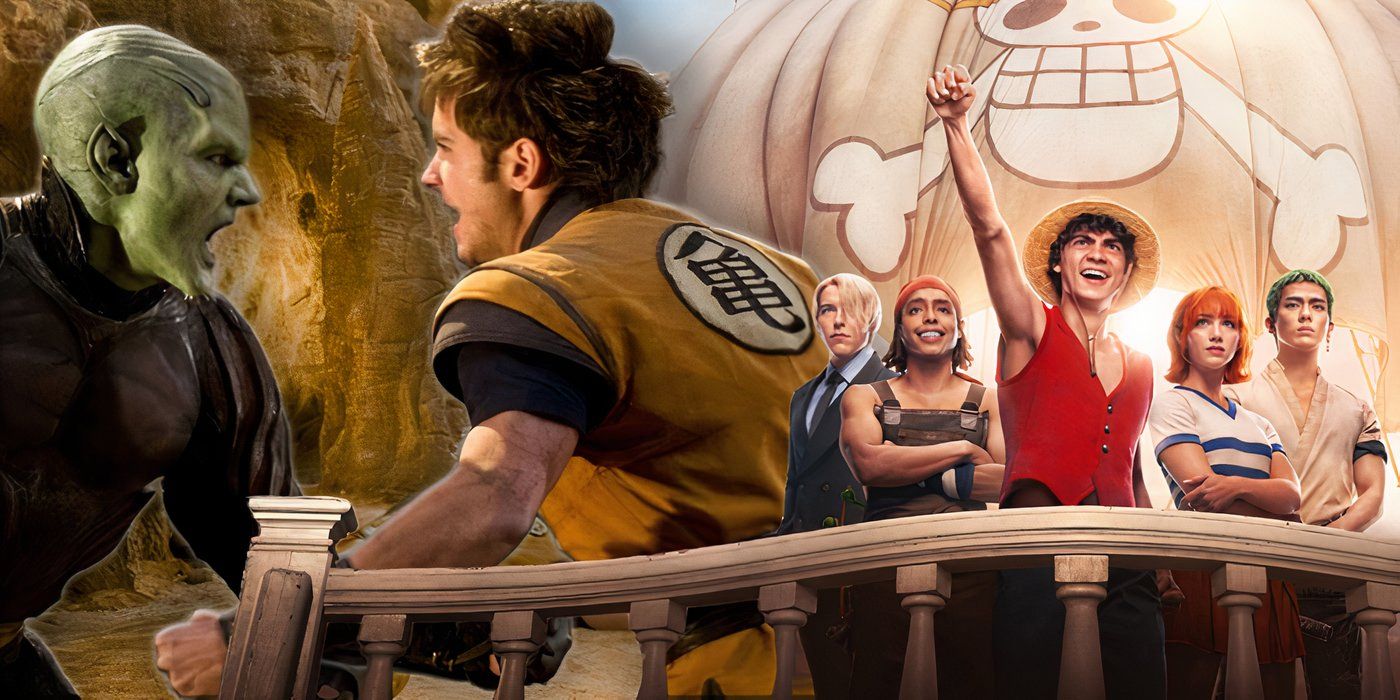
Like any large entertainment industry, anime is constantly expanding beyond its traditional form – whether to attract a wider audience, increase profits, or simply reimagine popular stories in new ways. When people talk about anime, they’re not just referring to Japanese animation; the anime aesthetic and cultural impact can be found in video games, books, products, and even live-action films and shows. While some of these expansions have worked well, adapting anime into live-action often proves challenging.
Despite many failed attempts at bringing anime to life in live-action, it is possible to get it right. Recently, Netflix’s adaptation of One Piece surprised a lot of people – even those who typically dislike live-action anime – with its quality and success. Many fans doubted it at first, but it turned out to be one of the best adaptations ever made. While One Piece’s success is rare, future live-action anime projects can learn a lot from how it was done.
Live-Action Anime Adaptations Don’t Have the Best Track Record
Live-action anime adaptations have a long history of being criticized, and for good reason. Filmmakers in both Japan and the West have been trying to turn anime and manga into live-action movies and shows for decades. Interestingly, one of the earliest and most notable attempts was actually a live-action version of Astro Boy – a TV show in 1959 and a movie in 1962 – which came out before the famous 1963 anime series.
Even early attempts to adapt anime and manga into live-action faced the same problems we see in modern adaptations. Common complaints – like cheap-looking effects, stories that feel too fast-paced, and a lack of understanding of what made the original work so good – were just as prevalent then as they are today for anyone who’s seen a disappointing live-action anime.
Japanese and Western filmmakers have both created some notoriously bad live-action adaptations of popular anime. Japan has given us examples like the poorly made Attack on Titan and the inaccurate Black Butler from 2014. However, films like Dragonball Evolution, Death Note, and Ghost in the Shell arguably angered anime fans even more. These adaptations often abandon what made the original anime special, prioritizing Western appeal over faithfulness to the source material.
A common complaint about Western remakes of anime is “whitewashing” – changing characters who are Asian or appear Asian to be played by White actors. These live-action adaptations often didn’t attract new viewers and also upset existing anime fans.
Anime and manga often work together, which makes it relatively simple to maintain the original story’s feeling, art style, and way of telling the story when adapting between the two. Live-action adaptations, however, frequently need to shorten or remove parts of the original material to fit the new format, which can result in a loss of depth or a significantly altered story. Additionally, live-action projects rarely have enough funding to recreate the dynamic visuals common in anime action scenes.
The biggest issue with live-action anime is that filmmakers often miss what makes the original anime special – its emotional depth and subtle details. Adaptations frequently either pick stories that don’t translate well to live-action, or they change too much of the original story in an attempt to make more money and appeal to a wider audience.
One Piece Is a Rare Example of a Live-Action Anime Done Right
Adapting One Piece into a live-action series seemed doomed from the start, like so many other failed attempts. Eiichiro Oda’s story is incredibly imaginative, filled with over-the-top characters, exciting journeys to colorful places, and unique abilities that would be difficult and expensive to bring to life. However, unlike many other live-action anime adaptations, it actually succeeded.
The live-action adaptation of One Piece clearly put a lot of care and effort into faithfully recreating the source material. Eiichiro Oda, the creator of One Piece, served as a consultant, making sure the series stayed true to his vision while allowing for some necessary changes to fit the new format.
Technically, One Piece is also remarkably well-made. The animation and CGI perfectly capture the show’s unique, over-the-top style without trying to be overly realistic. This makes unbelievable abilities, like Luffy’s stretching powers, and fantastical characters like the Fish-Men and Chopper, look believable while still maintaining their distinctive charm.
The actors in Netflix’s One Piece are perfectly cast, accurately reflecting the characters’ backgrounds and showcasing the skills of a talented young ensemble. Iñaki Godoy’s portrayal of Luffy is a standout, capturing not only the character’s appearance but also his energetic, adventurous spirit. The show’s impressive set design also deserves praise; by using real sets instead of relying on computer-generated imagery, locations like Baratie and the Going Merry feel incredibly detailed and bring viewers deeper into the world.
What sets Netflix’s One Piece apart is that it was made by people who genuinely love and understand Eiichiro Oda’s original work. This deep respect for the source material shines through in the show’s careful and artistic choices. Importantly, the series isn’t just for existing fans; it’s actually been most successful in attracting new viewers who were intrigued by One Piece but felt overwhelmed by its length or weren’t impressed with the beginning of the anime.
The live-action series was a great way for new viewers to discover the exciting world and story of One Piece in a format that was easy to enjoy. Because of this, many people who first encountered One Piece through the show then went on to read the manga or watch the anime.
Live-Action Anime Is Controversial But Not Hopeless
The success of Netflix’s One Piece really shows that live-action adaptations of anime can work well. While longtime fans of anime and manga might point out that successful adaptations have always existed, it’s easy to focus on the failures. Unfortunately, the unsuccessful ones often get more attention, overshadowing the many good live-action anime and manga adaptations that have been made.
Live-action adaptations tend to work best with stories that are already realistic, like those in the romance, drama, and everyday life genres. Several series, including My Love Story!!, Wotakoi, and Cherry Magic!, have live-action versions that are just as good as – and sometimes even better than – the original anime. However, even shows with more fantasy or action elements can be successfully adapted, as demonstrated by the funny 2017 Gintama movie and the Rurouni Kenshin films.
I get why a lot of anime fans are hesitant about live-action adaptations, even after seeing some good ones. Too often, they feel like studios are just trying to make a quick buck, and honestly, it makes you question why bother with a weaker live-action version when the original anime already did the story so well. That’s where something like Netflix’s One Piece really stands out – it tries to do things differently.
The Netflix live-action adaptation of One Piece doesn’t attempt to change the original story or make it more mainstream, even if that would mean sacrificing what makes it special. Instead, it offers a fresh way for fans to enjoy the Straw Hats’ adventure, and introduces it to a broader audience with a respectful and accurate portrayal. This version of One Piece is clearly made with passion and dedication, and it manages to be both unique and true to the source material – which is exactly what fans hope for in live-action anime adaptations.
Read More
- Everything We Know About Georgie & Mandy’s First Marriage Season 3
- Stranger Things Brings Back Divisive Season 2 Character in Season 5 Vol. 1
- Man of Tomorrow: James Gunn Debunks Rumor Regarding DCU’s [Spoiler]
- The Super Mario Galaxy Movie Trailer Is Here, And I’m All About Rosalina And That Villainous Introduction
- Tom Felton’s Official Harry Potter Return Finally Revealed With Rapturous Applause In Emotional Cursed Child Video
- Brendan Fraser Reflects on Missing Out on Playing Superman in J.J. Abrams’ Canceled ‘Superman: Flyby’
- Mickey’s Very Merry Christmas Party Nearly Sold Out: One Final Date Remains (And It’s Not Cheap)
- Taika Waititi Developing New Comedy for Hulu
- Western Comedy ‘Eddington” Is Streaming on HBO Max, Starring Joaquin Phoenix and Pedro Pascal
- 8 Most Iconic Final Scenes in Superhero TV Shows
2025-11-20 05:40