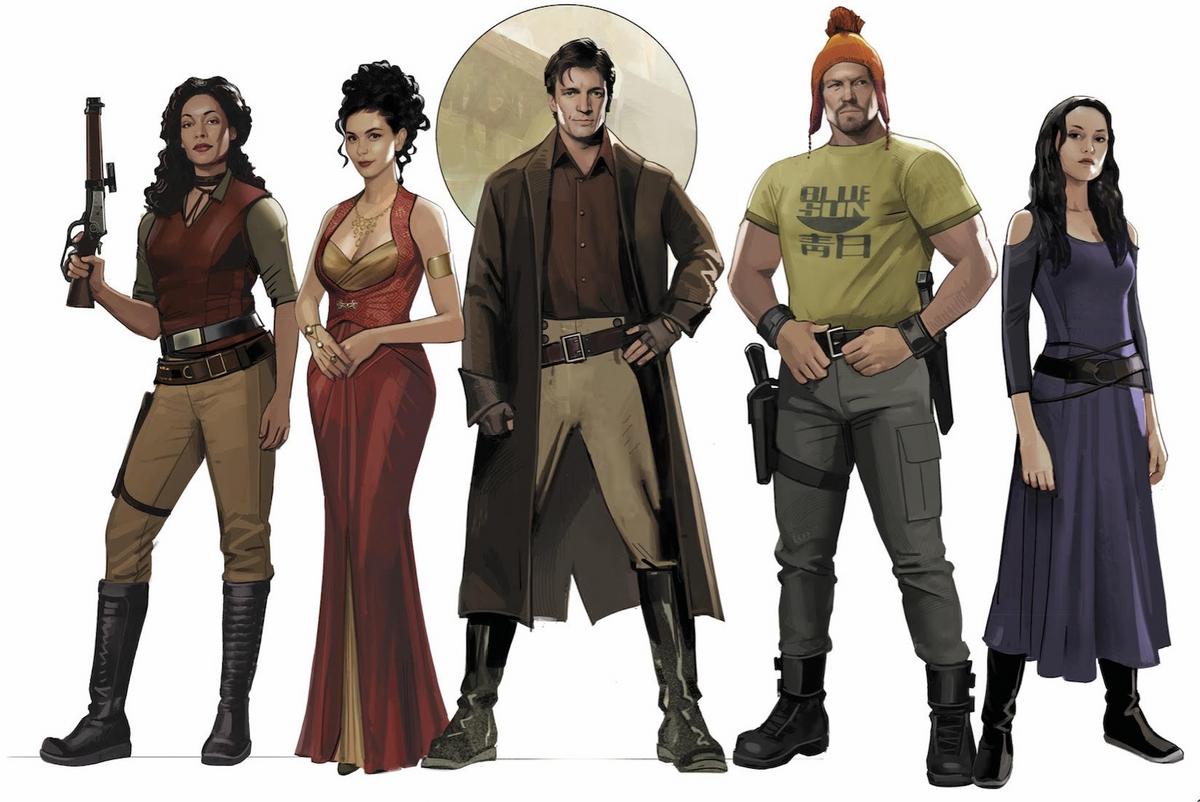
Firefly is on the verge of a comeback.
The popular sci-fi western series only lasted one season back in 2002, followed by the movie Serenity in 2005. But after more than 20 years, the show is coming back! Actor Nathan Fillion revealed at Awesome Con that his production company is teaming up with 20th Television Animation to create an animated revival.
According to a recent announcement, the new Firefly series takes place between the events of the original 2002 TV show and the 2005 movie Serenity. It will build upon the existing story and world without changing what fans already know and love.
Nathan Fillion shared the news while appearing with his former Firefly co-stars – Alan Tudyk, Gina Torres, Jewel Staite, Morena Baccarin, Sean Maher, and Summer Glau – suggesting they’ll all likely return for the new series.
While shows like Star Trek focus on a crew working for a space-based government, Firefly centers around a group of smugglers aboard their ship, Serenity, in the 26th century. The crew is mostly made up of former soldiers and those who lost the intergalactic civil war, and they’re just trying to survive and avoid those chasing them.
Joss Whedon was the creator of Firefly and an executive producer on the original show. He also wrote and directed the Serenity movie. Now, Marc Guggenheim and Tara Butters will be leading the writing and production of this new animated Firefly series.
According to the official announcement, a script for a new Firefly pilot episode is complete. Early designs, including the image shown, were created with ShadowMachine, the award-winning animation studio. The project is now being presented to potential buyers, so fans hoping for a Firefly revival might finally get their wish.
Movies That Were Originally Supposed to Have Much Darker Endings

Alien
The original ending for Alien was much darker than the one we saw! Director Ridley Scott revealed that he once planned for the xenomorph to kill Ripley after she ejected it from the airlock – it would have broken through her helmet and decapitated her. Then, chillingly, the alien would perfectly imitate a crew member’s voice and send a routine captain’s log to the company, making it seem like everything was fine. It’s hard to believe the studio didn’t choose that version!

Army of Darkness
The Evil Dead films are essentially director Sam Raimi’s playful torment of Bruce Campbell and his character, Ash Williams, all for the audience’s entertainment. No matter how confident Ash becomes, something terrifying always appears to humble him. After defeating evil in Evil Dead II, he’s thrown back in time to the Middle Ages, the setting for Army of Darkness. That film almost ended with Ash messing things up again on his way back to the present. In a hilarious gag, Ash miscalculates a sleeping potion and accidentally sleeps through centuries, waking up in a post-apocalyptic future. This would have been a perfect, ironic ending to the series, but the studio pressured Raimi to give Ash a happier conclusion—one so exaggerated it feels like a parody of typical studio endings. (He ends up back at his old job, heroically saving a woman from a monster.) Raimi is skilled enough to make even a forced ending work, but the story would have been stronger if Ash had remained trapped in the future, forever battling zombies.

The Butterfly Effect
It makes sense that a film about changing reality with time travel would have multiple endings. The most shocking – and arguably the darkest – ending in The Butterfly Effect involves Ashton Kutcher’s character, Evan, deciding the only way to fix the damage caused by his time travel is to go back and strangle himself as a fetus with his umbilical cord. It’s a truly disturbing and incredibly sad conclusion – far beyond just a typical sad ending.

Clerks
The original ending of Kevin Smith’s film Clerks was surprisingly dark: after a day of complaining, the character Dante was meant to be killed during a robbery at the convenience store. Smith said he included this shocking and ironic ending because he couldn’t think of a better way to finish the movie. However, friends who saw an early version urged him not to release it that way. Unable to afford reshoots, Smith simply cut the robbery scene, leaving the film unresolved. He then sold Clerks to Miramax, which launched his directing career. It’s interesting to consider: if he hadn’t taken their advice and had kept the original, bleak ending, would the film still have become a beloved cult classic?

Dawn of the Dead
George Romero’s Dawn of the Dead concludes with the two remaining survivors flying away in a helicopter, escaping the mall where they’d been sheltering. However, Romero initially considered a much darker ending: the pair committing suicide, with one character even disabling the helicopter with their head, causing it to run out of fuel during the closing credits – implying any escape was futile. Although his earlier film, Night of the Living Dead, ended on a similarly bleak note, Romero ultimately opted for a slightly more optimistic conclusion for the sequel.

Eternals
The movie Eternals ended like most Marvel films: the heroes saved Earth from destruction (with one exception, who turned out to be the villain). Some of the team then left for space, while others stayed to protect the planet. However, that wasn’t the original plan. Early versions of the ending had the Eternals being punished by their Celestial creators for disobeying orders. A Celestial would have captured them, wiped their memories, and sent them to a new planet to begin the cycle of Celestial birth anew. Ultimately, Marvel opted for a more standard heroic ending, but given the current situation, it feels like sticking with the darker original ending wouldn’t have mattered much, as it’s unclear if we’ll see these characters in future films anyway.

First Blood
The original Rambo is a surprisingly thoughtful film about a troubled Vietnam War veteran (Sylvester Stallone) pushed too far by a small-town sheriff (Brian Dennehy). After unleashing his skills in the Pacific Northwest, Rambo is finally approached by his former commander (Richard Crenna), who manages to talk him down. Seeing a friendly face, Rambo breaks down and agrees to surrender. Director Ted Kotcheff actually filmed an alternate ending where Rambo commits suicide rather than face prison, a more fitting conclusion that could have prevented the series from becoming increasingly over-the-top. While the sequels have their moments, they stray far from the grounded nature of the first film, First Blood.

Get Out
The audience went wild when Rod showed up in a police car to rescue Chris at the end of Get Out – it was one of the biggest reactions I’ve ever witnessed in a theater. That last-minute escape from the Armitage family was incredibly satisfying for viewers, and definitely contributed to the film’s huge success. Interestingly, Jordan Peele’s original ending was more realistic and aligned with the ironic twists seen in shows like The Twilight Zone. In that version, the police arrive as Chris is attacking Rose and arrest him. Rod then visits Chris in prison, and Chris insists he handled the situation. While I’m thrilled Get Out was a hit and launched Peele’s career, and the current ending is still great, I actually think the original ending was even more impactful.

I Am Legend
As a big fan of Richard Matheson’s work, I always found the theatrical ending of I Am Legend a bit disappointing. It’s a classic heroic sacrifice – Will Smith’s character, Robert Neville, gives his life to protect the cure he’s created. But it really deviates from what Matheson originally intended. Thankfully, the director’s cut is a completely different beast! It’s much more thought-provoking; Smith realizes the creatures he’s been fighting – the ‘Darkseekers’ – aren’t just monsters, and he’s actually become the one causing the real harm. He sets free the creature he’d been experimenting on, and they all leave peacefully. Then, he and the other survivors head north in search of other people. It’s still not a perfect adaptation of the book, but it’s a lot closer to Matheson’s vision, and honestly, it’s a far more unsettling and powerful conclusion.

Little Shop of Horrors
One of the most famously depressing alternate endings in movie history also happens to be a very expensive one. Warner Bros. reportedly spent $5 million – a significant portion of the $25 million budget – on the film’s original finale, which closely followed the darker ending of the original stage musical. This version showed Audrey and Seymour being eaten by the giant Audrey II plant, which then escaped and began taking over the world. It featured a full-scale invasion, with Audrey II plants battling the military and wrapping vines around the Statue of Liberty, even seemingly breaking out of the movie screen to threaten the audience. However, test audiences strongly disliked it – scores plummeted to a dismal 13 out of 100 (anything below 55 is considered bad). As a result, director Frank Oz and the team had to reshoot the ending in just three weeks, creating a new finale where Seymour saves Audrey and destroys the plant. Though ultimately cut, Oz’s original ending was a great fit for the film’s dark humor and included impressive special effects and puppetry. Thankfully, these deleted scenes were eventually restored and released on the Blu-ray version of Little Shop of Horrors.

National Lampoon’s Vacation
The original ending of National Lampoon’s Vacation was much darker. Like the short story it was based on, it began with the line, “If Dad hadn’t shot Walt Disney in the leg, it would have been our best vacation ever!” While that scene was filmed and included in early versions of the movie, director Harold Ramis felt it made the ending too downbeat. He decided to rewrite it so the Griswold family actually reached Walley World, sneaking into the closed park to enjoy the rides. It’s a quirky but ultimately cheerful conclusion. Although, an ending where Chevy Chase’s character confronted Walt Disney could have been quite something!

Pineapple Express
The comedy Pineapple Express nearly ended with a surprisingly dark and violent fate for its main characters, Dale and Saul. While audiences usually prefer happy endings, especially in comedies, the film ultimately chose to have the heroes survive their adventure with only minor injuries. However, killing them off would have been a bold and unexpected way to finish the action-packed spoof.

Ronin
As a film buff, I’ve always been fascinated by stories of studios interfering with a director’s vision, especially when it comes to endings. A prime example is Ronin. Apparently, United Artists forced John Frankenheimer to change his original ending, which was pretty dark – Natascha McElhone’s character was supposed to be kidnapped, likely killed, by the IRA. Instead, they went with a ‘compromise’ where she just disappears after a chaotic shootout. While the revised ending isn’t bad – at least there’s no overly sentimental reunion – the director’s original version felt much more fitting for the film’s gritty and realistic take on international espionage. It would have really underscored the bleakness of that world.
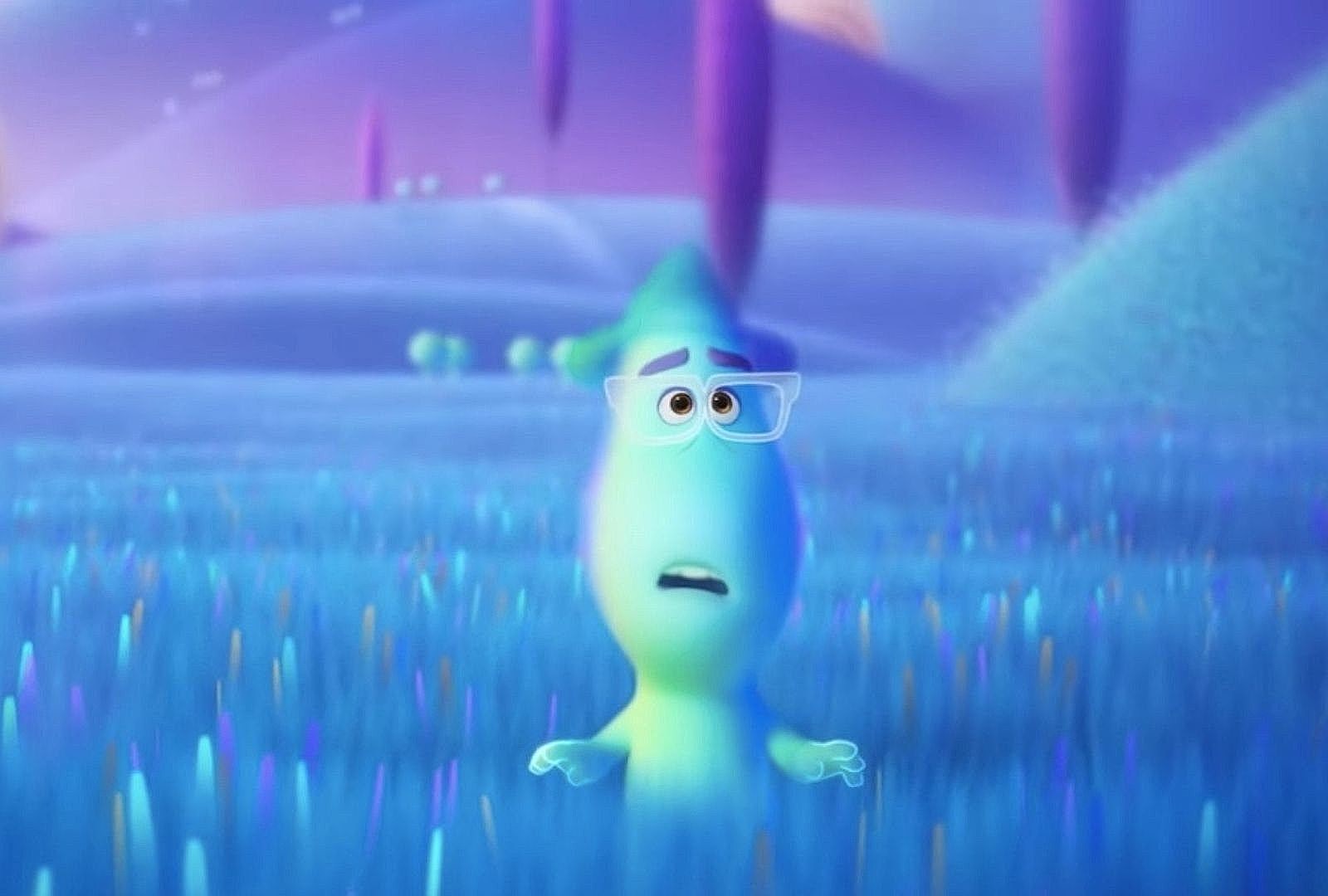
Soul
Throughout the making of Soul, Pixar struggled with how to finish the story. The film centers on a jazz musician whose spirit is caught between life and death after a coma. They debated whether to bring him back to Earth or let him move on to the afterlife. Although they eventually chose a happier ending, they also filmed alternate versions, some of which ended with the musician’s death. A children’s movie with a hero who dies? That would have been a bold move.

The Suicide Squad
It’s no surprise that The Suicide Squad wasn’t going to be a lighthearted movie. However, director James Gunn initially envisioned a much darker ending than what audiences ultimately saw. An early cut of the film featured the deaths of Ratcatcher 2 (Daniela Melchior) at the hands of Amanda Waller (Viola Davis), followed by Bloodsport (Idris Elba) killing Waller in revenge. Ultimately, Gunn and DC decided to let Waller, Bloodsport, and Ratcatcher—along with Peacemaker—all survive, though with the future of the DC Extended Universe uncertain, it’s possible we won’t see these characters again.
Read More
- ‘YouTube Customers Are Suffering.’ Disney CFO Says Company Isn’t Backing Down As Cable Outage Continues
- Jonathan Jackson’s Lucky Spencer Return: Fixing General Hospital’s Storyline Issues
- Millie Bobby Brown Files Harassment Complaint Against David Harbour
- Julia Roberts’ After the Hunt Finally Sets Prime Video Release Date
- Alex Russo’s Wizards Beyond Waverly Place Fate Confirmed By Star After Viral Backlash
- I Rewatch The Ref Every Year For Christmas. Why More People Need To Have It On Their Holiday Watch List
- Shrek 5’s Marcello Hernández Shared Some Wild Photos And Video After Being Cast, And Stars And Fans Are Loving It
- Every Winner at Japan’s Biggest Streaming Anime Trend Awards in 2025
- Hans Zimmer to Score Warner Bros.’ ‘Harry Potter’ TV Series
- Hamnet’s Jessie Buckley Reacted To Paul Mescal’s Oscars Snub
2026-03-15 21:28