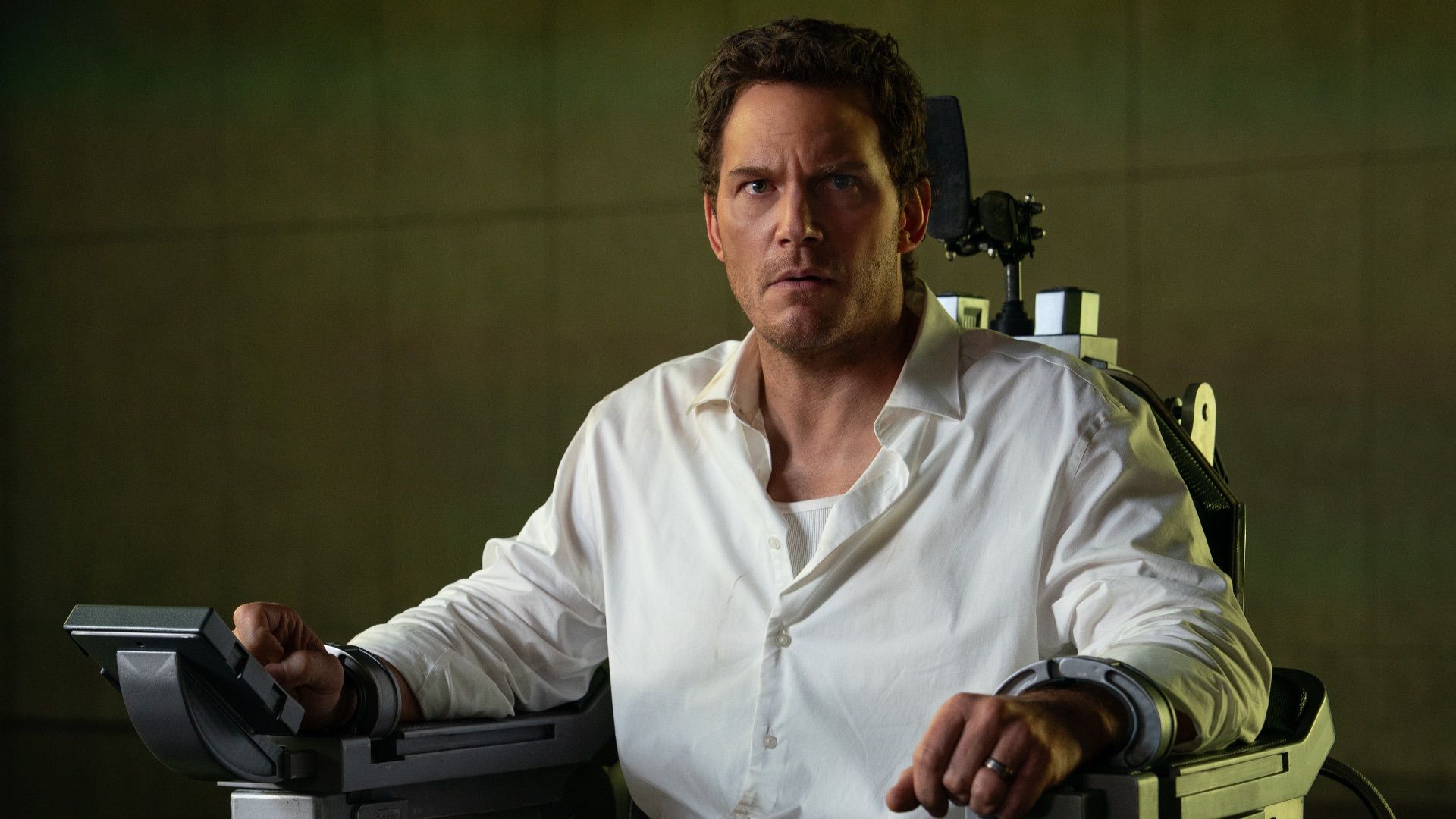
Following a trend of recent films starring a popular actor confined to a chair, Mercy feels very similar to last year’s War of the Worlds – both are disappointing and seem like wasted efforts. Both films were produced by Timur Bekmambetov, who has a strange interest in “screenlife” thrillers – movies where the audience watches characters looking at screens. This style only really worked well once, with the 2018 film Searching, and Mercy unfortunately doesn’t improve the genre’s track record. It also doesn’t showcase Chris Pratt at his best; he does his best with a silly, overly dramatic crime story while tied to a chair. This role asks a lot of an actor who usually relies on his charisma, forcing him to convey emotion solely through facial expressions.
Chris Pratt stars as Chris Draven, a detective in a futuristic Los Angeles overrun by crime. Here, trials are held before cold, efficient AI judges. Draven finds himself accused of murder and strapped into the ‘Mercy Chair’ – it’s not what you think! – with just 90 minutes to convince AI Judge Maddox (Rebecca Ferguson) of his innocence, or face immediate execution. While the story isn’t particularly original, it’s designed to move quickly, as Draven frantically uses a lot of advanced, fast-paced technology to try and prove he’s innocent.
Okay, so I went into Mercy hoping for a fast-paced, slightly unhinged sci-fi ride, kind of like a Josh Safdie film but with robots. It tries to be more than that, though – it wants to warn us about the dangers of AI taking over our courts. Honestly, the script felt…off. It’s set just three years in the future, which is supposed to be this terrifying vision, but it went so over the top it didn’t feel believable. It didn’t really work as a serious warning, the world-building wasn’t strong, and it wasn’t a particularly gripping thriller. Honestly, if this film’s promise of ‘swift justice’ could be applied to itself, I’d say bury it deep within the Prime Video library.
The movie Mercy falls into the same category as other weak thrillers like the 1995 film The Net and the 2004 movie Cellular. These films all rely on new technology as a plot device to create suspense. While Mercy doesn’t bother with realism, it does unfortunately portray a believable vision of Los Angeles in 2029 as a city overrun by crime and poverty. However, the central idea of 90-minute murder trials—where defendants have no lawyers and a ‘Guilt Percentage Meter’ decides their fate—is simply too far-fetched to be engaging. It’s hard to suspend disbelief when the premise is so unrealistic.
Draven, one of the first supporters of the Mercy project, now finds himself in a bizarre situation: defending himself against Judge Maddox, who appears as a massive, digitally created head on a giant screen. The judge throws logic and the US Constitution out the window by letting Draven use the Municipal Cloud – a complete record of every video ever taken – to build his defense. He can instantly access footage and even call anyone he needs, including his daughter, Britt, and his colleague, Jaq. Luckily, when Draven makes these crucial calls with only minutes to spare before his execution, no one happens to be unavailable.
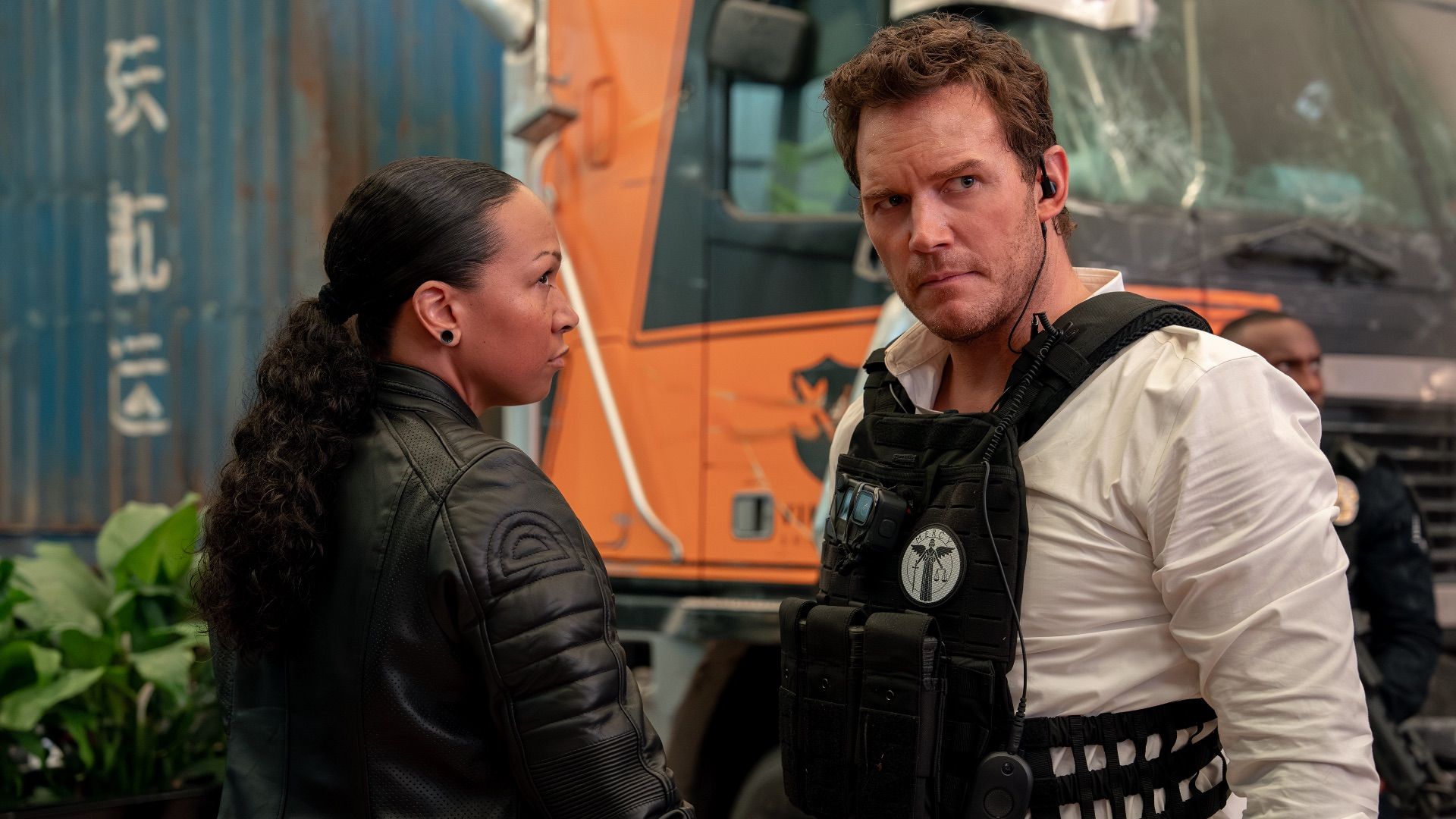
Honestly, I wasn’t shocked to learn Draven wasn’t as innocent as he seemed – it’s a pretty common movie trope. But the director, Timur Bekmambetov, did manage to throw me off a few times. We quickly find out Draven’s been struggling with anger and alcohol since his partner, Ray, died, and there’s even footage suggesting he was at the house right before his wife was killed. A lot of his backstory is explained to us through another character, Maddox, which feels a bit rushed when Draven only has an hour to prove he’s not guilty! He needs to get his guilt probability down to just 8% to walk free, and the movie throws a ton of twists, turns, and misleading clues at you in a super fast-paced 110 minutes. But it also gives Bekmambetov room to create some really exciting action sequences, like an incredible truck chase through Los Angeles – though it was so empty, it felt like something out of a sci-fi film!

Despite its fast pace, the film Mercy feels surprisingly dull because things happen so quickly that they don’t really make an impact. It spends a lot of time exploring a question that isn’t particularly relevant, and even if it accurately predicted future technology—like a 90-minute trial followed by execution—its argument against it isn’t very insightful. In fact, the most compelling ideas come when the character Draven reverts to simpler methods, a technique the film itself could have benefited from. Ultimately, Mercy‘s focus on speed and flashy visuals over strong characters and a compelling story is a major flaw, and it becomes clear well before the 90-minute mark.
Subscribe to the newsletter for sharper movie and AI takes
Crave sharper context on films about AI, justice, and tech-driven storytelling? Subscribing to the newsletter gives clear, critical coverage and concise analysis of cinema’s tech themes and trends, helping you spot what matters behind the spectacle.
Mercy, from Amazon MGM Studios, opens in theaters on Jan. 23rd
Read More
- One Piece Season 3 Has Begun Filming, And I’m So Glad We’ll Be Seeing Way More Of Four Specific Characters
- Pokémon Scarlet and Violet Free Downloads Available Now For Limited-Time
- Hamnet’s Jessie Buckley Reacted To Paul Mescal’s Oscars Snub
- ‘The Elder Scrolls’ TV Series Will Never Happen Because of ‘Lord of the Rings’
- The Mummy Returns Sets 25th Anniversary Rerelease Date With Poster & Teaser
- ‘Hamlet’ Trailer Reveals Modern Remake Starring Riz Ahmed
- My Final 2026 Oscar Predictions, Including A Chalamet vs. Jordan Upset
- Хэдхантер акции прогноз. Цена акций HEAD
- The Phoenician Scheme: What the Gap Actually Is, Revealed
- Julia Roberts’ After the Hunt Finally Sets Prime Video Release Date
2026-01-21 20:10