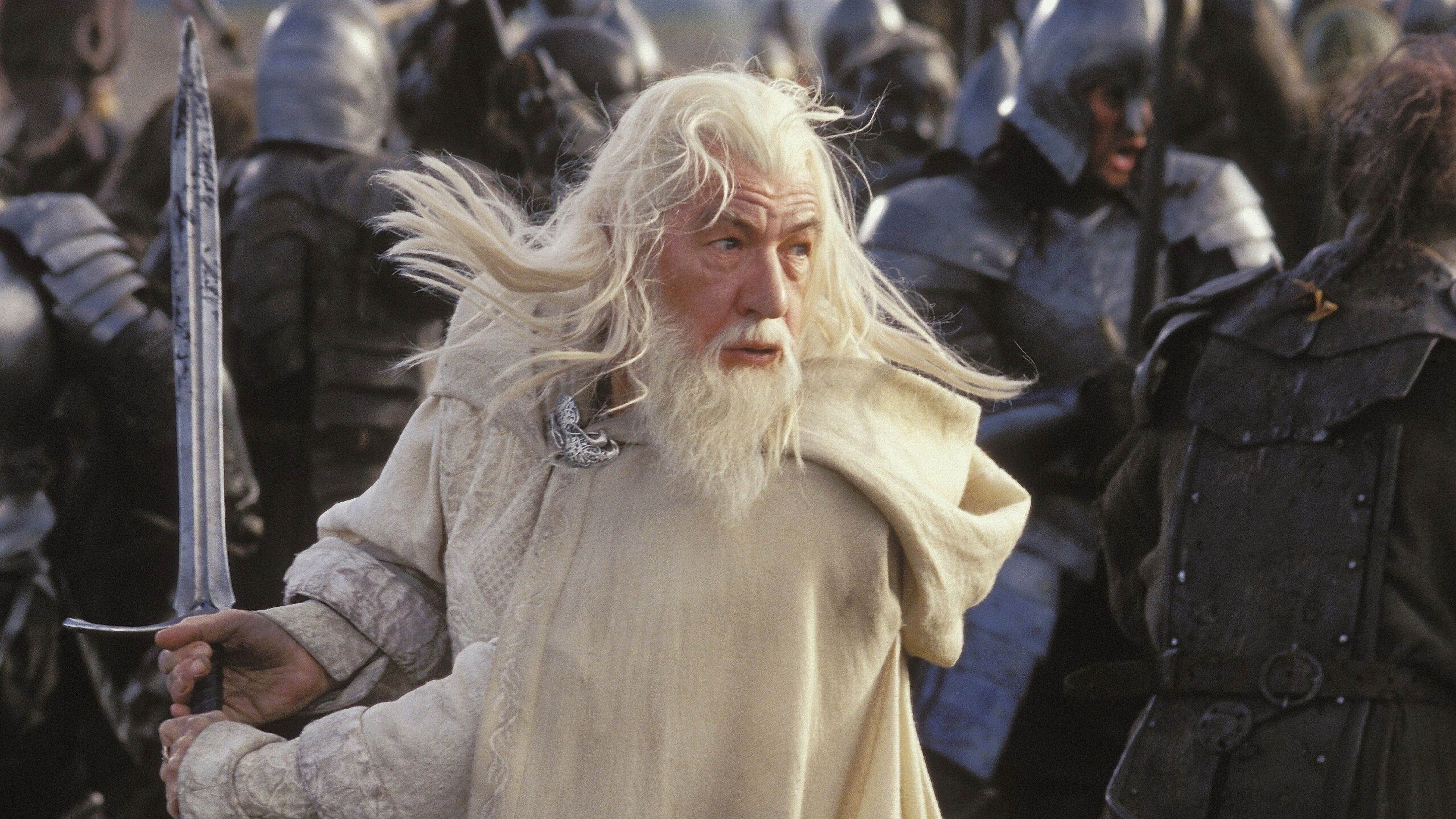
Like most fantasy tales, magic played a key role in J.R.R. Tolkien’s stories and Peter Jackson’s film adaptations. The entire plot centered around a magical ring, and powerful wizards were central figures on both sides of the conflict. However, the magic in Middle-earth felt different from what’s often seen in modern fantasy – it operated by its own unique rules.
J.R.R. Tolkien intentionally kept the specifics of magic in his stories vague. Author Brandon Sanderson calls this a “soft magic system” – unlike “hard magic systems” which have defined rules and limits, similar to how science works. Hard magic systems have become more common in recent fantasy, largely thanks to the impact of games like Dungeons & Dragons. This trend has sometimes led people to misunderstand the nature of magic in Middle-earth, particularly when considering the power of the One Ring.
The Lord of the Rings’ Most Magical Beings Struggled to Comprehend Magic
Magic isn’t clearly defined in J.R.R. Tolkien’s The Lord of the Rings. In The Fellowship of the Ring, when Pippin asks if the cloaks given to them are magical, an Elf responds that they don’t know what Pippin means by ‘magic.’ The Elf explains the cloaks are Elvish robes, crafted with the beauty of nature and imbued with the love and care of the Elves. They put their feelings into everything they create.
In the chapter “The Mirror of Galadriel,” Galadriel explains to Samwise Gamgee that what humans call “magic” is different from how the Elves see things. She notes that humans use the same word for both wondrous feats and the trickery of the enemy. To the hobbits, Elven cloaks that could perfectly camouflage someone or allow glimpses across time and space seemed magical, but the Elves themselves didn’t consider their creations to be magic in the same way.
One thing that really struck me while reading Tolkien is how the Elves see the world – it’s a perspective the Hobbits struggle to grasp. But it turns out, something similar applies to the Hobbits themselves! Tolkien explains in the prologue that humans actually thought Hobbits were magically sneaky. What’s fascinating is that it wasn’t magic at all – it was just a skill they’d developed over generations, a natural talent combined with practice, and a real connection to the land. It’s a clever detail that grounds their abilities and makes them feel more believable.
Tolkien was concerned he’d used the idea of ‘magic’ too loosely in his book, particularly the word itself. Peter Jackson’s films actually addressed this concern – the word “magic” appears very rarely, only twice throughout the three movies. The first time is when Gandalf scolds Bilbo for carelessly referring to a magical ring, and the second is when Éowyn is surprised to learn Aragorn knows about Elven magic.
The Lord of the Rings’ Magic Did Not Follow Strict Logic
The subtle nature of magic in The Lord of the Rings was essential to the story. Some fans have playfully tried to find ways Frodo Baggins could have carried the Ring without being harmed – like attaching it to a very long chain or an animal incapable of being influenced. However, these ideas miss the point of how the One Ring actually worked.
The Ring’s power to tempt people didn’t depend on how close they were to it. In The Hobbit, Gollum felt its pull even more strongly than Frodo, despite not even carrying the Ring on his body – it remained in his cave. Because the Ring was deeply connected to the evil Sauron himself, it didn’t follow any normal rules, and there was no way to protect Frodo from its corrupting influence during his journey.
Gandalf’s magic was often understated and worked in ways that weren’t always obvious. While fans have wondered if he could have done more to directly help the Fellowship, his purpose wasn’t to simply fix every issue with spells. As a Maia – a powerful, angelic being – he was limited in how much magic he could use. Gandalf acted as a guide, offering just enough assistance to the people of Middle-earth to allow them to achieve their goals.
The effectiveness of magic in resolving story conflicts is closely linked to how well readers understand that magic system. Brandon Sanderson noted this, and J.R.R. Tolkien’s The Lord of the Rings is a great illustration, even though it was written long before Sanderson shared his thoughts. Tolkien’s magic in Middle-earth was intentionally mysterious, so he often used it to create problems instead of solving them.
Jackson’s films consistently showed this effect well. When Saruman opposed Gandalf with magic, Gandalf couldn’t overcome it. Instead, the heroes had to find a more dangerous path under the Misty Mountains. It would have felt like an easy solution if Gandalf simply used a powerful, new spell to solve every problem the Fellowship faced.
Fans of stories like The Lord of the Rings often try to understand and classify every detail, which can be tricky when it comes to things like magic. Unlike some stories where magic has clear rules, Tolkien’s world leaves a lot open to interpretation, and that’s part of what makes it special. It’s great for fans to debate how magic works in Middle-earth, but it’s also important to remember that some of it is meant to remain a mystery.
Found an error? Send it so it can be corrected.
Read More
- Прогноз криптовалюты ATOM: прогнозы цены ATOM
- Welcome to Derry Just Officially Confirmed Its Shining Connection (& It’s Perfect)
- JJK Director Taps Talent From Spy x Family & JoJo’s Bizarre Adventure For New Movie
- One of Clint Eastwood’s Best Westerns (That Isn’t ‘The Good, the Bad and the Ugly) Is Leaving Free Streaming
- Taylor Sheridan’s 2-Part Action Thriller Series Is The Perfect Binge Ahead Of The New Season
- In Just 1 Day, Universal’s Wicked: For Good Is Officially the Most Watched Title on PVOD in America
- Группа Аренадата акции прогноз. Цена акций DATA
- The Fantastic Four: First Steps Prequel Ties Marvel Villain to MCU Team’s Origin
- Quentin Tarantino & Sylvester Stallone Team Up for 1930s Gangster Series
- Sonic Team Refuses to do ‘Sonic Adventure’ Remake — Instead Focuses on New Projects
2026-02-06 23:37