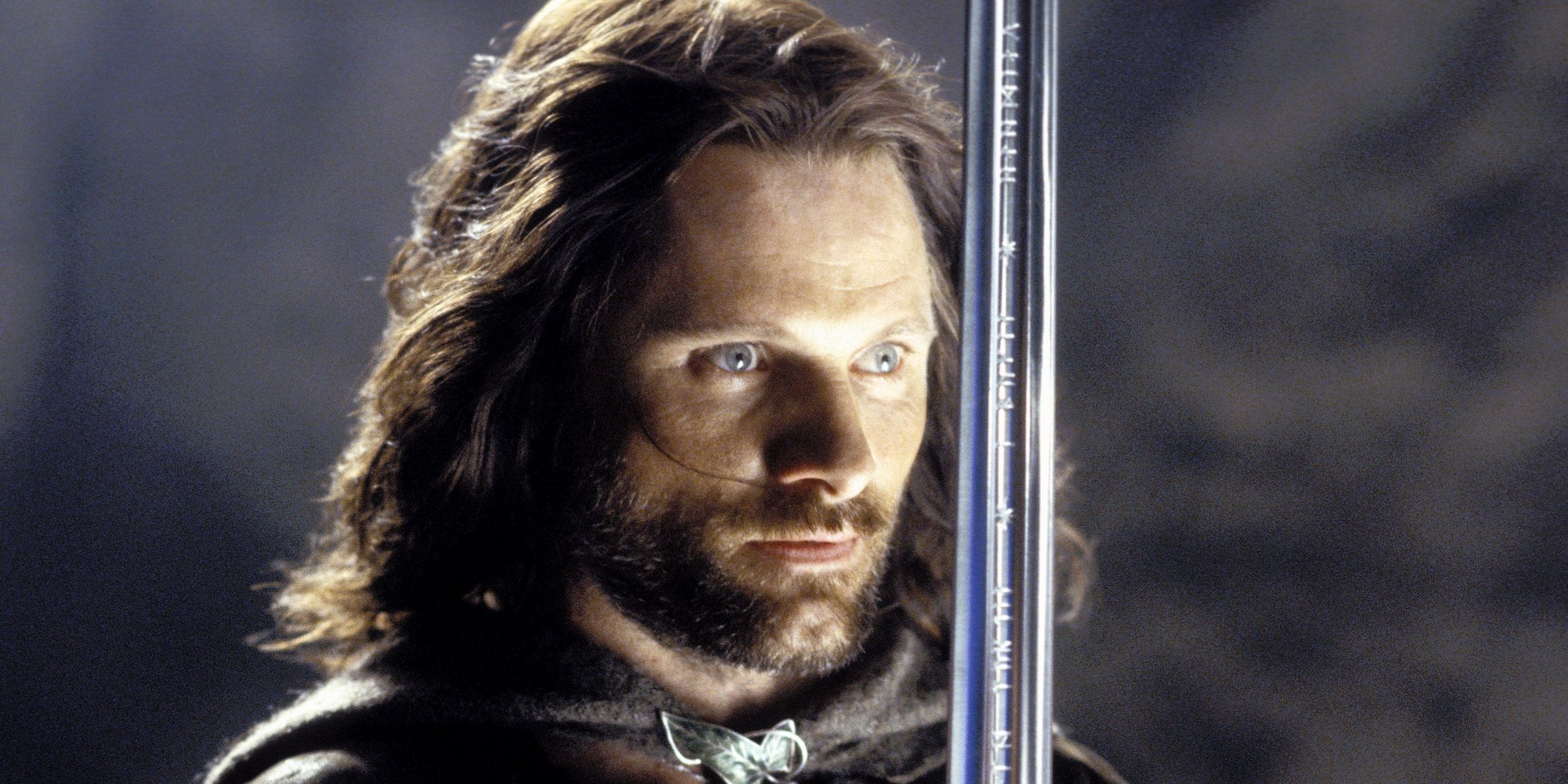
Before Peter Jackson started filming his Lord of the Rings trilogy, his team spent two years planning and turning J.R.R. Tolkien’s book into a workable script and visual plan. This careful preparation ensured filming went well, though Jackson ultimately cut some of his original ideas. A major change involved a planned duel between Aragorn and the Dark Lord Sauron during the final battle in The Return of the King. Fans have learned about this scrapped scene through storyboards, behind-the-scenes footage, and comments from the filmmakers.
As a huge fan, I always found it fascinating to learn about what could have been in the final battle! Apparently, Peter Jackson actually filmed a scene where Sauron himself appears at the Black Gate. It wasn’t just some shadowy figure, either! He would have initially shown up looking like the beautiful angel, Annatar – you know, his guise from the books – before transforming into that massive, terrifying form we saw in the prologue of The Fellowship of the Ring. They even had a whole fight planned where Aragorn would challenge him, but Sauron would knock him down. Just as Sauron was about to finish Aragorn off, the Ring would have been destroyed, and Sauron would explode – similar to how he was defeated by Isildur in the prologue. Sadly, Jackson ended up cutting the whole thing! He replaced Sauron with an armored troll, and cleverly reused the heroes’ reactions to Annatar as if they were reacting to the Eye of Sauron. While some fans, like me, are glad they stuck closer to the book, others think it would have been an amazing action sequence to end the trilogy. Honestly, there’s a good case to be made for both sides!
Sauron Would Have Made The Lord of the Rings’ Final Battle Even More Exciting
Adding Sauron to the Battle of the Black Gate would have significantly increased the tension and danger. While the heroes had defeated trolls before, Sauron represented a unique and overwhelming threat – he was the ultimate evil in Middle-earth, and the prologue clearly showed his power in battle. This kind of heightened conflict is what modern audiences expect, and the filmmakers understood that.
In the commentary for The Return of the King, screenwriter Philippa Boyens explained that they initially planned the story based on traditional storytelling principles. This meant a major confrontation between the hero and the villain. They also intended to link the final film to the beginning of the story, specifically referencing how The Fellowship of the Ring showed Isildur defeating Sauron by cutting off his fingers and breaking his connection to the One Ring.
Aragorn, as the descendant of Isildur, initially struggled with the idea of becoming King of Gondor. He worried about repeating Isildur’s mistakes. Over the course of the story, he gradually accepted his heritage. A final battle against Sauron would have been a perfect conclusion to his journey. While this didn’t happen in the book, it would have brought in important elements from Tolkien’s world – specifically the story of Annatar – that weren’t otherwise included in the movies.
In the early years of Middle-earth’s Second Age, Sauron preferred trickery and manipulation to direct battles. He cleverly disguised himself as a beautiful Elf, hoping to gain people’s trust, and introduced himself as Annatar, which means “Lord of Gifts,” claiming to be a messenger from the powerful Valar. While Annatar is a significant figure in Middle-earth’s history, he didn’t appear in the Prime Video series The Lord of the Rings: The Rings of Power until its second season in 2024. It would have been interesting to see how director Peter Jackson might have portrayed this deceptive side of Sauron.
The scene may have included a hidden reference to The Silmarillion. In The Return of the King, Aragorn stabs a troll in the foot after it steps on him, and a deleted scene suggests he would have done the same to Sauron. This echoes a similar fight described in The Silmarillion, specifically in the section about the fall of Fingolfin.
Fingolfin, the High King of the Noldor Elves, bravely fought Morgoth, Sauron’s master. During the battle, Fingolfin fell and Morgoth placed his foot on his neck, a weight like a collapsing mountain. Even in his final moments, Fingolfin managed to strike Morgoth’s foot with his sword, causing black, smoking blood to erupt.
It would have been a fun nod to Tolkien’s other writings if Aragorn had injured Sauron the same way. Beyond differing from the book, what was the problem with including this scene?
Sauron Dueling Aragorn Would Have Contradicted The Lord of the Rings’ Lore
As a huge fan of the films, I’ve always thought it wouldn’t have made sense for Sauron to physically show up at the Battle of the Black Gate. Remember in The Fellowship of the Ring when Saruman tells us Sauron ‘cannot yet take physical form’? While it’s possible he could have regained that ability by the time of the battle, it felt odd. He’d poured so much of his power into the One Ring, he should have been significantly weaker than how he appeared in the prologue – that was when he was at his strongest, before focusing everything into the Ring.
The One Ring made Sauron incredibly powerful, but without it, he was greatly weakened. This explains why he was so focused on getting it back, and why the heroes fought so hard to keep it from him. If Sauron had been a formidable warrior even without the Ring, Frodo’s journey wouldn’t have seemed as critical. By the time the War of the Ring began, Sauron had already regained his physical form, but after a devastating defeat in the previous war, he refused to directly engage in battle. Instead, he stayed safely hidden and commanded his armies from afar.
A direct fight between Sauron and Aragorn would have been odd, given how Peter Jackson showed Sauron in the movies. In the books, Sauron was a powerful spirit able to inhabit different bodies. However, the films portrayed him as a fiery eye on top of Barad-dûr. It would have been confusing if his awareness was both in that eye and battling Aragorn. Perhaps the eye would have vanished during the Battle at the Black Gate, but then Frodo’s dangerous journey through Mordor wouldn’t have felt as urgent or impactful.
A lot of the suspense came from the constant threat of Sauron turning his attention to Frodo. While early sketches for the scene where Aragorn faces Sauron showed the Eye of Sauron absent, Sauron and his tower, Barad-dûr, looked different in those sketches than they did in the final movie. So, it’s hard to know if that missing Eye was a deliberate choice by director Peter Jackson.
The more you consider this cut scene, the more problems with it become apparent. Even ignoring issues with established story details, adding it would have weakened Frodo’s journey. His mission was simply to distract Sauron while he reached Mount Doom, and the movie’s climax should have centered on that. The final cut successfully keeps the focus on Frodo’s quest in Mordor.
As a huge fan of The Lord of the Rings, I always thought it was interesting that they cut the scene with Sauron himself appearing at the Black Gate. It probably helped keep the focus on Frodo at that crucial moment, but honestly, I’d love to see it! While I understand why they removed the duel, it would be amazing if the full version ever surfaced. Even just as a spectacle, it’d be fun to compare it to the troll fight they used instead. With the 25th anniversary coming up and talk of re-releasing the films with lost footage, some of us are hoping Jackson was being a little coy when he talked about those deleted scenes – maybe there’s a chance we’ll actually get to see them!
Found an error? Send it so it can be corrected.
Read More
- ‘YouTube Customers Are Suffering.’ Disney CFO Says Company Isn’t Backing Down As Cable Outage Continues
- Underrated Shudder Horror Movie Becomes Global Streaming Hit After Quiet Theatrical Release
- 20 Years Before MobLand, Roger Ebert Hailed Pierce Brosnan’s The Matador as an ‘Overlooked Gem’
- Jake Paul Called Out Anthony Joshua Again, But I’m Not Sure Where He’s Going With This
- Every Winner at Japan’s Biggest Streaming Anime Trend Awards in 2025
- Hans Zimmer to Score Warner Bros.’ ‘Harry Potter’ TV Series
- Kim Kardashian Threw On $2.5 Million In Bling, Then Covered Her Face With Gauze To Look Like A Mannequin
- 3 Top Movies To Stream On Netflix This Week (October 20-24)
- ‘It: Welcome to Derry’ – 2025’s Stephen King Resurgence Just Added Its Crowning Achievement
- How Spartacus’ 100% RT Sequel Show Tweaks Roman History For Ashur’s Return
2026-03-13 00:39