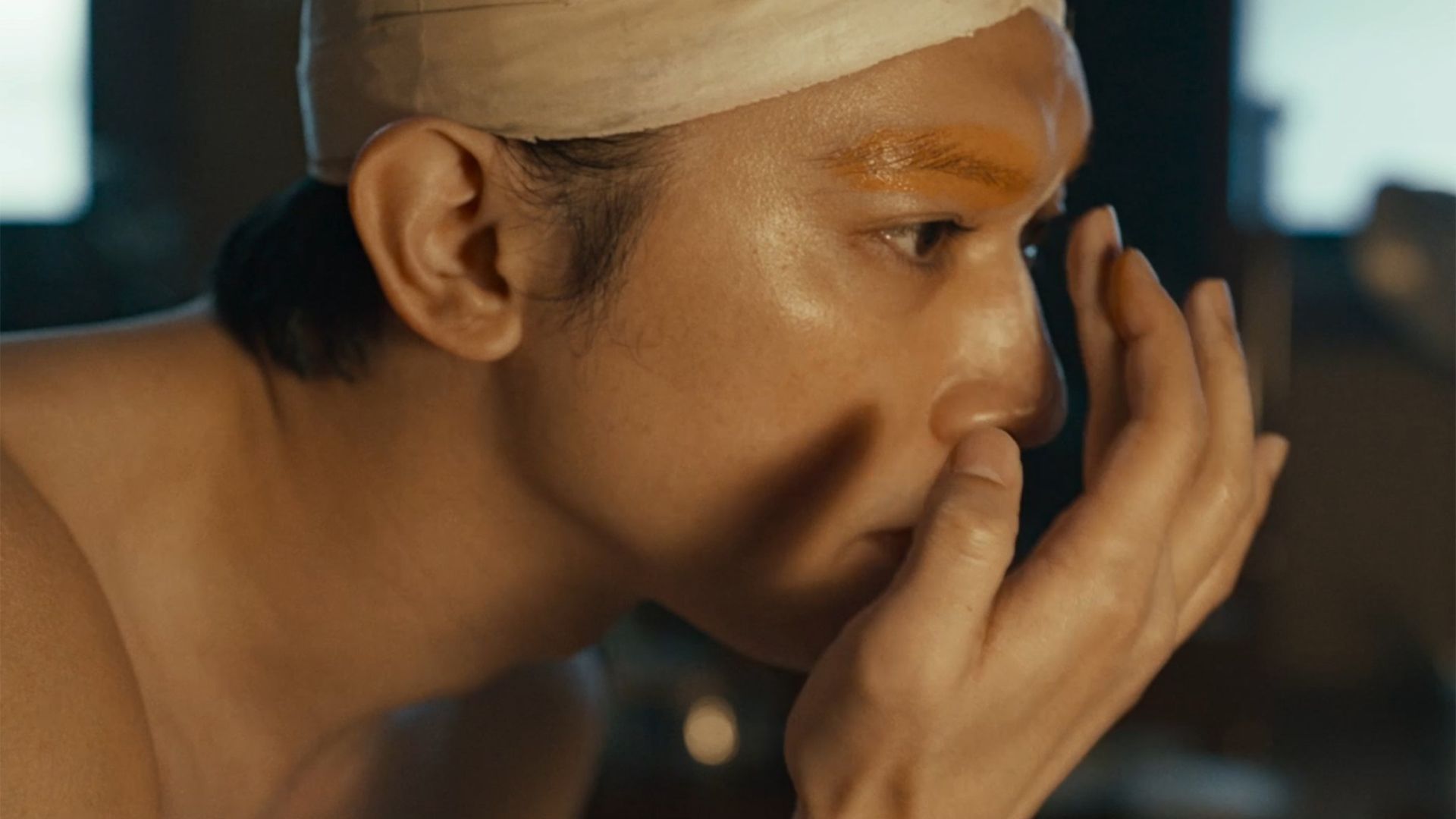
Kabuki is a performing art that relies heavily on an actor’s ability to maintain traditional poses for extended periods. Blending elements of opera, ballet, and theater, it demands both physical strength and deep emotional connection. It’s as much about stamina as it is about moving an audience. Kikuo (Ryo Yoshizawa) is determined to become a ‘Living National Treasure,’ and he’s willing to sacrifice anything – even himself and others – to become the best kabuki performer in Japan. He’s essentially making a desperate bargain, as if with the devil himself.
Sang-il Lee’s Oscar-nominated film, a three-hour drama, isn’t the first to explore the sacrifices artists make for their work. However, it’s truly special because it blends the grand, stylized performance of kabuki theater with the deeply personal story of Kikuo and his adopted brother, Shunsuke (Ryusei Yokohama). Similar to the film Drive My Car, Kokuho delicately examines the blurry line between an artist’s creation and their own life, prompting us to wonder whether art imitates life, or life imitates art.
Kokuho Is a Sprawling Epic that Devastatingly Portrays Artistic Sacrifice
The film Kokuho follows Kikuo’s life over thirty years, beginning in 1964 in Nagasaki. We first meet him as a young, aspiring kabuki performer and the son of a Yakuza boss named Gongoro Tachibana (Masatoshi Nagase). During a performance of the classic play Snowbound Barrier, Kikuo (played by Soya Kurokawa) shows exceptional talent, catching the eye of renowned kabuki actor Hanjiro Hanai (Ken Watanabe).
Just moments later, Tachibana is violently killed during a raid by a rival gang. His blood, a stark red against the falling snow, mixes with the detailed artwork of his back tattoo. Kikuo witnesses the entire event, and the memory becomes a haunting, inescapable emotional scar, much like the childhood sled in the film Citizen Kane.
Hanai decides to mentor Kikuo at his theater, putting him under rigorous training alongside his son, Shunsuke (played by Keitatsu Koshiyama). Initially, the two boys are competitive, each envying what the other possesses: Kikuo has raw talent, while Shunsuke is the designated successor. However, in a culture that highly values tradition – both in gender roles and family lineage – and also demands artistic skill, neither boy seems well-prepared for what’s to come.
Throughout the film, Kokuho explores the complex relationship between the two brothers, blending their close friendship with a rivalry that frequently disrupts the peaceful atmosphere of the theater. The film’s structure is reminiscent of both Amadeus and Macbeth, but ultimately establishes a unique dynamic between the characters. The cinematography, by Sofian El Fani, is stunning, beautifully capturing the colorful energy of traditional kabuki sets. The film creates a compelling sense that the actors are constantly performing, and that their dramatic lives could easily become the material for the art form they practice.
At times, Kokuho prioritizes intellectual concepts over genuine emotion. The story often feels predictable, serving to illustrate its lessons about Japanese tradition and how Japan has changed. However, when the film centers on the artistry of Kikuo and Shunsuke, and their personal connection to their work, it truly shines. This is largely due to the remarkable performances of Yoshizawa and Yokohama, who imbue their characters with depth and complexity.
It’s a shame Lee didn’t take bigger chances with the film. At over two hours long, it feels repetitive and doesn’t fully explore the interesting ideas it introduces about gender and sexuality. The film features Kikuo and Shunsuke, both onnagata – male actors traditionally playing female roles in kabuki. This practice originated because women were historically prohibited from performing kabuki, a ban based on concerns about public morality. While that ban has been lifted, women still rarely perform in this art form.
From the very beginning, with an introductory title card, Lee signals that his film will explore difficult and rarely discussed topics. While ambitious, the film generally succeeds, offering a compelling and thought-provoking look at artistic dedication and the sacrifices made in the name of creative ambition. Ultimately, the film poses a stark question: does the pursuit of artistic excellence justify personal ruin?
Lee doesn’t give us answers, but he encourages us to consider how we would act in similar situations. While both actors are exceptionally talented performers, their true personalities are revealed in their personal lives. Over time, as their relationship with their father, the public, and their craft fluctuates, they face a continuing challenge to prove their dedication.
Kokuho expands theatrically on February 6th, 2026.
Read More
- Прогноз криптовалюты OP: прогнозы цены OP
- Taylor Sheridan’s Mayor of Kingstown Kills Off Tracy in Season 3
- James Cameron Blasts America: Hollywood Billionaire Trashes the Nation That Made Him Rich
- НОВАТЭК акции прогноз. Цена акций NVTK
- Heated Rivalry Star Christina Chang Discusses Season 2 and Handling Fame
- Happiness Apocalypse: Inside Vince Gilligan’s Brave New Sci-Fi World At Apple TV
- New Chris Pratt Sci-Fi Flop Already Out on Streaming
- Whether Dunk Was Really Knighted in A Knight of the Seven Kingdoms Revealed
- 3 Huge Superhero Movies Not Expected To Get US Imax Releases in 2026
- 18 Years Later, This Underrated Sci-Fi Series Is Still Perfect for Jurassic Park Fans
2026-02-04 16:59