HBO’s Deadwood wasn’t just a good Western – it was groundbreaking, showing everyone what modern television could achieve. Its impressive 92% rating on Rotten Tomatoes and the strong reactions from viewers who watched it when it first aired prove that people recognized it as something special. Deadwood wasn’t a polished, idealized Western; it was a raw and stylish depiction of survival.
Whenever people talk about recent Western TV shows, Justified always comes up first, and for good reason—it’s witty, stylish, and enjoyable. However, Deadwood is on a whole other level. Justified is a fantastic cable drama, but Deadwood represents something truly special in television.
Deadwood Changes the Western’s Expectations Through Dialogue
Initially, Deadwood appears to be a typical Western – a chaotic town filled with dangerous characters and constant violence. But the show surprisingly doesn’t focus on drawn-out gun battles. Violence happens quickly and realistically, often ending before you fully process it. There’s no glorification – no dramatic poses or soaring music – just the harsh aftermath and the everyday life that continues around it.
This Western differs from most because the most important events happen during conversations. The dialogue is long, rambling, and often blunt, with characters constantly vying for control through what they say. In Deadwood, power isn’t just about being a fast gun; it’s about understanding people, being observant, and being a skilled liar. Al, for example, knows exactly when to threaten someone, but also when to hold back and wait for the right opportunity.
Throughout the series, Deadwood visibly transforms. We see new arrivals constantly testing their fate, and relationships form and dissolve quickly. The camp gradually evolves from a rough, lawless settlement into a flawed, but recognizable, society.
Watching Deadwood feels like accidentally overhearing a private conversation. The show’s dialogue is one of its most impressive features, shaping how we understand everything that happens. Unlike typical modern conversations, which often follow expected patterns, Deadwood‘s language is surprisingly poetic. Despite frequent use of strong language, the writing remains sharp and never feels careless.
I honestly think that a well-placed curse word can really add to a scene, and that’s definitely true in shows like Justified and Deadwood. Justified is so sharp and witty, with dialogue that just flows perfectly. But Deadwood… that’s something else entirely. The conversations aren’t neat; they’re messy, they overlap, and they often feel like full-on verbal battles where everyone’s just trying to be heard. And that, to me, is what still makes Deadwood so groundbreaking and powerful, even today. It wasn’t afraid to be real and raw, and that’s incredibly bold.
Deadwood’s Characters Refuse to Behave
Deadwood doesn’t offer simple stories of good versus evil. The characters are complex and evolve over time. For example, Al Swearengen is both a bad guy and someone who surprisingly helps others, while another character strives for justice but often lets his temper control him. Even Calamity Jane is full of contradictions – she’s bold, wounded, humorous, and often sad, and you see all of these sides of her within a single episode.
These characters aren’t simply well-written; they’re frustratingly flawed and don’t experience meaningful development. Any changes they undergo feel accidental, driven by circumstance rather than the needs of the story. This makes Deadwood feel more realistic than Justified, which presents a smoother, more idealized world. While Raylan Givens in Justified does evolve, he always maintains control. The characters in Deadwood, however, are constantly at the mercy of events and lack that same agency.
The supporting characters are just as important as the leads. People like Trixie, Wu, E.B. Farnum, and Doc Cochran each add unique depth to the town, making it feel authentic. Everyone has their own hidden motivations and wants, which often leads to clashes and competition as they all struggle to get by.
What truly captivates audiences is the performance. Ian McShane plays a character who is both ruthless and intelligent, always seeming to be in control, but he also subtly reveals vulnerabilities. This creates a compelling contrast – a cold, calculating exterior alongside a fragile interior that feels like it could unravel at any moment. It’s this complex combination that makes the character so memorable.
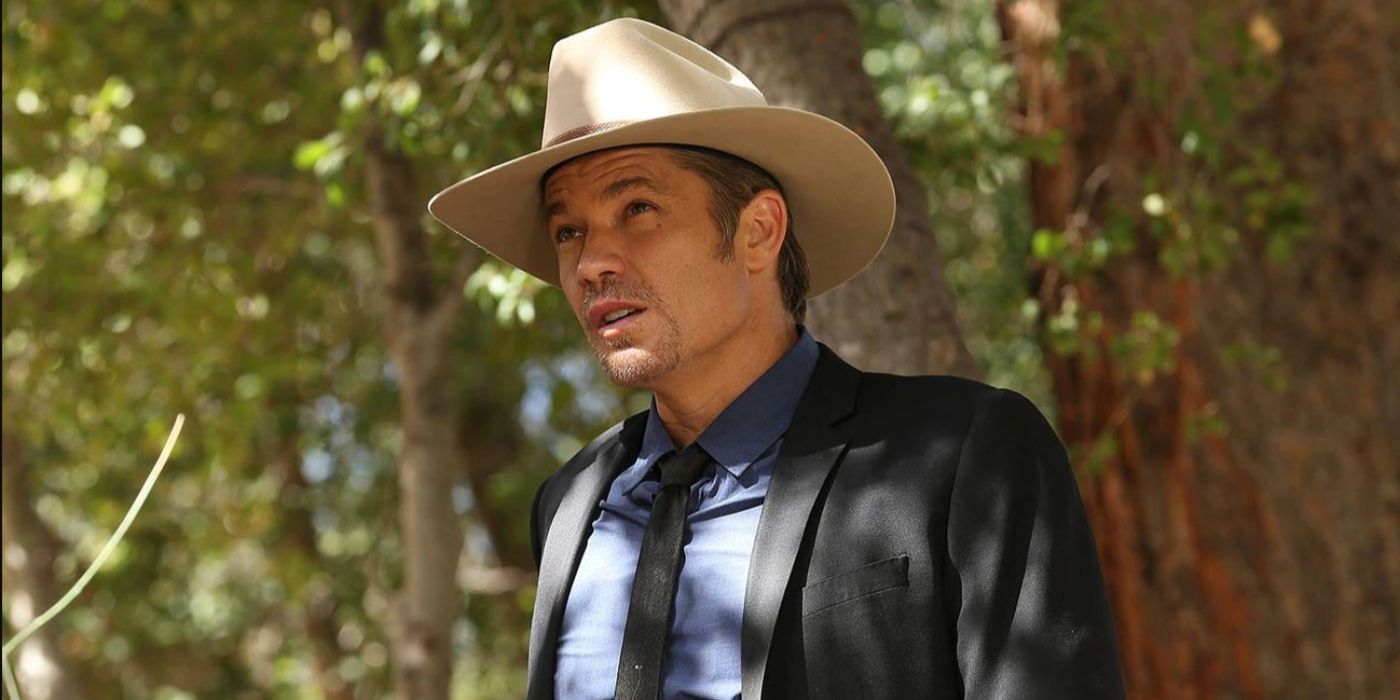
Timothy Olyphant is fantastic in Justified, bringing a lot of charm and self-assurance to his roles. However, his portrayal of Seth Bullock feels more genuine. While both characters benefit from Olyphant’s talent, Bullock is played with a reserved and understated style. He’s a powerful and angry man, but much of his internal struggle remains hidden, creating a sense of simmering tension.
What really struck me about Deadwood is how raw and honest it feels. Ian McShane isn’t playing a ‘good guy,’ he’s portraying a man wrestling with his own demons in a place that constantly gets under his skin. It’s that internal struggle, that constant holding back, that makes the character so compelling. And honestly, the show doesn’t try to make you like these people—they’re flawed, messy, and feel incredibly real. That’s what makes Deadwood so much more intense and emotionally resonant than most things on TV.
Deadwood Creates a World That Feels Lived In
The attention to detail in Deadwood is what truly makes it stand out and fully immerses viewers in a gritty, believable world.
Modern TV owes a lot to this approach. While popular, high-quality dramas now focus heavily on creating immersive worlds, Deadwood was a pioneer, doing so before it became a common practice. The show treated its setting as a crucial element, just as important as the story itself.
Both Justified and Deadwood effectively establish a strong sense of location, but they do so in different ways. While Justified uses Kentucky primarily as a setting for clever conversations and character development, Deadwood truly brings a settlement to life, and watching its growth is integral to the narrative.
Deadwood Takes a Risk That Changes TV
When Deadwood first came out, it was a gamble. The show featured harsh language and a deliberately slow rhythm. Luckily, HBO allowed creator David Milch creative freedom. Instead of trying to make it more conventional, they leaned into its gritty, unconventional style, which ultimately proved to be a smart move.
Unlike many shows, Deadwood didn’t spoon-feed the audience. It didn’t bother with recaps or overly explaining things, and instead asked viewers to pay attention and be patient. As a reward, it offered incredible acting and compelling stories. This approach – trusting the audience’s intelligence – became a standard for many high-quality dramas that came after it.
While Justified was successful on its own, it benefited from the groundwork laid by Deadwood. Deadwood paved the way for shows like Justified to thrive, and without it, Justified likely wouldn’t have reached the same level of popularity.
Despite its unconventional nature, the show developed a dedicated following. While its cancellation was disappointing for many, it ultimately prevented the show’s quality from declining. Fans are left with three strong, memorable seasons that continue to be talked about.
The 2019 HBO film provided a satisfying conclusion to the series, reuniting the cast over a decade after the original show ended. It allowed fans a final glimpse into the town of Deadwood and delivered a finale that lived up to the show’s high standards.
Instead of trying to be like other Westerns, Deadwood redefined the genre. It prioritized raw honesty and complexity over easy entertainment, proving that characters didn’t need to be heroes or even likable, and stories didn’t need neat resolutions to be powerful.
The show Deadwood was remarkable for its incredible writing and dialogue. While Justified also had clever conversations and exciting confrontations, Deadwood demonstrated how those moments could have a deeper impact than anything seen in previous Westerns. It ushered in a new era for the genre – one that’s difficult to replicate – and remains a standout achievement.
Read More
- Underrated Shudder Horror Movie Becomes Global Streaming Hit After Quiet Theatrical Release
- 2026 Oscar Contenders: Where to Stream Sinners, Bugonia, Jay Kelly
- Hans Zimmer to Score Warner Bros.’ ‘Harry Potter’ TV Series
- New Marvel TV Show Quickly Becomes A Disney Sensation After Just Days Of Release
- Ari Aster’s Eddington Is Missing The One Thing That Makes Me Obsessed With His Other Movies
- I Can’t Stop Thinking About Louis And Lestat’s Last Scene Together In Interview With The Vampire Season 2, And I Need To Talk About It
- Xochitl Gomez Joins Boston Blue in Key Role
- Peacock’s Wife Swap Revitalizes The Real Housewives Franchise
- Mark Waid and Salvador Larroca’s The Flash: Terminal Velocity is a Comic You Should Be Reading
- Chris Pratt Made A Pitch to Marvel for Star-Lord’s Return
2026-01-18 19:16